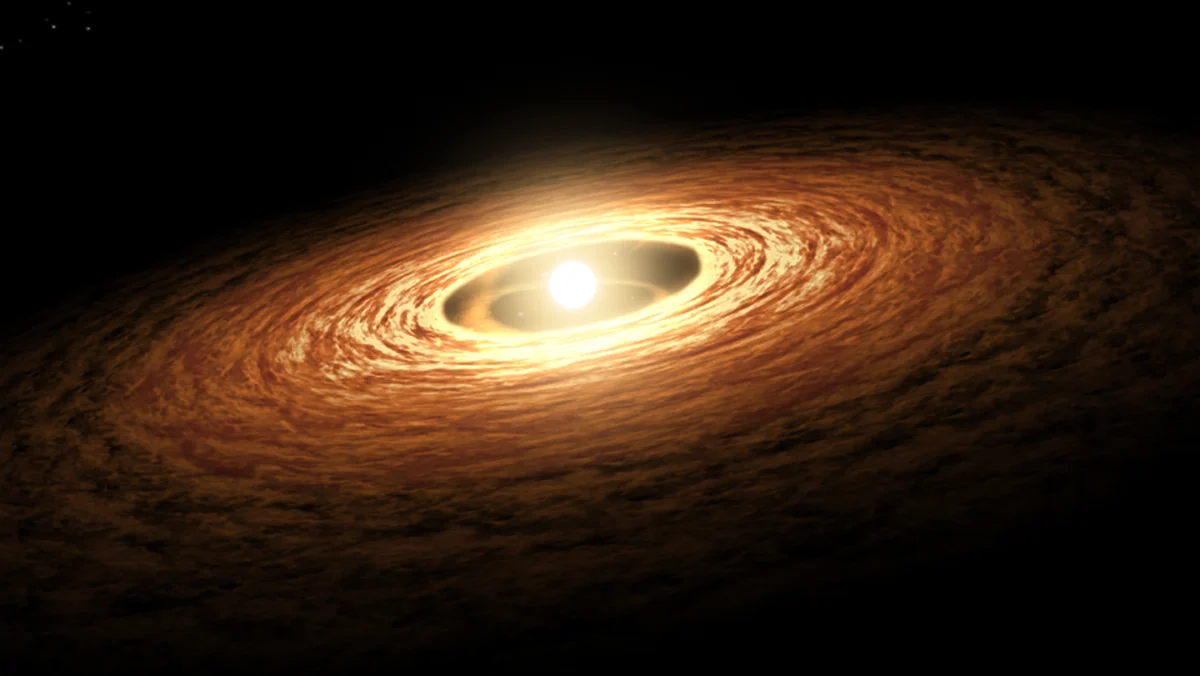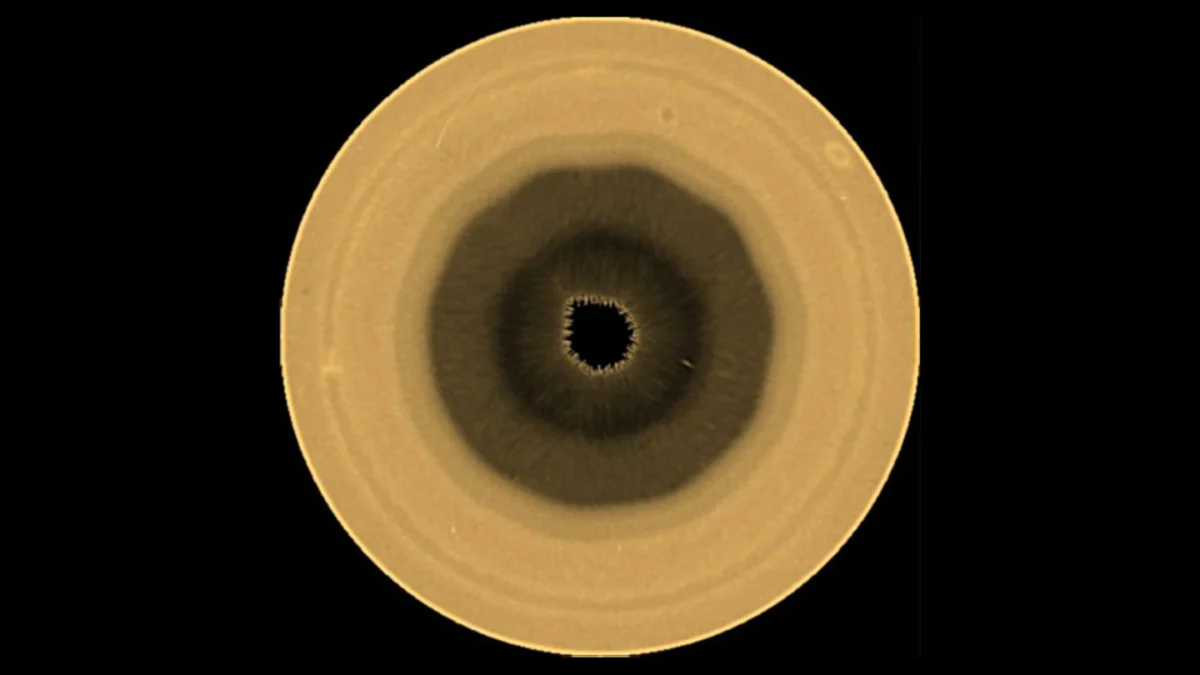
One day in June 2023, the numerous, unblinking electronic eyes of the LUX-ZEPLIN (LZ) detector may have glimpsed something remarkable—possibly the first direct detection of the shadowy dark matter that pervades the cosmos. While the data remains preliminary and requires rigorous verification, the event has sent a ripple of cautious excitement through the global high-energy physics community. For decades, dark matter has functioned as a ghost in the machine of the universe, inferred through its gravitational effects on galaxies and the cosmic microwave background, yet never once caught in the act of interacting with ordinary matter.
The Nature of the Invisible
Dark matter is estimated to constitute roughly 27 percent of the universe’s mass-energy budget, yet it remains entirely invisible to the electromagnetic spectrum. It does not emit, absorb, or reflect light, making it impossible to observe with conventional telescopes. Scientists have long theorized that dark matter consists of Weakly Interacting Massive Particles, or WIMPs. These hypothetical particles are thought to possess mass but interact only through gravity and the weak nuclear force.
Because WIMPs rarely interact with atoms, detecting them requires extreme measures. The LZ experiment, buried nearly a mile underground at the Sanford Underground Research Facility in South Dakota, is designed specifically for this purpose. By placing the detector in the former Homestake gold mine, researchers utilize the earth’s crust as a shield against cosmic rays and background radiation, which would otherwise overwhelm the faint signal of a potential dark matter interaction.
Inside the LUX-ZEPLIN Detector
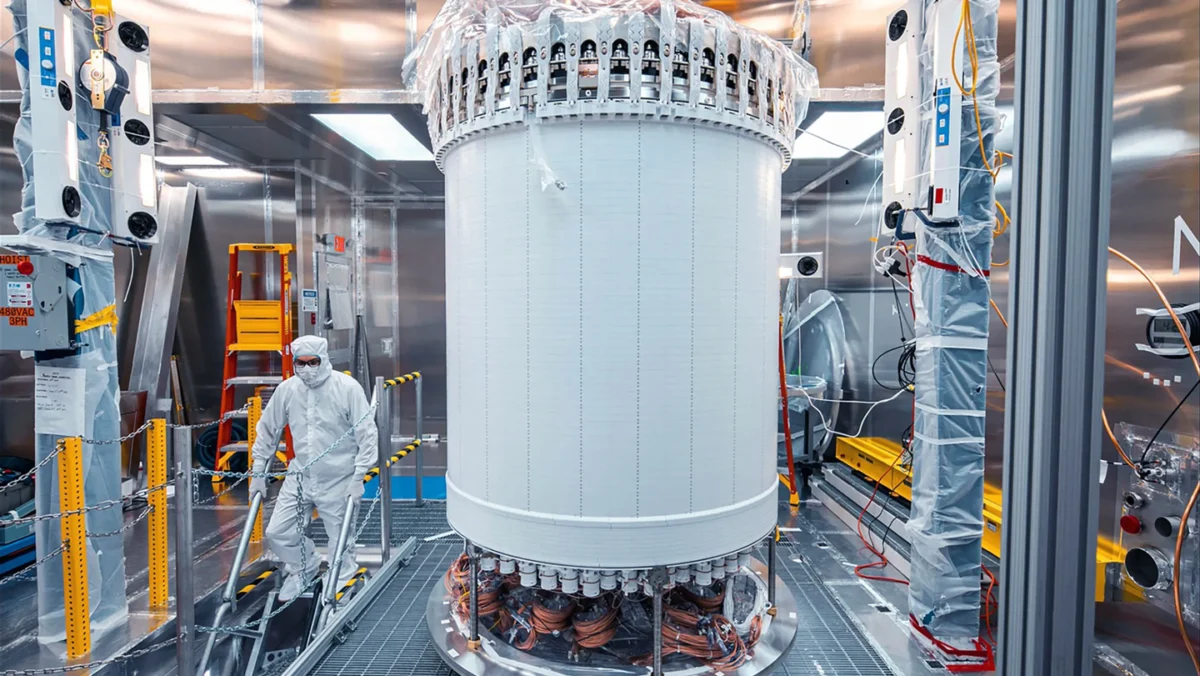
The LZ detector is a masterpiece of cryogenic engineering. At its heart lies a massive tank containing 10 tons of liquid xenon, kept at temperatures near negative 100 degrees Celsius. The physics of the experiment is elegant: if a WIMP drifts through the tank and strikes the nucleus of a xenon atom, the collision should produce a tiny flash of light and a cascade of electrons. These signals are captured by arrays of photomultiplier tubes lining the top and bottom of the tank.
The June 2023 event triggered these sensors with a specific signature that matched the theoretical profile of a WIMP interaction. However, in the realm of particle physics, a single event is insufficient to claim a discovery. The background "noise" of the universe—radioactive decay from the detector materials themselves or stray neutrinos—can often mimic the signature of a dark matter particle.
Chronology of the Search
The hunt for dark matter has been a multi-generational endeavor. In the late 1970s and 1980s, observations by astronomers such as Vera Rubin provided the first compelling evidence that galaxies were rotating much faster than their visible matter could account for, necessitating the existence of a "halo" of invisible mass.
The search for direct detection began in earnest in the 1990s. The LZ experiment represents the current pinnacle of this effort, a culmination of decades of incremental improvements in sensitivity. LZ began its primary science operations in late 2021. Since then, the team has been systematically refining the "quietness" of the detector, ensuring that any detection is indeed a particle from the dark sector rather than a stray radioactive particle from the laboratory environment. The June 2023 event, while unique, arrived at a time when the detector was operating at its highest level of sensitivity to date.
Data Analysis and Scientific Rigor
To validate a potential detection, physicists employ a rigorous statistical threshold known as "five-sigma." This standard ensures that the probability of the result being a random statistical fluctuation is less than one in 3.5 million. Currently, the June 2023 event falls far short of this benchmark.
The LZ collaboration, comprising over 250 scientists from 37 institutions, is now engaged in a process of "blind analysis." They are comparing the June data against extended runs of the detector to see if similar events appear or if the signature remains an isolated anomaly. The primary challenge is distinguishing between a genuine WIMP and a coherent elastic neutrino-nucleus scattering event. Neutrinos are also nearly impossible to detect and, like dark matter, only interact via the weak force. As detector sensitivity improves, neutrinos themselves are becoming a "background" that must be carefully subtracted from the dark matter search.
Official Responses and Peer Perspectives
While the LZ team has been measured in its public statements, the internal discussion among researchers reflects a deep appreciation for the gravity of the potential finding. Dr. Richard Gaitskell, a key figure in the LZ collaboration, has previously emphasized that the experiment was built to reach the "neutrino floor," a point where the background noise of solar and atmospheric neutrinos makes further detection exponentially more difficult.
"Every time we upgrade our instrumentation, we are essentially peeling back a layer of the universe’s veil," noted a physicist familiar with the project who requested anonymity due to the ongoing analysis. "The June event is a compelling data point, but we are essentially doing forensic science on a crime scene that occurred in a fraction of a nanosecond. We need to see if the trail leads somewhere or if it dead-ends in noise."
Implications for Modern Cosmology
If the June 2023 signal is confirmed to be a dark matter particle, the implications for physics would be transformative. It would represent the first extension of the Standard Model of particle physics in over half a century. The Standard Model has been remarkably successful in describing the fundamental forces and particles, but it remains incomplete because it fails to account for dark matter or the accelerating expansion of the universe.
A confirmed detection would provide a target for experimentalists to study the properties of dark matter, such as its mass and its exact interaction cross-section. This would allow theorists to build more robust models of how the early universe evolved and how dark matter seeded the formation of the galaxies we see today. Conversely, if the signal is determined to be a fluke or background noise, it will force the scientific community to reconsider the WIMP hypothesis. Alternative theories, such as axions or "dark sector" models, have been gaining traction in recent years, and a null result from LZ would likely accelerate the shift in funding and research focus toward these newer candidates.
Looking Ahead: The Future of the Hunt
The LZ detector is slated to continue its data collection runs for several more years. The collaboration is also considering upgrades to the detector’s shielding and electronics to further reduce the background noise. Simultaneously, other experiments around the world, such as XENONnT in Italy and PandaX-4T in China, are conducting parallel searches. These experiments act as a necessary check and balance; if a true dark matter signal is detected, it should, in theory, be visible across multiple detectors globally.
As the scientific community awaits further data, the June 2023 event serves as a poignant reminder of the limits of our current understanding. We reside in a universe where the vast majority of matter is hidden from our view, dictating the structure of galaxies and the paths of light from a position of total anonymity. Whether the LZ detector has finally caught the "ghost" or merely witnessed a transient flicker of the known world remains to be seen. For now, the electronic eyes in the South Dakota mine remain open, waiting for the next, perhaps more definitive, encounter with the unseen.