The landscape of no-code artificial intelligence development shifted quietly over the recent months as Google Labs introduced autonomous agent capabilities to its experimental prototyping platform, Opal. Built upon the internal Breadboard framework conceived by Google engineer Dimitri Glazkov, Opal has transitioned from a rigid, manual model-wiring utility into a dynamic, agent-driven automation ecosystem. This significant architectural evolution allows developers and non-technical creators to define high-level goals rather than prescribing linear, step-by-step execution paths for individual AI models.
Chronology of Development and Strategic Relocation
Launched initially in July 2025 as an experimental Google Labs catalog item, Opal was designed to bridge the gap between natural language prompts and functional AI mini-apps without requiring traditional server deployment pipelines. The platform initially relied on a foundational three-step structure: User Input, Generate, and Output. Creators manually selected specific models—such as Gemini for text or Imagen for visuals—and wired them in a deterministic sequence.

By February 2026, Google Labs deployed a major system update incorporating an agent step alongside three auxiliary tools: persistent memory, dynamic routing, and interactive chat functionalities. Simultaneously, Google migrated Opal’s official home to the primary Google for Developers portal (developers.google.com/opal). Industry analysts interpret this structural relocation as a strong indicator of long-term product commitment, moving the tool beyond a mere experimental testbed into a sustained developer utility. By early 2026, accessibility to the platform had scaled to more than 160 countries, expanding its global footprint among enterprise prototypers and independent developers alike.
The Mechanics of Agent-Driven Workflows

The introduction of the Agent option within the Generate step fundamentally alters how applications execute instructions. Previously, a Generate step was strictly tethered to a singular, manually chosen model that executed a uniform set of instructions with every runtime cycle. Selecting the Agent parameter removes this strict linkage. Instead of receiving a rigid script, the system evaluates a stated goal at runtime, selecting the most appropriate underlying model or external tool dynamically.
Under this new paradigm, the architecture can invoke Gemini’s advanced reasoning capabilities for complex logic, engage automated web search tools for real-time information retrieval, or trigger specialized multimedia models depending on the immediate requirements of the task. For instance, creating a digital storybook under the legacy system required pre-determining page counts and writing discrete prompts for each individual section. With the agent framework, a creator can input a broad directive—such as drafting an illustrated multi-chapter children’s narrative—allowing the runtime environment to determine plot points, request missing context, and adapt its output trajectory organically.
Expanded Model Ecosystem and Specialized Tools
To support these complex, non-linear workflows, Google concurrently expanded the underlying model roster available within the Opal environment. The current platform menu features a diverse spectrum of specialized artificial intelligence engines:

- Agent: Dynamically selects models and tools based on runtime objectives.
- Gemini Flash: Optimized for high-speed, everyday text processing and lightweight reasoning tasks.
- Gemini Pro: Deployed for intricate logical operations and multi-step computational challenges.
- Nano Banana and Nano Banana Pro: Tailored for image generation, with the Pro variant specialized for rendering accurate typography within visuals.
- AudioLM: Dedicated to text-to-speech conversion.
- Veo: Handles high-fidelity text-to-video and image-to-video generation tasks.
- Lyria 2: Powers instrumental music composition.
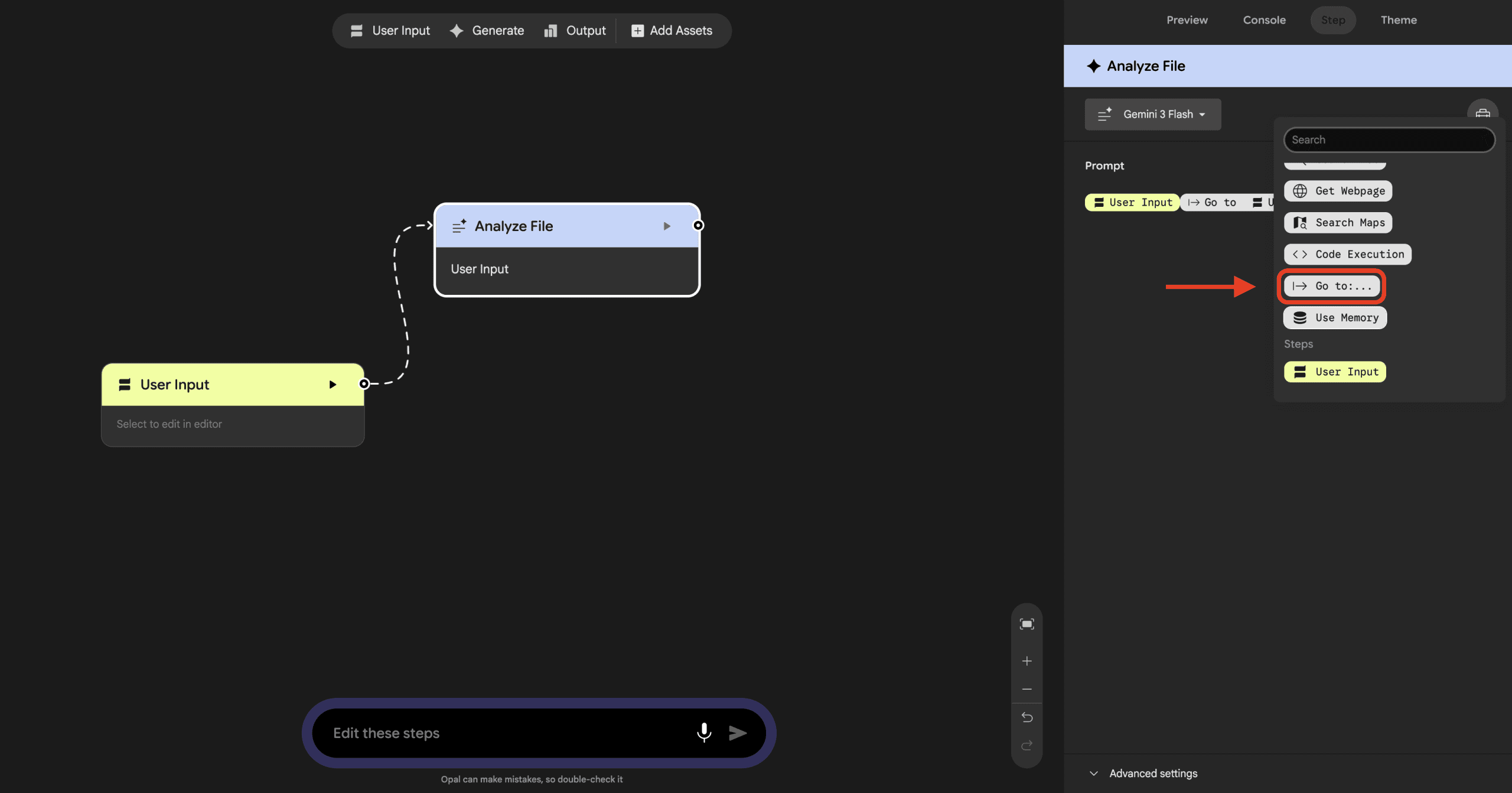
Complementing this expanded model directory are three core utilities that enable contextual continuity and operational flexibility. The persistent memory module retains user-specific parameters across sessions, eliminating the need to re-establish baseline context during subsequent visits. Dynamic routing empowers the agent to evaluate incoming data structures and autonomously determine whether external information retrieval—such as targeted web searches—is necessary. Finally, interactive chat features allow the system to pause execution and prompt the user for clarification when critical details are absent from the initial submission.
Practical Application: Building an Autonomous Interview Prep Coach
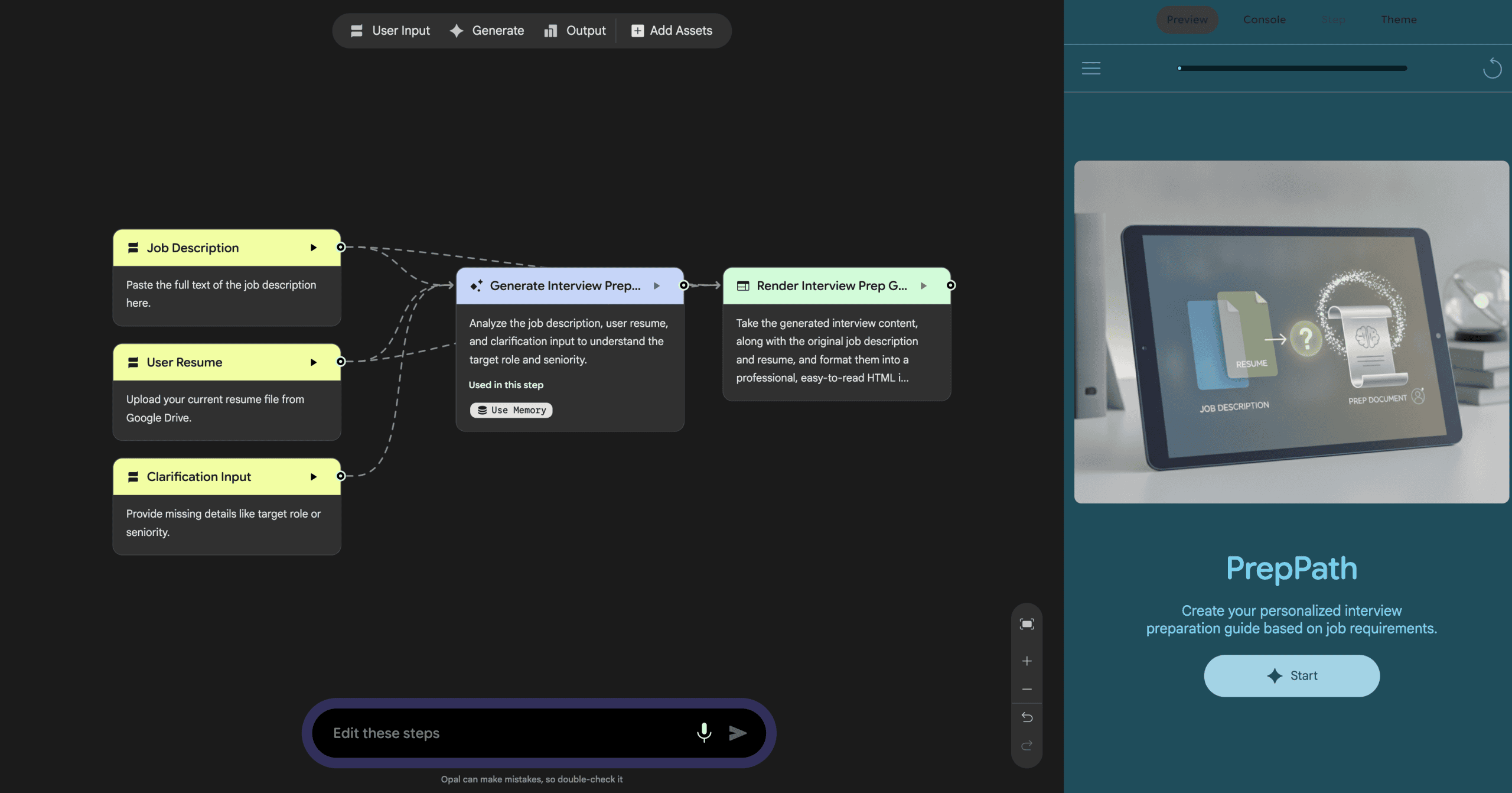
To demonstrate the efficacy of these new components, developers can construct advanced applications that surpass the limitations of legacy linear pipelines. A prime example is an automated interview preparation system. Unlike a standard keyword generator that executes a fixed script, an interview coach must evaluate unstructured inputs, identify missing variables, and adapt its operational pathway accordingly.
When initiating the application, a creator supplies a comprehensive objective prompt: "Build an application that collects a job description and a resume from the user, asks a clarifying question if key details like the target role or seniority level are missing, researches typical interview questions for that specific role and company if needed, and generates a personalized interview prep document. Remember the user’s target role and experience level for future visits."
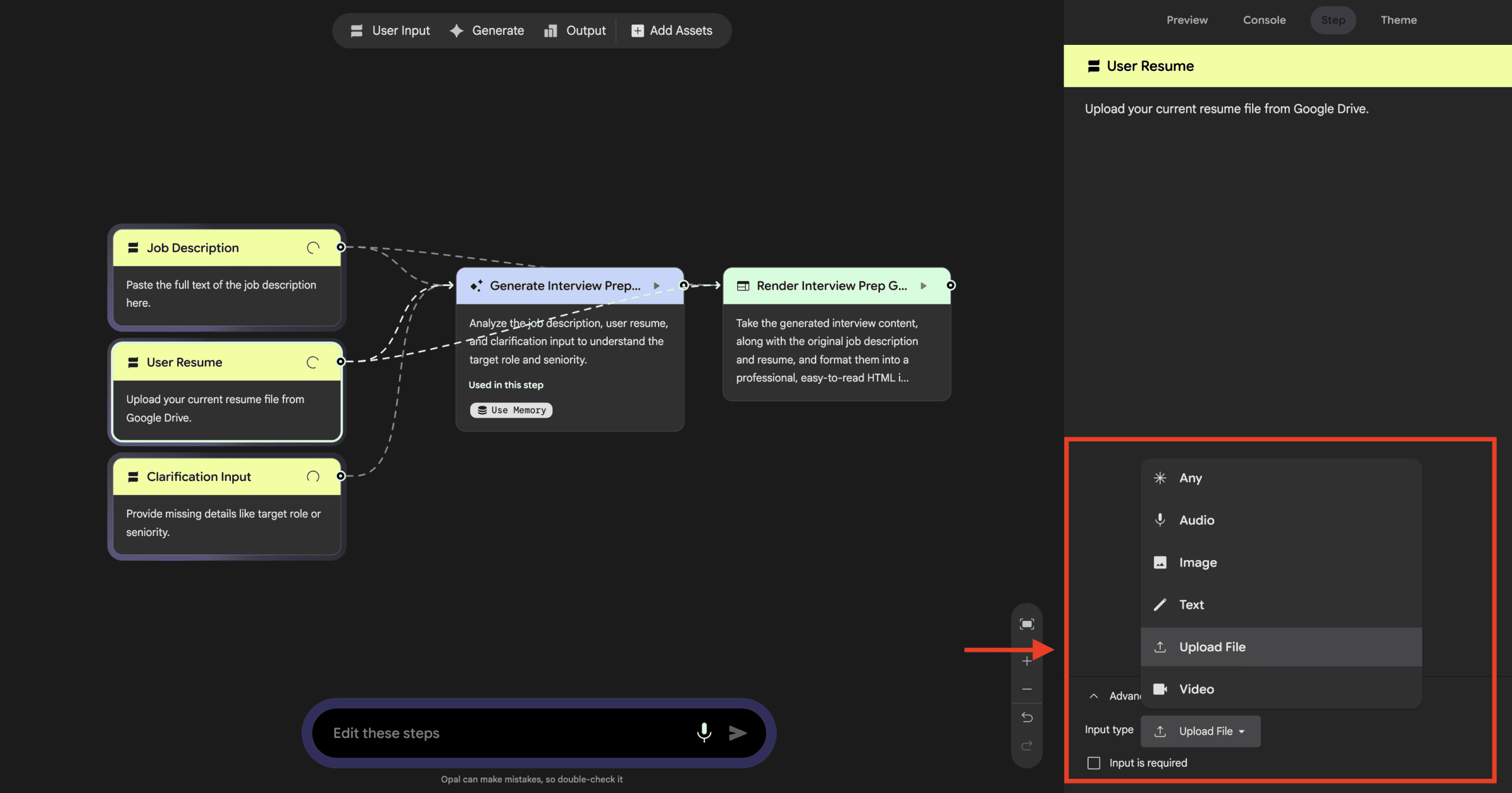
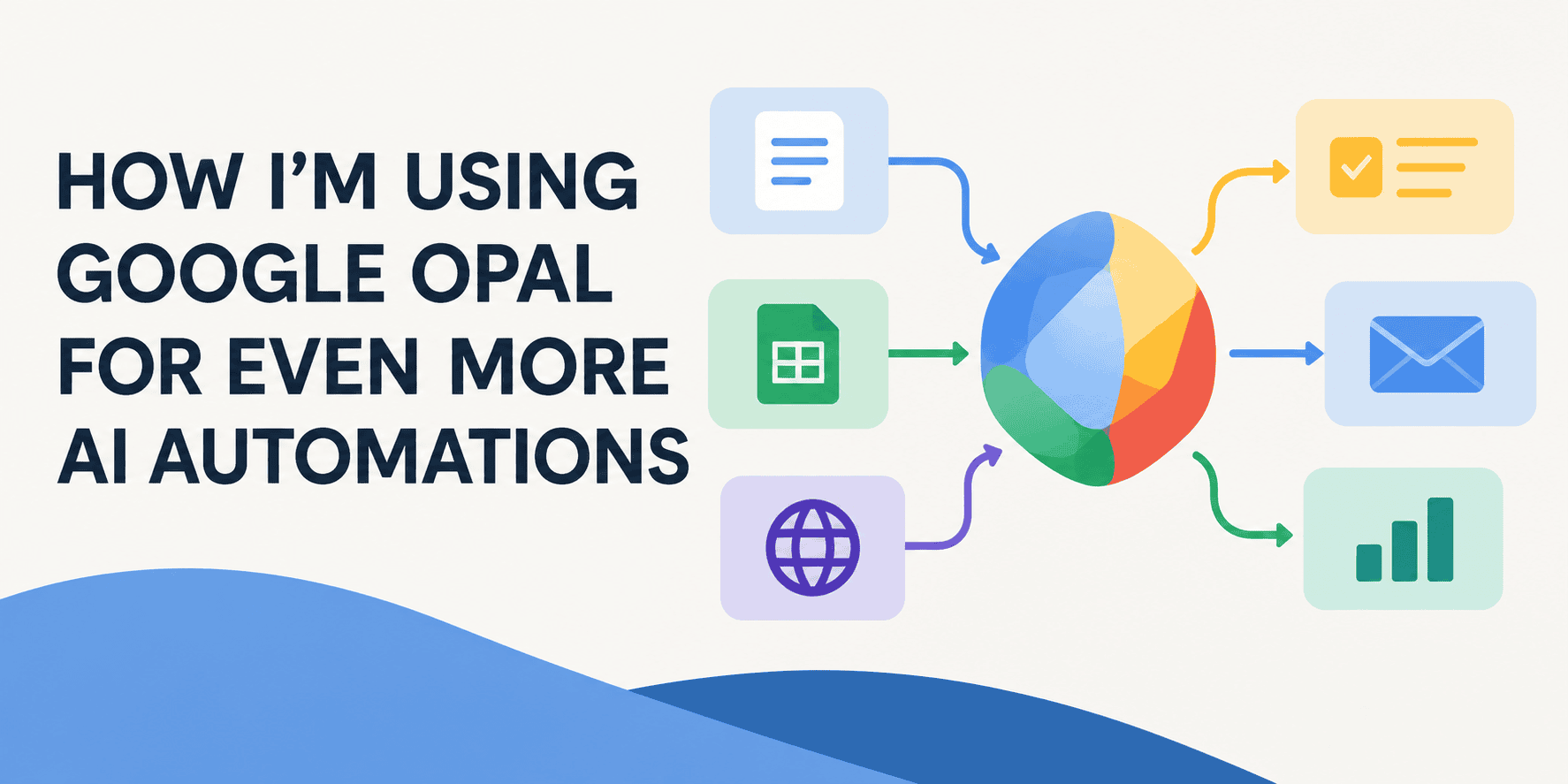
Upon generation, the platform constructs an initial scaffolding comprising a User Input node, an Agent Generate node, and a Google Doc Output node. The User Input step is configured to accept both raw text descriptions and uploaded document files. Within the Agent node, the prompt is enhanced by attaching the Memory and Interactive Chat tools via inline referencing.
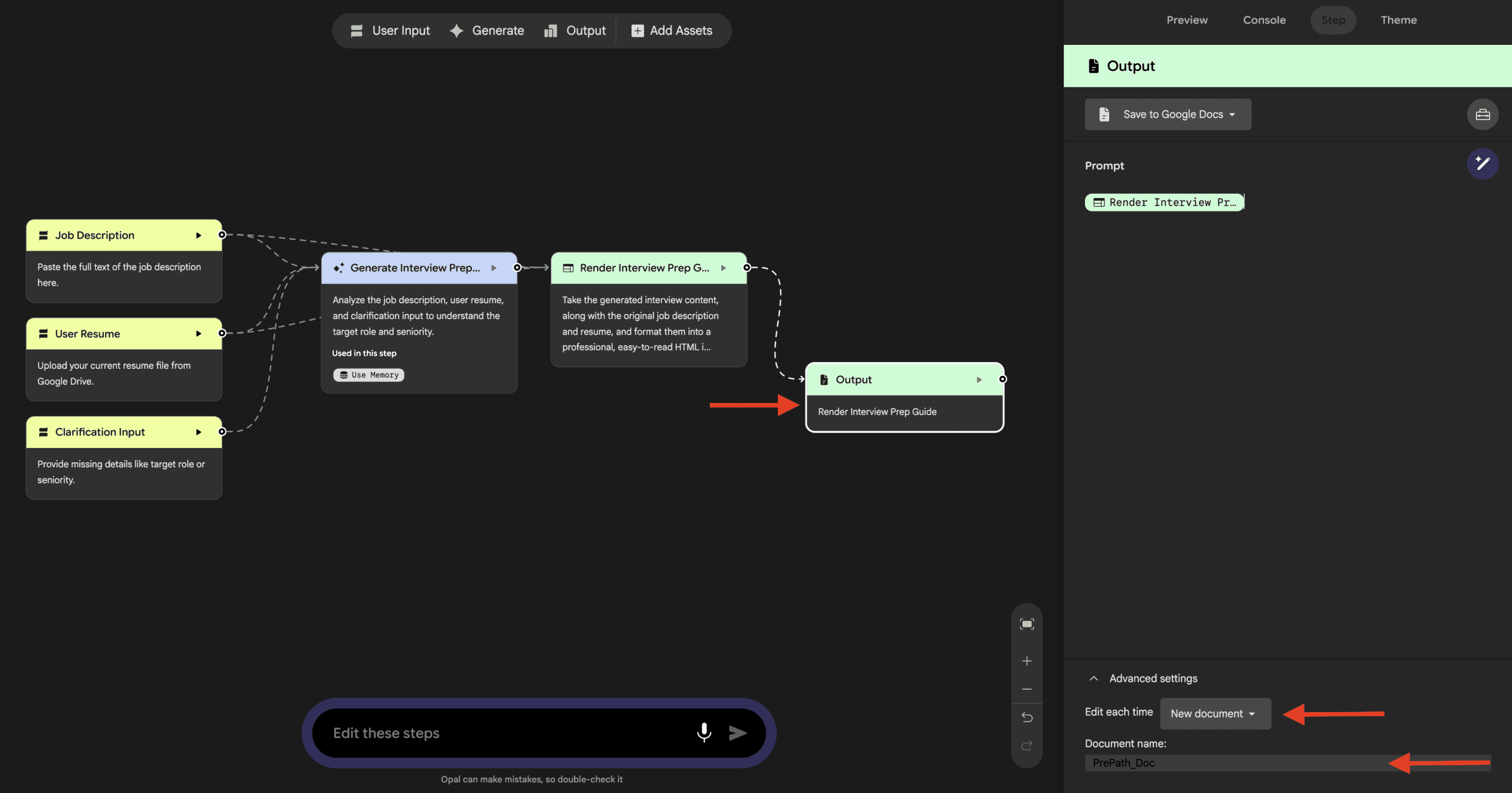
Crucially, developers do not need to manually wire a static web search step into the canvas. Because the node operates under agent control, the system autonomously decides whether the target company or specialized role requires real-time external research based on the specific resume and job posting submitted. If the corporate context is obscure, the console logs indicate an automated web search invocation; if the position is common, the system bypasses search operations entirely to proceed directly with document formulation. The final output is automatically compiled into a formatted Google Document, complete with customized titles referencing the extracted role and corporate entity.

Analysis of Broader Implications and Enterprise Integration
While the introduction of agentic automation lowers the technical barrier for constructing complex AI applications, industry observers note important limitations regarding enterprise deployment. Opal remains designated as an experimental Google Labs initiative. Consequently, there is currently no native mechanism to export a functional Opal prototype directly into production-ready software code. Organizations wishing to scale an Opal-derived application into a standalone commercial product must rebuild the architecture utilizing the standard Gemini API.
Furthermore, Google has not yet published formal quota metrics, rate-limiting policies, or comprehensive pricing structures for sustained, high-volume production usage. Enterprise-grade prerequisites—such as robust Single Sign-On (SSO) integrations, granular role-based access controls, and formalized compliance audit logging—are absent from the current feature documentation.
Despite these transitional constraints, the rapid release velocity demonstrated by Google Labs—delivering an agent system, three core tools, multiple model integrations, and a multi-region rollout within a span of roughly seven months—underscores a strategic push toward frictionless AI development. As no-code frameworks increasingly incorporate autonomous decision-making loops, tools like Opal signal a broader industry transition away from static automation toward adaptive, goal-oriented computational systems.