The summer of 2026 will be remembered in technology circles as an unprecedented eight-week sprint of frontier artificial intelligence releases. Within a compressed window, every major AI laboratory deployed next-generation foundational models. Anthropic initiated the cycle with Claude Sonnet 5 on June 30, followed by xAI’s release of Grok 4.5 on July 8, and OpenAI’s general availability rollout of GPT-5.6 on July 9. Concurrently, Google advanced its Gemini 3.1 Pro iterations through the exact same timeframe.
This clustering of powerful releases fundamentally altered how technical evaluators assess artificial intelligence. For years, the industry fixated on a singular, fleeting metric: which laboratory possessed the smartest model. However, when four major laboratories release competitive capabilities within days of one another, absolute supremacy becomes a transient title, changing hands on a weekly basis. More importantly, the performance gaps between these frontier systems have narrowed to a degree where minor benchmark variances rarely dictate real-world utility.
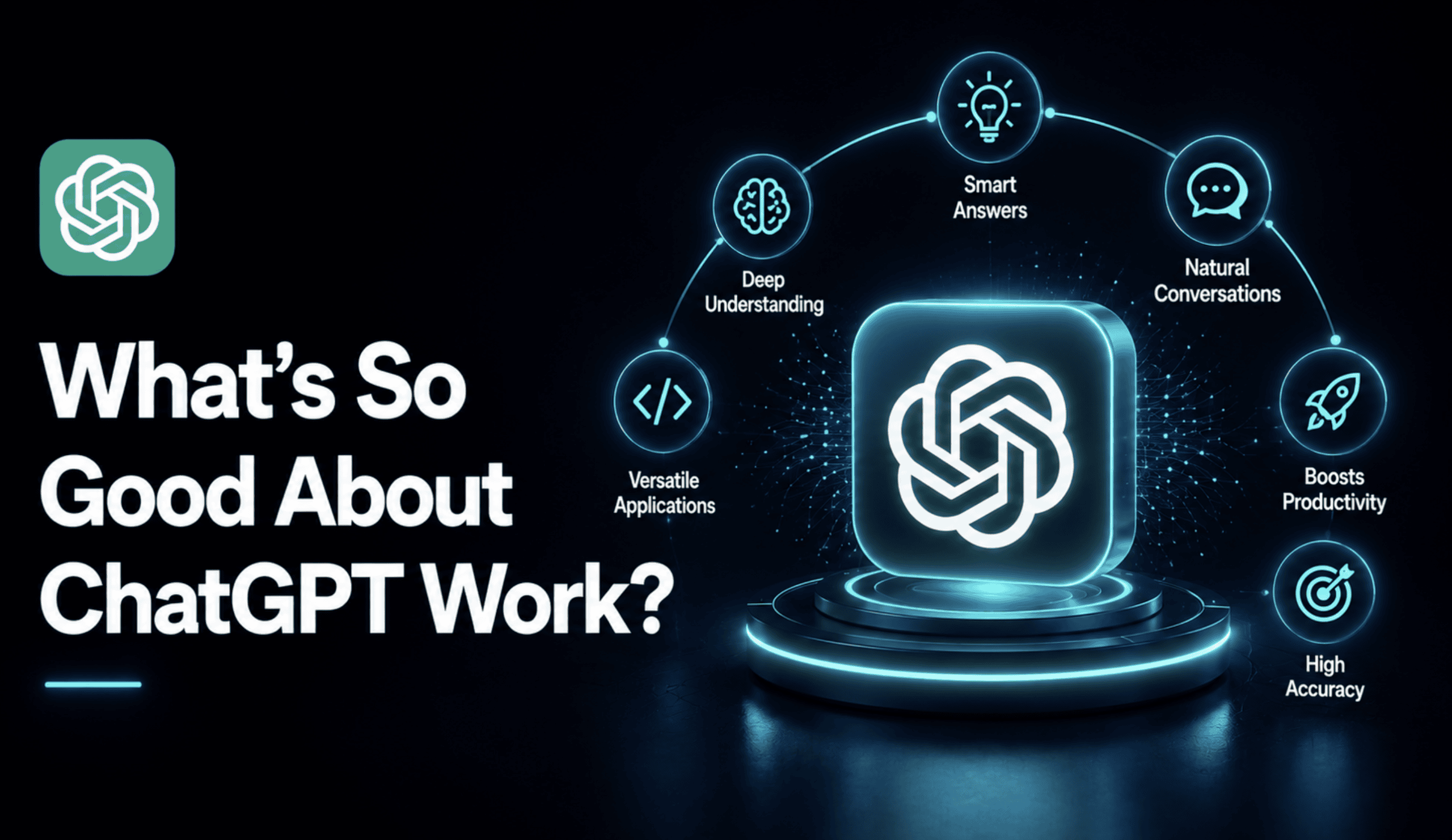
Consequently, enterprise buyers and software developers have pivoted toward a more practical question: what does a specific product allow an organization to achieve with that raw intelligence once integrated? Within this shifting paradigm, OpenAI’s enterprise-facing tier, ChatGPT Work, has emerged as a focal point for institutional evaluation, moving past initial skepticism to demand genuine technical scrutiny.
Background and Chronology of the 2026 Model Wave
The rapid succession of releases in mid-2026 was not coincidental, but rather the culmination of accelerated scaling laws, refined post-training techniques, and intense market competition. Enterprise customers had grown fatigued by model fragmentation, API switching costs, and the operational overhead of managing multiple isolated vendor relationships.
Anthropic’s June 30 deployment of Claude Sonnet 5 set an aggressive baseline for in-repository software development and developer ergonomics. Exactly eight days later, xAI countered with Grok 4.5, emphasizing raw compute efficiency and deep integration with social data feeds and real-time computation layers. On July 9, OpenAI deployed GPT-5.6, introducing a tiered architecture explicitly designed to mitigate the soaring inference costs that plagued earlier generations of reasoning models. Google’s continuous iteration of Gemini 3.1 Pro throughout this same window reinforced the industry-wide push toward native multimodality and massive context windows scaling safely past one million tokens.
Against this backdrop, ChatGPT Work—powered directly by the GPT-5.6 engine—was engineered to address a distinct operational bottleneck. Rather than serving purely as a conversational chatbot that answers isolated queries, the platform was designed to ingest high-level organizational goals and synthesize comprehensive artifacts. By directly querying internal file systems, connected tools, and secure cloud repositories, ChatGPT Work bypasses the cumbersome manual process of copying and pasting contextually rich data into isolated chat windows.
Anatomy of the GPT-5.6 Tiered Architecture
To understand the market positioning of ChatGPT Work, one must analyze the foundational model family driving it. With the release of GPT-5.6, OpenAI abandoned the traditional industry approach of deploying a single flagship model supplemented by a sliding inference-effort dial. Instead, the laboratory structured the family into three distinct, named tiers: Sol, Terra, and Luna.
This packaging decision represents a calculated shift in AI economics. By dividing capabilities into persistent tiers, development teams can dynamically route routine computational tasks—such as baseline text classification, basic summarization, and minor syntax checks—to the lightweight Luna tier, while reserving the heavy, compute-intensive Sol tier exclusively for complex agentic workflows, advanced mathematics, and multi-file code synthesis. This granular routing achieves cost efficiencies without forcing engineering teams to switch between disparate products or API endpoints.
Evaluating Raw Capabilities and Benchmark Realities
A rigorous examination of benchmark performance reveals a nuanced picture where GPT-5.6 does not achieve an unmitigated sweep across all evaluation metrics. On Terminal-Bench 2.1, an advanced agentic coding benchmark, the Sol tier achieved 88.8% in standard operational mode and scaled to 91.9% when utilizing higher-compute Ultra parameters. This performance slightly eclipsed both previous iterations and Anthropic’s Claude Mythos 5, which registered 88.0%.
However, competitive parity remains tightly contested. Anthropic’s premium flagship, Claude Fable 5, surpasses Sol on SWE-Bench Pro, scoring 80% compared to Sol’s 64.6%, while also leading on specific indices maintained by independent evaluators such as Artificial Analysis.
Despite these benchmark variances, OpenAI’s strategic advantage materialized in token economics and execution speed. Claude Fable 5 launched with API pricing structured at $10 per million input tokens and $50 per million output tokens—double the rate of OpenAI’s Sol tier. OpenAI’s internal and independent validation metrics indicate that Sol frequently achieves comparable or superior results on complex agentic and software engineering tasks while consuming significantly fewer tokens and executing in less wall-clock time. For enterprise software teams operating at scale, this trade-off—delivering high-fidelity performance at a fraction of the computational and financial overhead—represents a compelling economic proposition.
Furthermore, OpenAI diversified its deployment paradigm by releasing open-weight models, designated as gpt-oss-120b and gpt-oss-20b. Distributed under the permissive Apache 2.0 license, these models represent OpenAI’s first open-weight offerings since the early era of GPT-2. Tailored specifically for institutions requiring strict data residency compliance, localized fine-tuning pipelines, or self-hosted inference stacks operating on standard frameworks like vLLM, Ollama, or llama.cpp, these models decouple enterprise adoption from absolute cloud dependency.
Operational Workflows and Enterprise Impact
Beyond raw benchmarks, the tangible utility of ChatGPT Work is observed in daily organizational routines. Features such as Plan Mode and dedicated workspace sites allow teams to orchestrate multi-step projects from a centralized interface.
Real-world deployments across major technology enterprises illustrate this operational shift. At Zapier, complex lead-triage procedures that historically consumed between 35 and 45 minutes per prospect—requiring manual data aggregation across HubSpot, Gong, and internal email archives—were transformed into automated quality assurance workflows. According to Zapier’s Head of Enterprise Marketing, these autonomous systems systematically trace lead journeys, identify operational drop-offs, and surface pipeline opportunities valued in the millions of dollars on a monthly basis.
Similarly, NVIDIA reported significant administrative efficiencies. Go-to-Market managers noted that prior to adopting structured AI workflows, approximately 40% of their operational bandwidth preceding major GTC events was consumed by manual data compilation and spreadsheet reconciliation. By automating these processes into recurring bi-weekly cycles, teams reclaimed valuable hours for strategic field engagement. At Shopify, applied AI leaders integrated the platform as a foundational operating layer, establishing a continuous knowledge synchronization pipeline across thousands of non-engineering employees.
Underpinning these automated pipelines is the robust implementation of Scheduled Tasks. Rebuilt with a dedicated management interface, the feature enables users to transition one-off prompts into persistent, recurring operational routines. Whether executing daily intelligence briefings, generating automated status reports, or continuously monitoring external data sources for specific operational thresholds, scheduled tasks interact natively with live web browsing tools and connected enterprise applications. Current architectural constraints limit task frequency to a minimum interval of one hour, with active concurrency caps scaling dynamically from three tasks on introductory plans up to fifteen concurrent routines on enterprise tiers.
Integration Ecosystem and the Model Context Protocol (MCP)
Interoperability remains a critical determinant of enterprise software adoption. Rather than attempting to construct a proprietary, closed ecosystem, OpenAI adopted the Model Context Protocol (MCP) across its product suite. Originally conceived by Anthropic and subsequently transitioned to a vendor-neutral governance foundation, MCP establishes an open standard for connecting artificial intelligence models to external data sources and software tools.
Because MCP is mutually recognized across competing platforms—serving Claude, ChatGPT, and independent developer environments alike—organizations can build internal integrations once without risking vendor lock-in. Within the ChatGPT interface, this integration architecture manifests via Developer Mode for remote server connections on individual plans, alongside workspace-published MCP applications for Business, Enterprise, and Educational subscribers.
The market response to the Apps SDK and MCP integration has been swift. Within sixty days of rollout, more than thirty-five major enterprise software vendors—including Salesforce, Box, Dropbox, Atlassian, and Adobe—deployed native ChatGPT applications. Combined with a library exceeding 1,400 specialized plugins, the historical barrier of custom software integration has been substantially mitigated for standard business tooling.
Data Access, Usage Tiers, and Economic Considerations
Access to current information separates modern frontier models from older static architectures. ChatGPT integrates real-time web browsing capabilities, permitting models to retrieve and synthesize contemporary data mid-conversation. Agent Mode extends this functionality further, enabling multi-step execution sequences that combine web research, code execution, and software tool calls within a unified session.
Pricing structures and usage allowances scale across distinct organizational tiers. Free-tier users operate under message limitations on the default instant model, transitioning to lighter fallback parameters upon exhausting the allotted window. Paid individual tiers, such as Plus subscriptions, expand these message volumes significantly while granting dedicated allowances for intensive reasoning models. Enterprise and Pro agreements incorporate high-capacity thresholds designed to support continuous organizational workflows, though all tiers remain governed by fair-use operational guardrails.
Comparative Market Overview
| Metric / Feature | GPT-5.6 (ChatGPT Work) | Claude Sonnet 5 | Gemini 3.1 Pro | Grok 4.5 |
|---|---|---|---|---|
| Release Date | July 9, 2026 | June 30, 2026 | Rolling updates (2026) | July 8, 2026 |
| Base Pricing | Sol: $5/$30; Terra: $2.50/$15; Luna: $1/$6 (per million tokens) | $2/$10 introductory rate through August 31, 2026; $3/$15 standard | Varies by deployment and access path | $2 input / $6 output (per million tokens) |
| Context Window | 1.05 Million tokens | 1 Million tokens | 1M input / 65K output tokens | 500,000 tokens |
| Primary Strength | Advanced agentic execution, tiered cost-speed efficiency, broad MCP ecosystem | High-performance in-repository software development | Massive context scaling and native multimodality | Cost-efficient coding and deep ecosystem integration |
Broader Industry Implications
The maturation of tools like ChatGPT Work signals a transition phase in enterprise technology. The defining characteristic of the 2026 AI landscape is no longer raw model superiority measured by isolated benchmark victories, but rather the frictionless integration of intelligence into daily operational workflows.
As enterprises weigh the economic implications of token pricing, data residency requirements, and tool interoperability, the competitive advantage has shifted to platforms that successfully unify agentic automation with existing software infrastructure. While laboratories will undoubtedly continue to push the boundaries of foundational reasoning capabilities, the immediate enterprise value lies in systems that reliably transform unstructured corporate data into finished, actionable output.