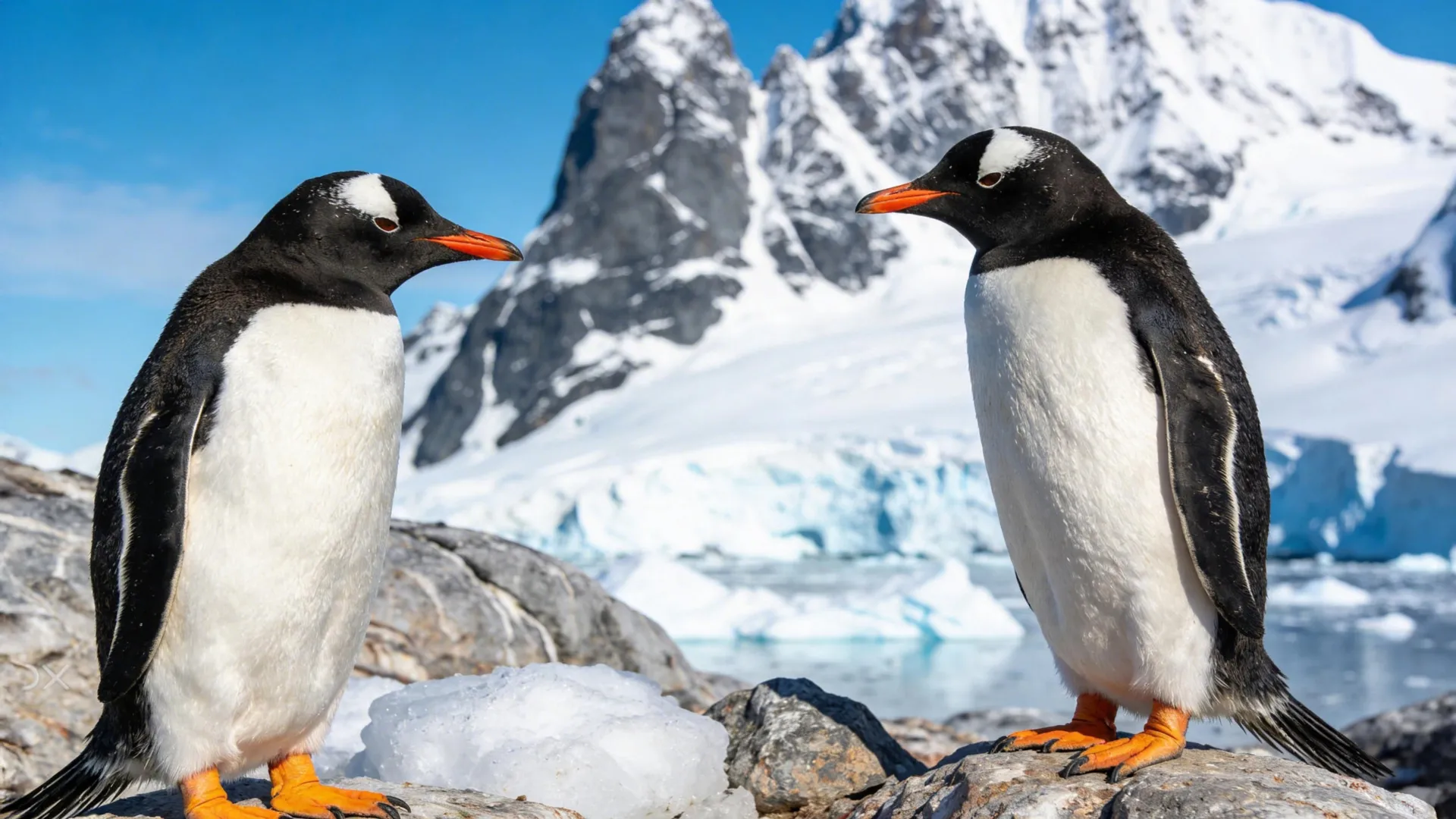
For over a century, the scientific community has operated under the assumption that the gentoo penguin, a charismatic inhabitant of the Southern Hemisphere, represented a single, cohesive species. However, a landmark genomic study involving an international coalition of researchers has fundamentally altered our understanding of these birds, revealing that the gentoo penguin is actually a complex of four distinct species. This discovery, published in the journal Communications Biology, marks the first time a new penguin species has been formally recognized in more than 100 years, highlighting the power of modern genomic sequencing to uncover "cryptic species"—organisms that appear physically similar but possess deep, evolutionary divergence.
The research, led by scientists at the University of Chile and the University of California, Berkeley, provides a definitive resolution to a century of taxonomic debate. By analyzing whole-genome sequences from 64 penguins across 10 breeding colonies, the team was able to map the genetic landscape of gentoo populations spanning their entire global range. This evidence confirms that geographic isolation, driven by the harsh realities of the Southern Ocean and the unique behavioral traits of the birds, has facilitated a rapid evolutionary branching over the last 300,000 to 500,000 years.
A Century of Taxonomic Uncertainty
The history of penguin classification has been fraught with disagreement. Since the late 19th and early 20th centuries, naturalists have proposed anywhere from two to six subspecies for the gentoo penguin, yet none of these classifications achieved universal consensus. The difficulty stemmed from the penguins’ distribution; they reside on isolated, remote islands—such as the Kerguelen Islands, often referred to as the "Desolation Islands"—located nearly 2,000 miles from the nearest permanently inhabited landmass.
For decades, the limited accessibility of these sites meant that morphological studies were based on sparse, fragmented data. The new study, spearheaded by Rauri Bowie, a curator in UC Berkeley’s Museum of Vertebrate Zoology, and Juliana Vianna of Andrés Bello National University, utilized an "integrative approach." This involved not just genomic data, but a rigorous comparison of coloration, vocalizations, breeding cycles, diet, and foraging behavior. The resulting data provided the necessary consensus to formally split the gentoo penguin into four species: Pygoscelis papua (northern), Pygoscelis taeniata (eastern), Pygoscelis ellsworthi (southern), and the newly identified Pygoscelis kerguelensis (southeastern).
Genomic Insights into Local Adaptation
The study, with primary analysis conducted by University of Chile graduate student Daly Noll, utilized thousands of single nucleotide polymorphisms (SNPs) to trace the evolutionary history of these birds. The findings reveal that each species has undergone specific genetic adaptations to thrive in its respective environment, illustrating a classic example of natural selection in action.
The southern gentoo (P. ellsworthi), which resides in the extreme conditions of the Antarctic Peninsula and South Georgia Island, exhibits genetic signatures linked to heat production, fat storage, and enhanced light perception. These traits are essential for survival in an environment characterized by sub-zero temperatures and the intense, reflective glare of polar ice. Conversely, the eastern lineage (P. taeniata), inhabiting the Crozet, Marion, and Macquarie Islands, has evolved genes optimized for carbohydrate metabolism and high-performance diving. These birds possess unique adaptations for oxygen transport and lung development, allowing them to forage more effectively in nutrient-poor, deeper waters.
The northern lineage (P. papua), found in the Falkland/Malvinas and South American regions, shows a distinct genetic profile focused on digestion and sustained muscle contraction. This suggests that the species has adapted to the specific metabolic demands of its local prey base and the physical exertion required for foraging in warmer, more turbulent temperate waters. The fourth species, P. kerguelensis, represents a population that has evolved in near-total isolation near the Antarctic Polar Front, a critical boundary where shifts in water temperature and salinity act as an ecological barrier to movement.
Climate Change and the Future of Island Populations
The classification of these four species is not merely an academic exercise; it has profound implications for conservation strategy. As global temperatures rise, the habitats of these sub-Antarctic penguins face significant pressure. Climate modeling conducted by the research team suggests that by 2050, the island-dwelling species—P. taeniata, P. papua, and P. kerguelensis—could lose critical portions of their habitable range.
Unlike the southern gentoo (P. ellsworthi), which is currently thriving and may even expand its range southward as ice retreats, the island-based species are trapped by their geography. "The gentoo is of most concern in the sub-Antarctic region," noted Juliana Vianna. Because these birds are endemic to specific, isolated islands, they lack the ability to easily migrate to new territories if their local environment becomes unsuitable. This makes them significantly more vulnerable to the cascading effects of climate change, including shifting prey distributions and the potential for increased competition from other species.
Furthermore, these penguins face a host of anthropogenic threats beyond climate change, including commercial overfishing, predation by invasive species like rats and dogs, and the potential for disease outbreaks. The recent emergence of avian influenza globally has put conservationists on high alert. Professor Rauri Bowie emphasized that the genomic dataset assembled for this study will be vital in identifying which populations possess the genetic resilience to withstand such threats. "Whole genome sequencing has transformed our ability to not only look at adaptation… but it has really important conservation value," Bowie said.
Evolutionary Context and Behavioral Plasticity
The success of the gentoo penguin, compared to its relatives like the Emperor or Adélie penguin, is often attributed to its dietary flexibility. Gentoos are generalists; they consume a wide array of prey, including fish, krill, squid, and cuttlefish. This flexibility has allowed them to colonize diverse environments, from the Antarctic shelf to the temperate shores of South America.
However, this same behavioral trait may have driven the speciation process. Because gentoos are capable of finding sufficient food near their breeding sites, they do not exhibit the same migratory tendencies as other, more specialized penguin species. They return to the same nesting grounds year after year, effectively creating a feedback loop that reinforces genetic isolation. Over hundreds of thousands of years, this local fidelity has led to the divergence seen today.
The broader timeline of penguin evolution, as proposed by Vianna and Bowie in their 2019 research, suggests that the penguin family originated near Australia and New Zealand approximately 22 million years ago. The development of the Antarctic Circumpolar Current 12 million years ago served as a catalyst, allowing penguins to traverse the Southern Ocean and colonize remote archipelagos. The gentoo penguins represent a relatively recent branch of this evolutionary tree, demonstrating how rapidly species can diverge when presented with distinct ecological niches.
The Need for Collaborative Conservation
The international team behind this study—including experts from Australia, Spain, France, South Africa, and several South American nations—argues that conservation efforts must be recalibrated to account for this new taxonomy. International governing bodies, including those managing the territories of Chile, the Netherlands, and Australia, are now urged to recognize these four distinct species.
"It’s very important that conservation institutions in all the different countries involved recognize and take appropriate action to save these three gentoo penguin species," Vianna stated. Protecting these birds requires a trans-boundary approach that addresses not only climate change but also the protection of local marine ecosystems and the mitigation of invasive species.
As the scientific community continues to analyze the implications of this discovery, the gentoo penguin serves as a poignant reminder of the hidden diversity of the natural world. In an era of rapid environmental change, recognizing these cryptic species is a vital step toward ensuring their long-term survival. The study concludes that by integrating genomics with traditional biological monitoring, researchers can provide policymakers with the precision required to protect the unique, fragile, and often isolated populations that make up our planet’s biodiversity. The formal acknowledgment of these four species is more than a taxonomic update; it is a call to action for the preservation of the Southern Hemisphere’s rich and evolving marine heritage.