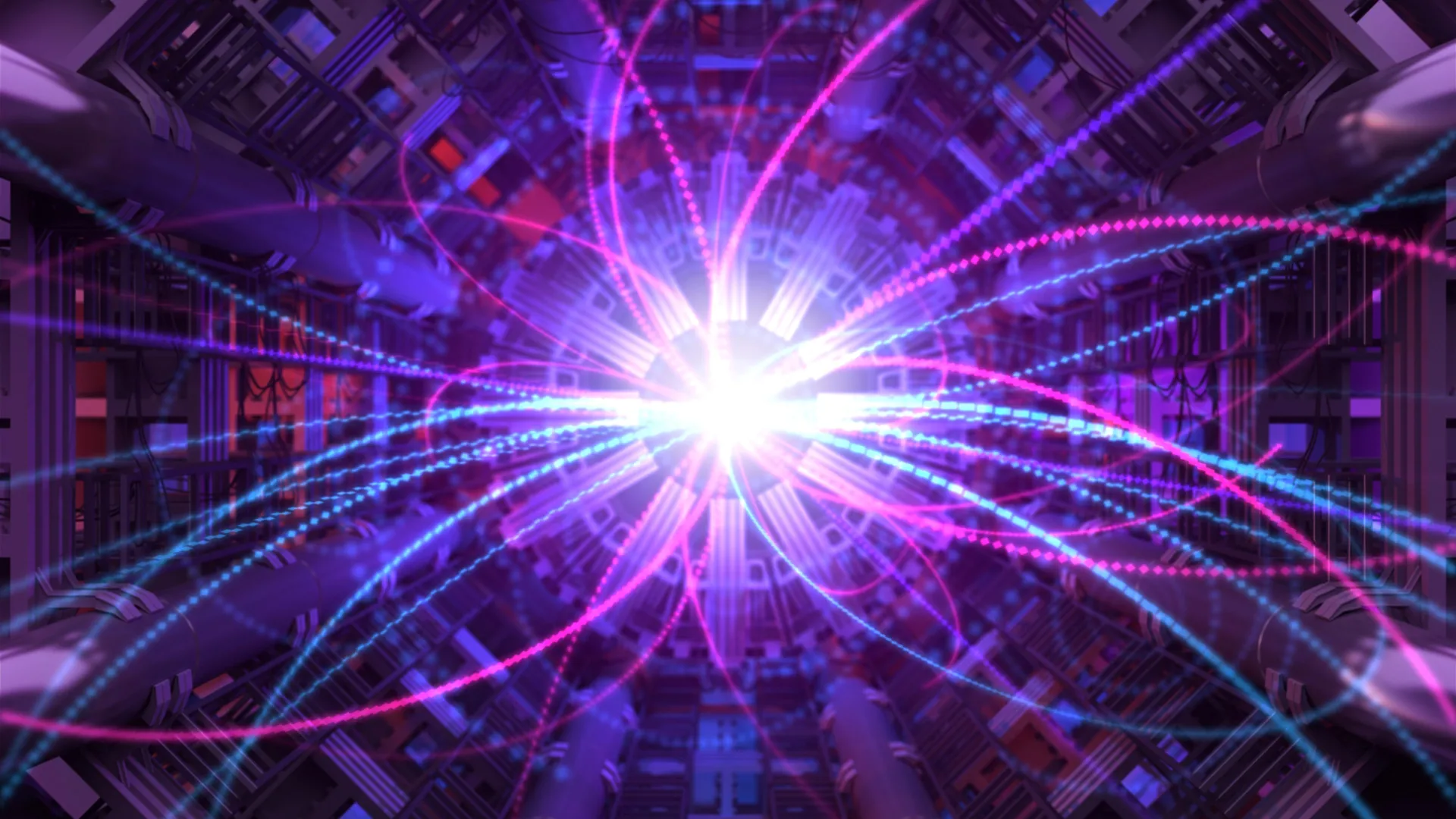
Physicists at the University of California, Santa Barbara (UCSB), working in collaboration with the international Compact Muon Solenoid (CMS) experiment at the European Organization for Nuclear Research (CERN), have completed a groundbreaking search for microscopic quantum black holes. Utilizing advanced machine learning techniques and unprecedented datasets compiled from the Large Hadron Collider (LHC), the research team probed energy scales previously unreachable in laboratory settings. Although the study did not uncover empirical evidence of these elusive spacetime anomalies, the resulting exclusion limits have significantly narrowed the parameters for fundamental physics, restricting viable theoretical models concerning extra spatial dimensions and quantum gravity.
The findings, recently published in the journal Progress in High Energy Physics (PHEP), mark a critical milestone in modern particle physics. By establishing rigorous exclusion boundaries up to approximately 12 Tera-electronvolts (TeV), the UCSB team has systematically restricted the landscape where new physics might operate, providing a vital compass for future experimentation.
Main Facts and Experimental Framework
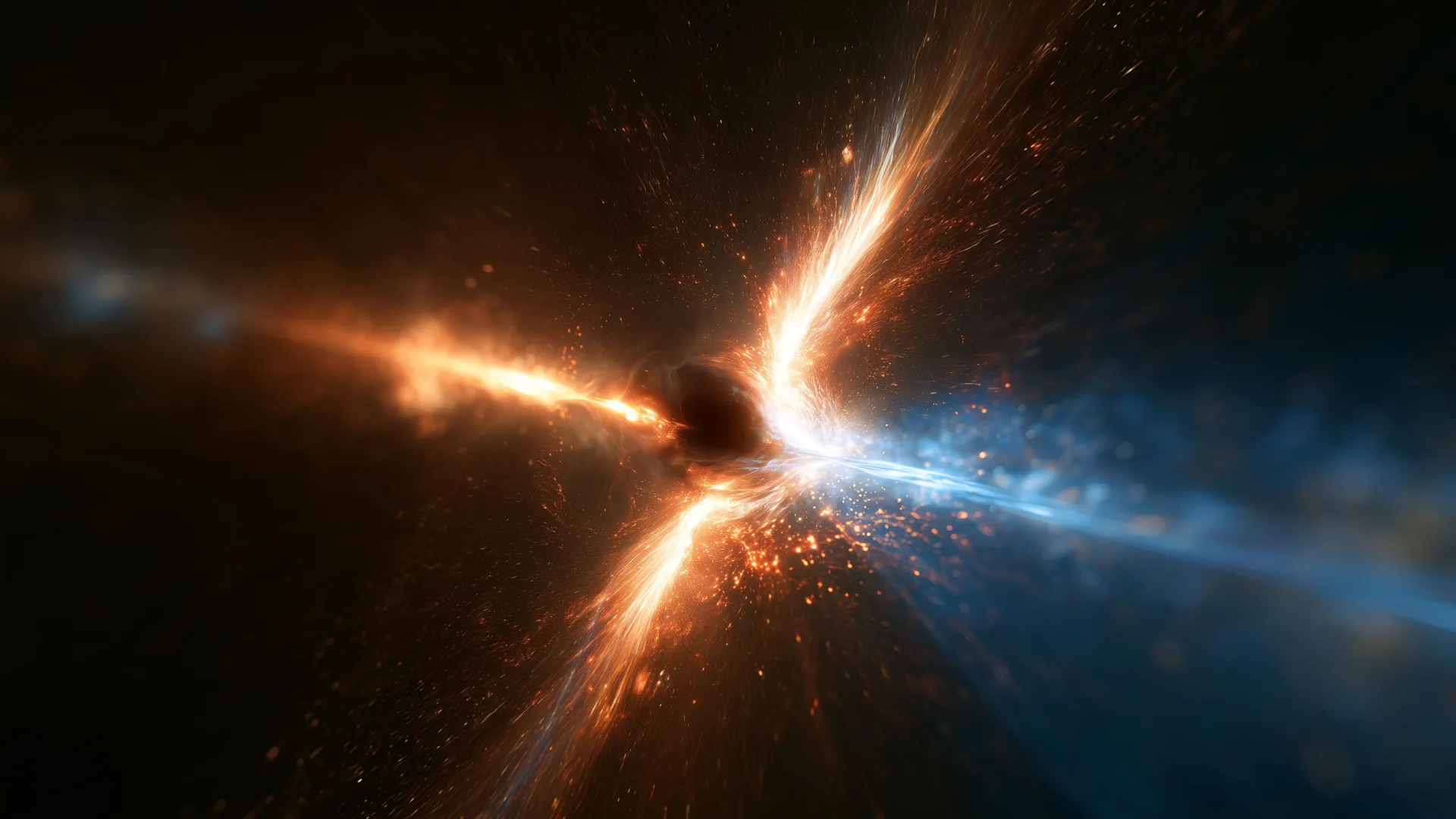
The primary objective of the UCSB research was to determine whether high-energy proton-proton collisions at the LHC could generate microscopic, short-lived quantum black holes. Unlike the massive, astrophysical black holes observed throughout the cosmos—which possess immense gravitational pull capable of consuming entire stars—hypothetical quantum black holes would be subatomic in scale and disintegrate almost instantaneously upon formation.
The existence of such phenomena would serve as a key to addressing the hierarchy problem, one of the most persistent puzzles in theoretical physics. The hierarchy problem questions why gravity is profoundly weaker than the other three fundamental forces of nature: electromagnetism, the strong nuclear force, and the weak nuclear force.
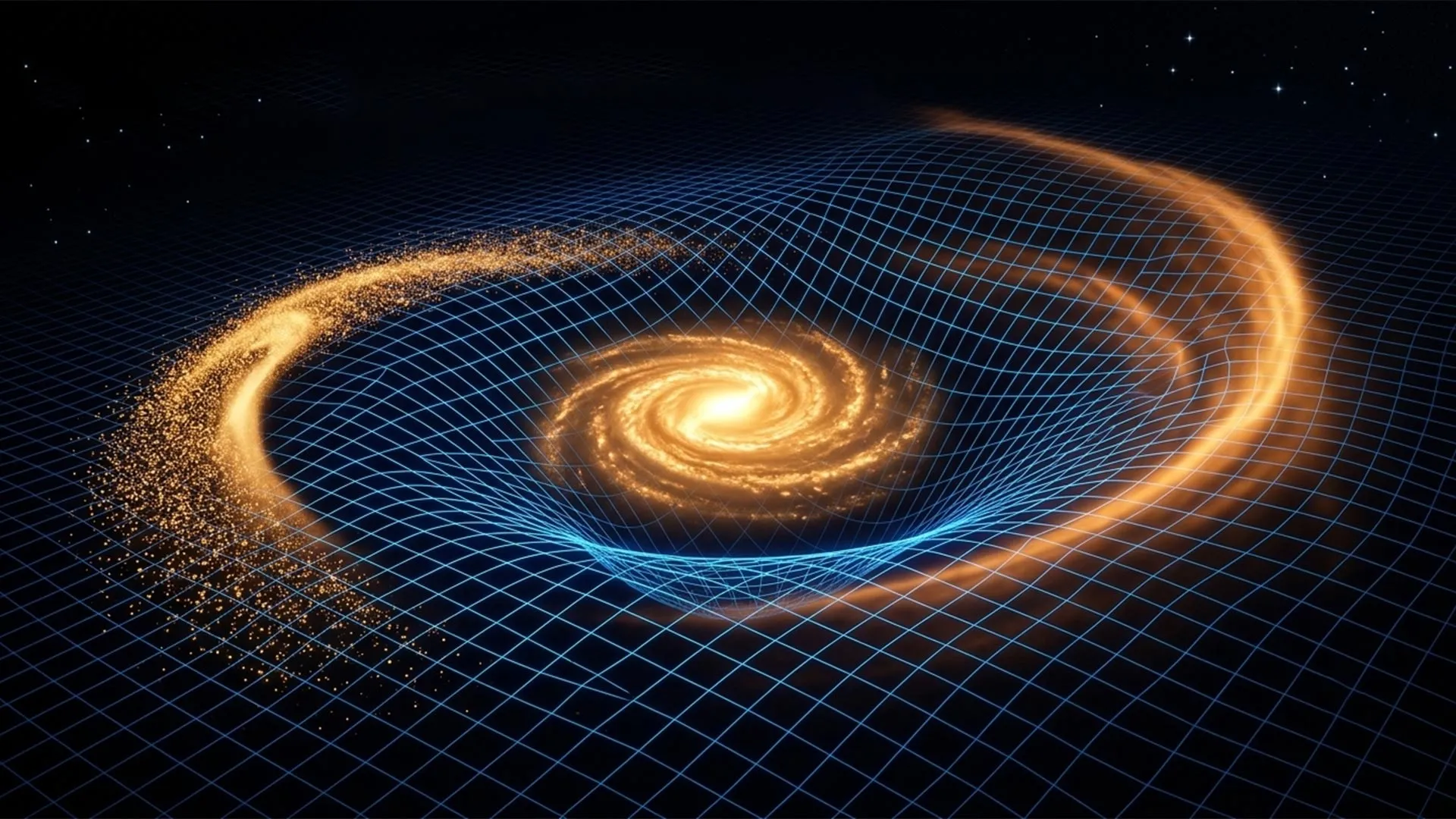
To bridge this immense gap, some theoretical frameworks—most notably string theory—propose the existence of extra spatial dimensions beyond the standard three dimensions of space and one dimension of time. If gravity possesses the ability to propagate or "leak" into these hidden dimensions, its true strength would be vastly underestimated in our everyday reality. Consequently, the fundamental energy scale associated with gravity, known as the Planck scale, could be lowered significantly, bringing it within the operational reach of the particle accelerators like the LHC.
Chronology and Background of the Research
The theoretical foundation for producing microscopic black holes at particle colliders emerged approximately twenty years ago, spearheaded by theorists including UCSB physics professor Steven Giddings. At the time, public apprehension briefly surfaced over the speculative risk that such experiments might generate stable, runaway black holes capable of consuming the Earth. However, rigorous peer-reviewed safety assessments quickly debunked these fears, demonstrating that any quantum black holes produced would instantly evaporate via Hawking radiation. Furthermore, scientists noted that naturally occurring ultra-high-energy cosmic rays constantly bombard Earth’s upper atmosphere at far greater energies without producing hazardous effects.
Despite these reassuring safety margins, detecting the ephemeral decay signatures of quantum black holes remained an immense experimental challenge due to the immense background noise of standard particle collisions.
The analytical phase of the recent UCSB study focused on comprehensive datasets gathered by the CMS detector between 2016 and 2018 during the LHC’s Second Run. This period provided a vastly superior volume of high-energy collision data compared to earlier monitoring campaigns conducted by both the ATLAS and CMS collaborations. By analyzing this wealth of data at higher energy thresholds, the researchers drastically increased their statistical sensitivity to exceptionally rare physical events.
Supporting Data and Methodological Innovation
To sift through trillions of collision events, the UCSB researchers deployed an innovative analytical framework known as "phase-space distance," a mathematical concept developed by UCSB particle theorist Nathaniel Craig and his collaborators. This method was integrated with a supervised machine learning architecture called a Support Vector Machine (SVM).
In high-energy physics, phase space is a multidimensional mathematical construct that maps out variables such as position, momentum, energy, and time for interacting particle systems. By converting the spatial and energetic distances between collision outcomes into a singular SVM score, the researchers could effectively differentiate genuine signal anomalies from routine background noise.
"We developed the idea of the phase space between events, which can be combined with SVM to help the search," noted Craig.
Graduate student researcher Danyi Zhang highlighted the efficacy of the new technique: "We compared phase space distance with the sphericity variable and our conclusion is that phase space distance outperforms sphericity." Sphericity—a traditional metric measuring the multidimensional spread of particle decay debris—was previously the primary tool for identifying the symmetrical disintegration patterns characteristic of quantum black holes. The phase-space distance approach proved notably more precise.
In addition to quantum black holes, the research team applied their analytical models to hunt for sphalerons—unstable theoretical configurations of particle fields that could potentially explain the matter-antimatter asymmetry of the universe. Much like the black hole search, no direct evidence of sphaleron transitions was detected, allowing the team to place strict quantitative limits on their occurrence.
Official Responses and Scientific Implications
Although the study yielded a null result in terms of direct discovery, the physics community regards exclusion limits as essential currency in scientific progress. In empirical research, ruling out specific scenarios provides definitive knowledge regarding the architecture of the natural world.
"It’s not a dead-end," emphasized Danyi Zhang. "The result is an exclusion limit, which is a real, publishable statement: ‘If this thing existed with these properties, we’d have seen it. We didn’t, so we can rule it out here.’ That’s genuine knowledge about how the universe works."
Tamas Vami, a postdoctoral researcher working under the guidance of UCSB physics professor Joe Incandela, underscored the broader ambitions of the project. "Had we found evidence, we could have begun to directly study quantum gravity," Vami explained. "It’s a step toward unifying all of the known fundamental forces, which has been a goal of physicists for more than a century."
The null results have profound implications for multidimensional models. String theory traditionally incorporates ten total dimensions. However, the constraints established by the UCSB study indicate that, within the parameters of the evaluated models, the number of observable extra dimensions accessible at these energy levels cannot exceed two.
"Theories don’t predict one exact answer," Zhang added. "They predict a whole range of places a particle could be hiding. Each search clears out part of that range and says ‘not here,’ and over time the map of where new physics could still be, shrinks." This step-by-step elimination mirrors the historical progression that ultimately led to the historic discovery of the Higgs boson in 2012 after decades of progressive energy exclusions.
Future Outlook and the High-Luminosity LHC
As the physics community grapples with the persistent mystery of the hierarchy problem and the ongoing separation between quantum mechanics and general relativity, researchers are already preparing for the next generation of experimental instruments.
Currently, the Large Hadron Collider is undergoing an extended operational shutdown designed to facilitate comprehensive technological upgrades. When it reemerges as the High-Luminosity Large Hadron Collider (HL-LHC), the facility will deliver vastly amplified datasets and significantly higher collision rates. This upcoming phase will empower experimentalists to probe even finer distance scales—approaching 10^-20 meters—and explore rarer interaction phenomena with unprecedented clarity.
Professor Steven Giddings maintains that empirical data remains the indispensable driver of theoretical breakthroughs. "The best guide is experimental data, and that’s what we’d really like to have," he stated, characterizing quantum gravity as the most profound unresolved dilemma in theoretical physics.
Ultimately, the work led by the UCSB team demonstrates how advanced computational tools, machine learning integration, and rigorous data analysis can stretch existing accelerator technology to its absolute limits. By systematically charting the invisible boundaries of spacetime, these physicists continue to lay the groundwork for the eventual unification of fundamental physics.