Access to safe and reliable drinking water remains one of the most pressing humanitarian and infrastructural challenges of the 21st century. According to recent estimates from the United Nations, approximately 2.2 billion people worldwide currently live without access to safely managed drinking water. As climate change accelerates, prolonged droughts deplete natural reservoirs, and subterranean aquifers suffer from over-extraction, municipalities spanning from the agricultural hubs of California to hyper-arid regions in the Middle East increasingly turn to engineered solutions. Among these, seawater desalination has emerged as a cornerstone technology, capable of transforming the vast, untapped expanses of the world’s oceans into municipal-grade fresh water.
However, conventional desalination methodologies—predominantly reverse osmosis and thermal distillation—are burdened by severe operational limitations. Reverse osmosis requires forcing saline water through specialized, high-pressure synthetic membranes, a process that demands immense electrical energy inputs. Thermal distillation, conversely, relies on boiling seawater to separate moisture from salt through phase change, similarly consuming massive amounts of thermal and electrical power. Beyond their heavy carbon footprints, these traditional industrial facilities generate millions of gallons of a hyper-saline, highly toxic by-product known as brine.
When facilities discharge this chemical-laden brine back into coastal marine ecosystems, the dense fluid sinks to the sea floor, drastically increasing local salinity and depleting dissolved oxygen levels. This phenomenon triggers devastating ecological consequences, suffocating benthic organisms, disrupting delicate marine food webs, and prompting stringent environmental regulatory pushback.
Addressing the Dual Crises of Water Scarcity and Industrial Waste
Seeking a sustainable paradigm shift, a multidisciplinary team of researchers at the University of Rochester’s Institute of Optics has developed a novel solar-thermal desalination technology. Their breakthrough system successfully eliminates the generation of liquid brine, operates entirely on renewable solar energy, and functions without the chemical pre-treatments that plague contemporary facilities. The pioneering research was detailed in a scientific paper published in the peer-reviewed journal Light: Science & Applications.
The project was spearheaded by Dr. Chunlei Guo, a professor of optics and physics and a senior scientist at URochester’s Laboratory for Laser Energetics. Working alongside Senior Scientist Subash Singh, alumnus Ran Wei, and graduate researchers Luheng Tang, Tainshu Xu, and Mingjiang Ma, Guo’s laboratory engineered a system that harnesses advanced materials science to radically rethink how humanity interacts with water and sunlight.
The Physics of Ultrafast Laser-Textured Metals
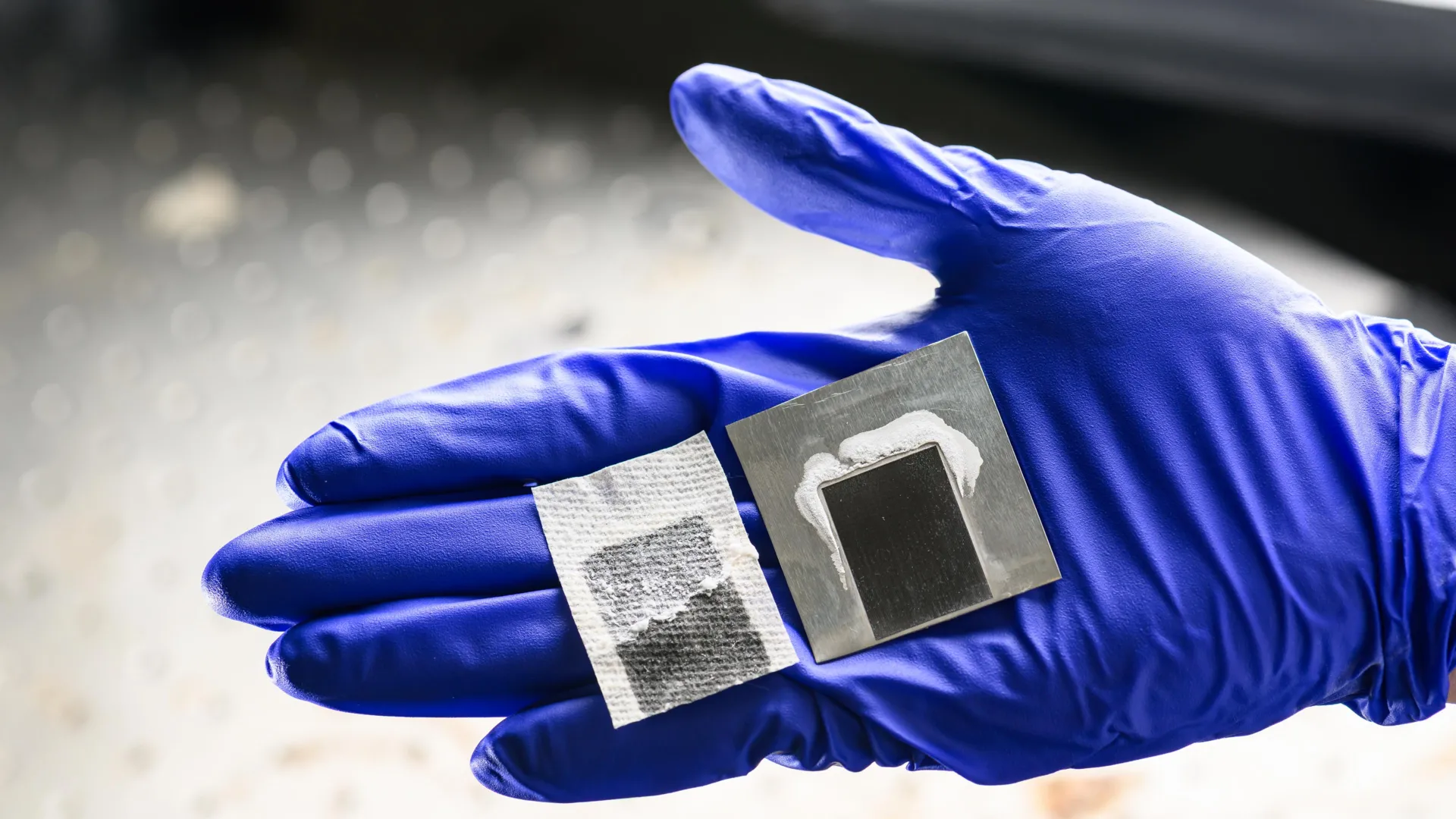
At the core of the URochester innovation are specialized solar panels fabricated from ordinary metal sheets transformed through the application of femtosecond laser pulses. A femtosecond is an unimaginably brief unit of time, representing one quadrillionth of a second ($10^-15$ seconds). By bombarding metal surfaces with ultra-short, highly intense laser pulses, the researchers can manipulate the physical topography of the material on a microscopic scale.
This laser texturing fundamentally alters how the metal interacts with light and fluid dynamics. The treated metallic surface turns a deep, absorbing black, granting it near-total solar absorption capabilities across the visible and infrared spectrums. Simultaneously, the laser treatment imparts superwicking properties to the metal. Rather than forming spherical beads due to surface tension, water molecules spread rapidly and uniformly across the microscopic grooves of the treated surface, creating an ultra-thin fluid film optimized for rapid evaporation.
Engineering Self-Cleaning Surfaces to Defeat Mineral Scaling
The functional mechanics of the solar panel rely on a precise division of labor across its surface topology. Each panel features an active, laser-treated central zone that draws a microscopic film of seawater across its expanse. The dark metal absorbs incoming solar radiation with exceptional efficiency, rapidly heating the thin film and driving swift evaporation.
As the water molecules transition into vapor, they leave behind all dissolved minerals and salts. In conventional desalination setups, this accumulation of salts spells operational disaster. If minerals form a hard, crystalline crust over the evaporation zone, they physically block fluid movement, insulate the heat source, and eventually cause the system to shut down entirely.
To prevent this, Guo’s team engineered the panels to direct mineral accumulation toward untreated peripheral zones known as passive regions. This directional transport overcomes one of the oldest hurdles in desalination technology: the behavior of real seawater.
Laboratory experiments involving artificial seawater—typically formulated from pure water and sodium chloride—have historically deceived researchers. When sodium chloride crystallizes, it forms a loose, porous, grainy structure. Water can easily percolate through these sodium chloride crystals, continuously dissolving trapped salt and simplifying maintenance.
Natural seawater, however, is a complex chemical soup containing suspended organic matter alongside dissolved magnesium, calcium, sulfates, and hundreds of other trace elements. When these compounds evaporate, they form dense, non-porous crystalline scales. This process mirrors the stubborn mineral scale that ruins household showerheads and kettles over time, but magnified exponentially by the high concentrations of marine minerals.
Harnessing the Coffee Ring Effect
To master the unpredictable crystallization behavior of real seawater, the University of Rochester team leveraged a common fluid-dynamic phenomenon known as the coffee ring effect. Famously observed when a spilled droplet of coffee dries and leaves a distinct, dark circular ring of suspended particles at its perimeter, this physical mechanism describes how evaporating droplets transport suspended matter toward their outer boundaries.
By designing precise microscopic grooves into the black metal panels, the researchers harnessed the coffee ring effect to actively push crystallizing salts away from the sun-heated active evaporation zone and toward the passive regions along the panel’s borders.
Rigorous testing using authentic seawater samples harvested directly from the Pacific, Atlantic, and Indian Oceans validated the design. The panels successfully maintained peak evaporation rates without suffering efficiency losses from scaling, continuously depositing dry, solid salt formations into the passive collection troughs.
Transforming Industrial Waste Into Strategic Resources
The architectural elimination of liquid brine represents a monumental leap forward for environmental engineering. Traditional plants produce vast quantities of brine that require expensive deep-ocean outfalls or energy-intensive evaporation ponds. The URochester system, by contrast, extracts nearly 100 percent of dissolved minerals in a solid, dry state.
This paradigm shift converts what was once an ecological liability into a valuable economic resource. The harvested mineral aggregate contains standard sodium chloride suitable for commercial processing, alongside rarer, high-value trace elements that are increasingly critical to the global clean-energy transition.
Chief among these strategic minerals is lithium, the indispensable alkali metal powering the lithium-ion batteries that propel electric vehicles, stabilize electrical grids, and energize consumer electronics. Global demand for lithium has skyrocketed, straining terrestrial mining operations that are frequently criticized for their massive water consumption, heavy chemical use, and carbon footprints.
Pioneering Lithium Extraction from Saline Streams
Recognizing the potential of their foundational technology, Guo and his collaborators expanded their research to target specific mineral recovery. In a companion study published in the Journal of Materials Chemistry A, the research team demonstrated that the superwicking solar panels can be chemically modified to selectively isolate lithium from complex saltwater mixtures.
By embedding hydrogen titanate nanoparticles directly into the microscopic grooves of the laser-treated metal, the panels acquire selective chemical affinity. While the bulk of the salts are directed to the passive regions during evaporation, the hydrogen titanate particles capture lithium ions from the fluid stream.
Testing the modified system on real-world brine samples obtained from the Great Salt Lake, the team successfully recovered approximately 50 percent of the lithium contained within the residual salts.
"Mining lithium from the earth has proven to be very taxing from an energy and environmental standpoint, so pulling lithium directly from saltwater could be a very important future route," Dr. Guo stated. This breakthrough suggests that future desalination plants could function simultaneously as municipal water utilities and mineral refineries, capturing critical supply-chain commodities directly from waste streams.
Chronology, Development, and Institutional Support
The path toward this dual-purpose desalination technology represents years of rigorous interdisciplinary research at the University of Rochester. The foundational laser-texturing techniques developed by Dr. Chunlei Guo’s laboratory trace their origins back to foundational studies in materials optics, where ultrafast lasers were first utilized to create super-hydrophobic and super-hydrophilic metal surfaces.
Over the past several years, the research group shifted its focus toward environmental applications, recognizing that optical absorption and fluid-wicking mechanics could solve thermodynamic bottlenecks in solar distillation. The culmination of these efforts was formally documented in late 2023 and early 2024, leading to the recent publications in Light: Science & Applications and the Journal of Materials Chemistry A.
The advancement of this technology has been underwritten by major competitive research grants from institutions dedicated to global development and scientific innovation. Financial and logistical support for the project was provided by the National Science Foundation, the Bill & Melinda Gates Foundation, and the Worldwide Universities Network, reflecting the technology’s dual potential to alleviate global poverty and combat climate change.
Industry Implications and the Path to Commercialization
While the technology has demonstrated remarkable efficacy in laboratory settings, commercial deployment will require navigating standard hurdles associated with scale-up and industrial engineering. To date, the research team has validated the superwicking desalination approach using proof-of-concept devices of modest proportions.
Transitioning these benchtop prototypes into sprawling industrial arrays capable of supplying municipal water districts requires ongoing collaboration with environmental engineers and private sector manufacturing partners. However, the fundamental design principles—relying on modular, flat-plate solar panels—are inherently scalable. Engineers can theoretically aggregate thousands of individual laser-textured panels into expansive solar farms floating on coastal waters or constructed in arid inland basins.
The implications for global infrastructure are profound. As municipal leaders grapple with escalating water tariffs, stringent environmental mandates regarding brine disposal, and geopolitical vulnerabilities surrounding critical mineral supply chains, technologies that unite fresh water production with resource recovery offer an attractive blueprint for sustainable development.
By mimicking natural phase-change cycles while optimizing surface physics at the microscale, the University of Rochester team has charted a viable course toward closing the loop on water scarcity. If successfully scaled, this solar-powered innovation could simultaneously quench the thirst of a growing global population and strip the toxic sting from industrial desalination.