The Archaeological Context of the Find
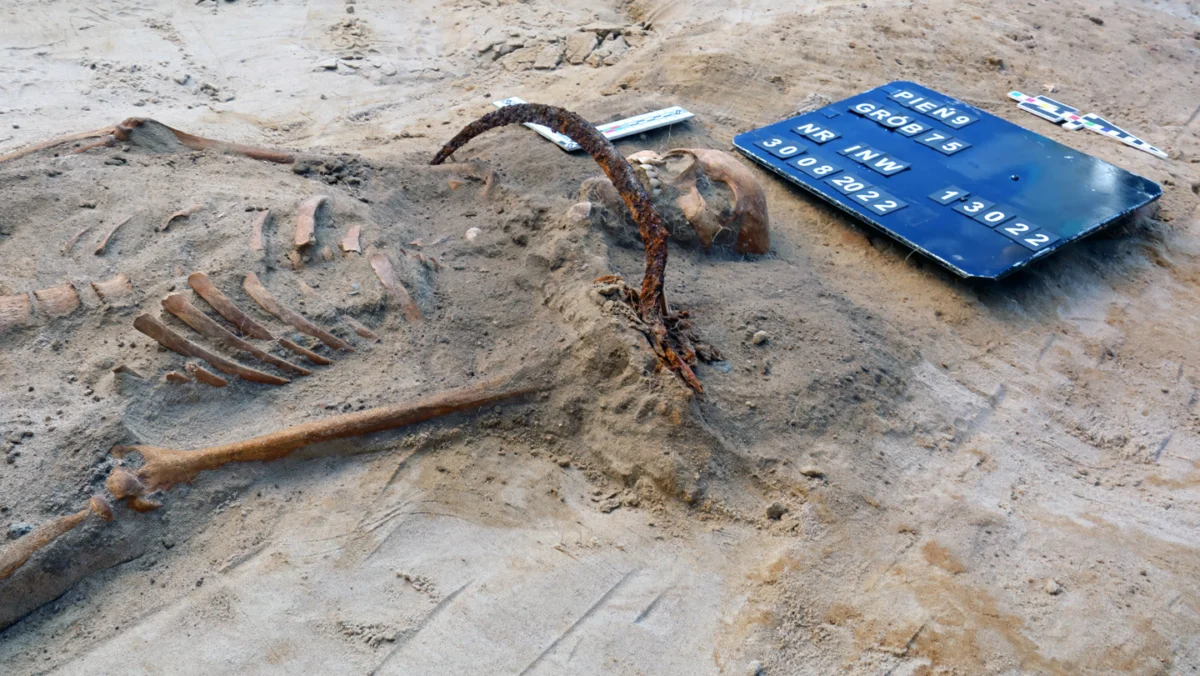
The remains were discovered by a research team led by archaeologists from Nicolaus Copernicus University in Toruń. The site, a cemetery dating back to the post-medieval period, has long been a subject of study for its unusual funerary customs. The girl, estimated to be in her late teens, was laid to rest with a sharp iron sickle positioned directly across her neck. Additionally, a padlock was fastened to the big toe of her left foot.
These items were not accidental inclusions; they were deliberate, ritualized placements. In the folklore of 17th-century Poland, the sickle was believed to act as a preventative measure against reanimation. Should the deceased attempt to rise, the edge of the blade, placed precisely against the throat, was intended to decapitate or inflict a fatal wound, thereby ensuring the individual remained in the grave. The padlock, conversely, represented the closing of a cycle or the permanent locking of the soul within the body, preventing the spirit from wandering or causing harm to the living.
Chronology of Folk Superstition
The 17th century in Poland was a period defined by intense religious fervor, political instability, and the recurring trauma of disease outbreaks. It was also a time when the boundary between the living and the dead was often blurred in the public consciousness.
- Early 1600s: The emergence of anti-vampiric burial practices begins to appear more frequently in the archaeological record in Eastern Europe. These customs were often reserved for individuals who were deemed "different" or who died under suspicious, sudden, or violent circumstances.
- Mid-17th Century: The height of the plague and other epidemic diseases. During these periods, mass mortality led to increased anxiety, and those who died unexpectedly were often viewed with suspicion.
- 1650s – 1690s: The era from which the Pień burial is dated. It reflects a societal shift where local communities took extrajudicial measures to "protect" themselves from potential supernatural threats.
- 2022–2026: The modern archaeological investigation of the site, which has utilized isotopic analysis and osteological studies to understand the demographics and health status of the individuals buried at Pień.
Supporting Data and Scientific Analysis
The scientific investigation of the remains has focused on understanding why this specific individual was targeted for such an elaborate burial. Researchers from the Nicolaus Copernicus University have conducted extensive testing on the bones. Initial assessments suggest that the girl did not suffer from any obvious physical deformities that would have historically marked her as a target for superstition, such as physical abnormalities or severe illness.
However, researchers note that the burial customs at the site are part of a broader "anti-vampiric" tradition. Similar findings in the region have shown that individuals labeled as "undead" were often those who had been victims of trauma, suffered from chronic illnesses like tuberculosis (which causes a pale, wasting appearance), or were simply outsiders to the community. The use of metal objects—particularly iron—in burials is a recurring theme in European folklore, as iron was believed to possess apotropaic qualities, capable of repelling malevolent spirits.
Data from the Journal of Archaeological Science: Reports indicates that such burials were not limited to the marginalized but were a widespread cultural response to the fear of "revenants." In Poland, these burials are distinct because they often involve the precise placement of tools—sickles, scythes, or padlocks—rather than the more brutal forms of desecration found elsewhere in Europe, such as stone-crushing or physical dismemberment.
Expert Perspectives and Official Responses
Professor Dariusz Poliński, the lead archaeologist on the project, has emphasized that the discovery is significant not for the "vampire" narrative itself, but for what it reveals about the psychology of the 17th-century Polish peasantry.
"The rituals associated with these burials are a mirror of the society that performed them," Poliński noted in a recent briefing. "They tell us about the deep-seated anxieties of the era. These were people living in a world where the natural and supernatural were indistinguishable. When someone died, particularly a young person, the community had to reconcile that loss, and if they couldn’t find a medical or natural explanation, they turned to their folklore."
Other experts in the field of medieval and early modern bioarchaeology agree. Dr. Marek Polański, a specialist in European funerary customs, suggests that the padlock on the toe is particularly indicative of the community’s desperation. "It is an attempt to exert control over the uncontrollable," he stated. "The sickle is a tool of harvest; by placing it over the throat, they were metaphorically ‘harvesting’ the death of the individual, ensuring they could not re-emerge to disrupt the harvest of the living."
Broader Impact and Implications
The burial at Pień challenges modern perceptions of history by illustrating that science and superstition often coexisted in the post-medieval period. While the 17th century was a time of burgeoning intellectual growth and the early stirrings of the Enlightenment, this discovery reminds us that the common folk remained deeply tethered to traditional belief systems.
The implications of this study extend to how we interpret death and mourning in the past. Archaeologists are increasingly moving away from the sensationalist "vampire" label, preferring to categorize these as "apotropaic burials"—interments designed to avert evil. This shift in terminology allows for a more nuanced understanding of the social dynamics that led to such practices.
Furthermore, the discovery has sparked a renewed interest in the preservation of the Pień cemetery site. The local government has moved to support further excavation, recognizing that the site provides an invaluable archive of human behavior under extreme psychological pressure. As research continues, the goal is to create a comprehensive digital database of these burials, allowing historians to map the geographic spread of these protective rituals across Poland and the wider Baltic region.
Conclusion
The girl from the 17th century, buried with her sickle and padlock, remains a silent witness to a time when fear was a tangible, heavy weight upon the community. Her story is not one of monstrosity, but one of human vulnerability. By examining these remains through the lens of modern archaeology, we gain not only a better understanding of the past but also a clearer perspective on the enduring human instinct to protect the living from the uncertainties of death. The research currently being conducted in Poland serves as a vital bridge between the historical record and the folklore that shaped the cultural identity of the region for centuries. As we continue to uncover these graves, we do more than just study the dead; we learn about the living who stood over them, gripped by the terror of a return that, in their minds, was all too possible.