Industrial civilization has long grappled with a monumental paradox: the very processes that power modern infrastructure generate staggering volumes of toxic and cumbersome byproducts, yet these same waste streams are saturated with trillions of dollars in critical materials essential for advanced technologies. Across the globe, millions of tons of coal ash, red mud, and mine tailings sit in sprawling landfills, industrial ponds, and settling basins. These deposits are commonly viewed through the lens of environmental liability and high remediation costs. However, a multi-institutional research initiative aims to rewrite this narrative by looking to the natural world for inspiration.
A multidisciplinary team of scientists and engineers spearheaded by Worcester Polytechnic Institute (WPI) has secured a prestigious $3.3 million award from the National Science Foundation (NSF). Granted through the federal agency’s highly competitive Growing Convergence Research program, the funding underwrites a comprehensive, five-year scientific investigation. The core objective is to determine whether biological mechanisms perfected over millions of years by marine organisms and plants can be harnessed to extract high-value minerals and repurpose industrial waste with a fraction of the energy and harsh chemical inputs currently required.
The Convergence of Biology, Geochemistry, and Artificial Intelligence
The five-year initiative is structured in two distinct phases and brings together a diverse consortium of academic institutions. Mingjiang Tao, an associate professor in the WPI Department of Civil, Environmental, and Architectural Engineering, serves as the lead principal investigator directing the overarching project. He is joined by WPI colleagues Carrick Eggleston and Yan Wang as co-principal investigators.
Beyond WPI, the collaborative network spans several major research universities, including George Mason University, the University of California San Diego, the University of Massachusetts Amherst, and the University at Buffalo. This wide-ranging partnership integrates expertise from structural biology, geochemistry, materials science, metallurgical engineering, computational chemistry, and artificial intelligence.
The research framework relies heavily on computational modeling and machine learning to accelerate discovery. By leveraging artificial intelligence, the team hopes to simulate and design specialized biomolecules capable of interacting precisely with silicon-rich industrial residues. These computational tools will allow researchers to rapidly forecast chemical behaviors and identify optimal pathways for mineral separation and material synthesis, bypassing the sluggish trial-and-error approach typical of traditional laboratory science.
The Hidden Wealth of Industrial Byproducts
To understand the urgency of the WPI-led initiative, one must examine the dual challenge posed by silicon-derived materials and industrial refuse. Silicon-based compounds are foundational to contemporary manufacturing, serving as critical components in everything from high-strength concrete, flat-panel glass, and industrial ceramics to advanced semiconductors and silicones. Yet, the conventional production of these materials demands extreme thermal conditions, intensive energy inputs, and aggressive chemical processing.
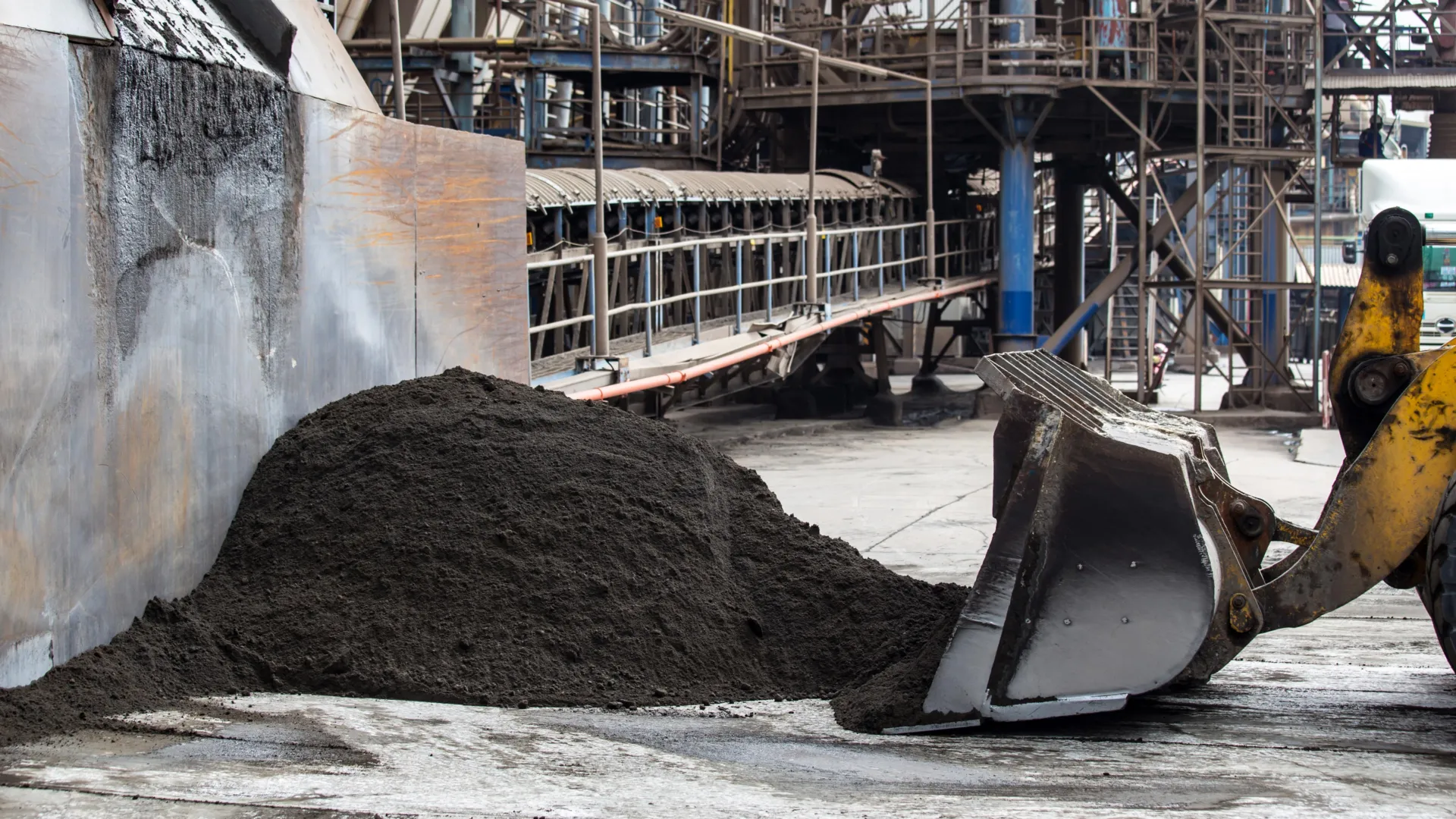
Concurrently, heavy industry generates massive quantities of silicon-rich waste. Coal ash from thermal power plants, red mud from aluminum production, mine tailings from ore extraction, construction and demolition debris, waste glass, and metallurgical slag are produced on a global scale every year. Rather than being recycled, the vast majority of this material is relegated to containment ponds, impoundments, and landfills, where it occupies valuable land and poses long-term ecological risks.
Despite being discarded, these waste streams are rich in valuable elements, including silica, rare earth elements (REEs), and other critical minerals vital to national security, clean-energy infrastructure, and consumer electronics. Industry estimates suggest that U.S. coal ash landfills alone contain roughly 11 million tons of trapped rare earth elements. Based on recent market valuations, this hidden reserve is worth an estimated $8.4 billion—a figure nearly eight times greater than the nation’s entire current base of raw domestic reserves. Unlocking these resources could fundamentally alter global supply chains for critical technology metals.
Mimicking Nature: Diatoms, Sea Sponges, and Plants
To harvest these tightly bound resources without resorting to environmentally destructive mining and smelting techniques, the research team is turning to biomimicry. Nature has long solved the problem of manipulating silica under ambient conditions. Microscopic algae known as diatoms, marine sea sponges, and various terrestrial plants routinely extract dissolved silicon from their environments to construct intricate, highly ordered silica structures. They achieve this using specialized organic molecules and biological scaffolds at ambient temperatures and neutral pH levels.
The WPI-led consortium aims to adapt these biological strategies for industrial applications. By replicating or adapting the mechanisms of biosilicification, the researchers hope to develop low-energy techniques to dissolve and break down the tough silicate matrices found in industrial waste. Breaking down these mineral cages will not only liberate trapped rare earth elements and critical metals but also allow the residual silica to be captured and transformed into marketable, high-grade commercial products.
Dr. Tao emphasizes that the project’s vision extends far beyond simple mineral extraction. "Recovering critical minerals is only part of the opportunity," Tao noted when discussing the initiative. "We want to develop a process that uses as much of each waste stream as possible, separating strategically important elements while converting the remaining material into useful products. That whole-material approach could fundamentally change how industries manage waste and obtain essential resources."
Leadership Roles and Specialized Research Tracks
The division of labor within the research team reflects the multifaceted nature of the challenge. Each co-principal investigator brings a specialized skill set to a distinct phase of the project workflow.
As lead principal investigator, Mingjiang Tao oversees overall project management and coordination while directly managing research into biosilicification and bio-enabled metallurgy. His work centers on isolating the biochemical pathways that organisms use to precipitate and dissolve silica, translating those biological processes into scalable engineering methodologies for harvesting rare earth elements from silicon-heavy industrial waste.
Carrick Eggleston, a professor in the Department of Civil, Environmental, and Architectural Engineering with deep expertise in geochemistry, leads the team’s thermodynamic and kinetic investigations. Eggleston’s group focuses on understanding and optimizing the complex chemical reactions required to break down and rebuild silicate structures. His research examines fundamental reaction pathways and rates associated with silicate dissolution, repolymerization, carbonation, glass formation, and advanced silicone synthesis, ensuring that the bio-inspired methods are chemically sound.
Yan Wang, the William B. Smith Professor of Mechanical and Materials Engineering and a globally recognized pioneer in battery recycling and sustainable manufacturing, leads the development of bioengineered recovery techniques. Wang’s team focuses on scaling up the extraction of rare earth elements and critical minerals, applying his extensive background in closed-loop material recovery to bridge the gap between biological concepts and industrial metallurgy.
Broader Economic, Environmental, and Strategic Implications
If the team successfully validates and scales these bio-inspired technologies, the implications for the global materials sector could be profound. Successfully converting millions of tons of hazardous industrial waste into economically viable commodities would mitigate environmental liabilities for heavy industry while establishing a secondary domestic supply of critical minerals.
This localized supply chain resilience is of paramount strategic importance. Currently, many advanced economies rely heavily on foreign imports for rare earth elements, leaving high-tech manufacturing and defense sectors vulnerable to geopolitical supply disruptions and market volatility. By shifting toward urban mining and industrial waste reprocessing, nations could secure essential raw materials domestically while shrinking the overall environmental footprint of materials production.
Furthermore, the project integrates educational and workforce development objectives. Undergraduate and graduate students at WPI and partner institutions are integrated directly into the multiyear research effort through immersive STEM programs. By exposing students to convergent, interdisciplinary problem-solving, the initiative helps cultivate the next generation of engineers, scientists, and innovators equipped to tackle complex sustainability challenges.
Ultimately, the National Science Foundation-backed initiative seeks to lay the groundwork for a broader bioengineered, silicon-based materials ecosystem. By bridging the traditional silos between biology, data science, materials engineering, and public policy, the project offers a blueprint for a circular economy—one where today’s burdensome industrial waste becomes the foundation for tomorrow’s green technology.