In a landmark achievement that bridges more than a century of quantum physics theory with cutting-edge experimental engineering, researchers at Stanford University have directly observed quantum jumps of sound for the first time. Published in the prestigious journal Science, the breakthrough centers on the real-time tracking of individual phonons—the discrete quanta of acoustic energy—inside a specially designed microscopic mechanical resonator. While similar quantum transitions have long been documented in subatomic particles and light, capturing these discrete energy states in mechanical vibrations opens an unprecedented frontier for acoustic-based quantum technologies, advanced computing architectures, and ultra-sensitive biological sensors.
The research, spearheaded by a team in the Stanford School of Humanities and Sciences, overcomes decades of experimental hurdles. It demonstrates that macroscopic objects and mechanical systems can exhibit distinctly quantized behaviors, paving the way for next-generation devices that harness sound waves with absolute precision.
Background Context: A Century of Quantum Jumps and the Acoustic Frontier
To understand the significance of the Stanford experiment, one must look back at the foundational principles of quantum mechanics. The concept of the "quantum jump"—a sudden, instantaneous transition of a physical system from one discrete energy level to another—has been a cornerstone of quantum theory since the early 1900s. Originally proposed to explain atomic stability and spectral lines, these abrupt shifts challenge classical intuition, which dictates that energy changes should occur smoothly and continuously.
For decades, observing these elusive events directly was deemed nearly impossible due to the fragility of quantum states and the severe limitations of measurement apparatuses. A major turning point occurred in 1986, when physicists successfully demonstrated quantum jumps using trapped atomic ions. More than two decades later, in 2007, researchers achieved a similar milestone with photons, the fundamental particles of light.
However, sound presented a uniquely formidable obstacle. In everyday experience, acoustic energy dissipates gradually. A struck tuning fork or a ringing bell exhibits a smooth, continuous fade in volume until the sound completely dies out. Translating this macroscopic phenomenon to the subatomic or quantum scale required isolating individual phonons—the collective vibrational motion of countless atoms—and creating a system stable enough to register their sudden energy shifts without destroying the fragile state in the process. Led by Amir Safavi-Naeini, associate professor of applied physics at Stanford, the research team successfully bridged this gap, making sound the latest fundamental medium to reveal its underlying quantum nature.
Chronology and Experimental Methodology
The journey toward observing acoustic quantum jumps required years of meticulous material science, cryogenic engineering, and quantum circuit design. The timeline of this research reflects a steady escalation in precision fabrication and measurement techniques.
Phase 1: Designing the Microscopic Resonator
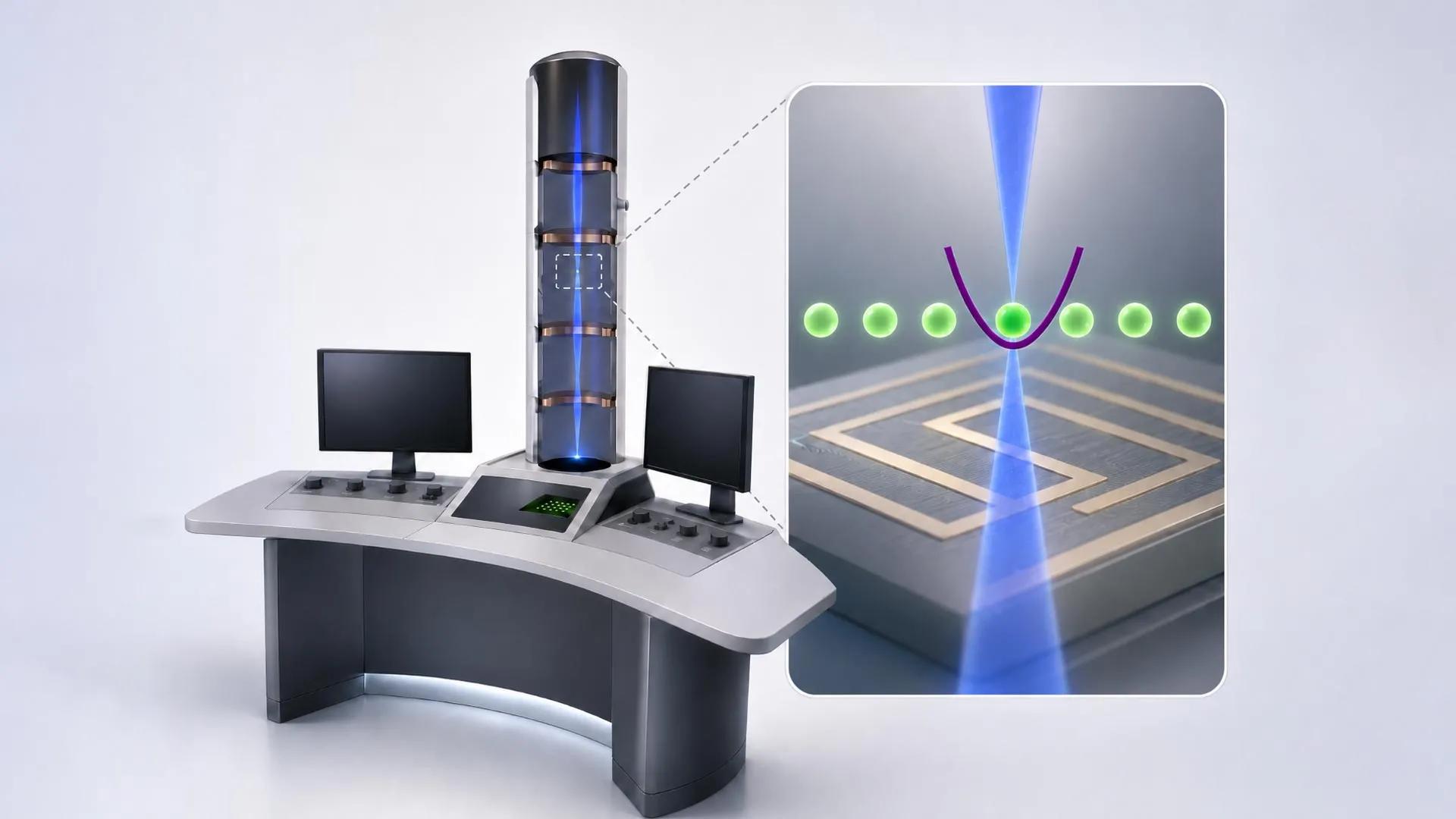
The foundation of the experiment relied on advanced semiconductor chip fabrication techniques. The researchers constructed an extraordinarily tiny mechanical resonator designed to act as a microscopic tuning fork. Crucially, the team engineered the device to possess an exceptionally long ringdown time—the duration it continues to vibrate before its energy fades. While a typical macroscopic tuning fork dampens rapidly, this micro-resonator was engineered to vibrate for up to two milliseconds. In relative terms, if a standard musical tuning fork possessed the same longevity, it would ring continuously for several hours. This extended duration was paramount; it provided the research team with a narrow but sufficient temporal window to execute hundreds of repetitive measurements.
Phase 2: Integrating the Superconducting Qubit
A central challenge in quantum engineering is the "observer effect"—the phenomenon wherein the act of measuring a quantum system inevitably disturbs or destroys its delicate state. To circumvent this, co-first authors Takuma Makihara and Erik Szakiel devised an innovative coupling method. They integrated the mechanical resonator with a superconducting electrical circuit, known as a qubit, which served as a highly sensitive quantum detector.
"We had to continually develop new processes to make this extremely long-lived, vibrating object and then integrate it with the qubit, which is our little electrical detector — without ruining either subsystem," explained Makihara, a recent Stanford doctoral graduate.
Phase 3: Real-Time Tracking and Data Collection
Operating at cryogenic temperatures near absolute zero to minimize thermal noise, the superconducting qubit repeatedly probed the mechanical resonator throughout its two-millisecond vibration cycle. By assessing whether the phonon population resided in an energy state of 1 or 0 during each rapid iteration, the researchers mapped out the trajectory of the system. Rather than seeing a gradual, continuous decay, the data unmistakably revealed sharp, discrete transitions—capturing the exact moment an individual phonon underwent a quantum jump.
Supporting Data and Technical Specifications
The rigor of the Stanford study is underscored by advanced parametric measurements and the sheer volume of high-resolution data gathered during the cryogenic trials.
- Duration of Acoustic Sustainment: The mechanical resonator achieved a vibrational ringdown time of 2 milliseconds, an exceptionally prolonged period for a mechanical oscillator at the quantum level.
- Energy States Tracked: Measurements focused primarily on transitions between the foundational 0 and 1 phonon energy states, proving that vibrational energy is quantized into distinct packets rather than continuous waves.
- Collaborative Infrastructure: The project was supported by cross-institutional infrastructure, drawing on resources from Stanford Q-FARM, the Stanford Bio-X initiative, the SLAC National Accelerator Laboratory, and the Edward L. Ginzton Laboratory.
- Financial and Institutional Backing: The research received substantial grants and resources from federal and private entities, including Amazon Web Services Inc. (where key researchers serve as Amazon Scholars), the Air Force Office of Scientific Research, the Office of Naval Research, the National Science Foundation, the Natural Sciences and Engineering Research Council of Canada, and the U.S. Department of Defense.
Official Responses and Expert Analysis
The publication of these findings has drawn widespread praise from the global physics community, signaling a shift in how scientists approach acoustic engineering and quantum information systems.
"What this study shows will allow us to move forward with developing new quantum technologies with sound," stated Amir Safavi-Naeini, the principal investigator of the study. "We have seen that vibrating objects can exhibit quantum behavior, which is the prerequisite for many of the operations needed by quantum computing and sensing."
The implications of the work extend deeply into the theoretical framework of quantum mechanics, validating decades-old predictions regarding macroscopic quantum states. By proving that mechanical vibrations can be manipulated and monitored at the single-phonon level, the Stanford team has opened a new subfield of quantum acoustics.
Broader Impact and Future Implications
While the experiment was conducted in a highly controlled laboratory environment, the long-term technological implications span multiple industries, ranging from fault-tolerant computing to cellular biology and commercial electronics.
Quantum Error Correction
One of the most pressing bottlenecks in the development of practical quantum computers is decoherence—the vulnerability of qubits to environmental noise, which leads to computational errors before complex calculations can be completed. In many advanced quantum architectures, sudden quantum jumps serve as immediate indicators that an error has occurred within the system. Because tracking these jumps has historically been difficult in mechanical systems, the ability to monitor phonon transitions provides engineers with a robust new mechanism for real-time quantum error detection and correction.
Ultra-Sensitive Biological and Physical Sensing
The marriage of microscopic mechanical resonators and superconducting qubits creates an extraordinarily sensitive measurement platform. Safavi-Naeini’s group is already collaborating with a team led by physicist Michael Roukes at the California Institute of Technology (Caltech). The objective of this partnership is to investigate whether this acoustic-quantum platform can be scaled to detect and identify individual protein molecules inside living cells, which could revolutionize medical diagnostics and molecular biology.
Evolution of Commercial Electronics
Beyond specialized quantum computing hardware, the research holds transformative potential for everyday consumer devices. Sound waves are fundamental to the operation of modern smartphones, radar systems, wireless communications, and signal-processing filters.
"This shows we can have incredibly fine-tuned control of sound, which might mean that devices that use sound as a fundamental technology can get much better," noted Erik Szakiel, a doctoral student in Safavi-Naeini’s lab and co-first author of the study.
As researchers continue to refine the integration of mechanical resonators with superconducting circuits, the boundary between abstract quantum theory and practical acoustic engineering continues to dissolve. The Stanford study not only marks a historic milestone in fundamental physics but also establishes a firm foundation for the next generation of sound-based quantum and classical technologies.