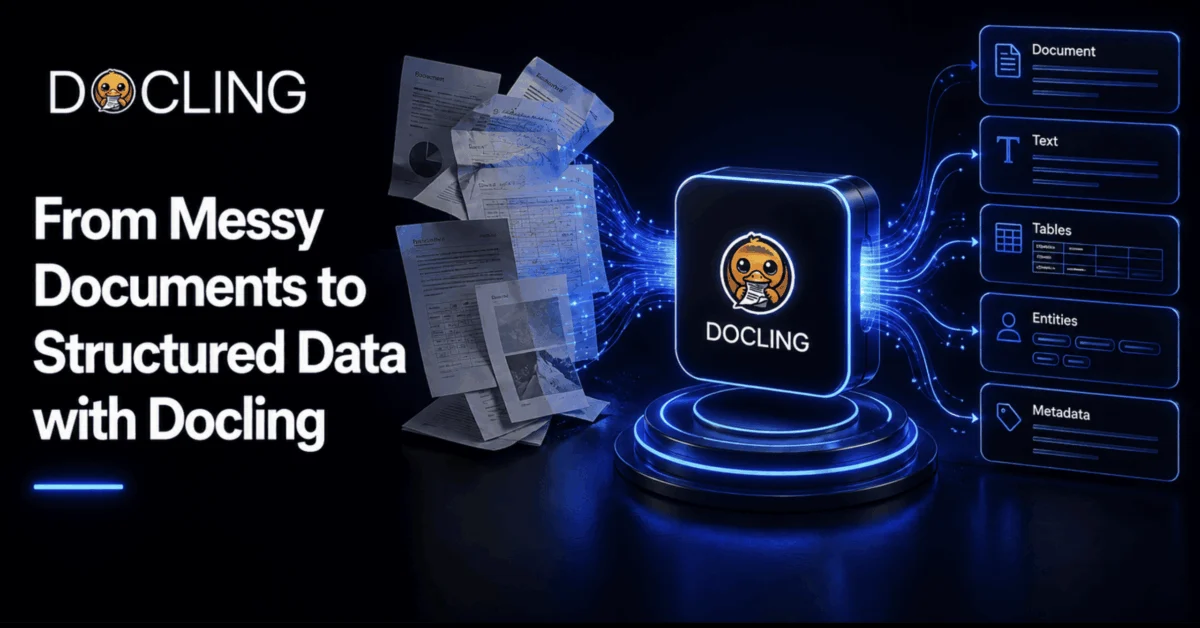
In the modern enterprise, vast amounts of critical business data remain trapped in unstructured formats. Whether it is a multi-page PDF report buried on a corporate shared drive, a scanned multi-column academic paper, or a complex PowerPoint deck, extracting actionable insights often requires tedious manual copy-pasting. Traditional parsing tools frequently fail to preserve structural integrity, causing tables to collapse into unreadable strings and rendering automated data processing nearly impossible. To solve this persistent operational bottleneck, developers and data engineers are increasingly turning to advanced open-source parsing frameworks designed to convert messy, unstructured artifacts into reliable, machine-readable schemas.
Background Context and the Structural PDF Crisis
The challenge of document parsing stems from the fundamental architecture of standard file formats like PDFs. Unlike database records or XML files, a standard PDF does not inherently recognize concepts such as headings, paragraphs, or tabular cell boundaries. Instead, it merely positions text at specific coordinate points on a canvas. Consequently, basic text extraction algorithms process information strictly from left to right and top to bottom.
When applied to complex layouts—such as two-column research papers or financial tables—these rudimentary parsers often scramble content, merging unrelated sentences and stripping away critical cell borders. Scanned documents introduce an additional layer of complexity, requiring sophisticated optical character recognition (OCR) engines to interpret pixel arrays. Furthermore, recurring headers, footers, footnotes, and embedded figures frequently contaminate the primary body text, introducing significant noise into downstream pipelines. Addressing these obstacles requires more than simple text scraping; it demands intelligent layout analysis and semantic relationship mapping.
The Rise of Docling: Origins and Governance
To bridge the gap between unstructured documents and programmatic utility, researchers at IBM Research Zurich developed Docling, an open-source toolkit engineered specifically for comprehensive document conversion. Initially conceived within the AI for Knowledge team, the project has since transitioned to neutral governance under the LF AI & Data Foundation, operating under the permissive MIT license.
The software has experienced rapid adoption within the global developer community. Its official GitHub repository has accumulated over 64,000 stars and approximately 4,600 forks, positioning it as a leading solution for document intelligence. Unlike many commercial offerings that rely strictly on marketing claims, Docling’s architecture and performance benchmarks are supported by detailed technical publications, providing enterprises with the transparency required for production-grade deployments.
Comprehensive Capabilities of Modern Document Parsing
Docling’s functional scope extends far beyond basic text extraction, encompassing a wide array of import formats, structural extractions, and export options designed to fit seamlessly into modern data pipelines.
| Functional Category | Supported Formats and Extraction Features |
|---|---|
| Import Formats | PDF, DOCX, PPTX, Markdown, HTML, AsciiDoc, WebVTT, XLSX, CSV, images (PNG, JPEG, TIFF, BMP, WEBP), and audio files (MP3, WAV). |
| Export Formats | JSON, Doctags, Markdown, HTML, and plain text. |
| Extracted Elements | Page images and numbers, headers, footers, paragraphs, list items, code blocks, mathematical formulas, reading order, pre-chunked segments, table structures, cell boundaries, and picture classifications with accompanying captions. |
A key differentiator of this toolkit is its local-first execution model. By default, core models execute locally on the host machine, eliminating the necessity for external API keys or continuous internet connectivity. This architectural choice is particularly advantageous for organizations handling sensitive information—such as legal contracts, medical records, and proprietary financial reports—where data privacy and regulatory compliance preclude sending documents to third-party cloud services.
Technical Implementation: From Installation to Structured Extraction
Deploying Docling for basic conversions requires minimal configuration. The package can be installed via standard Python package management:
pip install doclingFor programmatic workflows, developers utilize the Python API to ingest documents, automatically routing them through format-specific conversion pipelines that handle layout analysis, reading order determination, and table structure recognition:
from docling.document_converter import DocumentConverter

source = "https://arxiv.org/pdf/2408.09869"
converter = DocumentConverter()
result = converter.convert(source)
doc = result.document

print(doc.export_to_markdown())
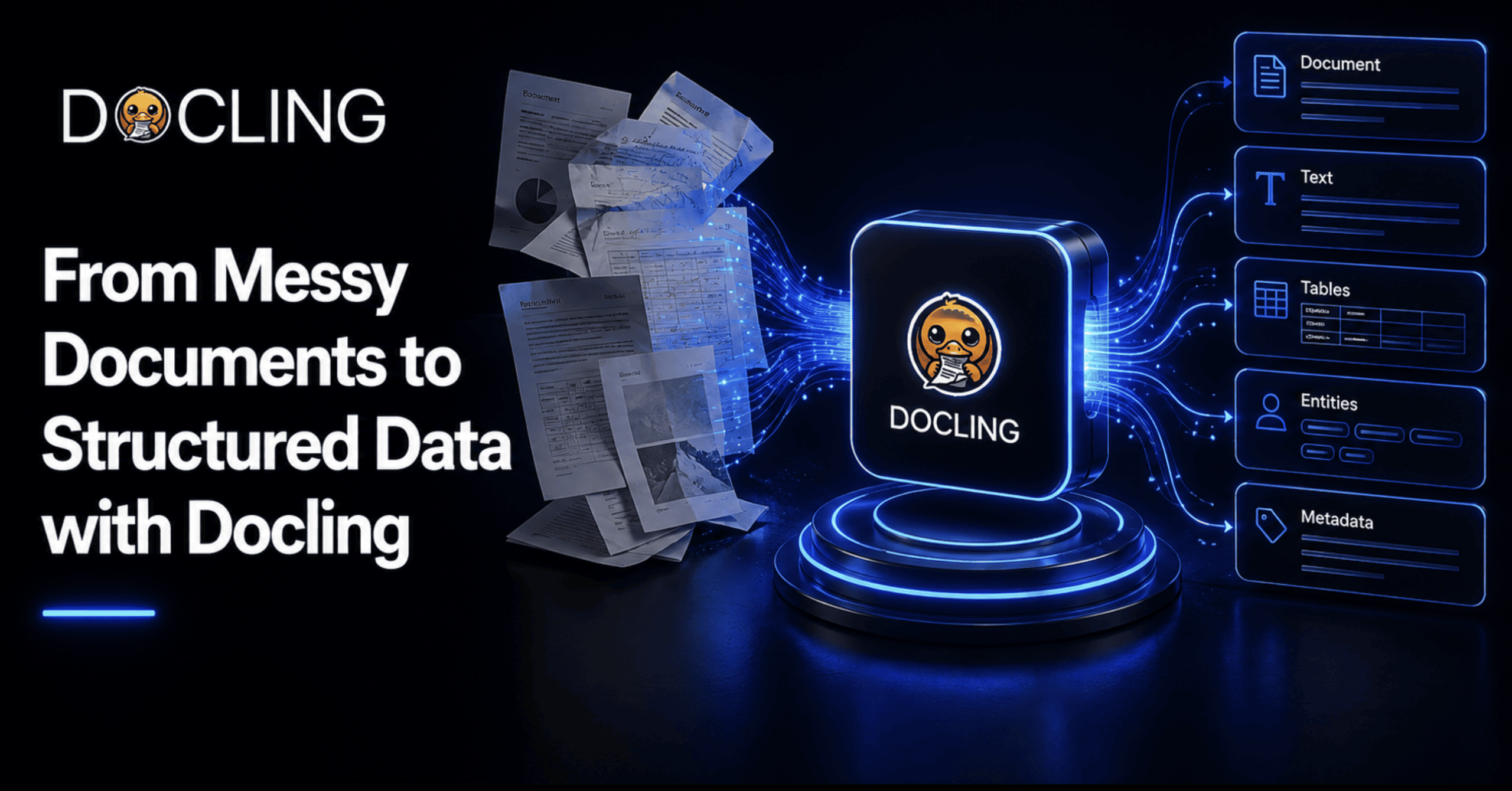
Behind this interface, the DocumentConverter inspects the input file type and deploys the appropriate backend—routing PDFs to layout analysis engines and images to OCR pipelines. The resulting DoclingDocument object unifies all content into a standardized hierarchical representation. This structure separates content items—such as texts, tables, pictures, and key-value pairs—from document topology, utilizing a root body tree to maintain reading order and contextual parent-child relationships between headings and subordinate paragraphs.
Advanced Workflows: OCR Integration and Hybrid Chunking
In enterprise environments dealing with scanned invoices or legacy paperwork, enabling OCR and advanced table reconstruction is essential. Developers can configure custom pipeline options to ensure multi-level headers and complex cell structures are accurately interpreted rather than flattened into text blocks:
from docling.document_converter import DocumentConverter, PdfFormatOption
from docling.datamodel.pipeline_options import PdfPipelineOptions
from docling.datamodel.base_models import InputFormat

pipeline_options = PdfPipelineOptions()
pipeline_options.do_ocr = True
pipeline_options.do_table_structure = True

converter = DocumentConverter(
    format_options=
        InputFormat.PDF: PdfFormatOption(pipeline_options=pipeline_options)

)

doc = converter.convert("scanned_invoice.pdf").document
print(doc.export_to_markdown())
For Retrieval-Augmented Generation (RAG) applications, document chunking is a critical step. Naive character-count splitters frequently disrupt semantic meaning by dividing sentences or separating table headers from their corresponding data rows. Docling addresses this via its HybridChunker, which leverages the document’s underlying structural tree to perform intelligent, tokenizer-aware segmentation. This mechanism ensures that fragments retain necessary contextual metadata, such as section headings, significantly improving the precision of vector embeddings and subsequent information retrieval.
Schema-Based Extraction and Enterprise Integration
Beyond general conversion, modern data pipelines often require structured, validated data fields rather than generalized text exports. Docling facilitates schema-based extraction by integrating with Pydantic, allowing developers to define strict data models for unstructured inputs:
from docling.datamodel.base_models import InputFormat
from docling.document_extractor import DocumentExtractor
from pydantic import BaseModel, Field
from typing import Optional

extractor = DocumentExtractor(allowed_formats=[InputFormat.IMAGE, InputFormat.PDF])

class Invoice(BaseModel):
    bill_no: str = Field(examples=["A123", "5414"])
    total: float = Field(default=10, examples=[20])
    tax_id: Optional[str] = Field(default=None, examples=["1234567890"])

result = extractor.extract(
    source="invoice_scan.jpg",
    template=Invoice,
)

print(result.pages[0].extracted_data)
This capability extends to nested schemas, allowing complex entity relationships to be mapped directly into strongly typed Python objects.
To support broader software ecosystems, Docling provides native integrations with major orchestration frameworks including LangChain, LlamaIndex, and Haystack, allowing it to function as a drop-in document loader. For scaled enterprise environments, teams can deploy Docling Serve to expose the engine via a self-hosted REST API, or leverage managed software-as-a-service offerings such as IBM’s integration with watsonx.
Broader Industry Implications and Future Outlook
The proliferation of intelligent document processing tools marks a significant shift in how organizations manage unstructured information. By automating the transition from raw, variable-layout files to structured, validated data models, open-source initiatives are reducing reliance on manual data entry and custom-built regex parsers.
However, ongoing development remains necessary. Current roadmap items from the project maintain active focus areas on automated metadata extraction—such as title, author, and reference identification—alongside specialized scientific parsing capabilities like molecular structure recognition. Furthermore, as organizations scale their processing volumes, hardware considerations such as GPU acceleration and memory allocation remain vital for maintaining optimal throughput. Ultimately, frameworks that successfully bridge the gap between human-readable documents and programmatic execution are poised to become foundational components of modern enterprise data architectures.