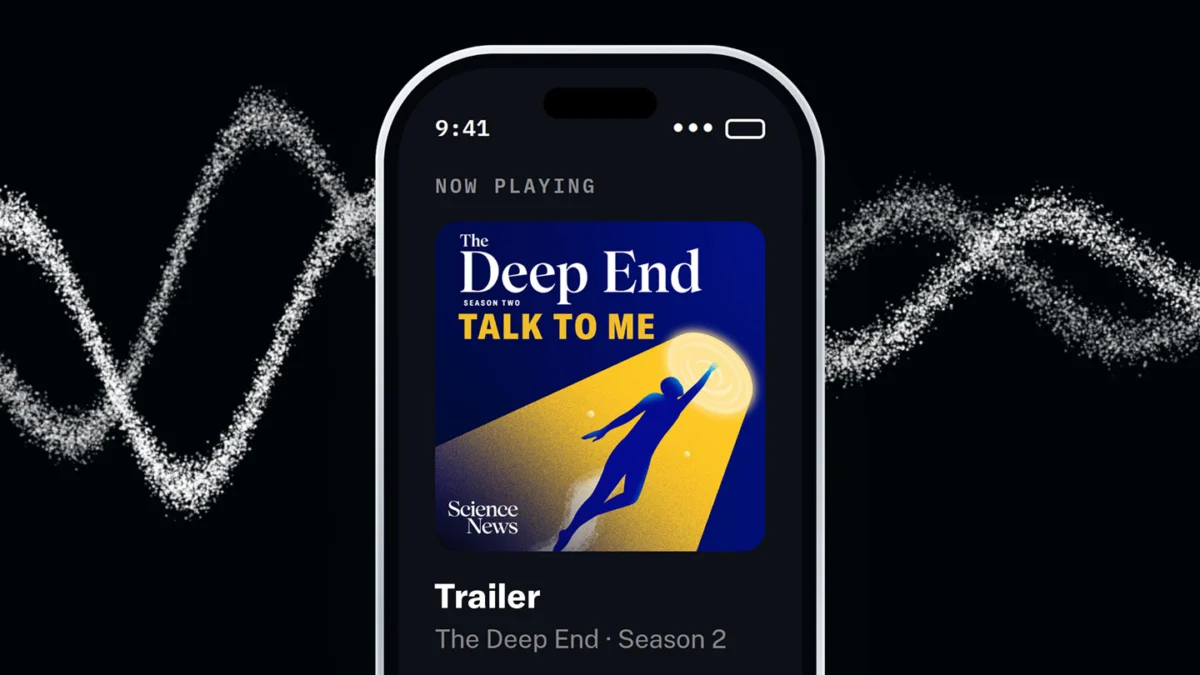
The human voice serves as the primary conduit for social connection, personal identity, and emotional expression. It is a biological instrument capable of conveying nuance, affection, and authority with a single inflection. However, when illness, injury, or neurological conditions rob individuals of this ability, the impact is often profound, isolating, and life-altering. A new season of the Science News podcast, The Deep End, titled Talk to Me, launches a six-episode investigative series examining how cutting-edge neuroscience and artificial intelligence are revolutionizing the landscape of vocal restoration. By documenting the journeys of individuals utilizing brain-computer interfaces and AI-driven speech synthesis, the series poses fundamental questions about the future of human communication and the essential nature of the voice.
The Biological and Psychological Significance of the Human Voice
The human voice is not merely a mechanism for data transmission; it is an extension of the self. Research in phonetics and psychology consistently demonstrates that vocal characteristics—pitch, timbre, cadence, and prosody—provide critical information about a speaker’s identity and emotional state. When a person loses their voice, they often report a loss of autonomy and a diminished ability to maintain interpersonal bonds.
From an evolutionary perspective, the ability to vocalize allowed early humans to signal danger, coordinate complex activities, and build social cohesion. In modern clinical settings, speech-language pathologists observe that the loss of vocal agency can lead to increased rates of depression and social withdrawal. The technology featured in Talk to Me aims to mitigate these effects by bridging the gap between intention and articulation, effectively restoring the "chorus" of human expression that defines the human experience.
A Chronology of Vocal Restoration Technology
The quest to restore the human voice has evolved from rudimentary mechanical devices to sophisticated neural implants. The timeline of this field represents a convergence of several scientific disciplines:
- 1970s–1980s: Early efforts focused on assistive communication devices, such as text-to-speech machines that relied on manual input. While revolutionary, these devices were often slow, robotic, and lacked the expressive quality of natural human speech.
- 1990s–2000s: The advent of digital signal processing allowed for more fluid speech synthesis. During this period, researchers began exploring how to store and reconstruct vocal patterns using large datasets of recorded human speech.
- 2010s: The emergence of high-resolution neuroimaging and advancements in machine learning enabled researchers to map the neural pathways associated with speech production. This paved the way for brain-computer interfaces (BCIs) capable of interpreting motor cortex signals.
- 2020s–Present: We have entered the era of generative AI and invasive neural implants. Current technologies, as highlighted in the podcast, allow for real-time speech reconstruction from brain activity and high-fidelity vocal cloning, which can capture the unique "vocal fingerprint" of an individual before they lose their ability to speak.
Technological Breakthroughs: BCIs and AI Cloning
The podcast highlights two primary technological approaches to restoring speech: brain-computer interfaces (BCIs) and AI-driven synthetic voice cloning.
In the case of participants like Casey Harrell, BCIs represent the frontier of medical engineering. These implants record electrical signals directly from the brain’s motor cortex, which are then processed by algorithms to translate intended movements into words. This technology is designed for patients suffering from conditions like Amyotrophic Lateral Sclerosis (ALS) or severe spinal cord injuries. The implications are significant: by bypassing the damaged vocal tract, patients can communicate their thoughts with a fluidity that was previously impossible.
Parallel to this, AI voice cloning—used by individuals like comedian Jules Rodriguez—offers a different solution. By training a machine learning model on a person’s existing voice recordings, developers can create a synthetic replica. This clone can then be controlled via text-to-speech software, allowing the user to maintain their unique vocal identity even if their biological voice has been compromised. The technical accuracy of these models has improved exponentially, with modern systems capable of mimicking subtle emotional cues and idiosyncratic speech patterns.
Clinical and Ethical Implications
The rapid advancement of these technologies brings forth a series of critical ethical considerations. Experts in neuroethics argue that while the restoration of speech is a major medical victory, it necessitates rigorous oversight.
- Data Privacy and Ownership: When a voice is cloned, who owns the resulting audio? As AI models become more capable of generating speech that sounds indistinguishable from a real person, the potential for misuse, such as deepfake audio, increases.
- Psychological Integration: How does an individual psychologically adapt to a "synthetic" version of their own identity? For those using voice clones, the experience is described as a form of "reappearance," yet it challenges our traditional understanding of biological continuity.
- Accessibility and Equity: These technologies are currently expensive and highly specialized. A significant challenge for the scientific community is ensuring that these life-changing advancements are accessible to a broader range of patients, not just those in high-resource clinical settings.
Broader Impact on Modern Communication
The narratives shared in The Deep End suggest that the "story of the human voice" is undergoing a permanent shift. We are moving toward a future where vocal loss may no longer be a permanent barrier to communication. As these technologies become more integrated into daily life, they will likely influence how we define personhood.
Furthermore, the integration of these systems into society may change our relationship with technology itself. As seen with the use of AI voices in public performance and even personal legacy planning—such as individuals creating AI versions of their voices to "speak" at their own funerals—the boundary between the organic and the synthetic continues to blur.
Conclusion and Future Outlook
The launch of The Deep End: Talk to Me serves as a crucial milestone in public science communication. By grounding technical advancements in the lived experiences of those directly affected, the series provides a human-centric view of neuro-engineering.
Looking forward, the focus of the research community remains on increasing the speed and naturalness of these interfaces. The goal is to move from laboratory settings into the home, making speech restoration a routine aspect of rehabilitative medicine. As scientists continue to decipher the complex relationship between the brain, the body, and the voice, the progress documented in this podcast offers a glimpse into a future where the ability to "talk" is no longer fragile, but a durable and recoverable aspect of human life.
For those interested in the ongoing developments of this research, the podcast provides an essential entry point into the current state of neuro-technology, highlighting both the remarkable scientific achievements and the enduring importance of the human voice in our collective identity. The series invites listeners to consider not just how we speak, but what it means to be heard.