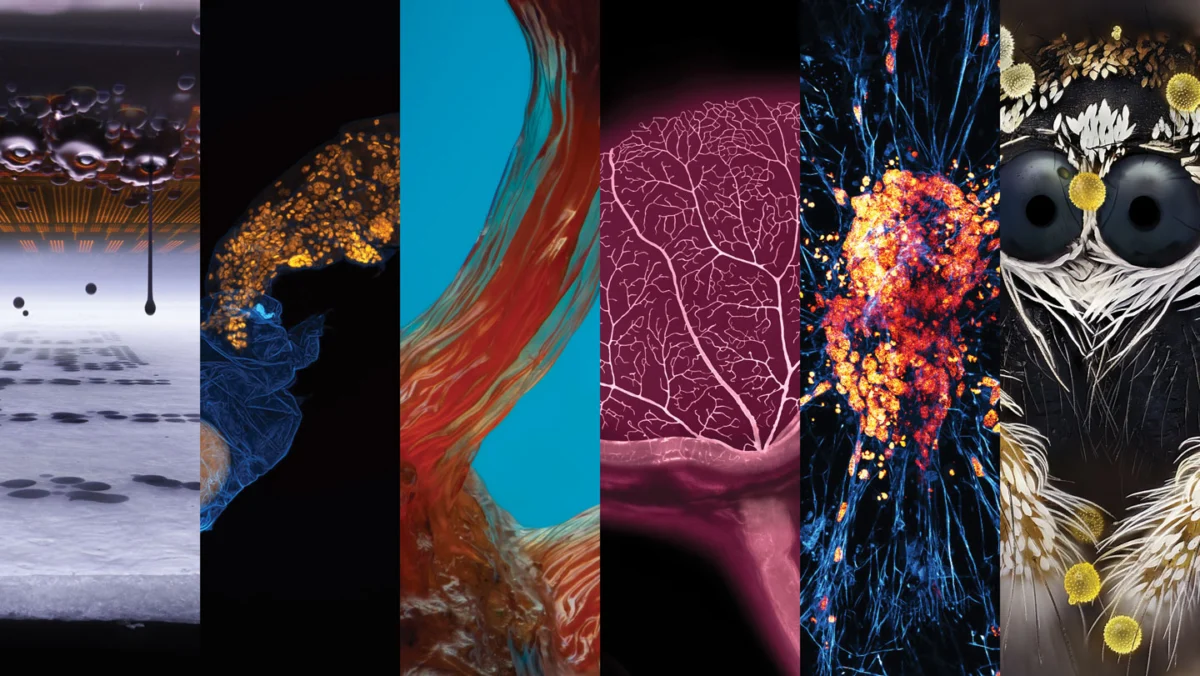
Science News, a venerable institution in the realm of scientific communication, has been a cornerstone of accurate and accessible information for over a century. Founded in 1921, its enduring mission to empower individuals to critically evaluate the latest advancements in science, medicine, and technology remains as vital today as it was at its inception. Published by the Society for Science, a nonprofit 501(c)(3) membership organization committed to public engagement in scientific research and education, Science News has consistently provided a beacon of clarity in an increasingly complex world. Its longevity and unwavering dedication to its core principles underscore its significant contribution to fostering scientific literacy and informed public discourse.
The genesis of Science News can be traced back to a burgeoning need for a dedicated platform that could distill complex scientific findings into understandable narratives for a broader audience. In the early 20th century, scientific discovery was accelerating at an unprecedented pace, yet the pathways for the public to access and comprehend this progress were often limited to specialized journals or fragmented news reports. Recognizing this gap, the founders envisioned an independent, nonprofit entity that would serve as a bridge between the scientific community and the general public. This commitment to independence ensured that the reporting would remain objective and free from commercial or political pressures, prioritizing factual accuracy above all else.
A Century of Scientific Storytelling: Evolution and Impact
Over its 100-year history, Science News has navigated numerous technological revolutions, scientific paradigm shifts, and societal transformations, consistently adapting its approach to remain at the forefront of science journalism. From reporting on the early days of quantum mechanics and the discovery of antibiotics to covering the intricacies of gene editing, the exploration of exoplanets, and the unfolding narrative of global pandemics, Science News has provided a continuous chronicle of human ingenuity and scientific endeavor.
The publication’s commitment to accuracy is reflected in its rigorous editorial standards. Each article undergoes a meticulous review process, ensuring that scientific concepts are explained with precision and nuance. This dedication has earned Science News a reputation for trustworthiness among both scientists and the general public. Furthermore, its nonprofit status, coupled with its affiliation with the Society for Science, reinforces its public service mission. The Society for Science itself plays a crucial role in nurturing future generations of scientists and science communicators through initiatives such as the Regeneron Science Talent Search and the Regeneron International Science and Engineering Fair, further solidifying Science News’s integral position within the broader landscape of science engagement.
The Pillars of Science News: Accuracy, Accessibility, and Independence
The core tenets that have guided Science News since its founding—accuracy, accessibility, and independence—continue to define its editorial philosophy.
Accuracy as the Bedrock of Trust
In an era where misinformation can spread rapidly, Science News’s unwavering commitment to factual reporting is more critical than ever. The publication employs a team of experienced science journalists and editors who possess a deep understanding of scientific principles. They work diligently to verify information, consult with leading experts, and present research findings in a way that is both scientifically sound and readily comprehensible. This meticulous approach ensures that readers can rely on Science News for accurate and trustworthy information, empowering them to make informed decisions about their health, their environment, and the future of society.
Bridging the Gap: Making Science Accessible
Science is often perceived as an arcane subject, accessible only to those with specialized training. Science News actively works to demystify science by translating complex jargon into clear, engaging language. The use of illustrative graphics, analogies, and compelling narratives helps readers grasp intricate concepts without sacrificing scientific integrity. This commitment to accessibility is not merely about simplification; it is about fostering a genuine understanding and appreciation for the scientific process and its profound impact on our lives. Whether it’s explaining the latest breakthrough in artificial intelligence or detailing the mechanisms of climate change, Science News strives to make science relevant and understandable to everyone.
Independence: A Shield Against Bias
As an independent, nonprofit news source, Science News operates without the influence of corporate sponsors or political agendas. This independence is crucial for maintaining objectivity and ensuring that reporting is driven by the pursuit of truth, not by external pressures. The Society for Science, as its parent organization, provides a framework that upholds this independence, allowing Science News to focus on delivering unbiased coverage of scientific developments. This commitment to impartiality is a hallmark of its long-standing credibility and a vital component of its mission to empower public understanding.
Supporting Data and Chronological Context: A Legacy of Reporting
To fully appreciate the impact and evolution of Science News, examining its historical reporting alongside supporting data and contextual events is illuminating.
Early Decades (1920s-1940s): Laying the Foundation
- 1921: Science News is founded, marking the beginning of a sustained effort to communicate scientific progress to the public. Early reports likely focused on emerging fields such as relativity, quantum physics, and the burgeoning understanding of genetics.
- 1920s: The discovery of the expanding universe by Edwin Hubble begins to reshape our understanding of cosmology. Science News would have played a role in disseminating these groundbreaking observations.
- 1930s: Significant advancements in medicine, including the development of sulfa drugs and the isolation of insulin, would have been covered, offering hope and practical applications of scientific research.
- World War II: While maintaining its focus on civilian science, Science News would have reported on the broader scientific and technological mobilization during the war, albeit with a careful consideration of sensitive information.
Mid-Century Advancements (1950s-1970s): The Space Age and Molecular Biology
- 1950s: The dawn of the Space Age, marked by the launch of Sputnik and the subsequent U.S. space program, captured the public imagination. Science News would have provided accessible explanations of orbital mechanics, rocket propulsion, and the scientific goals of space exploration. The discovery of the DNA double helix in 1953, a pivotal moment in molecular biology, would have been a significant topic of reporting, laying the groundwork for the genetic revolution.
- 1960s: The Apollo missions and the moon landing were watershed moments, with Science News offering detailed coverage of the scientific experiments conducted and the technological innovations that made them possible. The growing awareness of environmental issues, spurred by Rachel Carson’s Silent Spring (1962), would have also found a platform for discussion.
- 1970s: Advances in computing and the early stages of the internet began to emerge. Science News would have started to explore the implications of these nascent technologies. The ongoing development of medical imaging techniques like CT scans also offered new avenues for reporting.
The Information Age and Beyond (1980s-Present): Genomics, Climate, and Digital Transformation
- 1980s: The Human Genome Project, launched in 1990, marked a monumental undertaking in genetics. Science News would have provided ongoing updates on its progress, explaining the significance of gene sequencing and the potential for understanding and treating genetic diseases. The rise of personal computers and the internet began to transform how information was accessed and shared.
- 1990s: The development of the World Wide Web dramatically changed the media landscape. Science News adapted by establishing its online presence, expanding its reach and offering interactive features. Breakthroughs in areas like cloning (Dolly the sheep in 1996) generated significant public interest and ethical debate, which Science News would have covered extensively.
- 2000s: The mapping of the human genome was completed, opening new frontiers in personalized medicine and genetic research. Climate change emerged as a more urgent global concern, with Science News providing in-depth reporting on the scientific consensus, the evidence, and potential solutions. The rapid evolution of artificial intelligence began to be a prominent theme.
- 2010s: The explosion of big data, advancements in machine learning, and the discovery of gravitational waves (first detected in 2015) represented major scientific milestones. Science News continued to translate these complex discoveries for a broad audience. The COVID-19 pandemic, beginning in late 2019, demanded immediate and ongoing scientific reporting, a challenge Science News met with extensive coverage of virology, epidemiology, vaccine development, and public health measures.
- 2020s: The focus on mRNA vaccine technology, the ongoing exploration of Mars with rovers like Perseverance, and rapid advancements in AI continue to be central themes. Science News remains a vital source for understanding these rapidly evolving fields.
Official Responses and Community Engagement
The Society for Science, as the publisher of Science News, plays a crucial role in fostering a broader ecosystem of science engagement. Its initiatives, such as the Regeneron Science Talent Search, directly support young aspiring scientists, many of whom may become future readers and contributors to Science News. The organization’s commitment to public outreach ensures that the vital work of scientists is not confined to academic circles but is shared with the public in an accessible and engaging manner.
Statements from leaders within the Society for Science have consistently emphasized the importance of scientific literacy for a functioning democracy and a healthy society. They have highlighted the need for trusted sources of information that can help individuals navigate complex scientific issues, from public health crises to environmental challenges. The Society’s annual reports and public statements often underscore the growing demand for accurate science communication and the critical role that Science News plays in meeting that demand.
Broader Impact and Future Implications
The enduring legacy of Science News is its consistent ability to demystify science and technology, making it accessible and relevant to a global audience. By providing accurate, independent, and engaging reporting, Science News empowers individuals to:
- Make Informed Decisions: Whether it’s understanding the science behind a new medical treatment, evaluating the risks and benefits of emerging technologies, or forming opinions on environmental policy, a scientifically literate populace is better equipped to make sound decisions.
- Foster Critical Thinking: By presenting scientific evidence and the process of scientific inquiry, Science News encourages critical thinking and a healthy skepticism towards unsubstantiated claims.
- Inspire Future Generations: Through its compelling narratives and celebration of scientific discovery, Science News undoubtedly inspires young people to pursue careers in science, technology, engineering, and mathematics (STEM).
- Promote Public Discourse: A shared understanding of scientific issues, facilitated by publications like Science News, is essential for productive public discourse and informed policy-making.
Looking ahead, the challenges for science journalism are significant. The accelerating pace of discovery, the proliferation of misinformation, and the evolving media landscape demand continuous adaptation and innovation. However, the foundational principles that have guided Science News for over a century—accuracy, accessibility, and independence—remain as relevant and crucial as ever. As science continues to shape our world in profound ways, the role of an independent, nonprofit source like Science News in bridging the gap between the laboratory and the public will undoubtedly remain indispensable. Its mission to empower people to evaluate the news and the world around them is not just a historical endeavor; it is a vital ongoing contribution to a well-informed and engaged society.