Two science journalists, molecular biology reporter Tina Hesman Saey and climate and earth science writer Carolyn Gramling, ventured into a Washington D.C. movie theater, braving the aftermath of a significant snowstorm to experience the cinematic adaptation of Andy Weir’s bestselling novel, Project Hail Mary. The film centers on Ryland Grace, a middle school science teacher portrayed by Ryan Gosling, who awakens aboard a spaceship light-years from Earth with amnesia. The sole survivor of a crew of three, Grace’s fragmented memories gradually reveal a desperate, one-way mission: to save his home planet from a devastating existential threat.
The Astrophage Menace: A Stellar Extinction Event
The primary antagonist in Project Hail Mary is the astrophage, a fictional microorganism theorized to be consuming the sun and other stars within a cluster, causing a significant dimming of their luminosity. This phenomenon, according to the film’s narrative, will plunge Earth into a devastating ice age within 30 years, with a projected temperature drop of 10 to 15 degrees Celsius. The mission’s objective is to understand why the star Tau Ceti, at the heart of this infected stellar cluster, remains unaffected and to transmit a solution back to Earth. Grace’s solitary quest is unexpectedly joined by Rocky, an alien from a planet facing the same astrophage threat, leading to an unlikely interspecies collaboration.
Examining the Science of Stellar Dimming and Ice Ages
The premise of astrophages diminishing the sun’s output immediately raises scientific questions regarding the mechanics of Earth’s climate and historical ice ages. While the film posits a 10% solar luminosity reduction leading to an ice age, scientific understanding of past glacial periods offers a more nuanced perspective.
"Past ice ages are more related to other natural forces, including variations in Earth’s tilt and the shape of its orbit," explains Gramling. "Sometimes Earth is farther from the sun, or not tilted toward it as much in summertime, and so the planet’s average temperature is colder. During the last glacial maximum 20,000 years ago, Earth was maybe 10 degrees Celsius colder than now. The sun was still putting out the same amount of radiation, but less sunlight reached Earth’s surface."
This distinction is crucial: past ice ages were not primarily driven by a decrease in the sun’s intrinsic energy output but by Earth’s orbital mechanics and axial tilt, which altered the amount of solar radiation reaching the planet’s surface. A direct 10% decrease in solar luminosity, as depicted in the film, would undoubtedly lead to a significant cooling effect. However, the immediate climate response would also depend on atmospheric composition.
"Billions of years ago, the sun was maybe 25 percent as dim as it is now," Gramling adds, referencing the "faint young sun paradox." "But there’s evidence that Earth wasn’t as cold as people thought it would be under those conditions. There was liquid water on the surface. And that could be because there was a high concentration of greenhouse gases in the atmosphere. So it’s hard to know how much colder Earth would have been just from a dimmer sun, because we don’t know the other possible mitigating conditions."
The rapid timeline of the astrophage threat, leading to a 10% solar dimming in just three decades, stands in stark contrast to the sun’s natural evolutionary processes. The sun’s luminosity has increased at a rate of approximately 10% every billion years. The film’s accelerated timeline is a common narrative device in science fiction to heighten dramatic tension.
The Biological Enigma of Astrophages: Resilience and Adaptation
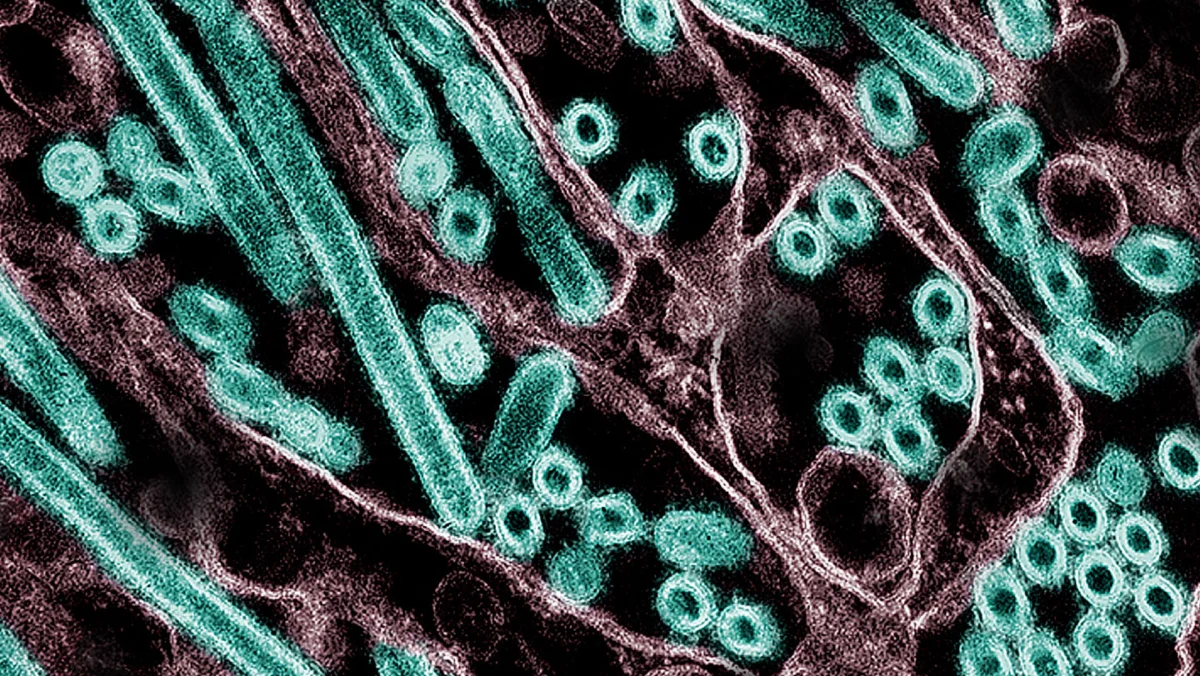
The astrophages themselves are inspired by terrestrial organisms like algae and mold, as revealed by author Andy Weir. The fictional microbes are depicted as absorbing solar energy for propulsion and requiring a carbon dioxide-rich atmosphere, such as that of Venus, for reproduction. Their ability to travel between stars is envisioned as a spore-like dispersal mechanism.
The critical question arises: can life, particularly microbial life, survive and thrive in the extreme conditions of interstellar space, the surface of a star, and the highly hostile environments of planets like Venus?
"Maybe," suggests Saey. "Many Earth organisms can survive in space, usually in some inert state. Moss spores survived in the vacuum of space for nine months. And tardigrades can basically turn to glass and survive just about anything, including outer space." However, Saey clarifies that these terrestrial examples represent survival in a state of suspended animation, not active life. The astrophages, in contrast, are shown to be actively living and propelling themselves.
The astrophages’ purported ability to endure the sun’s surface temperatures, Venus’s scorching atmospheric conditions (reaching 467 degrees Celsius, hot enough to melt lead), the vacuum of space, and intense radiation presents a significant biological challenge.
"There are some single-celled organisms, especially archaea and bacteria, that can live in extreme hot or extreme cold, crushing pressure, high radiation, salt, acid – pretty much any nasty condition you can think of," Saey elaborates. "One type of bacteria can live in temperatures as low as –100° C. And there is an archaeon that can grow at 122° C – above the boiling point of water. Of course, that is nowhere near as hot as the surface of the sun or even Venus."
The astrophages’ hypothetical capacity to exist in both extreme heat and cold, coupled with survival in a vacuum and Venus’s atmospheric pressure and radiation bombardment, pushes the boundaries of known biology. Saey quotes Weir, who emphasizes the potential of single-celled organisms: "Like 99.999 percent of the awesomeness that is life can be found in a single-celled organism. The rest of it is just cells cooperating." This sentiment underscores the novel’s exploration of extreme biological adaptability.
Xenonite: The Fictional Material Driving the Plot
A key plot device in Project Hail Mary is xenonite, a material that has been labeled "technobabble" by some critics, drawing parallels to fictional materials like Avatar‘s unobtainium or Marvel’s vibranium. Xenonite is presented as a solid form of xenon, a noble gas, which in its elemental state is highly unreactive and gaseous at standard temperatures and pressures.
"To make a rock, atoms bond together in a 3-D structure. But noble gases don’t like to share electrons or get tied down into crystals. I don’t know how you’d keep it from escaping," Gramling points out the fundamental chemical challenge.
The film implies that xenonite can be manipulated into complex structures and tools, a capability that seems to defy the known properties of xenon. Scientists have indeed managed to crystallize xenon, but this requires extreme conditions: cooling to below -111.79° C or subjecting it to pressures of approximately 140 gigapascals. The latter pressure is comparable to that found at the boundary of Earth’s mantle and core.
"The cold is a problem, because Rocky’s planet is very hot," notes Saey, referencing the extreme thermal environment of Rocky’s homeworld. However, Rocky’s planet does possess a high atmospheric pressure, 29 times that of Earth, as stated by Weir. This high pressure could potentially facilitate the creation of metallic xenon under certain conditions.
"Maybe Rocky’s people have come up with a way to create these extreme conditions in a controlled portable diamond anvil cell," Saey speculates, referencing a laboratory device used to generate high pressures. Weir’s intention was to imbue his alien character with superior abilities, including expertise in materials science, complex mathematical reasoning, and perfect memory, to counterbalance human limitations and drive the narrative.
Broader Implications and Scientific Engagement
The success of Project Hail Mary, both as a book and a film, highlights a growing public interest in scientifically grounded speculative fiction. Films and novels that meticulously incorporate scientific principles, even when extrapolating them for dramatic effect, can serve as powerful tools for science education and engagement. The dialogue between Saey and Gramling, delving into the plausibility of the film’s scientific concepts, exemplifies this phenomenon.
The narrative of interspecies cooperation to avert a shared cosmic threat also resonates in an era marked by global environmental challenges. While the astrophage threat is fictional, the underlying message of collaboration and ingenuity in the face of existential crises is a potent one. The film’s ability to balance thrilling action with intellectual curiosity about scientific possibilities, as noted by both journalists, underscores its appeal to a broad audience.
"It was so fun going to the movie with you and nerding out about it. I really did enjoy the movie," Saey concludes. Gramling echoes this sentiment, stating, "I did too. I loved it. I loved Ryan Gosling. And despite what it sounds like, it wasn’t like I was unable to suspend my disbelief! I enjoyed everything. It’s just that for me, it’s more fun to think about these things than annoying or aggravating." This suggests that for scientifically literate viewers, the exploration of scientific underpinnings, even those that are speculative, enhances the overall enjoyment of the narrative rather than detracting from it. The film, therefore, not only entertains but also sparks a dialogue about the possibilities and limitations of science, inspiring viewers to ponder the universe and humanity’s place within it.