

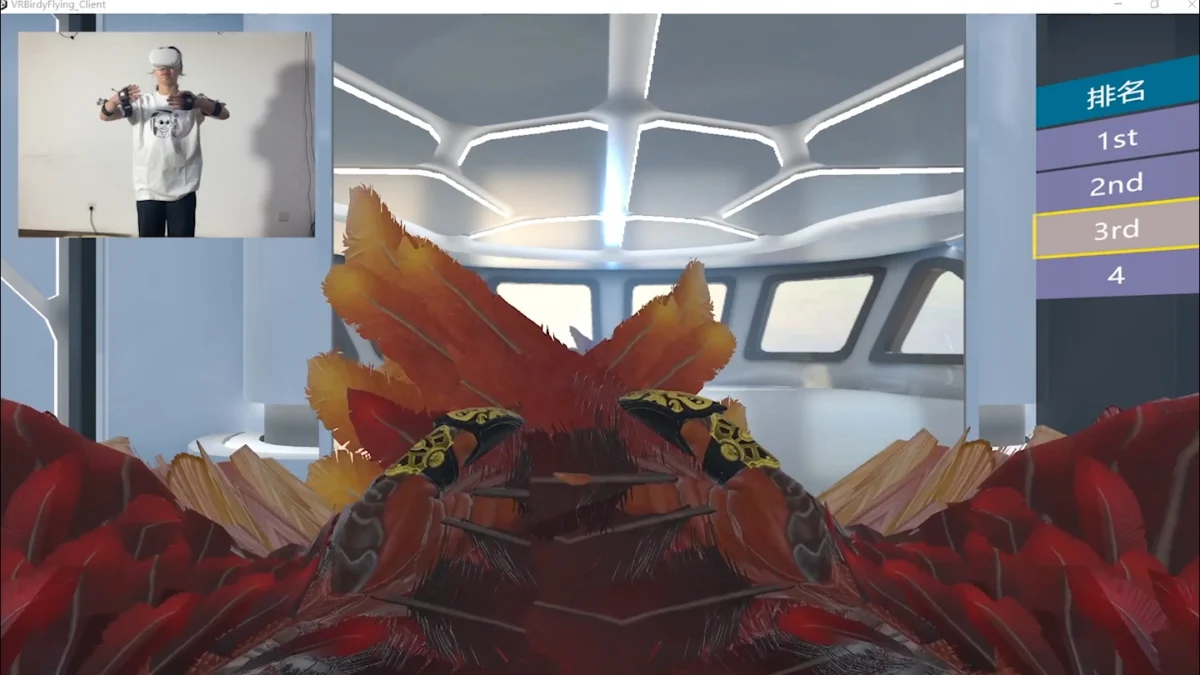
A groundbreaking study has revealed that the human brain can adapt to perceive and control virtual wings as if they were natural extensions of the body, a phenomenon that blurs the lines between biological limbs and artificial appendages. Researchers from Peking University and Beijing Normal University conducted an immersive virtual reality (VR) experiment where participants were tasked with flying using a pair of digital wings. The findings suggest a remarkable neural plasticity, indicating that with dedicated training, our brains can integrate novel sensory and motor experiences into our sense of self.
The experiment, detailed in a recent publication, involved a cohort of volunteers who underwent a rigorous flight training regimen within a sophisticated VR environment. Over a period of several weeks, these individuals were instructed to control a pair of virtual wings attached to their avatars. Their physical movements, captured by advanced motion-tracking technology, were translated into the digital realm, allowing them to navigate a simulated sky. The study’s lead neuroscientist and coauthor, Yiyang Cai, demonstrated the system’s interactive nature, where her physical gestures directly corresponded to the real-time visual feedback experienced within the VR headset. This intricate feedback loop was crucial for the participants to develop a sense of embodiment with their virtual wings.
This research draws parallels to the fantastical scenarios depicted in popular culture, such as Warren Worthington III, the X-Men character who develops magnificent wings. While fictional, such narratives tap into a primal human desire for flight and the augmentation of our physical capabilities. The scientific exploration of this concept, however, moves beyond fantasy and delves into the fundamental mechanisms of brain function and adaptation. By studying how the brain responds to controlling artificial limbs, scientists are gaining invaluable insights into neuroplasticity, sensory integration, and the very nature of self-perception.
The Genesis of the Experiment: Exploring Embodiment
The genesis of this study lies in the burgeoning field of virtual reality and its potential to reshape human-computer interaction and even our understanding of the human body. As VR technology becomes more sophisticated, offering increasingly realistic sensory experiences, questions arise about how our brains process these artificial stimuli. Specifically, researchers were keen to investigate whether the brain could extend its existing somatosensory map – the neural representation of the body – to encompass virtual appendages.
Previous research in embodiment has demonstrated that humans can develop a sense of ownership over virtual hands or bodies. However, the concept of controlling wings, which are not a natural part of the human anatomy, presented a unique challenge and a more profound test of neural adaptability. The researchers hypothesized that prolonged and consistent interaction with virtual wings, coupled with rich sensory feedback, would lead to a significant shift in the brain’s representation of the body.
The study’s methodology involved a carefully controlled experimental design. Participants were fitted with VR headsets and motion capture suits. They were then introduced to a virtual environment designed for flight. The wings, a central element of the VR experience, were controlled through a combination of arm and torso movements. The visual feedback was meticulously synchronized with the participants’ actions, creating a seamless illusion of flight. The training sessions were conducted over an extended period, with participants engaging in daily flight exercises for a duration of approximately one hour. This consistent exposure and active engagement were deemed critical for fostering neural adaptation.
Chronology of Adaptation: From Awkwardness to Intuition
The initial stages of the training were marked by a sense of unfamiliarity and deliberate effort. Participants described their movements as feeling "clumsy" or "forced," akin to learning a new, complex motor skill. The brain, accustomed to controlling biological limbs, had to grapple with the novel demands of orchestrating the flapping, gliding, and maneuvering of virtual wings. This phase likely involved a significant amount of conscious processing and cognitive load as the brain attempted to map these new motor commands.
As the training progressed, a discernible shift occurred. Participants reported a gradual decrease in conscious effort. The movements began to feel more fluid and intuitive. This transition suggests that the brain was moving from explicit, cognitive control to a more implicit, automatic mode of operation. The neural pathways associated with wing control were becoming more efficient, requiring less conscious attention. This phenomenon mirrors the learning process of any complex physical activity, from riding a bicycle to playing a musical instrument.
By the end of the training period, many participants expressed a profound sense of embodiment. They described feeling as if the wings were a natural part of their bodies, extensions of their will. This subjective experience was further corroborated by objective neurophysiological measurements. Brain imaging studies, conducted before and after the training, revealed significant changes in neural activity patterns. Specifically, areas of the brain associated with somatosensory processing and motor control showed heightened responsiveness to stimuli related to the virtual wings. This suggests that the brain was not merely simulating control but was actively reconfiguring its internal body schema to include these artificial appendages.
Supporting Data: Neural Signatures of Embodiment
The neuroscientific underpinnings of this adaptation are particularly fascinating. Functional magnetic resonance imaging (fMRI) scans taken during and after the training revealed increased activation in brain regions such as the supplementary motor area (SMA), the premotor cortex, and the posterior parietal cortex. These areas are known to be involved in planning and executing movements, as well as integrating sensory information to form a coherent sense of the body.
Furthermore, electroencephalography (EEG) data indicated changes in brainwave patterns, particularly in the alpha and beta frequencies, which are associated with attention and motor control. The reduction in alpha wave activity during wing control tasks post-training suggested a more efficient and less effortful motor engagement. Conversely, an increase in beta wave activity pointed towards enhanced sensory processing and integration related to the virtual wings.
Perhaps the most compelling evidence comes from studies that explored the participants’ proprioception – the sense of the relative position of one’s own parts of the body and strength of effort being employed in movement. After training, participants showed an improved ability to accurately estimate the position and movement of their virtual wings, even when visual feedback was temporarily obscured. This suggests a genuine internalization of the wings into their proprioceptive map.
Broader Impact and Implications: Redefining the Human-Machine Interface
The implications of this research extend far beyond the realm of virtual reality gaming or entertainment. The ability of the human brain to adapt and integrate artificial limbs opens up a myriad of possibilities for therapeutic interventions and technological advancements.
Rehabilitation and Prosthetics: For individuals who have lost limbs, this study offers a glimmer of hope. The findings suggest that with advanced VR training and sophisticated prosthetic devices, amputees could potentially develop a stronger sense of embodiment and control over their artificial limbs. This could lead to improved functionality, reduced phantom limb pain, and a more natural integration of prosthetics into their daily lives. Imagine a future where prosthetic arms feel as natural and responsive as biological ones, allowing for intricate tasks with unprecedented dexterity.
Human Augmentation and Robotics: The research also has implications for human augmentation and the development of advanced robotics. As we develop more sophisticated robots and exoskeletons, understanding how humans can effectively interface with and control these complex machines becomes paramount. This study provides a foundational understanding of how to design systems that promote seamless integration and intuitive control, blurring the lines between human and machine. This could lead to more effective use of robotic assistance in various fields, from surgery to space exploration.
Understanding Consciousness and Self: At a more philosophical level, this research prompts us to reconsider the boundaries of our own bodies and the nature of self-perception. If our brains can readily incorporate virtual wings into our sense of self, what does this tell us about the fluidity of our embodied experience? It suggests that our sense of "self" is not rigidly defined but is a dynamic construct shaped by our interactions with the world, both physical and virtual. This opens new avenues for research into consciousness, body schema disorders, and the psychological impact of immersive technologies.
Future Research Directions: Building on these findings, future research could explore the long-term effects of such training, the transferability of these skills to different virtual environments or real-world applications, and the individual variability in neural adaptation. Researchers might also investigate the optimal parameters for VR training to maximize embodiment and explore the potential for using neurofeedback techniques to accelerate the process. The ethical considerations of human augmentation and the potential for blurring the lines between reality and simulation will also undoubtedly become increasingly important as this field evolves.
In conclusion, this study marks a significant step forward in our understanding of neuroplasticity and the human capacity for adaptation. By demonstrating that the brain can learn to treat virtual wings as if they were real limbs, researchers have opened a new chapter in the exploration of human-computer interaction, rehabilitation, and the fundamental nature of our embodied selves. The future promises a more integrated and fluid relationship between humans and the technologies they create.












Leave a Reply