

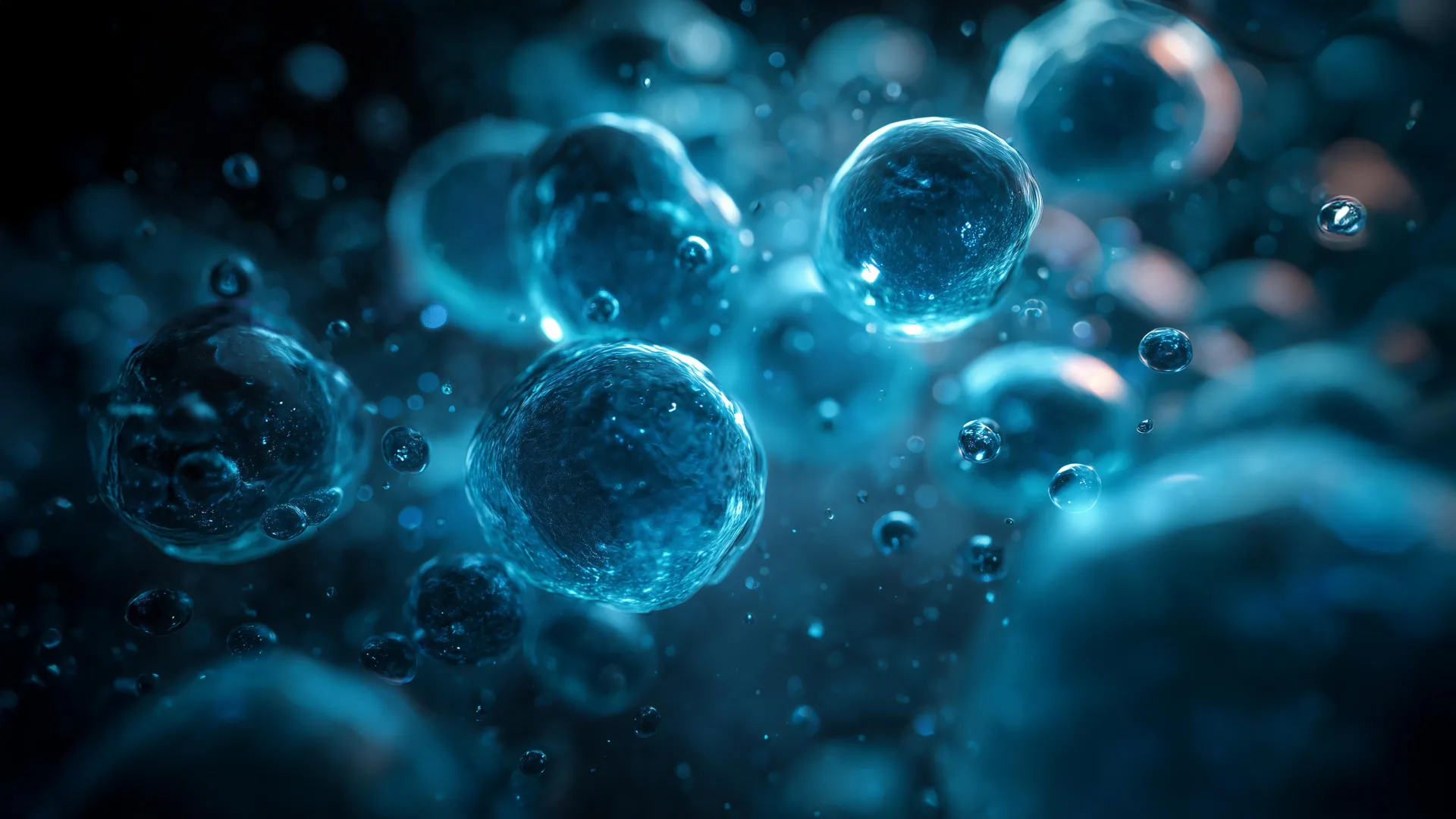
The intricate tapestry of modern cellular life, a marvel of biological engineering, stands in stark contrast to its primordial origins. Today’s cells are sophisticated micro-factories, equipped with internal scaffolding, precisely regulated chemical pathways, and a genetic blueprint that dictates nearly every function. This complexity empowers them to thrive in a vast array of environments and to engage in a perpetual competition based on their inherent fitness. Yet, the genesis of life traces back to astonishingly simple beginnings: primitive compartments, essentially microscopic bubbles formed by lipid membranes enclosing basic organic molecules. The profound question of how these rudimentary protocells evolved into the complex cellular entities we know today remains a cornerstone of origin-of-life research, a puzzle that scientists are diligently piecing together.
A groundbreaking recent study, spearheaded by researchers at the Earth-Life Science Institute (ELSI) at Tokyo Institute of Science, offers compelling new insights into the potential behavior of these nascent structures on the ancient Earth. Eschewing a singular explanation for abiogenesis, the research team focused on experimental simulations that closely mirror realistic environmental conditions of the planet’s early epochs. Their investigation zeroed in on the critical interplay between membrane composition and protocell dynamics, specifically examining how variations in lipid makeup influence growth, fusion, and the crucial ability to retain vital molecules during the tumultuous process of freeze-thaw cycles. This research not only sheds light on a potential mechanism for early cellular development but also broadens the scope of environments considered as cradles for life.
Crafting Primitive Compartments: The Role of Phospholipid Diversity
To probe the mechanics of early cellular life, the ELSI research team meticulously constructed simplified cellular models known as large unilamellar vesicles (LUVs). These artificial compartments were assembled using three distinct types of phospholipids, molecules that form the fundamental building blocks of cell membranes. The chosen lipids were:
- POPC (1-palmitoyl-2-oleoyl-glycero-3-phosphocholine; 16:0-18:1 PC): Characterized by one unsaturated acyl chain with a single double bond.
- PLPC (1-palmitoyl-2-linoleoyl-sn-glycero-3-phosphocholine; 16:0-18:2 PC): Featuring one unsaturated acyl chain with two double bonds.
- DOPC (1,2-di-oleoyl-sn-glycero-3-phosphocholine; 18:1 (D9-cis) PC): Possessing two unsaturated acyl chains, each with one double bond.
The selection of these phosphatidylcholine (PC) lipids was deliberate. "We used phosphatidylcholine (PC) as membrane components, owing to their chemical structural continuity with modern cells, potential availability under prebiotic conditions, and retaining ability of essential contents," explained Tatsuya Shinoda, a doctoral student at ELSI and the lead author of the study. This choice underscores the researchers’ commitment to bridging the gap between hypothetical early Earth chemistry and the established biology of extant organisms.
While these phospholipids share a common phosphatidylcholine head group, their acyl chain structures, particularly the degree and configuration of unsaturation, introduce crucial differences in how they pack together and influence membrane fluidity. POPC, with its more saturated acyl chains, tends to form more rigid and tightly packed membranes. In contrast, PLPC and DOPC, with their increased number of double bonds, result in more fluid and less ordered membrane structures. These subtle structural variations are pivotal, as they directly impact the physical properties of the protocell membrane, dictating its behavior under various environmental stresses.
The Catalytic Power of Freeze-Thaw Cycles: Driving Growth and Fusion
The experimental simulations then subjected these meticulously crafted LUVs to repeated freeze-thaw (F/T) cycles, a process designed to mimic the dramatic temperature fluctuations that are hypothesized to have been common on early Earth. These cycles represent a significant physical stressor, capable of destabilizing and reorganizing membrane structures. The results of these experiments were revealing.
After three cycles of freezing and thawing, distinct differences in vesicle behavior became apparent:
- POPC-rich vesicles: These tended to aggregate and cluster together. However, they did not readily fuse into larger structures, remaining largely as individual or loosely associated units.
- PLPC- and DOPC-rich vesicles: These exhibited a pronounced propensity for fusion. They coalesced and merged to form significantly larger compartments. Crucially, the higher the concentration of PLPC, the more prevalent and extensive the fusion events and subsequent growth of the vesicles.
This differential behavior directly highlights the profound influence of membrane chemistry on protocell dynamics. Lipids with a greater degree of unsaturation, such as those in PLPC and DOPC, create membranes that are less tightly packed. This looser organization appears to facilitate fusion. "Under the stresses of ice crystal formation, membranes can become destabilized or fragmented, requiring structural reorganization upon thawing," remarked Natsumi Noda, a researcher at ELSI. "The loosely packed lateral organization due to the higher degree of unsaturation may expose more hydrophobic regions during membrane reconstruction, facilitating interactions with adjacent vesicles and making fusion energetically favorable." This insight suggests that the very fluidity induced by unsaturation, while potentially posing stability challenges, also unlocks mechanisms for growth and consolidation.
The Significance of Fusion: Enabling Molecular Mixing and Encapsulation
The fusion of protocells is not merely a physical process; it is a critical step in the potential emergence of life, enabling the pooling of internal contents. In the dilute and scattered chemical landscape of early Earth, where organic molecules were not uniformly distributed, the ability of separate compartments to merge would have been paramount. Fusion allows for the mixing of diverse molecular inventories, bringing together precursor molecules that might otherwise remain isolated. This intermingling could have catalyzed essential chemical reactions, paving the way for increased molecular complexity and the development of self-sustaining systems.
Beyond growth, the study also investigated the ability of these protocells to capture and retain genetic material, specifically DNA. The researchers compared the performance of vesicles composed entirely of POPC with those made solely of PLPC. The findings indicated that PLPC vesicles demonstrated a superior capacity for trapping DNA even before the application of freeze-thaw cycles. Following repeated F/T treatments, these PLPC-rich vesicles continued to hold onto significantly more DNA compared to their POPC counterparts. This suggests that membrane fluidity, while promoting fusion, also plays a role in the efficient sequestration of important biomolecules, a crucial prerequisite for the development of heritable traits.
Re-evaluating Ancient Environments: The Icy Hypothesis
Historically, scientific inquiry into the origin of life has often gravitated towards specific terrestrial environments. Prominent hypotheses have centered on the dynamic conditions of drying pools on land, where evaporation could concentrate organic molecules, or the energy-rich hydrothermal vents on the ocean floor, offering chemical gradients and mineral catalysts. However, this recent ELSI study introduces a compelling new contender into the discussion: icy environments.
The findings strongly suggest that the recurrent cycles of freezing and thawing, characteristic of fluctuating temperatures in cold regions, could have played a significant and underappreciated role in the genesis of life. On early Earth, such freeze-thaw cycles may have occurred with remarkable frequency over vast geological timescales. As water transitioned between solid and liquid states, ice crystal formation would have acted as a natural concentrating mechanism. Growing ice crystals would have systematically pushed dissolved molecules, including essential organic precursors, into the remaining unfrozen liquid pockets. This process would have dramatically increased the local concentration of these molecules, thereby enhancing the probability of their interaction with each other and with nascent protocells.
Concurrently, the study demonstrates that membranes composed of more unsaturated phospholipids would have been more prone to fusion under these conditions, facilitating the mixing of internal contents. This synergy between molecular concentration and compartment fusion presents a powerful model for early cellular development. However, the researchers acknowledge a critical trade-off. While fluid membranes, rich in unsaturated lipids, are conducive to fusion and molecular exchange, they can also become inherently less stable and more permeable under the significant stress imposed by ice crystal formation and thawing. This potential for leakage would have necessitated a delicate balance for early protocells.
The Delicate Balance: Stability, Permeability, and the Dawn of Evolution
For protocells to transition from simple molecular enclosures to the first evolving entities, maintaining a precarious balance between membrane stability and controlled permeability would have been paramount. A membrane must be robust enough to retain its valuable internal cargo, shielding it from the external environment. Simultaneously, it must possess a degree of permeability or flexibility that allows for essential interactions, the uptake of nutrients, and the expulsion of waste products, all of which are drivers of chemical change and complexity. The optimal membrane composition for early protocells would therefore have been a dynamic property, intricately linked to the prevailing environmental conditions.
Professor Tomoaki Matsuura, the principal investigator of the study and a Professor at ELSI, elaborated on the potential long-term implications of these findings. "A recursive selection of F/T-induced grown vesicles across successive generations may be realized by integrating fission mechanisms such as osmotic pressure or mechanical shear," he stated. "With increasing molecular complexity, the intravesicular system, i.e., gene-encoded function, ultimately may take over the protocellular fitness, consequently leading to the emergence of a primordial cell capable of Darwinian evolution." This theoretical framework suggests a pathway where physical processes like freeze-thaw cycles initially drive growth and mixing, eventually giving way to internal biochemical mechanisms that enable true Darwinian evolution.
The implications of this research are far-reaching. By experimentally demonstrating how simple physical processes like freezing and thawing, coupled with specific membrane lipid compositions, can drive protocell growth and fusion, the study provides a tangible mechanism for the transition from inert molecular aggregates to the first rudimentary, self-replicating entities. It underscores the possibility that life’s origins may have been intimately tied to the cyclic dynamics of Earth’s ancient climate, suggesting that icy landscapes, often overlooked in favor of warmer locales, could have been pivotal in nurturing the earliest sparks of life. This work not only advances our understanding of abiogenesis but also opens new avenues for astrobiological research, prompting consideration of icy moons and planets as potential abodes for life beyond Earth. The journey from simple bubbles to complex cells, it appears, may have been significantly shaped by the very act of ice formation and dissolution.











Leave a Reply