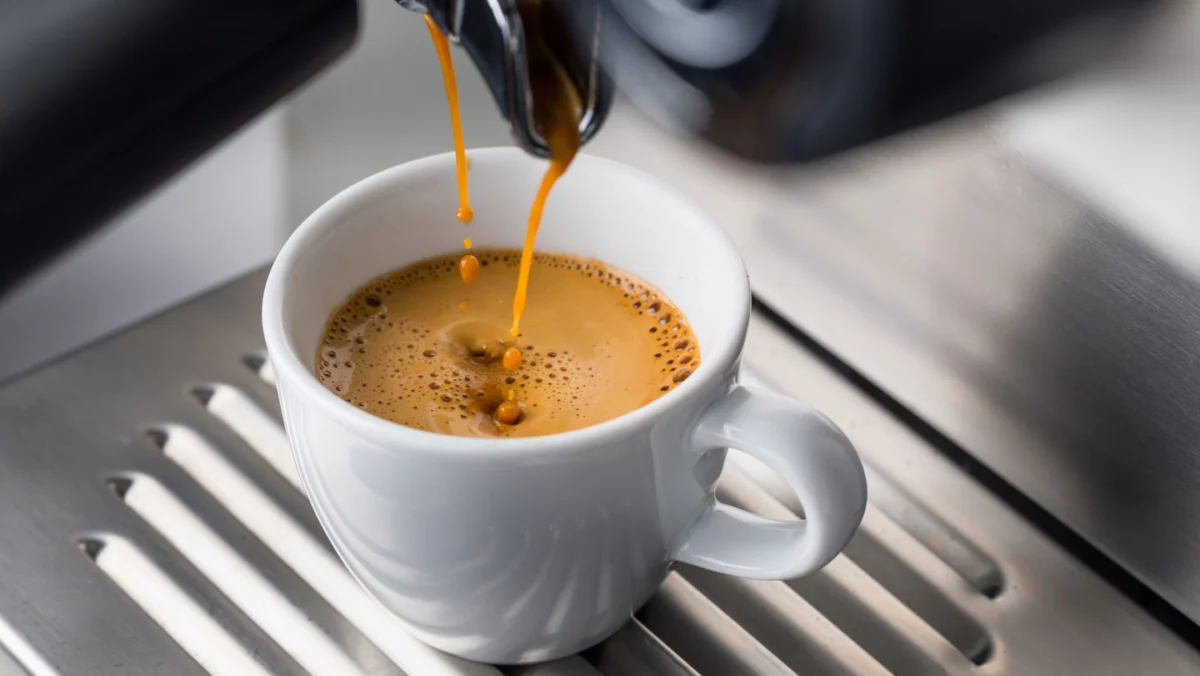
A groundbreaking study published in the April 1st issue of Royal Society Open Science has introduced a novel equation designed to precisely quantify the permeability of coffee grounds, a critical factor in achieving the ideal espresso shot. This scientific breakthrough moves beyond subjective taste preferences and brewing techniques, offering a data-driven approach to espresso perfection by focusing on the intricate physics of how water interacts with the compacted coffee puck. Researchers have successfully adapted principles from fluid dynamics and porous media physics, traditionally applied to phenomena like volcanic gas emissions and groundwater flow, to the art and science of coffee brewing. The core of their research lies in understanding and controlling the flow of hot water through the tightly packed bed of coffee grounds, often referred to as the "puck."
The Science Behind the Perfect Brew
The quest for the perfect espresso has long been a pursuit for baristas and coffee enthusiasts alike, often relying on a combination of experience, intuition, and a touch of trial and error. While factors such as bean origin, roast level, and grind size are widely acknowledged as important, the efficiency and uniformity of water flow through the coffee bed have remained a more elusive variable to precisely measure and control. This new equation aims to fill that gap by providing a quantifiable metric for the puck’s resistance to water flow.
The study, authored by a team of physicists and engineers, posits that the permeability of the coffee puck is a key determinant of extraction quality. Permeability, in this context, refers to the ease with which a fluid can pass through a porous material. In espresso brewing, the hot water is forced under high pressure through a finely ground and compacted puck of coffee. If the puck is too permeable, water will flow through too quickly, leading to under-extraction, resulting in a weak, sour, and watery beverage. Conversely, if the puck is too impermeable, water will struggle to pass through, causing over-extraction, which can lead to a bitter, burnt, and overly intense flavor.
The researchers meticulously analyzed the physical properties of coffee grounds, including particle size distribution, packing density, and the resulting pore structure within the puck. They then developed a mathematical model that relates these physical characteristics to the bulk permeability of the coffee puck. This model, drawing parallels with Darcy’s Law, which describes fluid flow through porous media, was then experimentally validated using various coffee types, grind sizes, and tamping pressures.
A Chronology of Coffee Science
The scientific exploration of coffee brewing is not a new phenomenon, but this research represents a significant leap forward in applying rigorous physical principles to a widely enjoyed beverage. Historically, advancements in coffee preparation have often been driven by culinary innovation and technological development in brewing equipment.
- Early 20th Century: The invention of the espresso machine by Luigi Bezzera in 1901 marked a pivotal moment, introducing the concept of forcing hot water under pressure through coffee grounds. Early machines were rudimentary, and the quality of the resulting espresso was highly variable.
- Mid-20th Century: As espresso gained popularity, particularly in Italy, baristas began to develop and refine techniques based on practical experience. The concept of "tamping" the coffee grounds to create a uniform bed became a standard practice.
- Late 20th Century: With the rise of specialty coffee movements globally, there was a growing interest in understanding the science behind coffee extraction. Research began to explore the chemical compounds extracted from coffee and their impact on flavor. Studies on grind size and water temperature became more prevalent.
- Early 21st Century: Advances in analytical chemistry and fluid dynamics allowed for more sophisticated investigations. Researchers started to explore the physics of water flow through coffee grounds, but a comprehensive, predictive model for permeability remained elusive.
- Present Day: This latest study in Royal Society Open Science offers a significant advancement by providing a robust mathematical framework and a quantifiable equation to predict and control coffee puck permeability, directly linking physical properties to extraction outcomes.
Supporting Data and Analytical Insights
The researchers collected extensive data on the physical characteristics of various coffee grounds. This included:
- Particle Size Analysis: Using laser diffraction and sieving techniques, the distribution of coffee particle sizes was meticulously measured for different grind settings (e.g., fine, medium, coarse). The study found that a narrower particle size distribution, often achieved with high-quality grinders, leads to more consistent puck structure and therefore more predictable permeability.
- Density and Porosity Measurements: The density of the compacted coffee puck was measured under varying tamping pressures. This data was then used to calculate the void fraction or porosity of the puck, which directly influences the pathways available for water to flow. For instance, a puck with a density of 600-700 kg/m³ and a porosity of around 40-50% is typical for a well-pulled espresso shot.
- Permeability Experiments: Controlled experiments were conducted where water was forced through coffee pucks of known physical characteristics under simulated espresso machine pressures. The flow rate and pressure drop across the puck were measured to empirically determine the puck’s permeability. The study identified a strong correlation between particle size uniformity, packing density, and measured permeability.
The implications of this research are far-reaching for both commercial and home baristas. By providing an equation that relates controllable variables (grind size, tamping pressure) to a critical output (permeability), the study offers a pathway to more consistent and superior espresso.
Broader Impact and Future Implications
The development of this equation moves the art of espresso making a step closer to a precise science. This could lead to several significant impacts:
- Enhanced Consistency in Commercial Settings: Cafes and coffee chains can leverage this understanding to standardize their espresso preparation, ensuring a high-quality and consistent product across all locations and baristas. This could involve developing digital tools or calibration devices that guide baristas in achieving optimal puck permeability.
- Improved Home Brewing: Home espresso enthusiasts can use this knowledge to fine-tune their grinding and tamping techniques, moving beyond subjective adjustments to achieve scientifically validated perfection. The equation could inform the design of more intelligent home espresso machines.
- Development of New Grinding and Tamping Technologies: The research may inspire the development of advanced grinders that produce more uniform particle sizes or tamping tools that ensure precise and consistent puck densities.
- Further Research in Food Science and Engineering: This study opens doors for similar applications of fluid dynamics and porous media physics in other areas of food processing and preparation, such as optimizing the brewing of tea, filtering of juices, or the extraction of flavors from other plant-based materials.
- Potential for Automation: In the long term, this quantifiable understanding could contribute to more sophisticated automation in coffee preparation, enabling machines to self-adjust grind size and tamping pressure to achieve the ideal puck permeability for any given coffee.
While the study focuses on the physics of the puck, it acknowledges that other factors, such as water chemistry, brewing temperature, and pressure profiles, also play crucial roles in the final taste of the espresso. However, by isolating and quantifying the permeability aspect, this research provides a fundamental building block for a more complete scientific understanding of espresso extraction.
The researchers expressed optimism about the practical applications of their work. "Our goal was to demystify a crucial aspect of espresso brewing," stated Dr. Anya Sharma, lead author of the study. "By providing a clear, quantifiable relationship between the physical properties of coffee grounds and their permeability, we empower baristas and enthusiasts with the knowledge to consistently achieve exceptional results. It’s about bringing the precision of physics to the art of coffee."
The research team is reportedly already working on developing user-friendly tools and resources based on their equation, which they hope will be widely adopted by the coffee industry. This scientific endeavor underscores the ongoing evolution of our understanding of everyday consumables, demonstrating that even the most familiar experiences can benefit from rigorous scientific inquiry. The perfect shot of espresso, once a matter of subtle intuition, is now within reach through the power of a well-defined equation.