

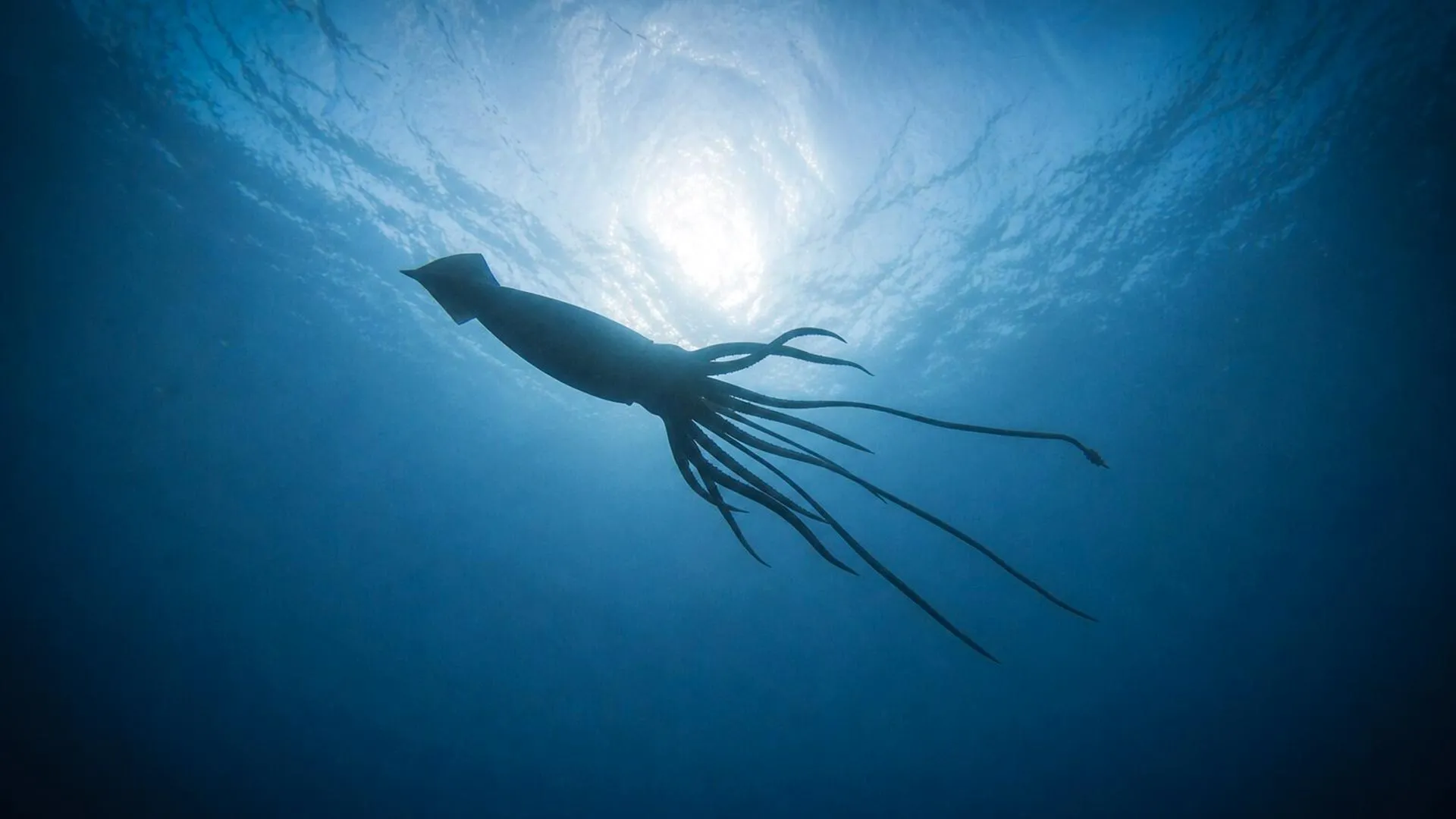
A groundbreaking scientific expedition off the coast of Western Australia has unveiled a hidden world of marine biodiversity within the deep waters of the Nyinggulu (Ningaloo) Marine Park, revealing an astonishing array of life, including strong evidence for the presence of the elusive giant squid and a significant number of species potentially unknown to science. The comprehensive study, led by Curtin University researchers, utilized cutting-edge environmental DNA (eDNA) techniques to explore the remote Cape Range and Cloates submarine canyons, approximately 1,200 kilometers north of Perth. This pioneering approach has significantly broadened our understanding of these deep-sea ecosystems, highlighting their immense ecological value and the urgent need for enhanced conservation efforts.
Unveiling the Depths: The Expedition and its Methodology
The ambitious research initiative took place aboard the Schmidt Ocean Institute’s research vessel R/V Falkor, with scientists from the Western Australian Museum playing a crucial role in the expedition. From its launch in late 2023, the expedition set out to systematically sample the abyssal plains and canyons, targeting depths that plunge as low as 4,510 meters. Unlike traditional methods that rely on visual observation via submersibles or the capture of specimens, this study embraced a revolutionary technique: environmental DNA (eDNA) analysis. This method involves detecting and identifying species by analyzing tiny fragments of genetic material shed by organisms into their surrounding environment, primarily seawater.
Researchers collected over 1,000 water samples from various depths within the Cape Range and Cloates canyons. These samples were meticulously processed to extract eDNA, which was then analyzed using advanced genomic sequencing. This approach allowed scientists to generate a comprehensive inventory of the marine life inhabiting these extreme environments without the need for direct observation or physical capture of every organism. The eDNA data was further corroborated by genetic reference material obtained from physical specimens collected by the remotely operated vehicle (ROV) SuBastian, ensuring the accuracy and robustness of the findings. These collected specimens have been permanently archived in the Western Australian Museum’s Collection and Research Facility, forming a vital genetic library for future scientific endeavors.
A Glimpse of the Mysterious: Giant Squid and New Discoveries
Among the most electrifying discoveries reported from the expedition is compelling evidence of the giant squid (Architeuthis dux). Genetic traces of this legendary cephalopod were detected in six separate eDNA samples collected from both the Cape Range and Cloates canyons. The presence of the giant squid, an animal shrouded in myth and rarely encountered by humans, underscores the extraordinary nature of the deep-sea environment.
Giant squid are among the ocean’s most enigmatic inhabitants. These colossal invertebrates can reach staggering lengths of 10 to 13 meters, comparable to a school bus, and can weigh between 150 and 275 kilograms. Their most remarkable feature is arguably their eyes, the largest in the animal kingdom, measuring up to 30 centimeters in diameter – roughly the size of a large pizza. Historically, confirmed sightings and specimens of giant squid in Western Australian waters have been exceptionally rare, with only two previous records and no confirmed collections in over 25 years. Dr. Lisa Kirkendale, Head of Aquatic Zoology and Curator of Molluscs at the WA Museum, highlighted the significance of this eDNA detection. "This is the first record of a giant squid detected off Western Australia’s coast using eDNA protocols and the northernmost record of A. dux in the eastern Indian Ocean," she stated, emphasizing the pioneering role of this technology in marine research.
Beyond the giant squid, the study identified a total of 226 species across 11 major animal groups, including a diverse range of squid, marine mammals, cnidarians, echinoderms, and a host of unusual deep-sea fish. The research also flagged dozens of species that have never been previously recorded in Western Australian waters. Among these potentially novel discoveries are the sleeper shark (Somniosus sp.), the faceless cusk eel (Typhlonus nasus), and the slender snaggletooth (Rhadinesthes decimus). The identification of these species, some of which bear intriguing and descriptive names, hints at the vast, unexplored biodiversity that thrives in the deep Indian Ocean.
The expedition also provided insights into the presence of well-known deep-diving whale species. Evidence was found for the pygmy sperm whale (Kogia breviceps) and Cuvier’s beaked whale (Ziphius cavirostris), species known for their ability to forage at extreme ocean depths. Their inclusion in the eDNA profile further illustrates the complex food webs and diverse ecological niches present within these submarine canyons.
The Transformative Power of Environmental DNA
Dr. Georgia Nester, the lead author of the study who conducted the research as part of her PhD studies at Curtin University, now with the Minderoo OceanOmics Centre at The University of Western Australia, emphasized the profound impact of eDNA on ocean exploration. "Finding evidence of a giant squid really captures people’s imagination, but it’s just one part of a much bigger picture," Dr. Nester explained. "We found a large number of species that don’t neatly match anything currently recorded, which doesn’t automatically mean they’re new to science, but it strongly suggests there is a vast amount of deep-sea biodiversity we’re only just beginning to uncover."
The value of eDNA, particularly for detecting elusive or fragile species, cannot be overstated. Traditional sampling methods often struggle to capture organisms that are fast-moving, inhabit inaccessible regions, or are simply too delicate to survive capture and retrieval. Dr. Nester elaborated on this advantage: "With eDNA, a single water sample can tell us about hundreds of species at once. That means we can dramatically expand our understanding of deep-water environments in a way that simply hasn’t been possible before." This non-invasive technique offers a scalable and efficient way to survey vast and remote ocean areas that are otherwise logistically challenging and prohibitively expensive to explore.
Shifting Ecosystems and the Imperative for Conservation
The study also revealed that marine life exhibits significant changes in response to ocean depth. Even adjacent submarine canyons, despite their geographical proximity, were found to support distinct ecosystems and unique biological communities. This depth stratification highlights the intricate ways in which environmental factors, such as pressure, temperature, and nutrient availability, shape deep-sea biodiversity.
Associate Professor Zoe Richards from Curtin’s School of Molecular and Life Sciences, a senior author on the study, underscored the critical implications of these findings for conservation. "Deep-sea ecosystems are vast, remote and expensive to study, yet they face growing pressure from climate change, fishing and resource extraction," Associate Professor Richards stated. "Environmental DNA gives us a scalable, non-invasive way to build baseline knowledge of what lives there, which is essential for informed management and conservation. You can’t protect what you don’t know exists."
The sheer volume of discoveries, including the detection of megafauna like the giant squid, serves as a stark reminder of how much remains unknown about the marine life inhabiting the Indian Ocean. Gaining a comprehensive understanding of deep-sea biodiversity is paramount for effective marine park planning, robust environmental monitoring, and targeted conservation initiatives. Dr. Nester reiterated this point, explaining that "By combining eDNA with conventional deep-sea survey techniques, we can build a far more complete picture of biodiversity, revealing species, ecosystems and ecological patterns that would otherwise remain hidden." This detailed knowledge is crucial for informed decision-making, enabling scientists and policymakers to better understand species distribution and community structures across different depths, thereby facilitating the establishment and management of effective marine protected areas.
A Collaborative Endeavor for a Deeper Understanding
The fieldwork and subsequent analysis were the result of a significant collaborative effort. The expedition received crucial support from the Schmidt Ocean Institute, which provided the state-of-the-art research vessel, and the Western Australian Museum, contributing invaluable taxonomic expertise. The project involved a multidisciplinary team of researchers from Curtin University, The University of Western Australia (UWA), the WA Museum, the Minderoo OceanOmics Centre at UWA, the University of Tasmania, and Research Connect Blue.
The comprehensive findings of this pioneering research have been published in the peer-reviewed journal Environmental DNA, marking a significant contribution to the field of marine science. This study not only expands our knowledge of Western Australia’s deep-sea environments but also sets a new benchmark for how deep-ocean biodiversity can be effectively surveyed and understood, paving the way for future explorations and more informed stewardship of our planet’s vital marine ecosystems. The ongoing exploration of these underwater canyons promises to yield further insights into the complex and often surprising life that thrives in the ocean’s most inaccessible realms.













Leave a Reply