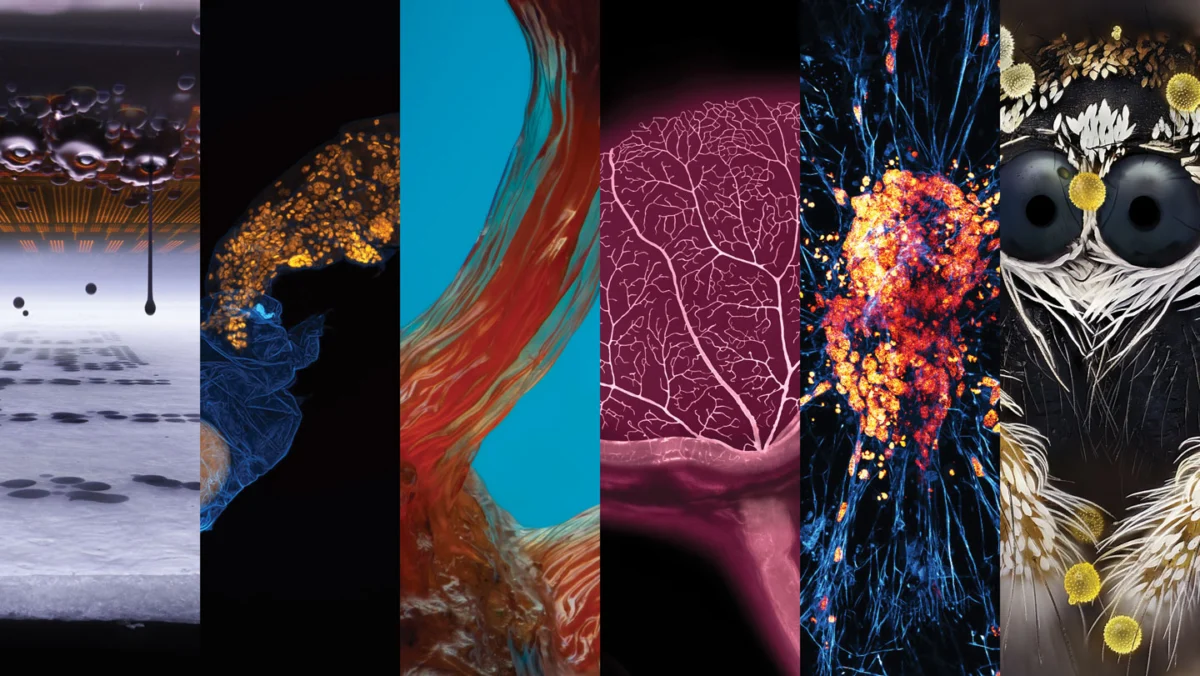
Science News, a cornerstone of accessible scientific reporting, has been dedicated to providing accurate, independent, and nonprofit coverage of advancements in science, medicine, and technology for over a century. Founded in 1921, the publication’s enduring mission to empower individuals to critically evaluate the world around them through informed understanding of scientific developments remains as vital today as it was at its inception. Published by the Society for Science, a 501(c)(3) nonprofit membership organization committed to fostering public engagement with scientific research and education, Science News has consistently served as a crucial bridge between complex scientific discoveries and the general public. Its longevity and unwavering commitment to journalistic integrity have solidified its reputation as a trusted source in an increasingly information-saturated landscape.
A Century of Scientific Journalism: The Genesis and Evolution of Science News
The establishment of Science News in 1921 occurred during a period of unprecedented scientific and technological progress. The early 20th century witnessed breakthroughs in fields ranging from physics and chemistry to medicine and engineering, many of which held profound implications for society. The need for a dedicated publication that could translate these often esoteric advancements into understandable terms for a broad audience was keenly felt. Science News emerged to fill this void, driven by a vision of democratizing scientific knowledge and fostering an informed citizenry capable of engaging with the scientific discourse shaping their lives.
The Society for Science, the nonprofit parent organization, was founded with a similar ethos. Its mission has always been to champion science education and public participation in scientific research. This foundational partnership has allowed Science News to operate with a degree of independence, prioritizing factual reporting and in-depth analysis over commercial pressures. This commitment to its mission has been instrumental in navigating the evolving media landscape and maintaining its relevance across generations. Over its history, Science News has adapted to technological shifts, embracing new platforms and formats to reach its audience while steadfastly upholding its core principles of accuracy and accessibility.
The Core Mission: Illuminating Science for Everyone
At its heart, Science News is driven by a commitment to demystify science. The publication tackles a vast spectrum of disciplines, from the intricacies of quantum mechanics and the latest discoveries in astrophysics to groundbreaking medical treatments and the societal implications of emerging technologies. Its reporting is characterized by a rigorous adherence to scientific accuracy, with articles often detailing the methodologies, data, and peer-reviewed research underpinning the news. This meticulous approach ensures that readers receive not just the "what" but also the "how" and "why" behind scientific breakthroughs.
The organization’s dedication to public engagement extends beyond its flagship publication. The Society for Science actively supports science education initiatives, including renowned competitions like the Regeneron Science Talent Search and the Regeneron International Science and Engineering Fair. These programs provide platforms for young aspiring scientists to showcase their work, fostering a pipeline of future innovators and researchers. This holistic approach, encompassing both reporting and direct engagement with the scientific community, underscores Science News’s multifaceted role in promoting scientific literacy.
Navigating the Information Age: The Enduring Relevance of Science News
In an era where misinformation can spread rapidly, the role of trusted, fact-based journalism like that produced by Science News is more critical than ever. The publication’s editorial independence, coupled with its nonprofit status, allows it to pursue stories based on their scientific merit and public interest, rather than on advertising revenue or sensationalism. This ethical framework has built a deep reservoir of trust among its readership, which includes scientists, educators, students, and the general public.
The increasing complexity of scientific challenges, from climate change and pandemics to artificial intelligence and genetic engineering, necessitates an informed public. Science News plays a pivotal role in equipping individuals with the knowledge and critical thinking skills needed to understand these issues, make informed decisions, and participate meaningfully in societal discussions about their implications. By translating complex scientific jargon into accessible language and providing historical context, the publication empowers readers to move beyond superficial headlines and engage with the nuanced realities of scientific progress.
Supporting Data and Evidence: The Foundation of Science News Reporting
Science News’s commitment to accuracy is underscored by its reliance on verifiable data and peer-reviewed research. When reporting on a new discovery, for instance, the publication typically references the specific scientific journals where the research was published, such as Nature, Science, or Cell. It often delves into the experimental methodologies employed, the statistical significance of findings, and the limitations acknowledged by the researchers themselves.
For example, in reporting on advancements in astronomy, Science News would likely cite data from space telescopes like the Hubble Space Telescope or the James Webb Space Telescope, providing details about the instruments used, the observation periods, and the specific astronomical phenomena being studied. Similarly, in medical reporting, it would reference clinical trial data, such as the number of participants, the efficacy rates, and any reported side effects, often drawing from publications like The Lancet or the New England Journal of Medicine. This dedication to providing the underlying evidence builds credibility and allows readers to trace the origins of the reported information.
Background Context: Placing Discoveries in Perspective
A hallmark of Science News’s reporting is its ability to provide essential background context. Scientific discoveries rarely emerge in a vacuum. They build upon decades, sometimes centuries, of prior research and theoretical development. Science News excels at situating new findings within this broader scientific narrative.
For instance, when a new gene-editing technology is announced, Science News would likely trace its lineage back to the discovery of DNA structure, the development of recombinant DNA technology, and the earlier CRISPR-Cas9 system. This historical perspective helps readers understand the evolutionary nature of scientific progress and the incremental steps that lead to significant breakthroughs. Similarly, reporting on advancements in artificial intelligence would often include a brief history of AI research, from early conceptualizations to the current era of deep learning and neural networks. This contextualization prevents discoveries from appearing as isolated miracles and instead frames them as logical, albeit exciting, steps in ongoing scientific exploration.
Timeline and Chronology: Mapping the Course of Scientific Advancement
To further enhance understanding, Science News frequently employs timelines and chronologies to illustrate the progression of scientific fields or the unfolding of specific events. This approach is particularly valuable for complex topics that have evolved over extended periods.
For example, a report on the development of vaccines might include a timeline detailing the pioneering work of Edward Jenner, the establishment of the Pasteur Institute, the discovery of antibiotics by Alexander Fleming, and the subsequent development of vaccines for polio, measles, and more recently, COVID-19. Such a chronology would highlight key researchers, pivotal discoveries, and the impact of these advancements on public health. In the realm of space exploration, a chronological account could chart the trajectory from early rocket development and the Sputnik launch to the Apollo missions, the International Space Station, and the ongoing exploration of Mars. This temporal mapping provides a clear narrative arc, making the history of scientific endeavor more digestible and engaging.
Statements and Reactions: Voices from the Scientific Community and Beyond
While maintaining an objective stance, Science News actively seeks out and incorporates statements and reactions from relevant parties. This includes direct quotes from the scientists involved in the research, providing their insights into the significance of their findings, the challenges they encountered, and their future research directions.
Beyond the immediate researchers, Science News also solicits perspectives from independent experts in the field. These individuals, who were not directly involved in the study, offer crucial commentary on the validity of the research, its potential implications, and how it fits within the broader scientific landscape. Their reactions help to contextualize the discovery and provide a more balanced assessment of its impact. In cases involving policy or societal implications, Science News may also include statements from relevant organizations, government agencies, or ethicists, offering a multifaceted view of the subject matter. This approach ensures that the reporting is not just a recitation of facts but a dynamic exploration of scientific progress and its reception.
Broader Impact and Implications: Understanding the "So What?"
A crucial element of Science News’s reporting is its exploration of the broader impact and implications of scientific advancements. The publication doesn’t just report on what has been discovered; it delves into what that discovery means for humanity, society, and the planet.
For instance, a breakthrough in renewable energy technology would be analyzed not only for its technical merits but also for its potential to mitigate climate change, its economic ramifications for energy industries, and its impact on global energy security. Similarly, advancements in artificial intelligence would be examined for their potential to transform industries, alter the job market, and raise ethical questions about bias, privacy, and autonomy. Medical breakthroughs are scrutinized for their potential to improve patient outcomes, reduce healthcare costs, and address public health challenges. By consistently asking the "so what?" question, Science News empowers its readers to understand the far-reaching consequences of scientific progress and to engage in informed discussions about the future. This forward-looking analysis is a testament to the publication’s commitment to making science relevant and impactful for everyone.