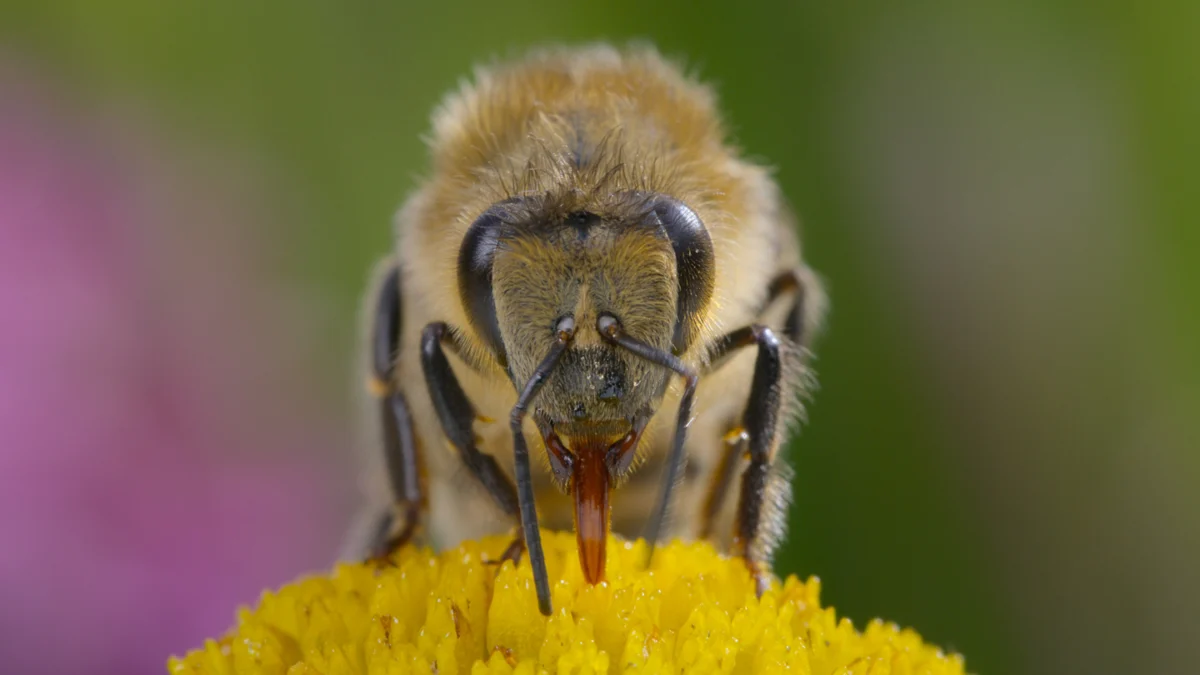
The National Geographic documentary highlights the incredible abilities of bees around the world. From the intricate social structures of honeybee colonies to the surprising intelligence and unique survival strategies of diverse bee species, "Secrets of the Bees," an executive-produced series by James Cameron, invites viewers into the often-overlooked world of these essential insects. Narrated and filmed by Bertie Gregory, the documentary aims to foster a deeper appreciation for bees and underscore the critical need for their conservation, presenting a compelling narrative that spans their remarkable capabilities and the daunting challenges they face.
A Glimpse into the Hive: The Life of a Worker Bee
The documentary opens with an intimate portrayal of a honeybee hive, focusing on a newly emerged worker bee, dubbed "Worker Bee One." This individual’s brief yet crucial life cycle, dedicated to nurturing larvae and foraging for pollen and nectar to sustain the colony through the coming winter, serves as the emotional anchor for the first episode. The sheer dedication and organized labor within a single hive are presented as a microcosm of the larger bee world, emphasizing the synchronized efforts that ensure the survival of the colony. The production meticulously captures the process of honeycomb construction and the vital task of collecting resources, illustrating the foundational role these activities play in the ecosystem.
This focus on the individual worker bee, while central to the narrative, is part of a broader tapestry that encompasses over 20,000 known bee species worldwide. The series, premiering on National Geographic and streaming on Disney+ and Hulu, aims to transcend the common perception of bees as mere honey producers, instead highlighting their diverse adaptations and ecological significance. As Gregory himself notes, his initial oversight of bees was a "mistake," recognizing that despite their diminutive size, they may well be "the most important animals on that planet." This sentiment is a cornerstone of the documentary’s message, urging a reevaluation of our relationship with these pollinators.
Beyond the Buzz: Unveiling Bee Intelligence and Adaptation
"Secrets of the Bees" delves into the astonishing cognitive abilities and adaptive strategies of bees, challenging long-held assumptions about their capabilities. While the documentary emphasizes the honeybee’s role in pollinating a significant portion of the food we consume—a statistic often simplified to "one in every three bites"—the series broadens this perspective to showcase the remarkable ingenuity found across various bee species.
One of the most striking examples presented is that of vulture bees in Ecuador. These unique insects have evolved a diet that includes digested meat from carrion, such as dead fish, from which they derive their honey. This adaptation highlights the extraordinary evolutionary pathways bees have taken to exploit diverse ecological niches, demonstrating a resilience and resourcefulness far beyond conventional expectations.
The documentary also explores instances of bees exhibiting problem-solving skills and tool use. Viewers are introduced to honeybees in Japan that employ leaves as a defense mechanism against the formidable "murder hornets" (now scientifically known as the Northern giant hornet). These bees use leaves to obscure the scent of their hive, a sophisticated strategy to deter predators. Dr. Samuel Ramsey, the series’ scientific advisor and an entomologist at the University of Colorado in Boulder, notes that this behavior, alongside the known use of animal feces by some bee species to mask their hives, suggests a higher level of cognitive processing than previously understood. "They have a higher level of [cognitive] processing than was originally expected," Ramsey states, underscoring the documentary’s commitment to showcasing the cutting-edge research on bee intelligence. Furthermore, laboratory experiments have shown that some bee species can learn to play with balls and solve complex puzzles, further cementing their status as highly intelligent invertebrates.
The Looming Threats: Perilous Futures for Pollinators
While the first episode of "Secrets of the Bees" is characterized by awe and admiration, the second installment shifts its focus to the existential dangers confronting bee populations globally. The documentary unflinchingly examines the threats that jeopardize the survival of these vital insects, from parasitic infestations to the unintended consequences of human activities.
A significant focus is placed on the varroa mite, a pervasive parasite that infiltrates honeybee colonies, weakening them and transmitting a host of debilitating viruses. These mites can lead to colony collapse disorder (CCD), a phenomenon that has baffled scientists for years and poses a severe threat to global agriculture. Dr. Ramsey’s research into bee hygiene and its role in combating these mites offers a glimmer of hope, as he observes bees with unusually effective grooming habits that could prove instrumental in developing resistance strategies. "Seeing these bees just manage it," he remarks, "really gives you a sense of hope that can be hard to find these days."
However, the documentary also addresses the inherent challenges posed by the very success of certain bee species, particularly the European honeybee (Apis mellifera). Introduced to regions outside their native range in Europe, western Asia, and Africa, honeybees can outcompete native bee species for resources. The series illustrates this ecological imbalance by featuring a male wool carder bee in a London rooftop garden, whose mating efforts are continually disrupted by the aggressive territorial defense of introduced honeybees. This scenario highlights the complex interplay between introduced and native species and the delicate balance of ecosystems.
The Broader Impact: Bees as Barometers of Environmental Health
The documentary makes a powerful case for the critical role bees play not only in food production but also as indicators of broader environmental health. Dr. Ramsey posits that due to their intimate relationship with humans and their dependence on flowering plants, honeybees serve as an early warning system for the perils faced by pollinators worldwide. Current estimates indicate that up to a quarter of all bee species are experiencing declines, a statistic that carries profound implications for biodiversity and agricultural stability.
While "Secrets of the Bees" commendably highlights the challenges, it notably does not extensively detail the human-induced factors contributing to bee decline. These include the pervasive impacts of climate change, which can alter flowering times and disrupt bee life cycles; habitat loss, driven by urbanization and intensive agriculture, which reduces foraging grounds and nesting sites; and the widespread use of pesticides, particularly neonicotinoids, which have been shown to impair bee navigation, reproduction, and immune systems. Scientific studies have documented these correlations, with research showing decreased bee populations in areas where they are most needed for pollination and the presence of harmful pesticides in a significant portion of the world’s honey.
A Call to Action: Hope for the Future
Despite the somber realities presented, "Secrets of the Bees" concludes on an inspiring note, showcasing the dedicated efforts of individuals and communities working to safeguard these invaluable insects. The documentary features the Maya community in Mexico, who are actively reviving the ancient practice of beekeeping with Melipona bees, a stingless species that once thrived across the Yucatan Peninsula. This resurgence of traditional knowledge underscores the deep-seated connection between indigenous cultures and bee conservation.
Additionally, the series highlights the innovative approaches of beekeepers like the one featured in Oregon, who has transformed 450 acres of land into a wildflower meadow. This initiative not only boosts honey production for his honeybees but, more importantly, provides essential nourishment and habitat for the region’s native bee populations. Such conservation efforts demonstrate that targeted interventions can yield significant positive outcomes for both managed and wild bees.
Ultimately, "Secrets of the Bees" succeeds in its overarching mission: to ignite a sense of wonder and foster a profound appreciation for the intricate lives of bees. By revealing their astonishing abilities and the urgent threats they face, the documentary serves as a compelling plea for their protection, arguing persuasively that these remarkable insects are not only essential for our planet’s ecosystems but are, indeed, worth saving. The series’ comprehensive exploration of bee biology, intelligence, and ecological importance, coupled with its poignant portrayal of their struggles and the hopeful initiatives for their future, makes it a vital viewing experience for anyone concerned about the health of our planet.