The field of organometallic chemistry has reached a significant milestone as researchers at the Okinawa Institute of Science and Technology (OIST) successfully captured and characterized a rare, highly unstable intermediate structure in the formation of metallocenes. This discovery, detailed in a recent publication in the Journal of the American Chemical Society (JACS), offers the first comprehensive structural evidence of a "doubly ring-slipped" intermediate. By isolating this elusive phase, the research team has provided a missing link in the understanding of how "sandwich" molecules—compounds that have defined modern chemical synthesis for over seven decades—assemble and transform at the molecular level.
The Evolution of Metallocene Chemistry and the 18-Electron Rule
To understand the weight of the OIST discovery, one must look back to the mid-20th century. The accidental discovery of ferrocene in 1951 by Peter Pauson and Thomas Kealy, and its subsequent structural elucidation by Ernst Otto Fischer and Geoffrey Wilkinson, revolutionized the chemical sciences. Ferrocene, consisting of a single iron atom held between two planar cyclopentadienyl (Cp) rings, challenged existing theories of chemical bonding and eventually led to a shared Nobel Prize in Chemistry for Fischer and Wilkinson in 1973.
Central to the stability of these compounds is the "18-electron rule." Much like the octet rule in organic chemistry, the 18-electron rule posits that transition metal complexes are most stable when the metal center’s outer shell is filled with 18 valence electrons. In a standard ferrocene molecule, the iron atom (Group 8) provides 8 electrons, while each of the two five-carbon rings provides 5 electrons (in an $eta^5$ or "pentahapto" bonding mode), totaling 18. This configuration creates a robust, symmetrical "sandwich" that is resistant to decomposition and highly versatile for industrial use.
Since the 1950s, metallocenes have become indispensable. They serve as essential catalysts in the production of polymers like polyethylene and polypropylene, act as redox-active components in electrochemical sensors, and are increasingly investigated for their potential in medicinal chemistry as anti-cancer agents. Despite this ubiquity, the exact pathways through which these molecules form have remained largely theoretical. The transition from free metal ions and carbon rings to the final 18-electron sandwich involves several high-energy intermediates that typically exist for only fractions of a second, making them nearly impossible to observe through traditional laboratory methods.
The OIST Breakthrough: From Iron to Ruthenium
The research led by Dr. Satoshi Takebayashi and the Organometallic Chemistry Group at OIST initially sought to push the boundaries of the 18-electron rule. In 2023, the group gained international attention by synthesizing unusual 20-electron ferrocene derivatives. These "over-filled" molecules are theoretically unstable, yet the team found ways to stabilize them, opening new doors for highly reactive catalysts.
Building on this success, the researchers turned their attention to ruthenium, an element located directly below iron in the periodic table. Given their shared group, ruthenium and iron often exhibit similar chemical behaviors, though ruthenium’s larger atomic radius and different electronic properties often lead to distinct reaction kinetics. The team expected that applying their previous methodology to ruthenium would yield a 20-electron ruthenocene derivative.
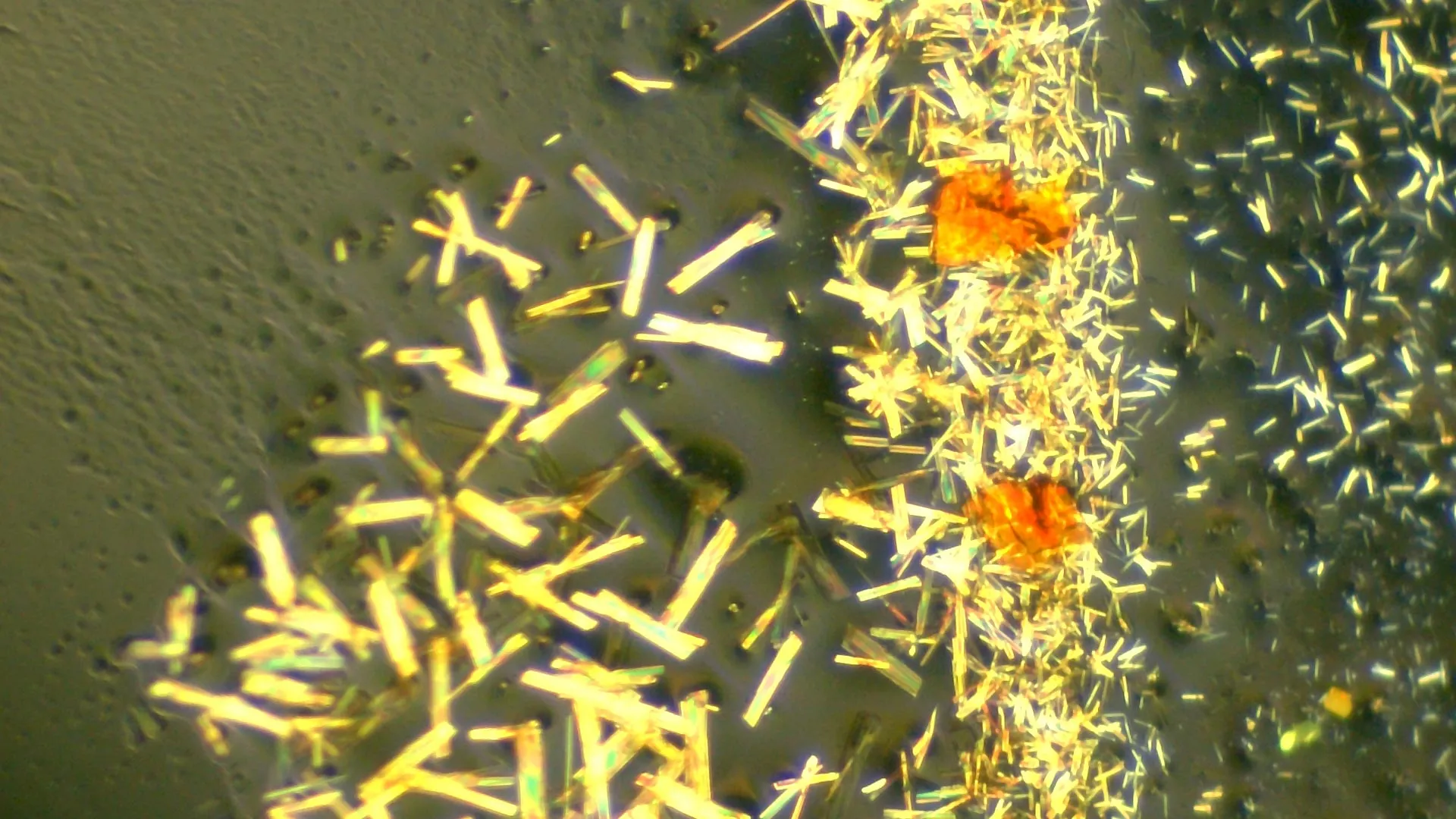
However, the chemical reaction took an unexpected turn. Instead of producing the anticipated 20-electron species, the reaction consistently resulted in standard 18-electron ruthenocene. This anomaly suggested that the reaction was proceeding through a different pathway than its iron-based counterpart. By slowing down the reaction and utilizing specialized crystallization techniques, the team managed to "trap" a molecule that existed momentarily before the final 18-electron sandwich was formed.
Structural Analysis of the Doubly Ring-Slipped Intermediate
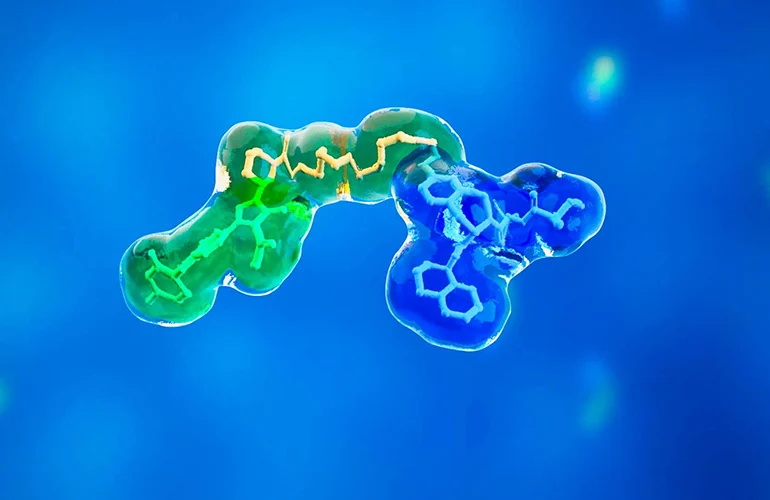
The captured intermediate was analyzed using single-crystal X-ray diffraction, a technique that allows scientists to determine the precise position of every atom within a crystal lattice. The results were startling: the molecule exhibited a "doubly ring-slipped" geometry.
In organometallic terms, "ring-slippage" refers to a change in the hapticity of the ligands. In a standard metallocene, the metal bonds equally to all five carbon atoms in the ring ($eta^5$ bonding). In the intermediate captured by the OIST team, both carbon rings had "slipped" so that the ruthenium atom was bonded to only one carbon atom on each ring ($eta^1$ bonding). This $eta^1, eta^1$ configuration is significantly less stable and more geometrically strained than the final $eta^5, eta^5$ sandwich.
"We were able to isolate an intermediate structure from our ruthenium complex formation reaction and characterize this with single-crystal X-ray diffraction," Dr. Takebayashi noted. "Surprisingly, we found the structure to be doubly ring-slipped. This is the first time such a structure has been fully characterized at the molecular level, providing a snapshot of the molecule as it rearranges itself."
Technical Methodology and Supporting Data
The verification of this rare structure required a multi-disciplinary approach. Beyond X-ray diffraction, the team employed:
- Nuclear Magnetic Resonance (NMR) Spectroscopy: This allowed the researchers to observe the behavior of the molecule in solution. The NMR data confirmed that the ring-slipped state was not merely an artifact of crystallization but a legitimate phase of the chemical reaction.
- Mass Spectrometry: This was used to confirm the molecular weight and elemental composition of the intermediate, ensuring that no unexpected side reactions had occurred.
- Computational Modeling (Density Functional Theory): By using supercomputers to simulate the electronic environment of the ruthenium atom, the team mapped the energy landscape of the reaction. The models showed that the doubly ring-slipped structure represents a high-energy "well" that the molecule must pass through before it can settle into the more stable 18-electron configuration.
The analysis also identified a second intermediate: a "single ring-slipped" structure ($eta^1, eta^5$). This suggests a sequential "unfolding" or "folding" process, where the rings attach to the metal one carbon at a time, eventually "wrapping" around the metal center to form the final sandwich.
Implications for Material Science and Medicine
The ability to understand and eventually control ring-slippage has profound implications for the design of "smart" or responsive materials. Because the electronic and physical properties of a metallocene change drastically depending on its hapticity (how many carbons are bonded to the metal), a molecule that can be induced to "slip" its rings in response to an external stimulus could function as a molecular switch.
1. Stimuli-Responsive Sensors
If a metallocene-based material can be engineered to shift from an $eta^5$ to an $eta^1$ state when exposed to specific chemicals, light, or temperature changes, it could serve as a highly sensitive sensor. The change in bonding would result in a measurable change in electrical conductivity or color.
2. Advanced Catalysis
In industrial chemistry, catalysts work by providing a surface or a site where molecules can react. A ring-slipped metallocene has more "open" space around the metal atom because the rings are pushed to the side. This could allow larger or more complex molecules to bond to the metal, potentially enabling the synthesis of new plastics or pharmaceuticals that are currently impossible to produce.
3. Precision Drug Delivery
Metallocenes, particularly those containing ruthenium or iron, are being explored as carriers for chemotherapy drugs. Understanding the stability of these "sandwiches" is crucial. If a drug delivery vehicle is designed to remain stable ($eta^5$) in the bloodstream but "slip" and release its cargo ($eta^1$ or dissociation) upon entering a tumor’s acidic environment, it could significantly reduce the side effects of cancer treatment.
Future Research Directions
The OIST study has opened a new chapter in organometallic research. The next step for Dr. Takebayashi’s group is to investigate whether similar intermediates can be captured using other transition metals, such as osmium or rhodium. Furthermore, the team aims to explore the kinetic triggers that cause these rings to slip.
The scientific community has reacted with high interest. Dr. Takebayashi noted that there is a "recent renewed interest in incorporating metallocenes into materials to access different properties." By providing the first concrete evidence of how these molecules deform and reform, the OIST team has moved the field from theoretical speculation to empirical certainty.
The discovery serves as a reminder that even in well-established fields like metallocene chemistry, there are still fundamental "secrets" to be uncovered. As researchers refine their ability to observe these fleeting molecular moments, the potential to engineer the next generation of catalysts, medicines, and high-tech materials grows exponentially. The "sandwich" molecule, once a curiosity of the 1950s, remains at the very forefront of 21st-century innovation.