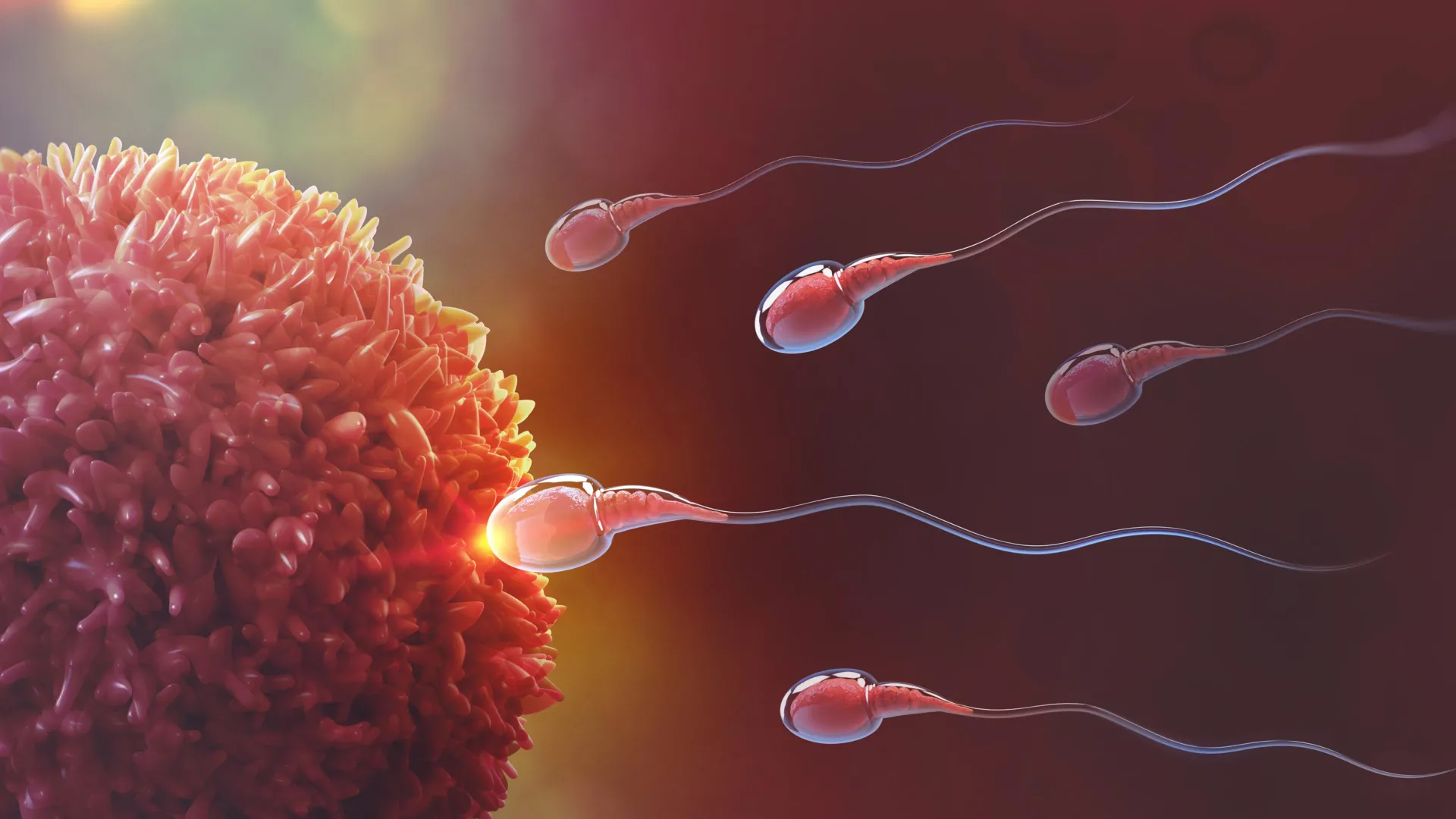
In a landmark study that could redefine the landscape of reproductive health, researchers at Michigan State University have identified a critical molecular "switch" responsible for the sudden surge in energy sperm require to fertilize an egg. This discovery, led by Melanie Balbach, an assistant professor in the Department of Biochemistry and Molecular Biology, offers a dual-pathway breakthrough: it provides a roadmap for developing the world’s first effective, nonhormonal male contraceptive and offers new diagnostic precision for treating global infertility. The research, published in the Proceedings of the National Academy of Sciences (PNAS), highlights a sophisticated metabolic reprogramming process that occurs within the sperm cell just moments before it attempts to breach the egg’s outer layer.
The Biological Mechanism of Sperm Activation
For decades, the scientific community has understood that mammalian sperm undergo a dramatic transformation once they enter the female reproductive tract. This process, known as capacitation, involves a series of physiological changes that enable the sperm to swim with increased vigor—a state called hyperactivation—and undergo the acrosome reaction, which allows them to penetrate the egg. However, the precise "fuel gauge" and the enzymatic pathways that regulate this sudden demand for ATP (adenosine triphosphate) remained largely theoretical until now.
Sperm are unique in the cellular world because their primary function is singular and ephemeral. Unlike most cells that balance growth, repair, and division, a mature sperm cell is a specialized delivery vehicle for genetic material. Before ejaculation, sperm are maintained in a quiescent, low-energy state within the male reproductive system to preserve their limited resources. Upon entering the female tract, they must rapidly "switch on" their metabolism to navigate the challenging environment of the uterus and fallopian tubes.
Dr. Balbach’s team focused on how these cells process glucose, the primary sugar found in the reproductive tract fluid. By utilizing advanced mass spectrometry and metabolomics tools at Michigan State University, the researchers were able to map the chemical journey of glucose as it is metabolized by the sperm. The study identified the enzyme aldolase as the primary regulator of this metabolic surge. Aldolase acts as a gatekeeper in the glycolytic pathway, ensuring that glucose is converted into energy at a rate sufficient to power the sperm’s final, high-intensity sprint.
Mapping the Metabolic Pathway: The "Pink Car" Analogy
To explain the complexity of tracking microscopic chemical reactions, Dr. Balbach utilized a vivid analogy. "You can think of this approach like painting the roof of a car bright pink and then following that car through traffic using a drone," she explained. In this scenario, the "pink paint" represents the chemical markers the researchers attached to glucose molecules. By tracking these markers, they could see not only how fast the glucose was being used but also the specific "routes" or metabolic pathways the cell preferred.
The data revealed that activated sperm do not just use more energy; they use it differently. In their quiescent state, sperm rely on a slow burn of internal reserves. Once activated, they shift into a high-gear glycolytic state where glucose is consumed at an accelerated rate. The researchers observed that in activated sperm, the "pink car" moved significantly faster through the cellular traffic and identified specific "intersections"—enzymatic checkpoints—where the process could potentially be stalled or accelerated.
This mapping was made possible through a collaboration with the Memorial Sloan Kettering Cancer Center and the Van Andel Institute. By combining expertise in oncology-related metabolic tracking with reproductive biology, the team created one of the most detailed pictures to date of sperm energetics.
A New Era for Male Contraception
One of the most significant implications of this research is the development of a nonhormonal male contraceptive. For over half a century, the burden of pharmacological contraception has fallen almost exclusively on women. Existing male options are largely limited to barrier methods (condoms) or permanent surgical interventions (vasectomy).
Previous attempts to create a "male pill" have largely focused on disrupting the production of sperm through hormonal manipulation involving testosterone or progestogens. However, these methods often carry significant side effects, including mood swings, weight gain, and changes in libido, similar to those experienced by women on hormonal birth control. Furthermore, hormonal methods can take months to become effective and equally long to reverse, as the body must restart the entire sperm production cycle.
The discovery of the aldolase-driven energy switch suggests a different strategy: targeting the sperm’s function rather than its production. By developing an inhibitor that temporarily "turns off" the aldolase enzyme or other traffic-control enzymes identified in the study, scientists could potentially create an on-demand contraceptive. Such a drug would render sperm unable to achieve the energy levels required for fertilization without affecting the man’s hormone levels or long-term fertility.
"Right now, about 50% of all pregnancies are unplanned," Dr. Balbach noted. "This would give men additional options and agency in their fertility. Likewise, it creates freedom for those using female birth control, which is hormone-based and highly prone to side effects."
Addressing the Global Infertility Crisis
While the findings offer hope for birth control, they are equally vital for the 1 in 6 people worldwide affected by infertility. Traditional fertility diagnostics for men often focus on "semen analysis," which counts the number of sperm, their shape (morphology), and their basic movement (motility). However, many men with "normal" counts still face unexplained infertility.
The MSU research suggests that the problem may lie in the "engine" of the sperm rather than its appearance. If the metabolic switch fails to flip, the sperm will never gain the power necessary to reach or penetrate the egg. By understanding the role of aldolase and glucose metabolism, clinicians may eventually be able to test sperm for metabolic efficiency. This could lead to more personalized treatments in assisted reproductive technologies, such as In Vitro Fertilization (IVF) or Intracytoplasmic Sperm Injection (ICSI), by identifying which sperm are metabolically "fit" for fertilization.
Chronology of the Research and Future Directions
The path to this discovery began earlier in Dr. Balbach’s career at Weill Cornell Medicine. There, she was part of a team that demonstrated that blocking a critical sperm enzyme called soluble adenylyl cyclase (sAC) caused temporary infertility in mice. That work laid the foundational proof-of-concept that sperm function could be targeted pharmacologically.
Upon joining Michigan State University in 2023, Balbach expanded this scope to look deeper into the underlying fuel sources. Her latest study identifies the specific metabolic "intersections" that sAC and other regulators influence. The timeline of this research reflects a growing shift in the field toward "metabolomics"—the study of small-molecule metabolites—as a key to unlocking reproductive mysteries.
The next phase of the research involves translating these findings from mouse models to human sperm. While mammalian sperm share many similarities, there are distinct differences in how human sperm utilize various sugars, such as fructose versus glucose. "Better understanding the metabolism of glucose during sperm activation was an important first step," Balbach said. "Now we’re aiming to understand how our findings translate to other species."
Broader Societal and Economic Impact
The potential for a nonhormonal male contraceptive has vast economic implications. The global contraceptive market is valued at billions of dollars, but it is currently lopsided toward female-centric products. A safe, reversible male option could capture a significant market share while reducing the public health costs associated with unintended pregnancies.
Furthermore, from a social perspective, the discovery supports the growing movement for reproductive equity. By providing men with a pharmacological tool to manage their own fertility, the discovery could alleviate the physical and emotional burden of contraception that has historically been placed on women.
Conclusion
The identification of the aldolase energy switch by the Michigan State University team represents a fundamental shift in our understanding of reproductive biology. By viewing the sperm cell not just as a carrier of DNA, but as a complex metabolic machine, Dr. Balbach and her colleagues have opened new doors for both the prevention and the facilitation of pregnancy. As the research moves toward human clinical applications, it promises to provide individuals with unprecedented control over their reproductive health, powered by the very same energy that drives the beginning of life.