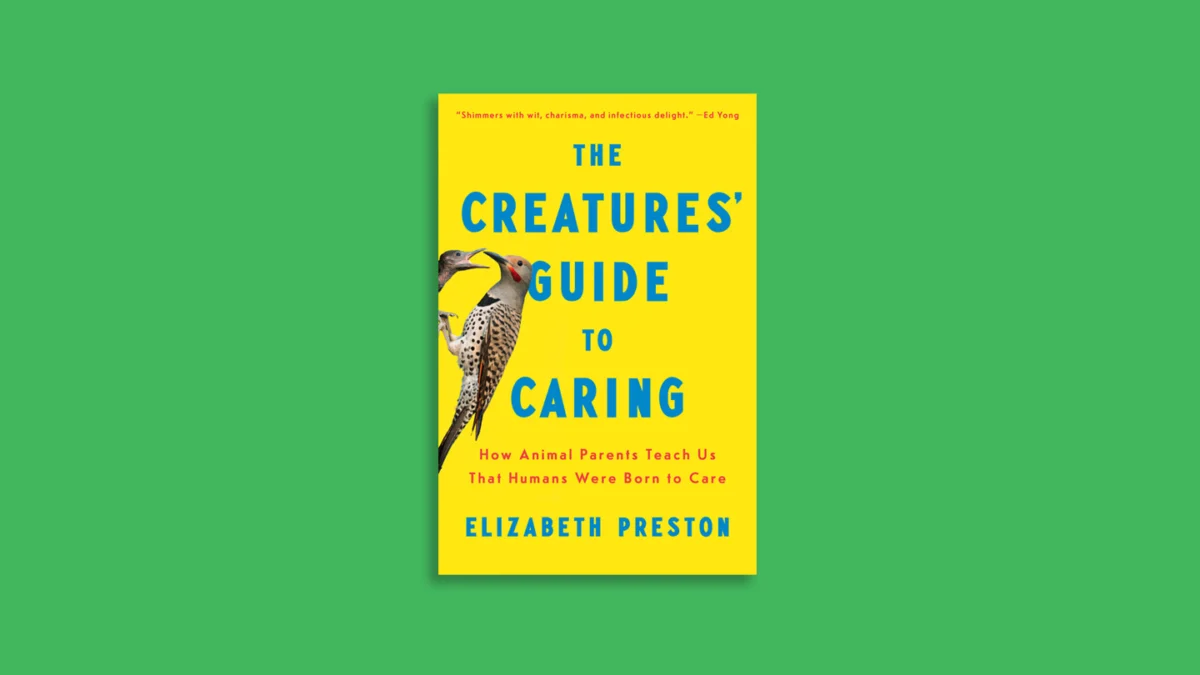
In the often overwhelming journey of parenthood, humans frequently seek guidance, turning to books, apps, and the wisdom of others. Yet, as science journalist Elizabeth Preston expertly illustrates in her latest book, The Creatures’ Guide to Caring, the fundamental principles of nurturing offspring are deeply woven into the fabric of life itself, spanning millions of years and an astonishing array of species. Preston’s work, published by Viking, delves into the biological and evolutionary underpinnings of parenting, revealing a universal, albeit sometimes peculiar, commitment to ensuring the survival and thriving of the next generation. The book, priced at $30, offers a compelling exploration of diverse parenting strategies, from the intensely devoted to the surprisingly detached, providing a new perspective on one of life’s most profound experiences.
Preston’s personal journey into the complexities of animal parenting was sparked by her own foray into motherhood. "If so many people have done it before you, and are doing it right now," she muses in the book, "and if so many animals are doing it without books or apps or advice to heed, why is it the hardest thing you’ve ever done?" This introspective question serves as the catalyst for The Creatures’ Guide to Caring, a meticulously researched and engaging examination of how various species navigate the challenges and rewards of raising young. By drawing parallels between human experiences and the behaviors observed in the animal kingdom, Preston offers a unique lens through which to understand the evolutionary roots of parental devotion, sacrifice, and even the more unsettling aspects of child-rearing.
The Unsettling Yet Essential Role of Parental "Goo"
The book’s exploration of parenting begins with a starkly vivid example: the burying beetle. These remarkable insects, far from the cuddly image often associated with parenting, engage in a process that is both crucial for their offspring’s survival and, to human sensibilities, rather unappetizing. Parent beetles meticulously prepare a carcass, utilizing specialized mouth and anal secretions to transform the deceased animal into a nutrient-rich, "slick ball of meat." This prepared food source is then buried, creating a protected environment for the eggs. In a further act of devotion, some species of burying beetles actively feed their young regurgitated portions of this carrion. Preston highlights the extraordinary growth rates facilitated by this parental provisioning, noting that young beetles can increase their size by a factor of 200 in as little as six days. To contextualize this rapid development, she aptly points out that "a newborn human growing at that rate would be the size of a beluga whale in less than a week." This striking comparison underscores the sheer efficiency and intensity of parental investment in certain species, making the physical demands of human infant care seem comparatively manageable.
Evolutionary Roots of Parental Hormones and Behaviors
Preston’s investigation into the evolutionary origins of parenting takes readers on a journey through diverse ecological niches, revealing the surprising biological commonalities that link seemingly disparate species. The book dedicates significant attention to the role of hormones in shaping parental behavior, demonstrating that the biological underpinnings of caregiving are ancient and widespread.
Fish Dads: The Early Adopters of Paternal Care
The second chapter of The Creatures’ Guide to Caring focuses on fish dads, presenting them as some of Earth’s earliest parental figures. Despite their distant evolutionary relationship to humans, fish exhibit complex hormonal responses that parallel those observed in mammalian pregnancies and childcare. For instance, in species like the three-spined stickleback, male fish that diligently guard their eggs experience an upregulation of genes associated with oxytocin, the well-known "bonding hormone" in humans. This suggests that the neurobiological mechanisms facilitating attachment and caregiving are deeply conserved. Furthermore, these male sticklebacks produce progesterone and estrogen, hormones traditionally associated with female reproduction in mammals. Preston posits that these hormonal shifts in male sticklebacks may influence their vigilance against predators and their overall dedication to offspring protection. This finding challenges traditional anthropocentric views of parenting, highlighting that paternal care is not a recent evolutionary development but a strategy that emerged very early in vertebrate history.
The Unconventional Births of Spotted Hyenas
The book does not shy away from the more challenging and, at times, visceral aspects of reproduction and early care. Preston touches upon the unique birthing process of female spotted hyenas, a species known for its matriarchal social structure and formidable parental investment. Female hyenas give birth through a pseudopenis, a result of highly masculinized genitalia. This arduous process, which involves considerable tearing and discomfort, is a testament to the extreme adaptations that can arise in the pursuit of reproductive success and offspring survival. Preston recounts a humorous, yet illustrative, anecdote where a scientist, when questioned about the birthing process, simply states there is "a lot of tearing." This detail, while graphic, underscores the immense physical challenges some mothers face. More importantly, like mother hyenas who fiercely protect their cubs by monopolizing kills, human parents often exhibit a similar drive to secure resources and safety for their young, even if the methods differ vastly. The intense, lifelong bond formed between hyena mothers and their offspring, mirroring human parental devotion, is a recurring theme that emphasizes the deep-seated nature of this biological imperative.
The Spectrum of Parental Sacrifice and Abandonment
While The Creatures’ Guide to Caring celebrates the extraordinary efforts of many parents, it also honestly confronts the darker realities that can exist within the animal kingdom’s reproductive strategies. Preston explores instances where parental investment can lead to the ultimate sacrifice, or conversely, to the abandonment of offspring when conditions become too challenging.
The Difficult Choices of Long-Tailed Skinks and Marmosets
The long-tailed skink, a species of lizard, presents a stark example of a survival-driven parental decision. A female skink may consume her entire clutch of eggs if she perceives an overwhelming threat from predators. Preston analyzes this behavior not as an act of cruelty, but as a pragmatic evolutionary strategy. In such dire circumstances, the female’s survival and the potential for future reproduction might be deemed more advantageous than the certain loss of the current brood. This behavior highlights the complex calculus of resource allocation and risk assessment that underlies reproductive success across species.
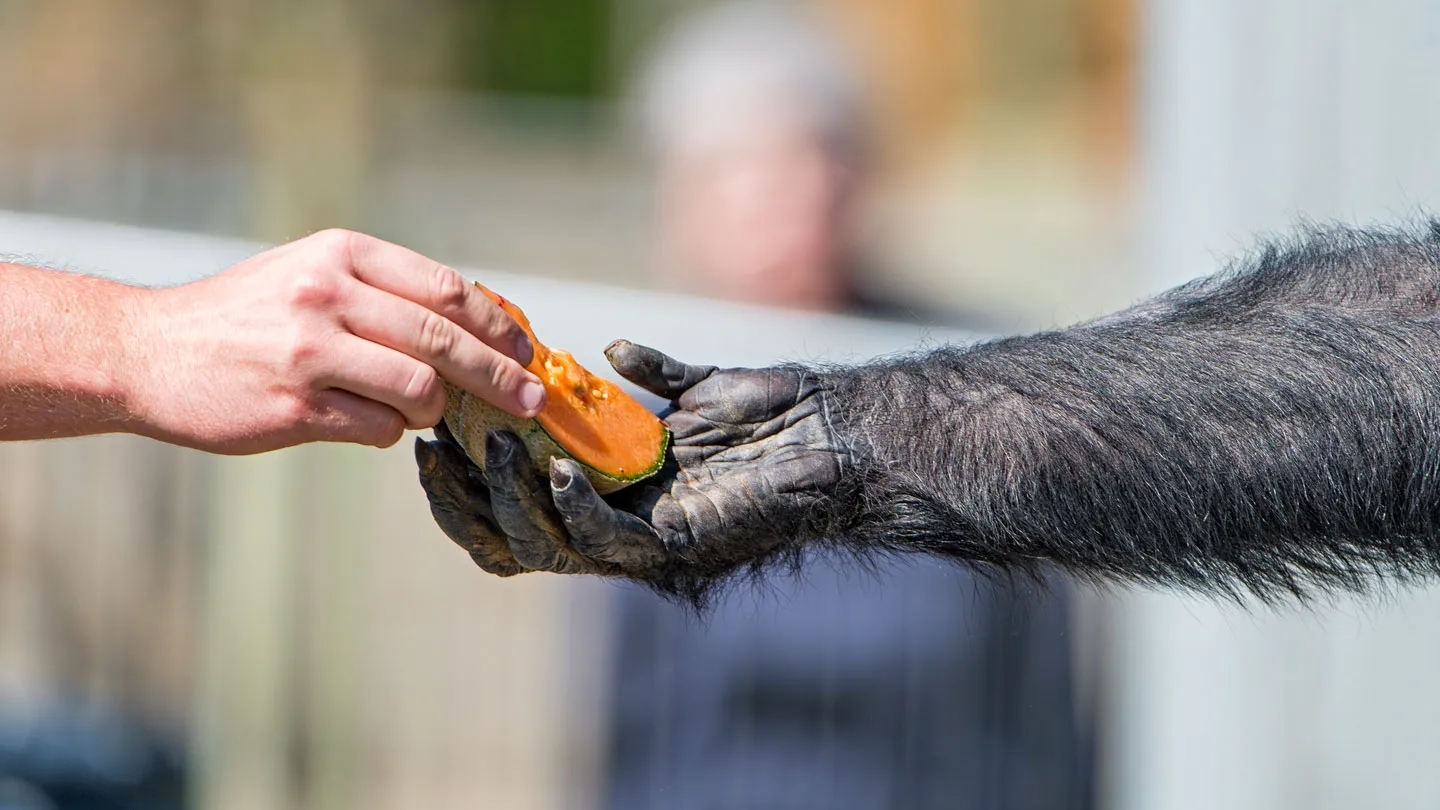
Similarly, the book examines the social dynamics of marmosets and tamarins, primate species where mothers rely heavily on helpers, often other family members, to assist in raising their young. In these species, a lack of adequate support can lead to increased infant mortality or even rejection by the mother. This phenomenon underscores the critical role of social support networks in successful parenting, a concept that resonates deeply within human societies as well. The evolutionary pressures that drive these behaviors, while seemingly harsh, are rooted in the fundamental drive for species propagation.
The Human Advantage: Community and Shared Burden
Preston argues that the human capacity for complex social structures and communal support provides a significant advantage in the realm of parenting. Unlike many species where parenting is a solitary endeavor or primarily the responsibility of one parent, humans evolved to share the burden of child-rearing across a community of relatives and friends. This "village" approach to parenting, as it is often described, alleviates some of the intense pressure and isolation that can be associated with raising young. The book suggests that the very difficulty humans often attribute to parenting stems, in part, from this evolutionary reliance on shared responsibility. When this communal support is lacking, the individual burden can become immense, leading to the feelings of overwhelm that prompted Preston’s initial inquiry.
Broader Implications: Redefining Parental Success
The Creatures’ Guide to Caring ultimately offers a profound message of solidarity and perspective for parents at all stages of life. Whether one is anticipating the arrival of a child, navigating the demanding years of active child-rearing, or experiencing the quietude of an empty nest, the book provides comfort in the shared experience of striving to nurture the next generation. Preston emphasizes that the animal kingdom, with its hundreds of millions of years of evolutionary experimentation, has yielded an "infinite" variety of solutions to the challenges of raising young. This diversity suggests that there is no single, universally "correct" way to be a good parent. Instead, the book encourages a broader understanding of parental success, one that acknowledges the biological imperatives, the environmental pressures, and the unique strategies that species, including our own, have developed to ensure the continuity of life. The implications of Preston’s work extend beyond the realm of parenting advice; they offer a deeper appreciation for the intricate tapestry of life on Earth and the remarkable adaptations that have allowed countless species to thrive and evolve. The book’s nuanced exploration serves as a reminder that while human parenting may be uniquely complex, it is also part of a grand, ancient biological narrative.