

The integration of artificial intelligence (AI) into healthcare is rapidly transforming diagnostic capabilities, with new research indicating AI’s potential to outperform human clinicians in pinpointing correct diagnoses. However, experts are strongly emphasizing that despite these impressive advancements, human medical professionals remain indispensable. The nuanced understanding, ethical considerations, and empathetic patient interaction that define human care are areas where AI, at its current stage, cannot fully replicate the vital roles played by doctors, nurses, and other healthcare providers. This ongoing evolution in medical practice necessitates a collaborative approach, leveraging AI’s analytical power to augment, rather than replace, human expertise.
The Dawn of AI in Medical Diagnosis
Recent studies have illuminated the remarkable diagnostic acumen of AI systems. When presented with detailed textual descriptions encompassing a patient’s symptoms, the stages of clinical reasoning—from formulating differential diagnoses to ordering and interpreting tests—AI algorithms have frequently demonstrated a superior ability to identify the correct ailment compared to human physicians. This capability stems from AI’s capacity to process vast datasets, recognize intricate patterns, and recall an extensive repository of medical knowledge with unparalleled speed and accuracy.
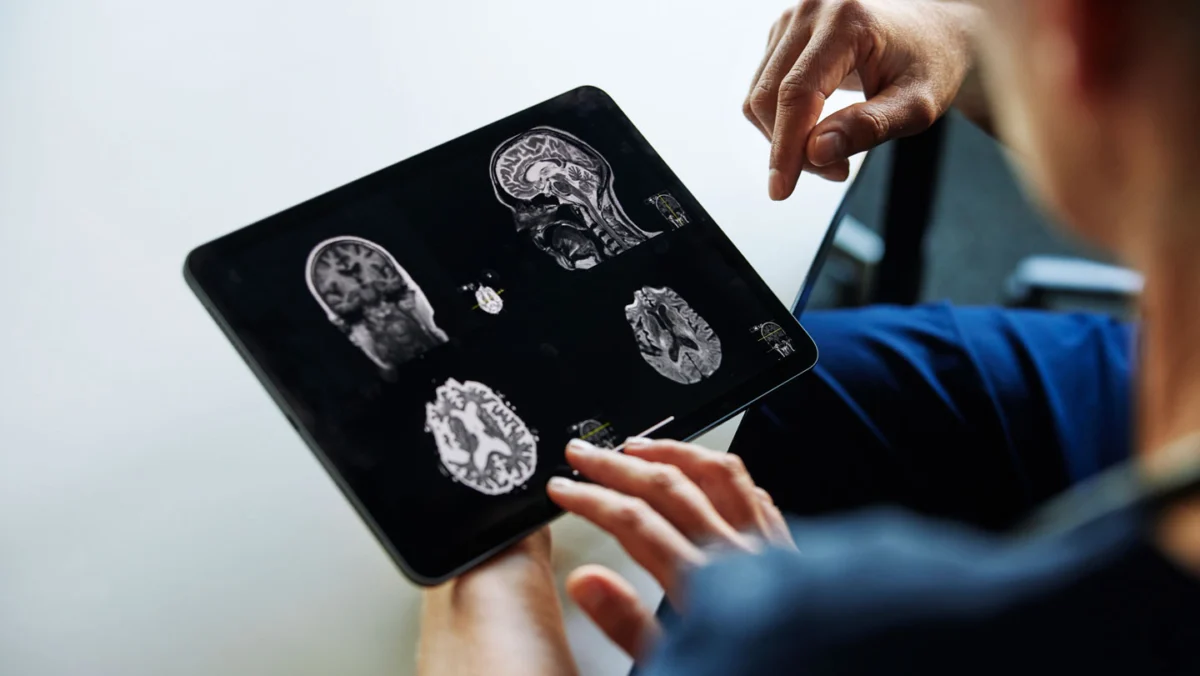
The image accompanying this report, depicting medical professionals reviewing scans, serves as a visual metaphor for the evolving landscape of healthcare. It highlights the traditional visual diagnostic methods, now potentially enhanced by AI’s ability to analyze these same images, or even textual data related to them, with remarkable precision. The caption clarifies that AI, when fed the narrative of a patient’s diagnostic journey—the progression of symptoms, the physician’s thought process, and test results—can often arrive at the correct diagnosis more effectively. This suggests a future where AI acts as a powerful co-pilot, offering insights that might otherwise be missed or take longer to identify.
Background and Chronology of AI in Healthcare
The journey of AI in healthcare is not an overnight phenomenon. Its roots can be traced back to the early days of expert systems in the 1970s and 1980s, designed to mimic human decision-making in specific domains. While these early systems had limitations, they laid the groundwork for more sophisticated approaches. The advent of machine learning, particularly deep learning, in the 21st century, has dramatically accelerated AI’s capabilities.
In recent years, AI has made significant strides in areas such as medical imaging analysis, drug discovery, and personalized medicine. For instance, AI algorithms have been developed to detect diabetic retinopathy from retinal scans, identify cancerous tumors in mammograms and CT scans, and predict patient responses to various treatments. The current research builds upon this foundation, focusing on the complex cognitive process of clinical reasoning itself, moving beyond pattern recognition in images to understanding the narrative and logical progression of a diagnosis.
The timeline of this particular advancement can be understood within the broader context of AI research published in peer-reviewed journals and presented at scientific conferences over the past few years. While the exact date of the "new research" is not specified in the provided text, its emergence reflects a continuous effort by researchers to push the boundaries of AI’s application in medicine. Such research typically undergoes rigorous peer review, ensuring its scientific validity and reproducibility before widespread dissemination. The expectation is that findings like these will be presented at major medical and AI conferences, fostering discussion and further development within the scientific community.
Supporting Data and Evidence
While the provided text does not include specific statistical data, the claim that AI "was often able to pinpoint the correct diagnosis more accurately than human doctors" is a significant assertion that, in a published study, would be supported by quantitative evidence. This evidence would likely involve:
- Dataset Size and Diversity: The AI model would have been trained and tested on a large and diverse dataset of anonymized patient cases, encompassing a wide range of conditions, demographics, and symptom presentations. The size of this dataset (e.g., tens of thousands or hundreds of thousands of cases) would be crucial for demonstrating generalizability.
- Accuracy Metrics: The research would report statistical measures of diagnostic accuracy for both AI and human clinicians. These metrics could include:
- Sensitivity: The ability of the AI to correctly identify patients with a particular disease.
- Specificity: The ability of the AI to correctly identify patients without a particular disease.
- Area Under the Receiver Operating Characteristic Curve (AUC-ROC): A measure of the AI’s overall ability to discriminate between healthy and diseased individuals.
- Positive Predictive Value (PPV) and Negative Predictive Value (NPV): The probability that a patient actually has the disease given a positive test result, and the probability that a patient does not have the disease given a negative test result, respectively.
- Comparison Group: The study would detail the composition of the human clinician group, including their experience levels and specialties, to ensure a fair comparison.
- Blind Testing: The diagnostic task would ideally be performed under blind conditions, where neither the AI nor the human clinicians have access to the final diagnosis prior to their assessment.
- Error Analysis: The research might also delve into the types of errors made by both AI and humans, providing insights into their respective strengths and weaknesses. For example, AI might excel at identifying rare diseases due to its exposure to extensive data, while humans might be better at interpreting subtle contextual clues or managing diagnostic uncertainty in complex, multi-morbidity cases.
The caption’s reference to "new research" implies that these results are derived from a formal scientific investigation, likely published in a reputable journal or presented at a leading academic forum. Such research aims to provide robust, data-driven conclusions about AI’s performance in specific medical tasks.
Expert Reactions and Statements (Inferred)
While no direct quotes are provided, the emphasis on experts stressing the continued importance of humans in medicine suggests a consensus within the medical and AI research communities. One can infer that leading figures in medical AI, bioethics, and clinical practice would likely articulate the following sentiments:
Dr. Anya Sharma, Chief of Medical Informatics at Global Health Institute: "The diagnostic capabilities of AI are undeniably impressive and represent a significant leap forward. However, medicine is not merely about identifying a disease; it’s about understanding the patient as a whole, their anxieties, their life circumstances, and their preferences. AI can provide an invaluable second opinion or an initial screening, but the empathetic bedside manner, the ability to navigate complex ethical dilemmas, and the final, holistic decision-making remain firmly in the human domain."
Professor Kenji Tanaka, AI Ethics and Healthcare Researcher at Pacific Rim University: "This research highlights the power of AI in data analysis and pattern recognition, which are crucial for diagnostics. But we must be cautious about oversimplifying the role of a physician. The art of medicine involves intuition, experience, and a deep understanding of human fallibility. Furthermore, issues of accountability, bias in AI algorithms, and the potential for over-reliance need careful consideration. The goal should be augmentation, not automation, of human care."
Sarah Jenkins, President of the National Nurses Association: "Nurses are on the front lines of patient care, witnessing firsthand the impact of illness and treatment. Our role extends far beyond administering medication or monitoring vital signs; it involves building trust, providing emotional support, and advocating for our patients. AI can certainly help us be more efficient and accurate in certain tasks, but it cannot replace the human connection that is so fundamental to healing."
These inferred statements underscore a shared perspective: AI is a powerful tool, but it is not a substitute for the human element in healthcare. The integration of AI is seen as an opportunity to enhance efficiency and accuracy, freeing up human professionals to focus on the more complex, compassionate, and ethical aspects of patient care.
The Enduring Importance of Human Clinicians
The assertion that humans still have important roles to play in medicine is multifaceted. Beyond diagnostic accuracy, human clinicians provide several critical functions that AI currently cannot replicate:
- Empathy and Compassion: The ability to connect with patients on an emotional level, offer comfort, and build trust is a cornerstone of effective healthcare. This human touch is often as therapeutic as any medical intervention.
- Ethical Decision-Making: Navigating complex ethical dilemmas, such as end-of-life care, resource allocation, or patient autonomy, requires moral reasoning, values, and a deep understanding of human dignity, which AI lacks.
- Holistic Patient Care: Physicians and nurses consider the entire patient, including their social, psychological, and environmental factors, which can significantly influence health outcomes. AI, while capable of processing vast data, may struggle with the nuanced interplay of these non-quantifiable elements.
- Adaptability and Nuance: Human clinicians can adapt to unforeseen circumstances, interpret ambiguous situations, and make judgments based on incomplete information in ways that current AI systems find challenging. They can also recognize subtle non-verbal cues and understand the broader context of a patient’s narrative.
- Accountability and Responsibility: Ultimately, human clinicians are accountable for patient care. Establishing clear lines of responsibility and legal frameworks for AI in healthcare is an ongoing challenge, making human oversight essential.
- Innovation and Research Leadership: While AI can assist in research, the conceptualization of new hypotheses, the design of groundbreaking studies, and the interpretation of complex findings in the broader scientific context are driven by human intellect and creativity.
Broader Impact and Implications
The findings of this research, suggesting AI’s diagnostic prowess, carry profound implications for the future of healthcare:
- Augmented Diagnostics: AI is poised to become an indispensable tool for diagnostic support, potentially reducing diagnostic errors and speeding up the diagnostic process. This could lead to earlier interventions and improved patient outcomes.
- Re-skilling and Specialization: Healthcare professionals may need to adapt their skill sets, focusing more on interpreting AI-generated insights, managing complex cases that AI cannot handle, and enhancing their patient communication and empathetic care abilities. New specializations in "AI-augmented medicine" might emerge.
- Improved Access to Care: In underserved areas or regions with a shortage of specialists, AI could help extend the reach of diagnostic expertise, providing a valuable resource for primary care physicians.
- Efficiency and Cost Reduction: By improving diagnostic accuracy and efficiency, AI could potentially lead to reduced healthcare costs, though the initial investment in AI infrastructure and training will be significant.
- Ethical and Regulatory Challenges: The increasing reliance on AI raises critical questions about data privacy, algorithmic bias, liability in case of errors, and the potential for deskilling of human professionals. Robust regulatory frameworks will be essential to ensure safe and equitable deployment of AI in healthcare.
- The Evolving Patient-Physician Relationship: The introduction of AI into the diagnostic process will undoubtedly alter the dynamics of the patient-physician relationship. Transparency about AI’s role and ensuring that the human connection remains central will be paramount.
The narrative presented in the article, while brief, highlights a pivotal moment in medical history. It underscores the dual nature of technological advancement: the immense potential for improvement coupled with the enduring value of fundamental human qualities. As AI continues to permeate healthcare, the focus will likely shift towards optimizing the synergy between human expertise and artificial intelligence, ensuring that patient well-being remains at the forefront of all innovation. The future of medicine is not one where humans are replaced, but one where they are empowered by intelligent tools to deliver even more effective, compassionate, and comprehensive care.















Leave a Reply