

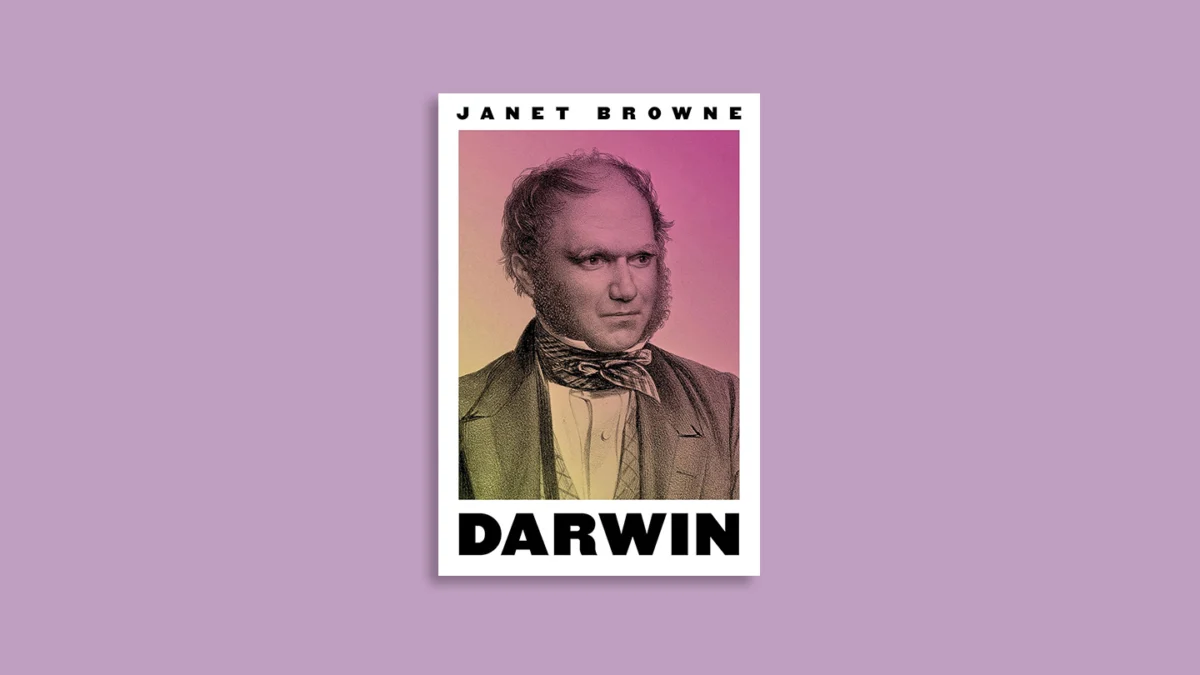
New Biography Unveils the Complex Private Life of a Scientific Titan
A recently published abridged biography, Darwin: A Biography by Janet Browne, offers a compelling and nuanced exploration of the private life of Charles Darwin, the scientist whose theories revolutionized our understanding of life on Earth. While Darwin is often remembered as a stoic, bearded scholar whose name is synonymous with evolution, Browne’s work meticulously peels back the layers of his public persona to reveal a man grappling with personal grief, existential doubts, and the complex social and financial networks that underpinned his monumental achievements. This comprehensive, 624-page volume, drawn from Browne’s earlier, extensive two-volume biographies, aims to humanize the figure most commonly encountered in science textbooks, presenting a vivid portrait of Darwin the man, not just Darwin the scientist.
The biography opens with a surprising glimpse into Darwin’s early interactions with the wildlife of the Galápagos Islands. Far from the revered naturalist meticulously cataloging specimens, the 26-year-old Darwin is depicted engaging in what could be described as almost mischievous experimentation. On San Cristóbal Island in 1835, he is noted for repeatedly tossing marine iguanas into the ocean to observe their swimming abilities, describing them with a surprising lack of reverence as "most disgusting, clumsy lizards." His interactions with their land-dwelling counterparts on Isla Isabela were similarly characterized by a degree of detached, almost cruel, curiosity; he described yanking their tails and found their appearance "singularly stupid." These anecdotes, while perhaps unsettling to some, serve as an early indicator of the complex and sometimes contradictory nature of the man who would go on to formulate the theory of natural selection.
Browne meticulously traces Darwin’s formative years, highlighting how seemingly disparate aspects of his youth profoundly shaped his future endeavors. His early passion for collecting beetles, for instance, provided him with crucial observational and methodological skills that would prove invaluable throughout his scientific career. Simultaneously, the profound grief he experienced following the death of his mother, though a deeply personal tragedy, is suggested by Browne to have contributed to a lifelong struggle with hypochondria, a condition that would persistently plague him.
The Pivotal Voyage of the HMS Beagle
The narrative then shifts to what is undeniably the most transformative period of Darwin’s life: his nearly five-year circumnavigation of the globe aboard the HMS Beagle. This epic voyage, commencing in 1831, provided Darwin with the indispensable raw material—observations, specimens, and invaluable firsthand experience of diverse ecosystems and species—that would eventually coalesce into his groundbreaking work, On the Origin of Species, published decades later. Browne emphasizes that this expedition was not merely a scientific undertaking but was deeply interwoven with the social and economic fabric of Victorian England.
Darwin’s privileged upbringing, characterized by significant financial resources, played a crucial role in enabling his participation. The invitation to join the Beagle expedition, extended by a Cambridge University professor, is presented by Browne as a subtle illustration of the pervasive influence of the "old boys’ network" within academic and scientific circles of the era. Furthermore, a substantial inheritance from his mother provided Darwin with the financial independence necessary to cover the costs associated with his provisions, lodging, and the meticulous preparation of the vast quantities of specimens he collected. Browne also sheds light on the often-overlooked detail of Darwin’s ability to request funds from his father while abroad, a capability made possible by the extensive financial reach of the British Empire. This aspect underscores how Darwin’s scientific pursuits were inextricably linked to the imperial ambitions and commercial networks of his time.
Imperialism and the Naturalist’s "Right"
As a seafaring naturalist operating within the context of Victorian England’s burgeoning imperial agenda, Darwin’s activities aboard the Beagle also highlight the era’s prevailing attitudes towards the natural world. Browne points out that Darwin, like many collectors of his time, often relied on hired and uncredited assistance in his expeditions. He is depicted as operating under the assumption that he possessed an inherent "right to take material as he wished," a sentiment that reflects a colonialist mindset prevalent in the era’s scientific exploration. His meticulous work of shooting, skinning, and dissecting specimens across the Southern Hemisphere, while crucial for his scientific development, also serves as a stark reminder of the complex ethical considerations surrounding scientific discovery in a period of global expansion.
Building a Reputation Amidst Controversy
While the voyage of the Beagle was a watershed moment, Browne’s biography underscores that it constituted only a fraction of Darwin’s 73 years. The narrative progresses to detail Darwin’s establishment of a family and his concerted efforts to build a formidable reputation within the natural sciences. This journey, however, was not without its significant controversies. A notable instance involves Darwin’s handling of his theory of evolution by natural selection. To preemptively announce his findings and avoid being "scooped" by his contemporary, Alfred Russel Wallace, Darwin engaged in a complex maneuver. He effectively "coauthored" a paper on the subject with Wallace by incorporating elements of an essay Wallace had written without Wallace’s explicit knowledge or consent. This episode, among others, contributed to the charged atmosphere surrounding the eventual publication of On the Origin of Species in 1859, a work that would fundamentally alter scientific discourse and societal understanding.
The Human Behind the Theories
By the conclusion of Browne’s biography, readers are presented with an image of Darwin that might resonate with the familiar textbook depiction: the dignified, bearded scholar with an extensive list of scholarly contributions. However, the profound insights of Darwin: A Biography emerge not solely from a recounting of his professional achievements but, more significantly, from an intimate examination of his personal correspondence, diaries, and private notes. These documents offer an unparalleled window into the man behind the revolutionary theories.
Browne reveals Darwin as an agnostic grappling with the deeply held religious beliefs of his future wife, Emma Wedgwood. The biography does not shy away from his profound personal grief as a father who endured the tragic deaths of three of his seven children, a burden that undoubtedly shaped his worldview and emotional landscape. We also encounter Darwin as a writer, at times bristling with frustration and resentment at unfavorable book reviews, demonstrating a sensitivity to public reception that belies his stoic image.
A Balanced Perspective on a Complex Figure
Darwin: A Biography is carefully crafted to avoid being a hagiography or a harsh condemnation. Instead, it offers a balanced and deeply humanizing portrayal of Darwin. The book effectively disentangles Darwin the Human from Darwin the Scientist, demonstrating how the former’s personal struggles, joys, and anxieties were intrinsically linked to his intellectual development. Browne paints a portrait of a man who, like all individuals, experienced laughter, wept through loss, and navigated the complexities of the Victorian era with the same struggles and triumphs that informed his groundbreaking scientific contributions.
For dedicated readers, engaging with Browne’s rendition of Darwin promises to be an intellectually stimulating and emotionally resonant endeavor. It is a testament to the enduring power of biography to illuminate not only the grand narratives of scientific discovery but also the intricate, often hidden, personal journeys that make such discoveries possible. The only beings who might approach this biography with a degree of apprehension, Browne humorously suggests, are perhaps the Galápagos iguanas themselves.

















Leave a Reply