

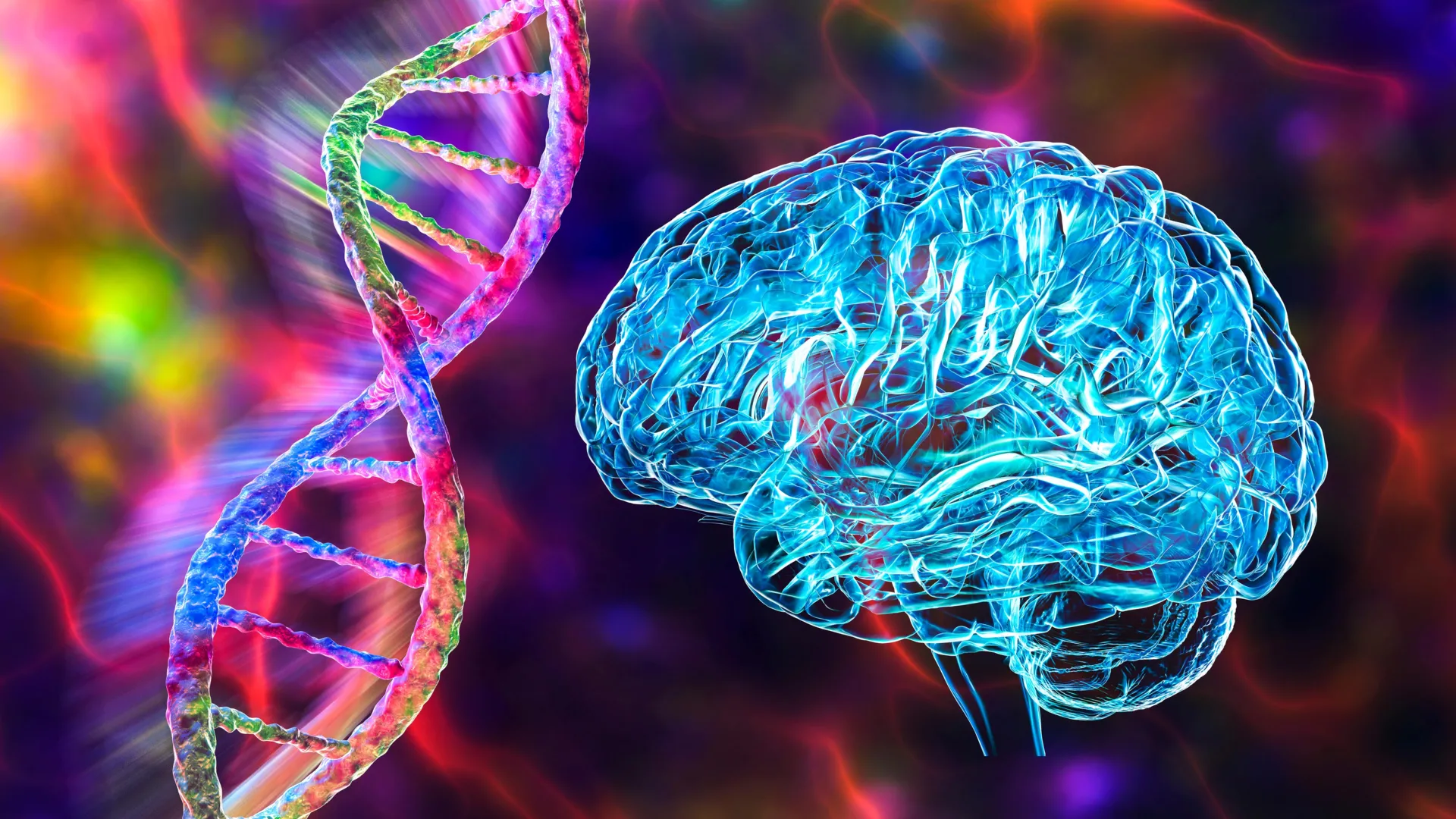
A groundbreaking study led by researchers at the Massachusetts Institute of Technology (MIT) has identified a specific genetic mutation and a corresponding neural circuit that may explain why individuals with schizophrenia often struggle to update their beliefs in the face of new information. The research, published in the journal Nature Neuroscience, provides a detailed look at the biological underpinnings of cognitive impairment, a core feature of schizophrenia that has long proven resistant to traditional treatments. By pinpointing the role of the grin2a gene and its impact on the mediodorsal thalamus, the study offers a new roadmap for developing targeted therapies aimed at the cognitive symptoms that often lead to a disconnect from reality.
The Cognitive Architecture of Schizophrenia
Schizophrenia is a complex and often debilitating psychiatric disorder that affects approximately 24 million people worldwide, or roughly 1 in 300 individuals. While the public often associates the condition with "positive symptoms" such as hallucinations and delusions, clinicians and researchers have increasingly focused on the "cognitive symptoms" as the primary driver of long-term disability. These symptoms include deficits in executive function, memory, and the ability to use new sensory data to make adaptive decisions.
A fundamental challenge for those living with schizophrenia is a breakdown in what neuroscientists call "belief updating." In a neurotypical brain, internal models of the world—prior beliefs—are constantly refined by incoming sensory information. This allows individuals to navigate changing environments effectively. However, in schizophrenia, this process becomes skewed. Patients often "over-weight" their prior beliefs, ignoring or misinterpreting new evidence that contradicts their internal reality. This cognitive rigidity is believed to be a precursor to the more overt symptoms of psychosis, as the mind becomes increasingly isolated from the external world.
The Genetic Search: From GWAS to Whole-Exome Sequencing
The genetic basis of schizophrenia is well-documented but notoriously difficult to untangle. Statistical data shows that while the risk in the general population is about 1 percent, it jumps to 10 percent for those with a first-degree relative with the disorder and reaches 50 percent among identical twins. Over the last decade, Genome-Wide Association Studies (GWAS) conducted by the Stanley Center for Psychiatric Research at the Broad Institute have identified more than 100 chromosomal regions associated with the disease.
Despite these breakthroughs, most of these variants reside in non-coding regions of the genome—the "dark matter" of DNA—which do not provide direct instructions for making proteins. This makes it difficult for researchers to determine exactly how these variants affect brain function. To circumvent this, the MIT-led team utilized whole-exome sequencing, a more targeted approach that focuses on the 2 percent of the genome that codes for proteins.
By analyzing approximately 25,000 genetic sequences from individuals diagnosed with schizophrenia and comparing them against 100,000 control subjects, the researchers identified 10 specific genes where mutations significantly increased the risk of the disorder. One of the most prominent candidates was grin2a, a gene that provides instructions for creating a subunit of the NMDA (N-methyl-D-aspartate) receptor. These receptors are essential for synaptic plasticity, the process by which the brain strengthens or weakens connections between neurons in response to learning.
Modeling Cognitive Rigidity in the Laboratory
To understand how a mutation in grin2a translates into behavioral symptoms, the research team, led by Guoping Feng and Michael Halassa, engineered a line of mice carrying the specific mutation. Because mice cannot report hallucinations, the researchers focused on "adaptive decision-making," a behavioral proxy for the belief-updating process seen in humans.
Tingting Zhou, a research scientist at the McGovern Institute and lead author of the study, designed a sophisticated "reward-switching" task. In this experiment, mice were presented with two levers. Initially, one lever provided a high reward (three drops of milk) for minimal effort, while the other provided a low reward (one drop of milk) for higher effort. Naturally, the mice quickly learned to favor the high-reward lever.
The researchers then introduced a shift: the effort required for the high-reward lever was gradually increased. A neurotypical "wild-type" mouse would eventually recognize that the "cost" of the high reward no longer made sense and would switch to the low-reward, low-effort lever. However, the mice with the grin2a mutation struggled significantly with this transition. They continued to oscillate between the two levers, failing to commit to the more efficient strategy long after the environment had changed.
"Our brain can form a prior belief of reality, and when sensory input comes into the brain, a neurotypical brain can use this new input to update the prior belief," Zhou explained. "What happens in schizophrenia patients is that they weigh too heavily on the prior belief… their adaptive decision-making is much slower compared to the wild-type animals."
Identifying the Mediodorsal Thalamus Circuit
The next phase of the research involved identifying where in the brain this breakdown was occurring. Using functional ultrasound imaging and high-density electrical recordings, the team monitored the brains of the mice as they performed the lever tasks. The results pointed consistently to the mediodorsal thalamus (MD).
The mediodorsal thalamus is a critical relay station that connects to the prefrontal cortex, the area of the brain responsible for high-level executive control and decision-making. In healthy mice, neurons in the MD were highly active during the process of evaluating rewards and updating strategies. In the grin2a-mutant mice, however, the activity in this thalamocortical circuit was severely disrupted.
The researchers discovered that the grin2a mutation specifically impaired the NMDA receptors in this region, preventing the neurons from communicating effectively with the prefrontal cortex. This lack of communication meant that even when the mice received "sensory data" (the increased effort required for milk), the information was not being integrated into the brain’s decision-making center.
Reversing Symptoms Through Optogenetics
In a dramatic demonstration of the circuit’s importance, the researchers tested whether they could "fix" the behavioral deficit by manually stimulating the affected brain region. Using a technique called optogenetics—which involves using light to control neurons that have been genetically modified to be light-sensitive—the team activated the neurons in the mediodorsal thalamus of the mutant mice.
When the light-based stimulation was applied, the mutant mice regained their ability to make adaptive decisions. They began to switch between the levers with the same efficiency as the healthy control mice. This finding is significant because it suggests that the cognitive symptoms of schizophrenia are not necessarily a permanent result of "hard-wired" brain damage, but rather a functional failure of a specific circuit that could, in theory, be corrected.
"We are quite confident this circuit is one of the mechanisms that contributes to the cognitive impairment that is a major part of the pathology of schizophrenia," said Guoping Feng, the James W. and Patricia T. Poitras Professor at MIT. "If this circuit doesn’t work well, you cannot quickly integrate information."
Broader Implications and Future Directions
The implications of this study extend beyond the rare group of patients who carry the grin2a mutation. Schizophrenia is a heterogeneous disorder, meaning different patients may arrive at the same symptoms through different genetic or environmental pathways. However, the researchers believe that the mediodorsal thalamus-prefrontal cortex circuit may be a "common denominator" for cognitive dysfunction across a much wider segment of the patient population.
Currently, the primary treatment for schizophrenia involves antipsychotic medications that target dopamine receptors. While these drugs are effective at reducing hallucinations and delusions (positive symptoms), they often do little to improve cognitive function or "negative symptoms" such as social withdrawal and lack of motivation. This leaves many patients unable to return to work or maintain stable social lives, even when their psychosis is under control.
By identifying a specific circuit and a specific receptor type (NMDA) involved in cognitive flexibility, the MIT study opens the door for a new class of "pro-cognitive" drugs. The research team is now focused on identifying small molecules or pharmacological agents that could mimic the effects of the optogenetic stimulation seen in the mice.
Chronology of Research and Support
The discovery is the culmination of several years of interdisciplinary collaboration between MIT, the Broad Institute, and Tufts University. The timeline of the research reflects a broader shift in psychiatric science:
- 2014-2018: Large-scale GWAS studies identify over 100 risk loci, pointing toward the complexity of schizophrenia’s genetic architecture.
- 2019-2021: The shift toward whole-exome sequencing allows researchers to pinpoint grin2a as a high-risk gene.
- 2022-2023: Development of the grin2a mouse model and the design of behavioral tasks to measure belief-updating.
- 2024: Publication of the findings in Nature Neuroscience, establishing the link between the mutation, the MD-thalamocortical circuit, and adaptive decision-making.
The research was supported by a coalition of high-profile institutions, including the National Institutes of Mental Health (NIMH), the Poitras Center for Psychiatric Disorders Research, and the Stanley Center for Psychiatric Research. The involvement of these organizations underscores the high priority the scientific community has placed on solving the cognitive puzzles of schizophrenia.
As neuroscience moves toward an era of personalized medicine, studies like this provide the necessary precision to move away from "one-size-fits-all" treatments. While a cure for schizophrenia remains a long-term goal, the ability to repair the circuits responsible for reality-testing and decision-making would represent a monumental leap in improving the quality of life for millions of patients.
















Leave a Reply