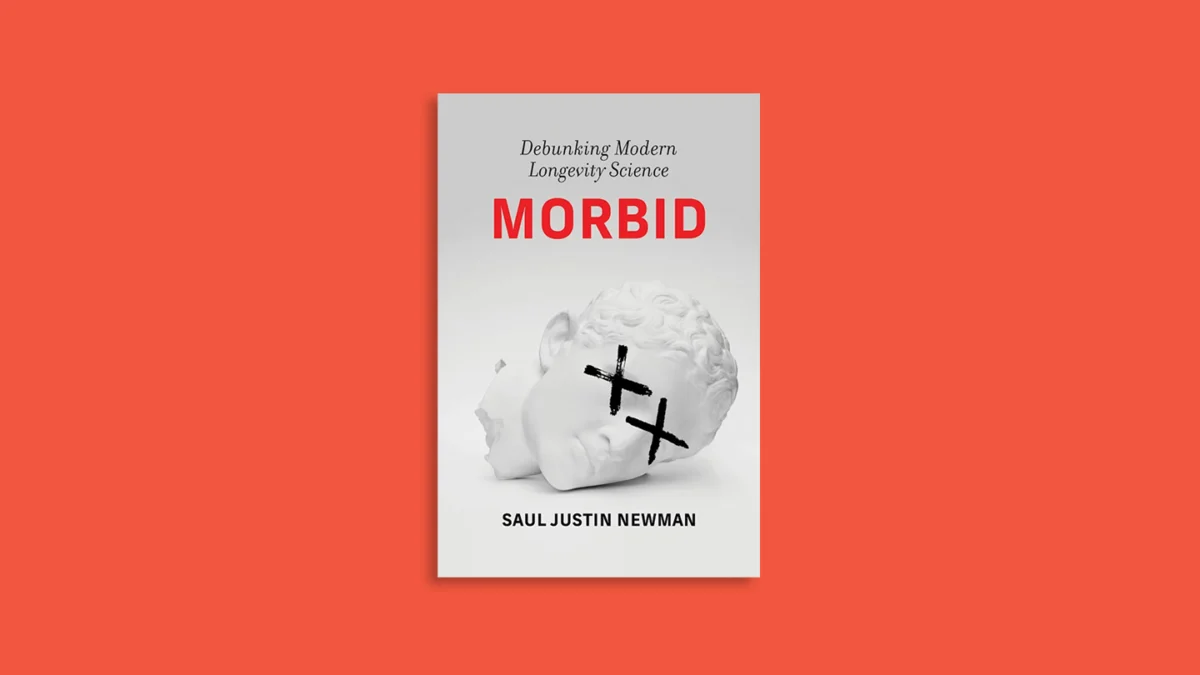
In a provocative and meticulously researched exposé, Oxford scientist Saul Justin Newman, a self-described "cheeky scamp," delivers a scathing indictment of the burgeoning field of longevity science in his new book, Morbid: A Salient Takedown of Longevity Science. Published by The MIT Press, Newman’s work plunges readers into the often-scandalous underbelly of research aimed at extending human lifespan, revealing a landscape riddled with data inaccuracies, outright deception, and the relentless pursuit of profit over verifiable scientific progress. Far from a dry academic treatise, Morbid employs wit and a relentless investigative spirit to dismantle the myths and exaggerated claims that have come to define much of the anti-aging industry.
Newman’s central thesis posits that much of the celebrated "extreme longevity" data, often cited as evidence for groundbreaking discoveries in aging biology, is fundamentally flawed. He meticulously scrutinizes the databases and methodologies used by researchers to identify centenarians and individuals with exceptional lifespans. His investigation uncovers a disturbing pattern of misreporting, outdated records, and, in some egregious cases, outright fraud. The book highlights compelling anecdotes, such as the case of Irma Borgoglio, a supposed centenarian whose neighbors believed her to be alive and well, only for it to be revealed that her son had been collecting her pension while her body was preserved in a freezer. This case, Newman reveals, was part of an extreme-age database that had been validated by researchers, underscoring the alarming ease with which such inaccuracies can infiltrate scientific inquiry.
The Deceptive Allure of Extreme Longevity
The allure of living to an extraordinary age, and the promise of scientific breakthroughs that could facilitate such a feat, has fueled billions of dollars in research and investment. Longevity science, encompassing fields from gerontology to genetics and pharmacology, has captured the public imagination, fueled by sensationalized media reports and the marketing of various supplements and lifestyle interventions. Newman’s work directly challenges this narrative, arguing that the celebrated "superagers" and the so-called "blue zones"—regions around the world purported to have unusually high concentrations of centenarians—are often built on a foundation of questionable data.
Newman’s rigorous examination of these databases revealed a "mountain of problems." He found that many instances of claimed extreme longevity were not the result of inherent biological resilience but rather stemmed from errors in record-keeping, administrative oversights, or deliberate fabrication. The question he poses to his readers, "Could most of the world’s oldest people be just… shonky data?" cuts to the heart of his critique. His investigative approach, characterized by a "locomotive force" and an admirable skill in statistics, systematically dismantles these claims.
A Chronicle of Deception and Misinformation
Newman’s journey into the world of longevity science is presented as a thrilling, albeit sometimes unsettling, exploration. He details his efforts to track down these purported superagers, uncovering the discrepancies and deceptions that often lay hidden beneath the surface of official records. The book chronicles his work debunking claims of exceptional longevity, including investigations into the records of a 122-year-old woman, a case that ultimately deflated the hype surrounding her supposed extreme age. This critical examination extends to the concept of "blue zones," areas that have been heavily promoted as havens of exceptional health and longevity. Newman’s findings suggest that the longevity observed in these regions may be significantly overstated or attributable to factors other than the purely biological, such as improved data collection in some areas or misinterpretation of existing records.
For his groundbreaking work in exposing flaws in record-keeping systems, particularly within the context of blue zones, Newman was recognized with a 2024 Ig Nobel Prize. The Ig Nobels, awarded for achievements that "make people laugh, and then think," perfectly encapsulate the dual nature of Newman’s contribution: his witty and often humorous presentation of complex issues makes them accessible, while simultaneously provoking critical thought about the foundations of scientific claims.
The Business of Anti-Aging: Profit Over Proof
Beyond the scientific inaccuracies, Morbid also sheds light on the financial incentives driving the longevity industry. Newman argues that there is a significant financial motivation to perpetuate the narrative of imminent breakthroughs in anti-aging. He points to instances where promising anti-aging compounds, often identified through basic research, are rapidly commercialized as dietary supplements without rigorous proof of efficacy or safety. The infamous case of resveratrol, a compound found in red wine that gained immense popularity in the early 2000s for its purported anti-aging properties, serves as a stark example. Newman notes that extensive research later revealed that high doses of resveratrol primarily lead to gastrointestinal distress, underscoring the gap between initial hype and actual therapeutic benefit.
Newman is unsparing in his critique of what he terms "antiaging medicine," dissecting the claims made for various drugs and interventions. His approach, characterized by "logic, math and wit," systematically dismantles the marketing hype surrounding these products, often funded by "Big Pharma" with significant investment. He highlights the industry’s tendency to capitalize on public desire for youth and longevity, sometimes at the expense of scientifically validated treatments.
Navigating the Complexities of Aging Biology
While Morbid excels in its critique of the longevity industry’s data and marketing practices, it does, as the original review notes, encounter some challenges when delving into the intricate biological mechanisms of aging. Newman demonstrates a thorough understanding of statistics and research methodologies, but his discussions on topics such as telomeres, cellular senescence, and evolutionary fitness, while factually presented, might leave some readers with more questions than answers. This aspect of the book, where it transitions from debunking to explaining the fundamental science of aging, may require a more specialized background from the reader to fully grasp. However, Newman seems to anticipate this, embracing skepticism as a core theme. His underlying message is a powerful reminder that critical thinking is paramount, urging readers to question even claims presented in prestigious scientific journals or popular science books.
A Call for Scientific Integrity and Caution
Despite its often lighthearted tone, Morbid carries a serious undercurrent: the potential for exploitation and harm within the pursuit of longevity. Newman makes a compelling case that the lucrative nature of longevity research can incentivize questionable practices, leading to the marketing of unproven remedies and the premature celebration of unverified claims. He advises a more cautious and evidence-based approach, urging the public to be discerning consumers of longevity science.
Newman’s concluding advice is a clarion call for scientific integrity: "Sack the charlatans, laugh out anyone who promises a ‘cure’ to aging or carries a trademark, and give space to reproducible basic research." This straightforward directive underscores his belief that genuine progress in understanding and potentially influencing aging will emerge from rigorous, transparent, and reproducible scientific inquiry, not from sensationalized claims or profit-driven marketing. His message resonates broadly, encouraging a healthy skepticism and a demand for evidence-based approaches, regardless of one’s personal stance on the ultimate potential of longevity science. The implications of Newman’s work extend beyond the scientific community, impacting public health discourse, consumer choices, and the ethical considerations surrounding life extension research. By dissecting the fallacies and financial machinations within the field, Morbid serves as a crucial, albeit entertaining, guide for navigating the complex and often misleading landscape of longevity science.