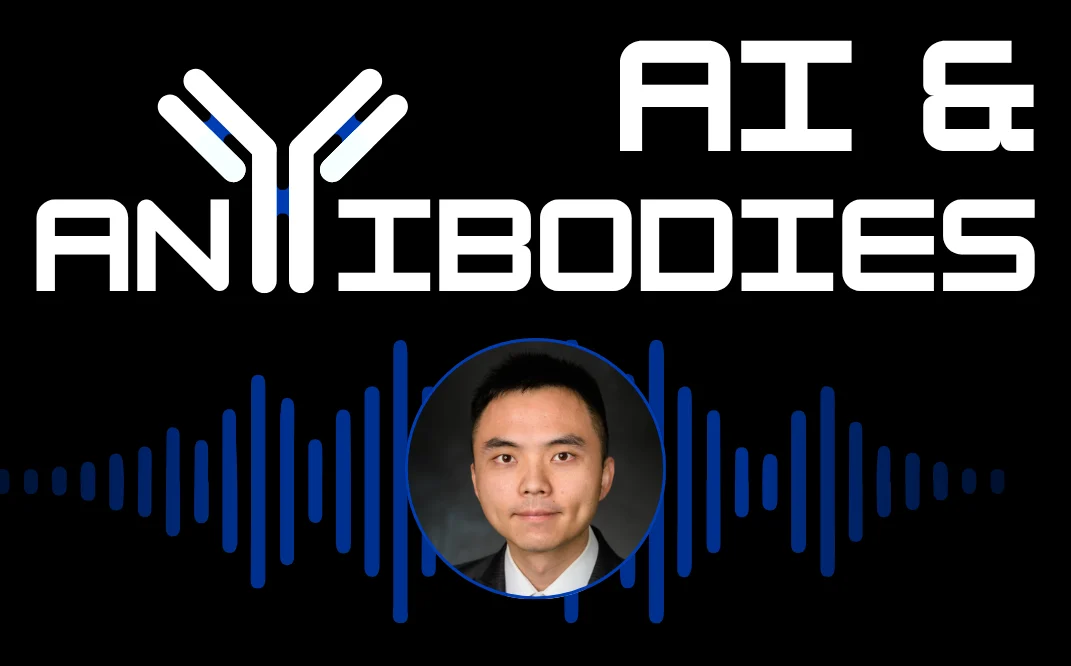
The landscape of antibody therapeutic development is undergoing a profound transformation, driven by the accelerating integration of artificial intelligence (AI) and machine learning (ML). This paradigm shift was the central theme of a highly successful special article collection in the prestigious mAbs journal, which recently concluded its comprehensive review of AI and ML applications in the field. Pin-Kuang Lai, an Assistant Professor in the Department of Chemical Engineering and Materials Science at Stevens Institute of Technology and a distinguished co-Guest Advisor for the collection, reflected on its remarkable impact and the future trajectory of this burgeoning interdisciplinary domain in a recent discussion on the Talking Techniques podcast.
Lai’s insights underscore a pivotal moment in biopharmaceutical research, where computational prowess is no longer a supplementary tool but an increasingly indispensable partner in accelerating the discovery and optimization of safer, more effective antibody-based medicines. The collection, a testament to the scientific community’s fervent interest, garnered significant attention, highlighting the urgency and potential of AI to address complex challenges in antibody design, development, and manufacturing.
Setting the Stage: The AI Revolution in Biologics
The journey towards this landmark collection began with a clear recognition that AI was already reshaping numerous sectors of biology and drug discovery. However, antibody development presented a unique set of intricate challenges. Unlike many other biological applications, antibody research generates an extraordinarily diverse array of data—ranging from intricate sequences and three-dimensional structures to critical developability measurements, complex formulation conditions, intricate manufacturing parameters, and vital clinical outcomes. The fundamental question that prompted the mAbs collection was how to synthesize these disparate, high-dimensional data types into coherent, scientifically rigorous, and actionable insights.
The global market for antibody therapeutics, valued at over $170 billion in 2022 and projected to exceed $300 billion by 2030, underscores the immense economic and health implications of advancements in this field. Monoclonal antibodies (mAbs) have emerged as a cornerstone of modern medicine, offering highly specific and effective treatments for a wide range of diseases, including cancer, autoimmune disorders, and infectious diseases. However, the traditional discovery and development pipeline for mAbs is notoriously lengthy, expensive, and prone to high failure rates, often taking over a decade and billions of dollars to bring a single drug to market. These inherent inefficiencies highlight the critical need for innovative approaches, making the integration of AI and ML not just advantageous but imperative.
Pin-Kuang Lai, whose research at Stevens Institute of Technology specifically focuses on applying AI, machine learning, molecular modeling, and biophysical characterization to accelerate antibody development, brought a wealth of expertise to the collection. His group is dedicated to understanding and predicting critical antibody developability properties, such as viscosity, aggregation, stability, and subcutaneous bioavailability. By combining sophisticated computational approaches with advanced experimental techniques like small-angle X-ray scattering (SAXS), nuclear magnetic resonance (NMR), and molecular simulations, his team aims to decipher and forecast these complex behaviors, ultimately streamlining the development process. His role as an Assistant Editor for mAbs further positions him at the forefront of discussions shaping emerging technologies in the antibody field.
Genesis of a Landmark Collection: Aims and Objectives
The primary objectives laid out for the mAbs article collection were multi-faceted and ambitious. Foremost among them was the creation of a dedicated forum to showcase not only novel AI algorithms but, crucially, their practical applications across the entire antibody development pipeline. This encompassed the full spectrum of the drug lifecycle, from initial antibody discovery and engineering to critical developability prediction, formulation optimization, manufacturing processes, and rigorous quality assessment. The aim was to move beyond theoretical discussions to demonstrate tangible, real-world utility.
A second, equally vital objective was to foster deeper collaboration between computational scientists and experimental researchers. Historically, these disciplines have sometimes operated in silos. The collection sought to bridge this gap, recognizing that the most impactful advances often emerge from the synergistic integration of machine learning capabilities with a robust mechanistic understanding and high-quality experimental data. This approach positions AI not as a replacement for empirical experimentation but as a powerful enhancer.
Finally, the collection was envisioned as a comprehensive resource for the global scientific community. It aimed to provide a timely snapshot of the field’s current standing, mapping out the cutting-edge research and indicating promising future directions. This comprehensive overview was designed to inform, inspire, and guide subsequent research efforts.
Unprecedented Engagement: A Resounding Success
The response to the mAbs collection on AI and ML in antibody development has been nothing short of extraordinary, far exceeding initial expectations. With 22 papers published to date and an impressive cumulative total of over 130,000 views on its articles, the collection has demonstrably resonated with the scientific community. This robust engagement—both in terms of submissions and readership—serves as compelling evidence of the tremendous and escalating interest in this interdisciplinary area.
Lai expressed satisfaction with the progress made toward the collection’s ambitious goals, noting that the level of community engagement was particularly encouraging. The breadth of contributors, encompassing researchers from academia, industry, and technology development sectors, further underscores the collaborative spirit that now characterizes modern antibody research. This diverse participation reflects a shared understanding that tackling the complexities of antibody development requires a concerted effort from various perspectives and expertise.
Significantly, Lai highlighted a crucial evolution in the discourse surrounding AI in antibody development. The fundamental question of whether AI has a role has largely been settled; the focus has unequivocally shifted to how to construct more accurate, interpretable, and deployable models that can genuinely accelerate drug development. While acknowledging the rapid pace of evolution in the field and the inherent impossibility of any single collection capturing its entirety, Lai expressed confidence that the mAbs series has laid a valuable foundation upon which researchers will continue to build.
Navigating the Landscape: Key Themes and Innovations
The extensive body of work submitted to and published within the mAbs collection revealed several recurring and impactful themes that illuminate the current trajectory of AI in antibody development. These themes represent the most active and promising areas of research and application:
-
Rapid Adoption of Deep Learning and Foundation Models: A dominant trend observed was the swift integration of deep learning architectures and large language models (LLMs), often referred to as "foundation models," for sophisticated antibody sequence and structure analysis. These advanced AI paradigms, capable of learning complex patterns from vast datasets, are being leveraged to predict antibody properties, design novel sequences, and even generate entirely new antibody structures with desired characteristics. This represents a significant leap from earlier, more traditional computational methods, offering unprecedented power in exploring the vast potential sequence space of antibodies.
-
Growing Emphasis on Developability Prediction: The community’s increasing recognition that identifying a high-affinity antibody is only a partial victory has led to a pronounced focus on developability prediction. For a therapeutic antibody to be successful, it must possess favorable biophysical properties crucial for its clinical and commercial viability. This includes excellent stability (resistance to degradation), low aggregation propensity (avoiding formation of insoluble clumps), appropriate viscosity (critical for injectability, especially for high-concentration formulations), and manufacturability (ease and cost-effectiveness of production). AI models are proving instrumental in predicting these attributes early in the development pipeline, allowing researchers to deselect problematic candidates and optimize promising ones, thereby saving significant time and resources.
-
Advanced Data Integration Strategies: Researchers are increasingly moving beyond reliance on single data sources. A prominent theme was the sophisticated integration of diverse data types, including sequence information, structural models, comprehensive biophysical measurements, and various experimental datasets. By combining these multimodal data streams, groups are achieving higher prediction accuracy and a more holistic understanding of antibody behavior. This integrated approach mirrors the complex biological reality of antibodies, where function and developability are influenced by a multitude of interdependent factors.
-
The Imperative of Interpretability: While AI models can make highly accurate predictions, a critical emerging demand is for "interpretability." Researchers are no longer satisfied with black-box models that simply provide an output. They require models that can also offer mechanistic insights, explaining why a particular prediction was made. This interpretability is crucial for guiding experimental design, informing rational decision-making, and building trust in AI-driven recommendations. Understanding the underlying biological or physicochemical rationale behind a prediction allows scientists to refine their hypotheses and develop more robust therapeutic candidates.
Addressing the Gaps: Future Research Frontiers
Despite the significant strides highlighted by the collection, Lai also identified critical areas that warrant greater attention and investment in future research. These represent both challenges and opportunities for the continued evolution of AI in antibody therapeutics:
-
Formulation Development: Lai emphasized the need for more focus on formulation development. Predicting how antibodies behave under varying formulation conditions—such as different excipients, pH levels, ionic strengths, and concentrations—is becoming increasingly vital. This is particularly true as more therapeutic antibodies are designed for high-concentration subcutaneous delivery, which demands highly stable and low-viscosity formulations to ensure patient comfort and compliance. AI models that can accurately forecast stability and physical properties across a range of formulation parameters could dramatically accelerate the optimization of drug products.
-
Emerging Modalities: Another area identified for further exploration is the application of AI to emerging antibody modalities. The field is rapidly diversifying beyond conventional monoclonal antibodies to include bispecific antibodies (which can bind to two different targets simultaneously), antibody-drug conjugates (ADCs, which link an antibody to a cytotoxic drug), and multi-specific therapeutics. These complex molecules present novel challenges that often require new AI models and computational approaches, as they possess distinct structural features, mechanisms of action, and developability profiles compared to traditional mAbs. Developing AI tools tailored for these advanced biologics is crucial for unlocking their full therapeutic potential.
The Road Ahead: Pin-Kuang Lai’s Vision for AI as a Partner
Looking to the future, Pin-Kuang Lai articulated a compelling vision for the next phase of AI in antibody therapeutic development, outlining several major directions that promise to redefine the field:
-
Multi-Modal AI Models: The future will be dominated by sophisticated multi-modal AI models. These frameworks will seamlessly integrate diverse data types, including detailed sequence and structural information, comprehensive experimental biophysical data, output from molecular simulations, and critical clinical information. By unifying these disparate data streams, such models will provide a far more complete and nuanced understanding of antibody behavior, from molecular interactions to patient outcomes.
-
Physics-Informed AI: A significant evolution will be the move towards more physics-informed AI. Rather than treating machine learning as a "black box," future models will increasingly incorporate fundamental biophysical principles and mechanistic understanding. This integration will make predictions not only more accurate but also more interpretable and robust, grounded in the underlying laws of chemistry and physics. Such models promise to accelerate the development of therapeutics by providing deeper insights into molecular mechanisms.
-
Specialized Foundation Models: Lai anticipates the continued improvement and proliferation of foundation models specifically trained for antibodies and other therapeutic proteins. These highly specialized models, pre-trained on vast repositories of protein data, will enable more efficient antibody design and optimization, serving as powerful starting points for various downstream applications and reducing the need for extensive de novo model development.
-
Integrated AI in Experimental Workflows: Perhaps the most transformative development will be the deep integration of AI into the experimental workflow. Instead of merely replacing experiments, AI will become an invaluable partner, actively assisting scientists throughout the discovery and development process. This includes prioritizing experiments based on predicted outcomes, guiding molecular design towards optimal characteristics, optimizing formulations for enhanced stability and delivery, and accelerating decision-making at every stage of antibody discovery and development.
Ultimately, Lai envisions AI evolving from being a useful computational tool into an essential, collaborative partner for scientists. This symbiotic relationship will empower researchers to develop safer and more effective biologic medicines with unprecedented efficiency, potentially drastically shortening timelines and reducing the costs associated with bringing life-saving therapies to patients.
Implications for Therapeutic Development
The implications of these advancements for the broader therapeutic development landscape are profound. The shift towards AI-driven antibody discovery and optimization promises to significantly de-risk the early stages of drug development, allowing for the rapid identification and refinement of promising candidates while simultaneously flagging and eliminating those with unfavorable developability profiles. This could lead to a dramatic reduction in attrition rates in clinical trials, a major bottleneck in pharmaceutical innovation.
Furthermore, by accelerating the design cycle and optimizing manufacturing processes, AI has the potential to shorten the time-to-market for new antibody therapeutics. This not only translates into substantial cost savings for pharmaceutical companies but, more importantly, means that innovative treatments can reach patients faster, addressing unmet medical needs more promptly. The ability to predict and engineer specific properties like stability and low aggregation will also improve the quality and safety of medicines, leading to better patient experiences and clinical outcomes.
The emphasis on interpretability ensures that these AI advancements are not just technological feats but are deeply rooted in scientific understanding, allowing for continued human oversight and informed decision-making. This blend of computational power and human expertise represents the optimal path forward for developing the next generation of antibody-based medicines.
The Collaborative Spirit
The success of the mAbs article collection serves as a powerful testament to the collaborative spirit driving innovation in biopharmaceutical research. It highlights the critical interplay between cutting-edge computational science, robust experimental validation, and open scientific discourse. As Pin-Kuang Lai concluded, the privilege of serving as a guest advisor was matched only by the gratitude owed to the countless authors, diligent reviewers, and dedicated editorial team who collectively contributed to the collection’s resounding success. This collaborative ecosystem is poised to continue pushing the boundaries of what is possible in antibody therapeutics, ushering in an era of unprecedented progress in medicine.