The Crucible of 2026: Navigating Unprecedented Headwinds
The year 2026 marks a pivotal strategic tipping point for clinical laboratories. Following a period characterized by regulatory uncertainty and temporary legislative reprieves, the industry now faces a mandate for decisive execution. The expiration of critical legislative moratoriums on PAMA (Protecting Access to Medicare Act) reporting and the impending reality of new oversight for Laboratory Developed Tests (LDTs) signal a landscape where the margin for operational error has significantly narrowed. This environment necessitates a robust, proactive approach to management, finance, and technology adoption. The Executive War College’s timing is critical, offering a timely forum for leaders to understand and mitigate the risks associated with this "regulatory cliff," defend increasingly thin margins against a surge in federal audit activity, and strategically integrate advanced technologies like Artificial intelligence (AI) and digital pathology into essential, everyday workflows. The focus is not on theoretical discussions but on providing concrete financial and operational blueprints, transforming what might appear as insurmountable regulatory challenges into sustainable competitive advantages.
From Bench to Boardroom: Spotlight on Operational Excellence
The core of the 2026 Executive War College program lies in its commitment to showcasing real-world solutions from leading institutions. The speaker spotlight underscores this by featuring insights from organizations at the vanguard of innovation in laboratory management.
Cultivating a Resilient Workforce: The MD Anderson Model
One of the most pressing issues facing clinical laboratories today is the escalating workforce shortage. Data from the American Society for Clinical Pathology (ASCP) consistently highlights significant vacancy rates across various laboratory professions, including medical technologists, histotechnologists, and phlebotomists. These shortages are exacerbated by an aging workforce, insufficient numbers of new graduates entering the field, and increasing demand for diagnostic testing. MD Anderson Cancer Center, a globally recognized leader in cancer care, is expected to present its innovative strategies for building "workforce pillars." This likely encompasses comprehensive approaches to recruitment, including partnerships with educational institutions and robust internship programs; retention initiatives focused on competitive compensation, professional development pathways, and fostering a supportive work culture; and succession planning to ensure leadership continuity. The session is anticipated to delve into the critical role of leadership in mitigating burnout, promoting employee engagement, and leveraging automation to optimize staff utilization. By sharing their practical framework, MD Anderson will offer a blueprint for labs grappling with the human capital crisis, emphasizing that a stable, skilled workforce is not just an operational necessity but a cornerstone of clinical quality and financial stability.
The Digital Transformation Imperative: NYU Langone’s Vision
Another critical area of focus is the rapid evolution of diagnostic technology, particularly in digital pathology. NYU Langone Health’s anticipated presentation on its "digital pathology overhaul" will shed light on the complex yet transformative journey of integrating advanced imaging and computational tools into routine diagnostic workflows. Digital pathology involves digitizing glass microscope slides, allowing pathologists to view, manage, and analyze images on a computer screen. The benefits are extensive: enhanced collaboration among pathologists regardless of geographic location, improved efficiency through automated image analysis and case management, and the foundation for AI-driven diagnostics. However, implementing such a system presents significant challenges, including substantial upfront investment in scanners and IT infrastructure, massive data storage requirements, ensuring data security and interoperability with existing Laboratory Information Systems (LIS) and Electronic Health Records (EHR), and navigating regulatory validation. NYU Langone’s experience will likely detail the strategic planning, technological implementation, change management, and clinical validation processes required to successfully transition from traditional microscopy to a fully digital workflow, demonstrating how this move can unlock new levels of diagnostic accuracy, speed, and ultimately, patient care.
Reimbursement Realities and the PAMA Paradox
The financial viability of clinical laboratories remains under constant threat, primarily due to the Protecting Access to Medicare Act (PAMA). Enacted in 2014, PAMA mandated significant changes to how Medicare pays for clinical diagnostic laboratory tests (CDLTs), requiring labs to report private payer data to establish market-based rates. The initial implementation led to substantial cuts, with an average reduction of 10% for many common tests in the first three years (2018-2020), followed by further cuts. While legislative moratoriums have provided temporary relief, these reprieves are expiring, setting the stage for renewed rate reductions in 2026 and beyond. This "PAMA paradox"—the demand for high-quality, innovative diagnostics amidst declining reimbursement—forces labs to scrutinize every aspect of their operations.
The 2026 Executive War College will delve into strategies for navigating this challenging financial landscape. Sessions will likely cover advanced cost-containment measures, strategic test menu management, optimizing billing and coding practices, and exploring diversified revenue streams. Furthermore, the anticipated increase in federal audit activity, designed to ensure compliance with complex billing regulations, adds another layer of financial risk. Lab leaders will need to implement robust compliance programs and data analytics capabilities to defend against potential recoupments and penalties, ensuring that every dollar earned contributes maximally to the lab’s sustainability.
The Evolving Regulatory Landscape: LDTs and Beyond
Beyond PAMA, the regulatory environment for clinical laboratories is undergoing a profound transformation, particularly concerning Laboratory Developed Tests (LDTs). For decades, LDTs, which are designed, manufactured, and used within a single laboratory, have largely been regulated by the Centers for Medicare & Medicaid Services (CMS) under CLIA (Clinical Laboratory Improvement Amendments). However, the U.S. Food and Drug Administration (FDA) has increasingly asserted its authority over LDTs, proposing new frameworks for oversight that would subject many LDTs to premarket review requirements similar to those for commercial diagnostic kits. This shift carries immense implications for innovation, test availability, and the financial burden on laboratories, especially academic medical centers and specialized reference labs that rely heavily on LDTs for diagnosing rare diseases or providing personalized medicine.

The College’s sessions will provide crucial updates and insights into navigating this evolving regulatory terrain. Experts will discuss the potential impact of FDA oversight on test development cycles, validation costs, and market access for new diagnostic tools. Additionally, the broader regulatory context includes ongoing compliance with CLIA, HIPAA for patient data privacy, and emerging cybersecurity regulations to protect sensitive health information. Understanding and proactively adapting to these complex and often overlapping mandates will be essential for avoiding legal pitfalls and maintaining operational integrity.
Innovation at the Forefront: AI and Advanced Diagnostics
The promise of Artificial Intelligence (AI) and advanced digital tools in diagnostics has long been discussed, but 2026 marks the year when many labs are compelled to transition these technologies from pilot projects to indispensable, everyday workflows. AI in pathology, for instance, offers immense potential for automating routine tasks like cell counting, identifying abnormalities in tissue samples, and even assisting in complex diagnostic interpretations, thereby improving efficiency and reducing inter-observer variability. Machine learning algorithms can analyze vast datasets of patient information to identify predictive biomarkers or improve disease prognostication.
However, the journey from expensive pilot to essential workflow is fraught with challenges. Sessions at the War College will address practical considerations such as:
- Validation and Integration: How to rigorously validate AI algorithms to ensure accuracy and clinical utility, and seamlessly integrate them into existing LIS/EHR systems without disrupting operations.
- Cost-Benefit Analysis: Demonstrating a clear return on investment (ROI) for AI and digital pathology solutions, moving beyond initial capital outlay to long-term operational savings and improved patient outcomes.
- Ethical and Legal Considerations: Addressing issues of algorithmic bias, data privacy, liability, and the evolving role of the pathologist in an AI-augmented environment.
- Scalability: Strategies for scaling these technologies across multiple lab sites and ensuring consistent performance.
By sharing "early-adopter" case studies, the College aims to demystify the process, offering practical guidance on how to leverage these technologies to enhance diagnostic capabilities, optimize resource allocation, and ultimately deliver higher value to the healthcare system.
The Executive War College: A Legacy of Strategic Insight
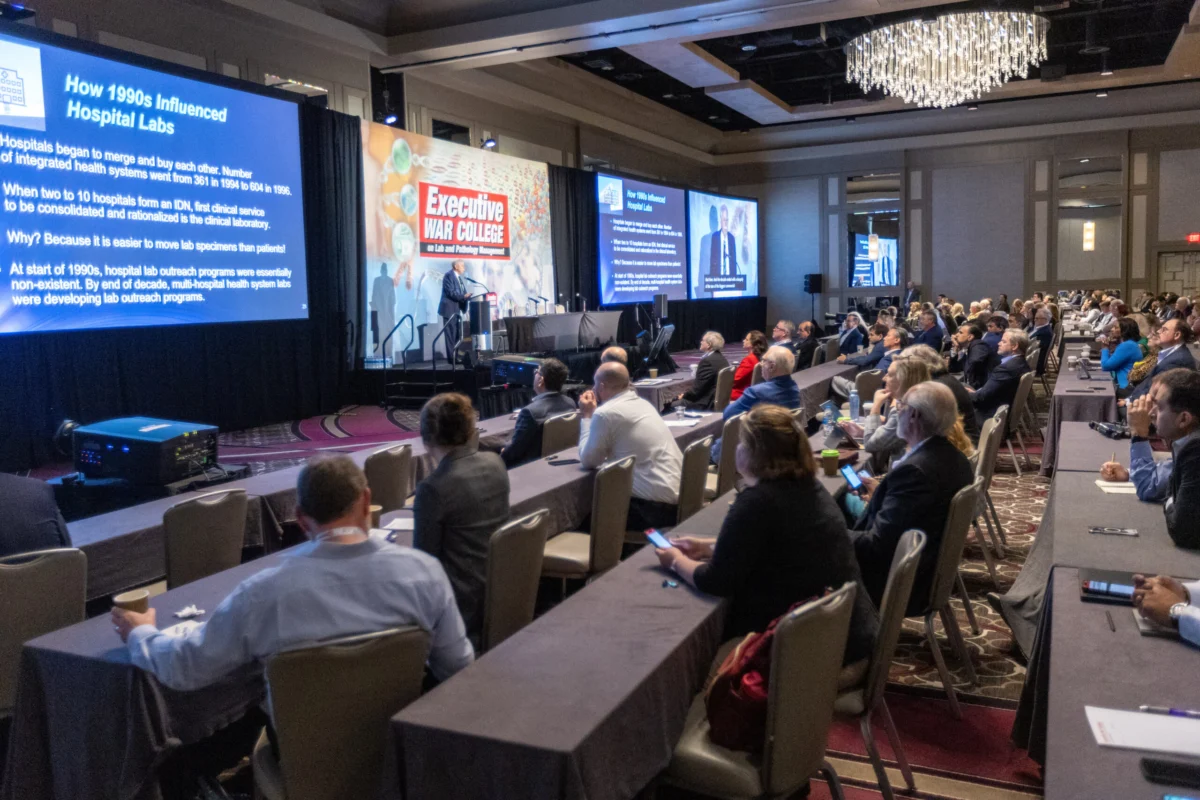
Now in its 31st year, the Executive War College on Diagnostics, Clinical Laboratory, and Pathology Management has established itself as the preeminent gathering for lab and pathology leaders focused exclusively on the business and management aspects of diagnostic medicine. Founded on the principle of providing actionable, strategic intelligence, the event has consistently evolved its agenda to reflect the most critical challenges and opportunities facing the industry. Over three decades, it has served as a vital forum for networking, knowledge exchange, and shaping the strategic direction of the clinical lab sector.
Its unique strength lies in its "boots-on-the-ground" approach, bringing together laboratory executives, pathologists, consultants, and industry experts who are directly involved in implementing change. Unlike broader scientific conferences, the War College hones in on the operational, financial, and leadership dimensions that dictate a lab’s success or failure. Past themes have ranged from the early impacts of managed care and the rise of molecular diagnostics to the advent of precision medicine and the current challenges of PAMA and workforce retention. This chronological responsiveness ensures that attendees receive the most current and relevant insights, positioning the event as an indispensable annual pilgrimage for leaders seeking to future-proof their organizations.
Statements and Industry Perspectives
The overarching sentiment conveyed by organizers and anticipated from attendees is one of urgency coupled with a renewed commitment to innovation. As Burgart noted, "The laboratory has the potential to reframe its role in the healthcare system." This statement encapsulates the profound shift required of labs: moving beyond being a cost center to becoming an indispensable value driver in patient care pathways. The focus on "specific financial and operational blueprints" emphasizes that the time for abstract discussion has passed; the industry demands practical, implementable solutions. Lab leaders are increasingly seeking peer-to-peer insights, validated strategies, and the collaborative spirit that the Executive War College fosters, recognizing that collective intelligence is paramount in navigating the complex landscape of 2026. This collective voice emphasizes the need for resilience, adaptability, and a proactive embrace of technological and operational advancements to thrive.
Broader Implications for Healthcare and Patient Outcomes
The challenges confronting clinical laboratories—reimbursement cuts, workforce shortages, and regulatory shifts—have profound implications that extend far beyond the lab walls. Diagnostics are the bedrock of modern medicine, influencing up to 70% of all medical decisions. Any disruption to the quality, accessibility, or affordability of laboratory testing directly impacts patient care, leading to potential delays in diagnosis, suboptimal treatment plans, and increased healthcare costs in the long run.
The proactive strategies discussed at the Executive War College, such as digital transformation, workforce development, and financial optimization, are not merely about preserving lab profitability; they are about safeguarding the integrity of the entire healthcare system. By ensuring that labs can innovate, maintain high-quality standards, and attract skilled professionals, the industry contributes directly to improved patient outcomes, the advancement of precision medicine, and the overall efficiency of healthcare delivery. The ability of labs to adapt and redefine their value proposition in this challenging era will determine their capacity to remain essential partners in patient health and to continue driving medical progress.
The 2026 Executive War College thus stands as a critical juncture, providing the essential knowledge and networking opportunities for lab leaders to not only survive but to strategically thrive amidst the complex and dynamic forces shaping diagnostic medicine. The insights shared from institutions like MD Anderson and NYU Langone will serve as guiding lights, offering concrete pathways to operational excellence, financial resilience, and sustained innovation in an era demanding nothing less.