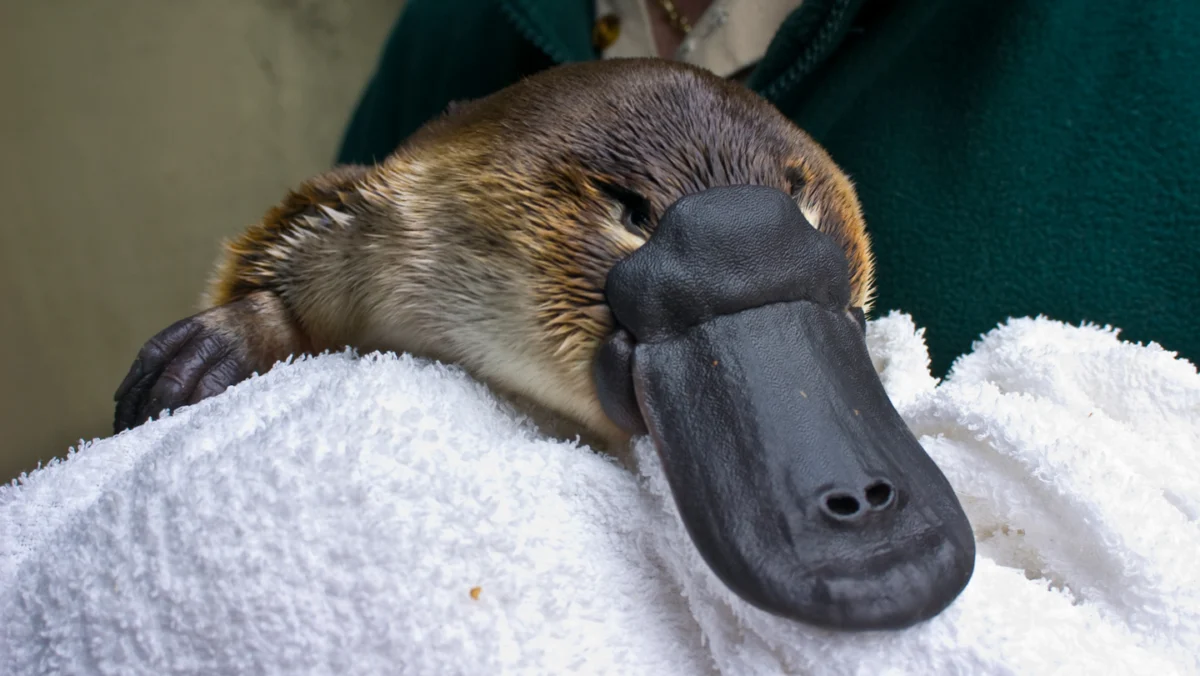
The enigmatic platypus, a creature already renowned for its unusual blend of mammalian, avian, and reptilian traits, has revealed another astonishing characteristic: its fur contains pigment structures that are hollow, much like those found in bird feathers. This discovery, detailed in recent scientific research, marks the first time such a pigment morphology has been observed in mammals, adding another layer to our understanding of this unique Australian monotreme.
The platypus (Ornithorhynchus anatinus) is an evolutionary marvel, a surviving member of a lineage that diverged from other mammals over 160 million years ago. Its distinctiveness stems from a suite of characteristics that defy typical mammalian classification. These include the ability to lay eggs, a duck-like bill equipped with electroreceptors for detecting prey underwater, venomous spurs on the hind legs of males, and, as recently uncovered, specialized pigment-bearing structures within its fur.
Unveiling the Hollow Melanosomes
The groundbreaking finding centers on the examination of melanosomes, the cellular organelles responsible for producing and storing melanin, the pigment that colors skin, hair, and feathers. Researchers utilized advanced microscopy techniques, including electron microscopy, to scrutinize the melanosomes within platypus guard hairs. Their observations revealed that these melanosomes are not solid, as is typically the case in most mammals, but rather possess a hollow interior. This structural characteristic is strikingly similar to the melanosomes found in the feathers of many bird species, where hollowness is believed to contribute to feather lightness and insulation properties.
This finding is particularly significant because it represents a convergence in evolutionary development between a mammal and a group of animals with which it shares no recent common ancestor regarding this specific trait. While birds have long been known to possess hollow melanosomes in their feathers, their presence in the fur of a mammal like the platypus suggests a potential functional adaptation that may be related to the animal’s specific ecological niche.
Background: The Mystery of Monotremes
The platypus, along with echidnas, belongs to the order Monotremata, a group of egg-laying mammals that are endemic to Australia and New Guinea. Their existence has long fascinated scientists, providing crucial insights into mammalian evolution. Monotremes represent an ancient branch of the mammalian family tree, retaining primitive traits that were likely present in early mammals. Their physiology and anatomy often present a mosaic of features, making them invaluable subjects for evolutionary biology.
The study of platypus fur has previously yielded intriguing discoveries. For instance, in 2020, researchers found that platypus fur exhibits biofluorescence, glowing a blue-green color under ultraviolet light. This phenomenon, also observed in some amphibians and marine organisms, remains poorly understood in the context of the platypus, with potential roles in communication or camouflage. The current discovery of hollow melanosomes adds another layer of complexity to the understanding of platypus integumentary system.
Timeline of Discovery and Research
While the exact timeline of this specific research is not provided in the initial excerpt, the process of scientific discovery typically involves several stages. The initial observation of unusual pigment structures in platypus fur likely occurred during broader microscopic studies of the animal’s tissues. Subsequent detailed investigations using high-resolution electron microscopy would have been necessary to confirm the hollowness of the melanosomes and to compare them with known structures in other animals. The publication of these findings in a peer-reviewed scientific journal would mark the formal dissemination of the discovery to the scientific community.
The researchers involved in this study likely represent a team of biologists and zoologists specializing in comparative anatomy, microscopy, and evolutionary biology. Their work builds upon decades of research into monotremes, aiming to unravel the evolutionary history and unique adaptations of these extraordinary creatures.
Supporting Data and Analysis
The structure of melanosomes plays a crucial role in determining the color and physical properties of tissues. In mammals, melanosomes are typically rod-shaped or oval and filled with melanin. Their shape, size, and density influence the resulting hair color, ranging from black and brown to red and blonde. The hollowness observed in platypus melanosomes, however, deviates from this typical mammalian morphology.
In bird feathers, hollow melanosomes are often associated with the production of structural colors, where the interaction of light with the microscopic structure of the feather creates iridescent hues. However, the platypus fur’s color is primarily derived from eumelanin, producing dark brown to black shades. The hollowness in this context might serve other functions.
- Insulation: Similar to birds, hollow structures can trap air, providing enhanced thermal insulation. Given the platypus’s semi-aquatic lifestyle, where it spends significant time in cold freshwater environments, improved insulation could be a significant evolutionary advantage. The dense, waterproof fur of the platypus is already known for its insulating properties, and hollow melanosomes might contribute to this by creating a more complex micro-structure within the hair shaft.
- Lightweight Structure: Hollow melanosomes would make the pigment-bearing structures lighter. While this is more critical for the structural integrity and flight capabilities of bird feathers, it could potentially contribute to the overall lightness and flexibility of the platypus’s fur, which is essential for its aquatic locomotion.
- Pigment Distribution and Stability: The specific arrangement and morphology of melanosomes can influence the distribution of pigment within the hair shaft, potentially affecting its strength and resistance to degradation. The hollow nature might provide a unique matrix for melanin deposition, influencing the optical properties of the fur in ways not yet fully understood.
- Aquatic Adaptation: The researchers speculate that this feature might be related to the mammal’s aquatic lifestyle. The water resistance and insulation properties of fur are paramount for aquatic mammals. The unique melanosome structure could be an adaptation that optimizes these characteristics, perhaps by influencing how water interacts with the fur at a microscopic level.
Broader Impact and Implications
This discovery has several significant implications for our understanding of mammalian evolution and adaptation:
- Convergent Evolution: It provides a compelling example of convergent evolution, where unrelated species independently evolve similar traits to adapt to similar environmental pressures. The shared trait of hollow melanosomes between platypuses and birds highlights how similar functional demands can drive similar biological solutions across vastly different evolutionary lineages.
- Rethinking Mammalian Diversity: The finding challenges our preconceived notions about the uniformity of mammalian biological structures. It underscores the remarkable diversity within mammals and the potential for unexpected evolutionary innovations even in well-studied groups.
- Monotreme Uniqueness: It further emphasizes the extraordinary and often ancient adaptations of monotremes. As a lineage that diverged early in mammalian history, monotremes continue to reveal unique biological features that offer glimpses into the ancestral state of mammals.
- Future Research Avenues: This discovery opens up new avenues for research. Scientists will likely investigate whether other monotremes possess similar melanosome structures, what the precise functional benefits are in the platypus’s specific environment, and whether this trait has any implications for the biofluorescence observed in their fur. Further studies could also explore the genetic mechanisms underlying the development of these hollow melanosomes.
Official Responses and Scientific Community Reaction
While specific quotes from the researchers or relevant scientific bodies are not available in the provided text, such a significant discovery would undoubtedly generate considerable interest and discussion within the scientific community. Researchers specializing in evolutionary biology, developmental biology, and animal physiology would likely engage with the findings, seeking to replicate the results, further elucidate the functional significance, and integrate this information into broader evolutionary models.
The discovery serves as a powerful reminder that even the most studied organisms can hold surprising secrets. The platypus, with its enduring mystique, continues to be a beacon of scientific inquiry, pushing the boundaries of our understanding of life on Earth. The hollow pigment structures in its fur are not just a biological curiosity but a testament to the intricate and often unexpected ways in which evolution shapes the natural world. As research continues, the platypus is poised to reveal even more about the deep evolutionary history and remarkable adaptability of mammals.