The pharmaceutical industry, a sector defined by rigorous clinical validation and data-driven R&D, paradoxically relies on archaic, informal methods when it comes to selecting the commercial infrastructure required to bring new drugs to market. While enterprise software buyers in other sectors benefit from robust ecosystems like G2, Gartner Peer Insights, and comprehensive analyst reports, pharmaceutical executives tasked with drug launches often find themselves navigating a fragmented landscape of vendors through little more than professional referrals and anecdotal evidence.
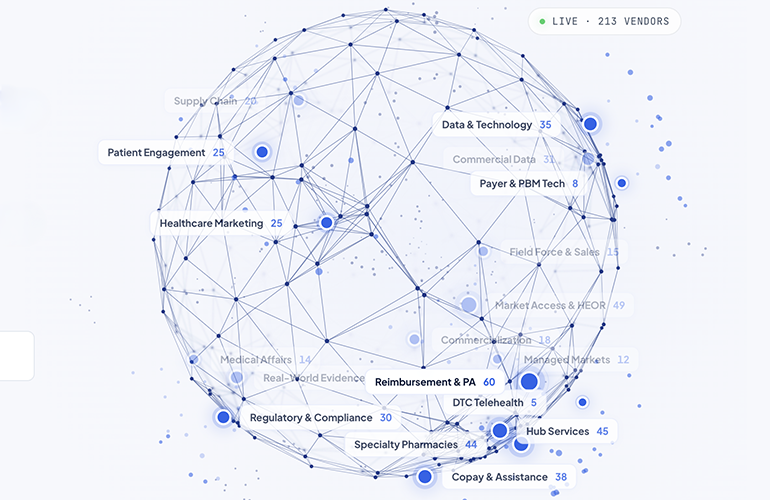
Hoyt Gong, a Harvard Business School MBA candidate and former senior product manager at an insulin pump manufacturer, identified this critical disconnect while managing the complex commercial scaling of medical devices. Recognizing the lack of a standardized resource—a "Yellow Pages" for pharma commercial services—Gong launched Rx Almanac. The platform aims to bring transparency to the post-R&D phase of the pharmaceutical lifecycle, providing editorial content and rigorous vendor comparisons to help launch teams navigate distribution, pricing, and customer relationship management (CRM) strategies.
The Anatomy of a Commercial Launch
The journey from a successful clinical trial to the patient’s medicine cabinet is fraught with operational hurdles. Pharmaceutical companies must select a web of vendors to handle pharmaceutical distribution, PBM (Pharmacy Benefit Manager) strategy, pricing analytics, and CRM integration. For a company that has spent years and billions of dollars on R&D, the final commercial stage is where the return on investment is either realized or squandered.
Historically, the lack of third-party evaluation tools has left launch teams vulnerable to high-cost, low-utility vendor partnerships. Gong’s experience in his previous role, where he was responsible for selecting CRM systems and navigating complex distribution strategies, revealed that the decision-making process was frequently based on opaque vendor promises rather than verified performance data. Rx Almanac seeks to codify this information, providing a neutral ground where vendors are evaluated based on their actual capabilities, migration success, data integrity, and total cost of ownership.
A Chronology of Industry Fragmentation
The pharmaceutical commercial services sector has undergone a seismic shift over the last decade, driven by aggressive private equity investment and corporate consolidation. Firms like Carlyle, KKR, and Summit Partners have played a pivotal role in this transformation, frequently acquiring smaller, specialized service providers and folding them into larger, multi-service entities.

This trend of "gobbling up" market share has created a paradoxical environment for pharma clients. While consolidation promises a "one-stop-shop" approach to commercialization, it often results in siloed services that are stitched together through acquisition rather than seamless product engineering.
- 2015–2018: The rise of specialized commercial tech providers begins as the industry shifts toward digital-first engagement.
- 2019–2022: Private equity interest spikes, leading to a wave of mergers and acquisitions among CRM, data, and distribution service providers.
- 2023–2024: Pharma companies express growing concern over "piecemealed" solutions, where the integration between CRM, data lakes, and distribution channels remains inefficient.
- 2025: Rx Almanac is officially introduced as a counter-narrative to opaque vendor marketing, aiming to provide independent audits of vendor efficacy.
Supporting Data and Market Analysis
The market for commercial services is substantial. According to recent life sciences industry reports, the global market for outsourced pharmaceutical commercial services is estimated to be valued in the tens of billions, reflecting the increasing tendency of pharma firms to outsource non-core functions to specialized vendors. However, unlike the software-as-a-service (SaaS) sector, which enjoys a high degree of transparency in feature parity and user experience, the pharma commercial landscape remains characterized by high barriers to entry and information asymmetry.
Rx Almanac’s recent analysis of the "Big Two" in pharma CRM—Veeva Vault CRM and Salesforce Life Sciences Cloud—serves as a case study for the value of this new model. By evaluating these platforms across six critical dimensions—migration, validation, data architecture, commercial workflows, implementation partners, and total cost of ownership—Gong provides a framework that allows executives to move beyond marketing brochures.
The evaluation reveals that while vendors often promise "AI-driven" capabilities, there is frequently a lack of clarity regarding what these AI agents actually perform. For instance, in an industry where data validation is a regulatory requirement, a vendor’s claim of "AI-automated workflows" can be dangerous if the underlying logic is not transparently documented. Rx Almanac forces vendors to explain the "how" behind their "what," effectively raising the bar for the entire service ecosystem.
The Impact of Private Equity on Service Quality
The influence of private equity in the pharma service sector has led to a focus on rapid growth and scale, sometimes at the expense of product integration. When a parent company acquires multiple niche providers, the primary goal is often to capture a larger share of the customer’s wallet. However, for a pharma launch team, this creates a significant risk: if the CRM, the distribution analytics, and the marketing automation tools are not natively integrated, the "patient experience" suffers.
Gong notes that the most pressing question for current launch teams is not just the cost of a service, but the interoperability of the commercial stack. "After you’ve done all the hard work of R&D and clinical development, how do you make it a great patient experience?" Gong asks. The answer, he suggests, depends on whether the vendor’s suite is truly unified or merely a collection of disparate acquisitions held together by a single corporate umbrella.

Future Implications for the Pharma Industry
The emergence of independent platforms like Rx Almanac signals a broader maturing of the pharma commercial space. As the industry faces increasing pressure to demonstrate value-based outcomes and improve patient access, the reliance on word-of-mouth recommendations will likely become untenable.
Industry analysts suggest that the future of pharma commercialization will move toward:
- Standardized Benchmarking: Adoption of third-party metrics that go beyond simple ROI, focusing on data migration timelines and system uptime.
- AI Scrutiny: A move away from "AI-washing" toward specific, actionable use cases where AI agents demonstrably reduce administrative burden or improve targeting accuracy.
- Vendor Accountability: Increased demand for proof-of-concept demonstrations that mirror the specific regulatory and commercial constraints of the pharmaceutical industry.
By securing backing from Harvard and Google, Gong has positioned Rx Almanac to be a serious, long-term player in the industry’s digital transformation. The project represents a fundamental shift in the power dynamic between vendors and pharmaceutical companies, placing the burden of proof back on the service providers.
Conclusion: A New Standard of Transparency
The transition from informal networking to evidence-based vendor selection is a necessary evolution for the pharmaceutical sector. As drugs become more specialized—particularly in oncology, rare diseases, and gene therapy—the complexity of commercialization increases. The "one-size-fits-all" vendor approach is rapidly becoming obsolete, and the need for a granular, objective understanding of the marketplace is more pressing than ever.
For the pharmaceutical executive, the value of an initiative like Rx Almanac lies in the reduction of risk. By providing a "Yellow Pages" that actually audits the capability of the service providers, Gong is helping to ensure that the innovations developed in the lab reach the patient with the speed and efficacy they deserve. As the industry continues to consolidate, the ability to discern between a truly integrated service and a collection of piecemealed acquisitions will be a key differentiator for the next generation of successful pharmaceutical product launches.