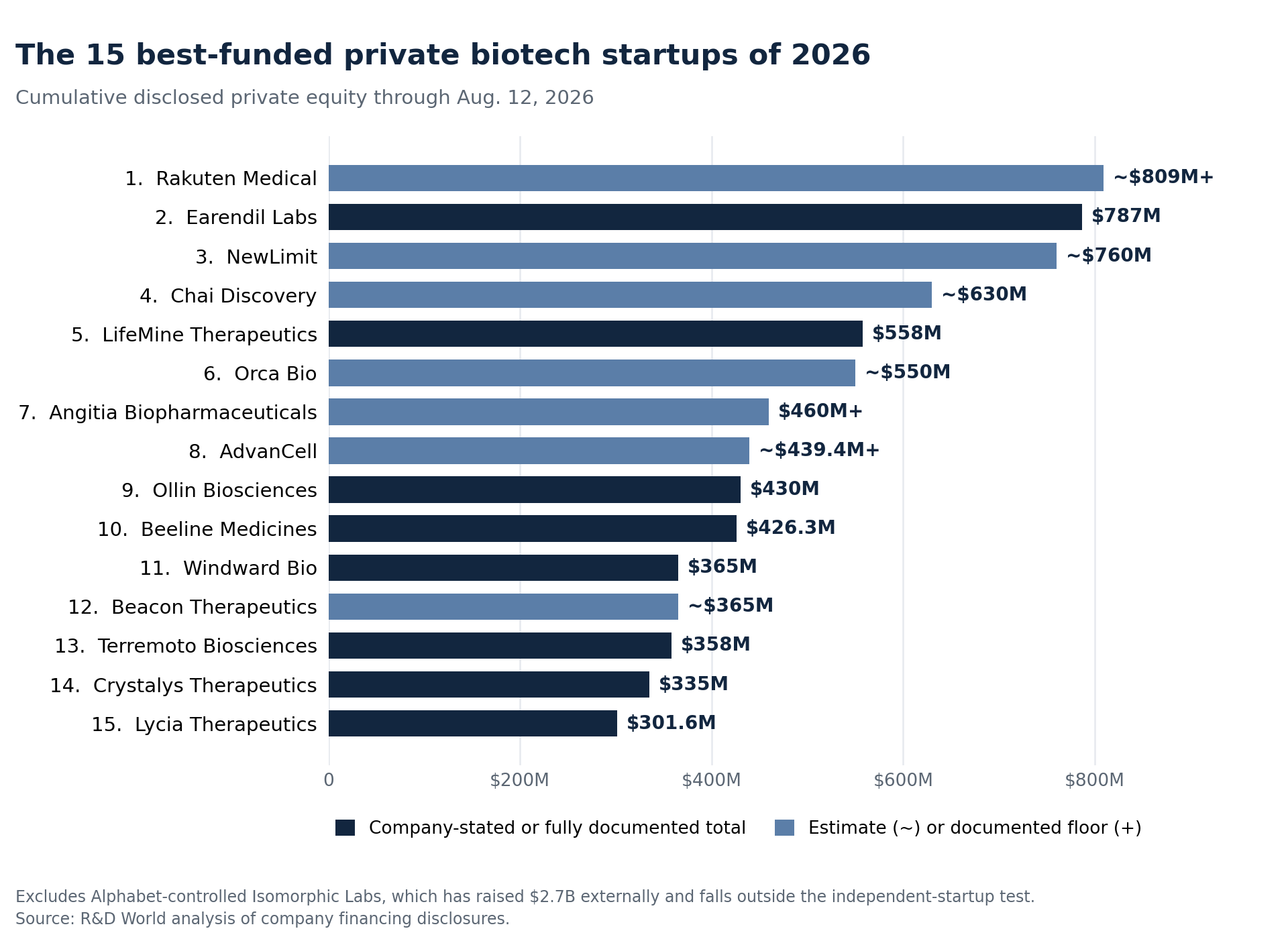
The biotechnology sector in 2026 continues to demonstrate remarkable resilience and a sustained appetite for high-risk, high-reward innovation, even as the global economic climate shifts. As of August 12, 2026, the landscape of private drug discovery and development has been defined by a surge in capital allocation toward protein therapeutics, AI-native platforms, and the burgeoning field of radiopharmaceuticals. While Alphabet-backed Isomorphic Labs commands a massive $2.7 billion in financing, its status as a subsidiary excludes it from independent startup rankings. Consequently, the mantle of the best-funded independent biotech is held by Rakuten Medical, which continues to drive innovation in photoimmunotherapy with $809 million in cumulative private equity.
The Vanguard of Private Biotechnology
The top tier of the 2026 funding leaderboard highlights a strategic pivot toward integrating advanced computational biology with traditional drug modalities. Rakuten Medical’s ability to secure $100 million in an oversubscribed Series F round in January reflects ongoing investor confidence in its proprietary platform, which combines precision light-based therapy with immunology. This approach has positioned the company at the forefront of clinical and commercial late-stage development.
Following closely in the rankings are Earendil Labs and NewLimit, two firms representing distinct frontiers in modern medicine. Earendil Labs, which reported a substantial $787 million in financing this past March, is aggressively scaling its AI-driven R&D platform. The company’s influence is underscored by a landmark pact with Sanofi, potentially valued at $2.56 billion, aimed at transforming the treatment of autoimmune diseases. Meanwhile, NewLimit has garnered $760 million in total funding, with a $435 million Series C in June providing the runway to pursue its ambitious goal of epigenetic reprogramming. By focusing on the biological mechanisms of aging, NewLimit has attracted the backing of elite venture firms, including Founders Fund, Khosla Ventures, and Kleiner Perkins, signaling a mainstreaming of longevity science.
The AI Drug Discovery Momentum
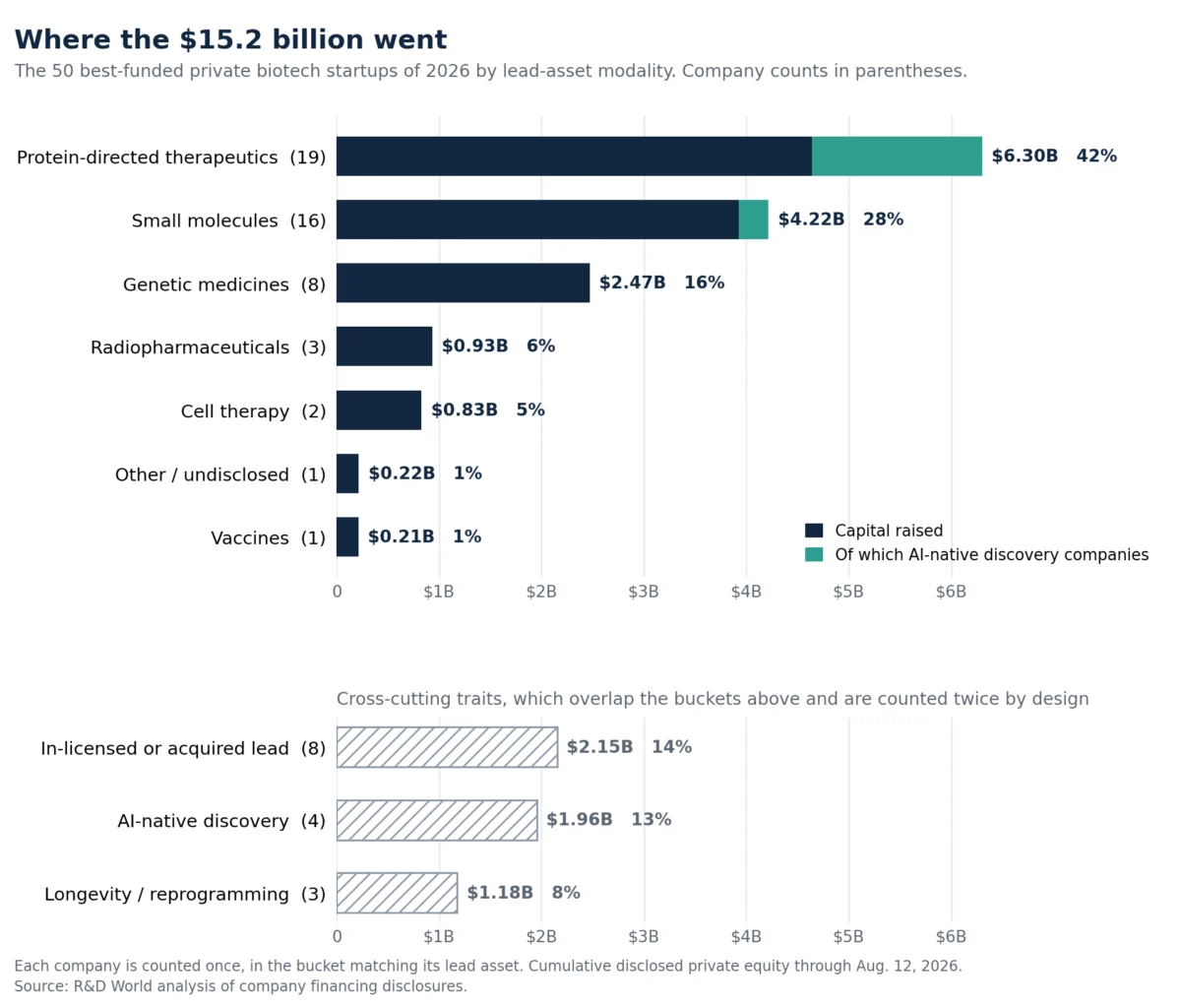
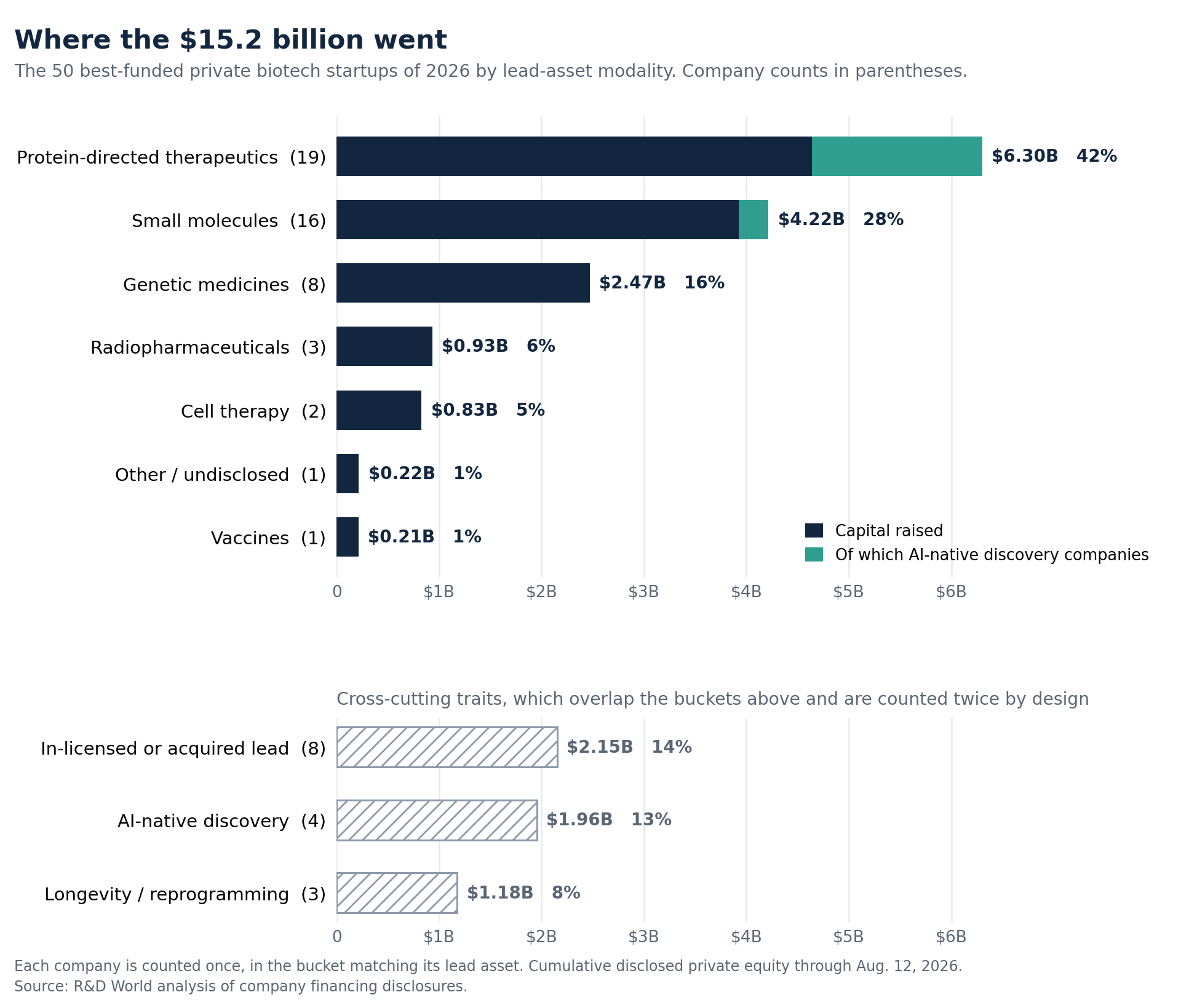
While artificial intelligence remains a buzzy topic in venture capital, the 2026 data reveals that "AI-native" companies occupy a specialized, albeit significant, niche. Four of the top 50 companies explicitly center their value proposition on AI, representing approximately $1.96 billion in cumulative capital.
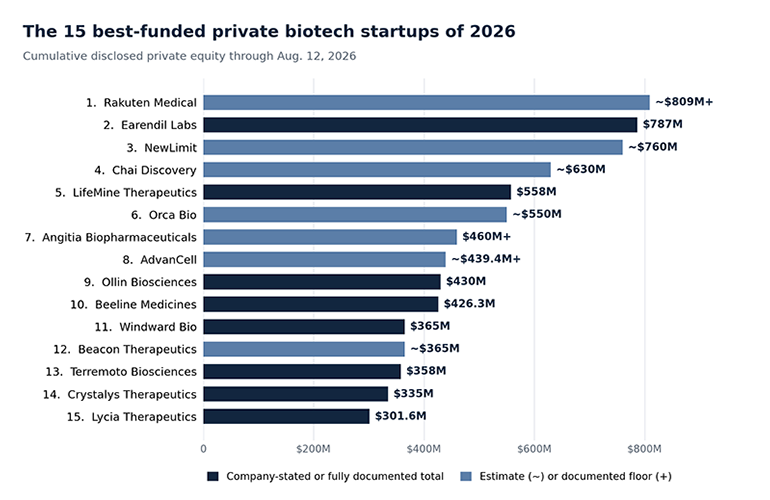
Chai Discovery is the standout in this segment, having secured a $400 million Series C in July. The company’s rapid growth—completing three funding rounds in less than a year—is a testament to the efficiency of its computer-aided molecular design technology. By securing strategic partnerships with pharmaceutical giants such as Lilly, Pfizer, and Novartis, Chai Discovery has validated the commercial viability of AI-accelerated drug design, moving beyond the hype cycle into actionable therapeutic development.
Modality Trends: Proteins, Genetics, and Radiopharmaceuticals
A granular analysis of the top 50 list reveals clear preferences in current venture capital investment patterns. Protein-directed medicine remains the dominant modality, with 19 of the 50 companies developing antibodies, multispecifics, antibody-drug conjugates (ADCs), peptides, or protein degraders. This segment accounts for $6.3 billion in capital—nearly 42% of the total funding represented in the ranking. This preference suggests that while genetic medicine is promising, investors are currently prioritizing the established success rates and technical maturity of protein-based therapies.
Genetic medicines, including gene therapy and RNA-based platforms, account for 11 of the top 50 companies and $3.5 billion in funding. This gap reflects the ongoing challenges in delivery mechanisms and manufacturing at scale that genetic medicine startups face compared to their protein-based counterparts.
Perhaps most notable is the rise of radiopharmaceuticals, an area that has quietly become a funding powerhouse. Companies such as AdvanCell, which closed a $315 million Series D in July, have pushed this modality into the spotlight. With $934 million distributed across three firms—including Full-Life Technologies and Ratio Therapeutics—the investment community is signaling a belief that targeted alpha and beta therapies represent a near-term breakthrough in oncology.
Chronology of 2026 Capital Inflows
The first eight months of 2026 have been characterized by consistent, large-scale financing events rather than isolated spikes.
- January: The year began with a flurry of activity, including Rakuten Medical’s $100 million Series F and Orca Bio’s $250 million Series F, both signaling a focus on late-stage clinical and commercial readiness.
- February – April: Mid-spring saw a focus on platform technology, with Angitia Biopharmaceuticals raising $130 million in February and Terremoto Biosciences closing a $108 million Series C in April.
- May – June: Summer marked a period of massive consolidation and scale-up, highlighted by NewLimit’s $435 million Series C in June and the launch of Bionyra Pharma with $165 million.
- July – August: The third quarter has maintained momentum, with Chai Discovery’s $400 million round and LifeMine Therapeutics securing $263 million in a Series D and E combination, underscoring the ongoing demand for novel, mechanistically distinct therapeutics.
Analysis of Implications
The data suggests that the "flight to quality" remains the prevailing sentiment among venture capitalists. Investors are gravitating toward companies with either clear paths to commercialization or highly defensible, validated technological platforms. The success of LifeMine Therapeutics, for instance, which uses fungal genomics to identify new drug-like molecules, demonstrates that investors are willing to fund "platform-first" companies if they possess a unique and proprietary biological data source.
Furthermore, the involvement of non-traditional biotech backers—such as Bezos Expeditions and Gates Frontier—in the LifeMine Series E round highlights the increasing intersection of technology, philanthropy, and life sciences. These backers are looking for "transformative" medicine rather than incremental improvements, which explains the high valuation of companies targeting systemic issues like organ transplantation and chronic respiratory disease.
The Role of Clinical Validation
A critical takeaway from the 2026 list is the shift in developmental stage. A substantial portion of the top-funded companies are already in clinical trials. Unlike the early 2020s, which saw a boom in seed-stage "idea" companies, 2026 is defined by "capital-intensive scaling." Startups are raising larger, later-stage rounds to fund Phase 2 and Phase 3 clinical studies. This trend indicates that the industry is maturing, and the burden of proof has shifted from the laboratory to the clinic.
For companies like Ollin Biosciences and Crystalys Therapeutics, which are advancing late-stage clinical assets in ophthalmology and metabolic disease respectively, the funding serves as a bridge to potential acquisition or independent commercial launch. The market is currently rewarding these "de-risked" assets, as evidenced by the high participation rates in oversubscribed rounds.
Looking Ahead: The Sustainability of Private Biotech
As the year progresses toward the final quarter, the sector faces the dual pressures of macroeconomic volatility and the high cost of capital. However, the data from the first half of 2026 suggests that the biotech industry has successfully decoupled from broader market downturns by focusing on essential, high-impact therapeutic areas.
The reliance on private equity, as opposed to public market exits, remains a defining feature of the current landscape. With IPO windows remaining selective, companies are choosing to stay private longer, utilizing large, multi-stage funding rounds to build robust, diverse pipelines. This "private-for-longer" strategy allows biotech firms to maintain control over their intellectual property and clinical development timelines without the quarterly pressures of the public equity markets.
In summary, the 2026 biotech funding landscape is characterized by a disciplined, data-driven approach. Investors are placing their bets on companies that combine high-tech computational platforms with tangible clinical assets. As the sector moves into 2027, the success of these 50 firms will likely serve as the primary barometer for the health of the broader life sciences economy. With billions in capital now deployed toward protein therapeutics, longevity, and radiopharmaceuticals, the industry is well-positioned to deliver the next generation of medical breakthroughs, provided these firms can navigate the complex regulatory and clinical hurdles that lie ahead.