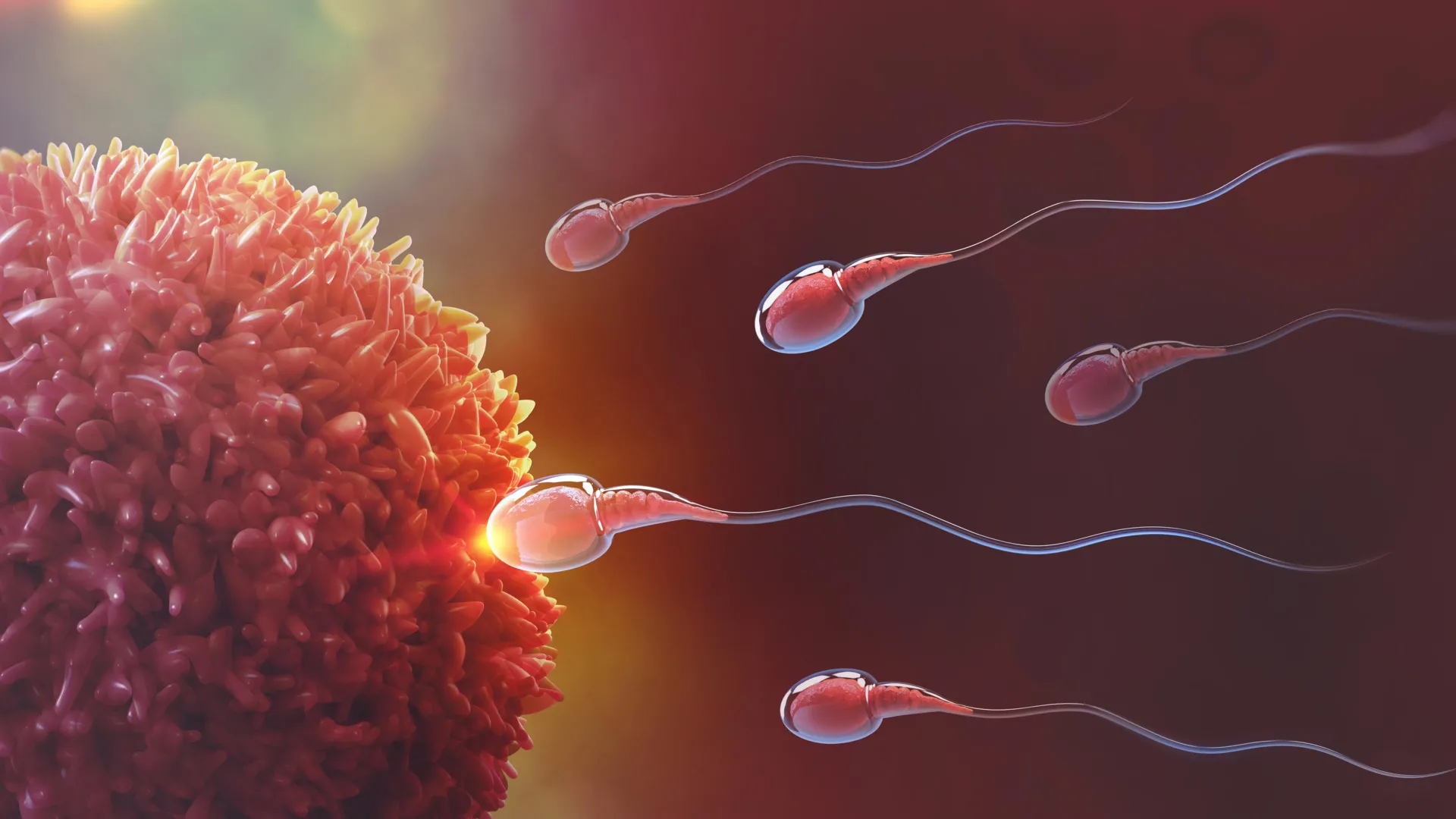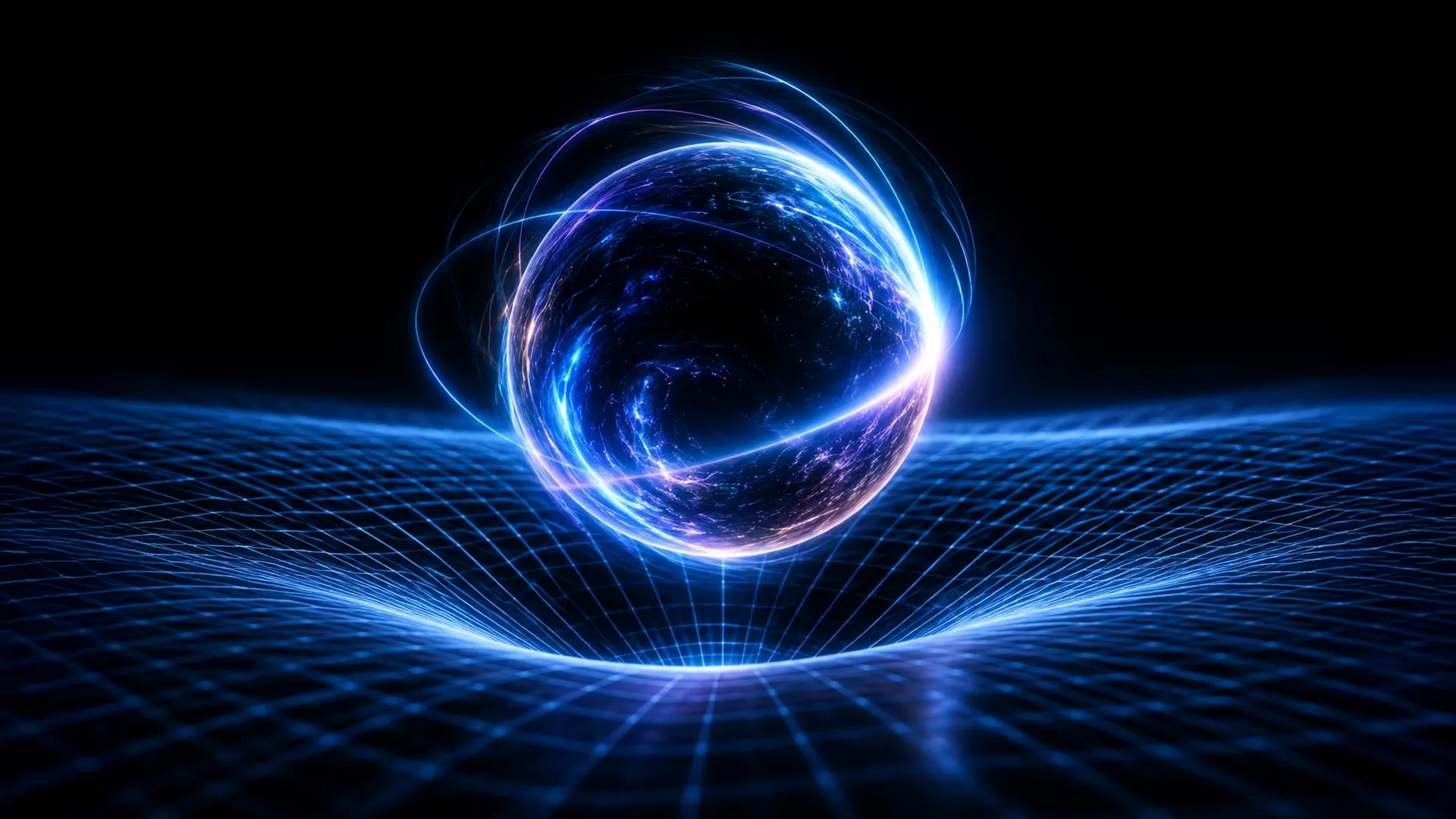
A collaborative team of physicists at ETH Zurich and the Paul Scherrer Institute (PSI) in Villigen has crossed a major technological threshold, clearing the path for an unprecedented experiment designed to test whether gravity influences all matter uniformly. By targeting the elusive muon—a heavier, second-generation cousin of the electron—the researchers aim to push the boundaries of Einstein’s Equivalence Principle into uncharted territory. If successful, the upcoming trials could validate foundational pillars of modern physics or hint at undiscovered cracks in our understanding of fundamental forces, potentially pointing toward a theoretical fifth force of nature.
The Core Premise: Challenging the Universality of Free Fall
At the heart of the proposed experiment lies a fundamental question that has intrigued scientists since the time of Galileo Galilei and Isaac Newton: Do all objects fall at the same rate in a gravitational field, regardless of their internal composition? Centuries of observation and experimentation have confirmed the universality of free fall for ordinary matter—the protons, neutrons, and electrons that make up people, planets, and stars. Albert Einstein later codified this observation into the Equivalence Principle, a cornerstone of his general theory of relativity that establishes the indistinguishability of gravitational mass and inertial mass.
However, a glaring blind spot has persisted in experimental physics. While the equivalence principle has been rigorously tested using ordinary matter and first-generation antimatter, it has never been verified for the heavier generations of fundamental particles. The Standard Model of particle physics categorizes matter into three distinct generations, each progressively heavier than the last. The first generation comprises up and down quarks along with electrons. The second generation includes strange and charm quarks alongside muons, while the third generation encompasses top and bottom quarks as well as tau particles.
Despite the precision of the Standard Model in cataloging these particles, it offers no explanation for why nature requires three distinct generations, nor why the heavier counterparts exist at all. This deep structural mystery gives rise to a critical scientific query: Do second- and third-generation particles obey gravity in the exact same manner as their lighter first-generation relatives, or do unexpected deviations lurk within the subatomic heavyweights?
The Muonium Advantage: Overcoming Electromagnetic Interference
To answer this question, researchers must study a particle from the second generation in isolation from confounding variables. Enter the muon, a particle with a mass roughly 207 times that of an electron. Because individual muons carry an electric charge, utilizing them directly in a gravitational drop experiment is practically impossible. Electromagnetism is roughly $10^36$ times stronger than gravity; consequently, even the most minute, stray electromagnetic fields in a laboratory environment would completely overpower the gravitational effect the researchers intend to measure, rendering the data useless.
To bypass this insurmountable obstacle, the research team at PSI turns to muonium—a short-lived, neutral atom formed when a positively charged antimuon captures a negatively charged electron. Because muonium is electrically neutral, it remains largely immune to ambient electromagnetic noise, making it the ideal candidate for a gravitational free-fall test.
Yet, working with muonium presents staggering experimental hurdles. Muons are notoriously ephemeral, boasting a mean lifetime of a mere 2.2 microseconds before decaying into electrons and neutrinos. Furthermore, historical methods of producing muonium resulted in atoms traveling at chaotic speeds and in randomized directions, a high-velocity, multi-directional spray entirely unsuited for the exquisite precision required in gravitational metrology.
The Breakthrough: Superfluid Helium as an Atomic Cannon
The recent milestone achieved by the ETH Zurich and PSI researchers—published in the journal Nature Physics—revolves around solving the velocity and trajectory problem. Led by Jesse Zhang and working under the guidance of project leaders, the team devised an innovative technique utilizing superfluid helium cooled to near absolute zero, approximately minus 273 degrees Celsius.
In this extreme cryogenic regime, superfluid helium behaves as a quantum fluid where individual helium atoms lose their distinct identities and the fluid exhibits zero viscosity, tolerating no internal impurities. The experimental process begins when high-intensity antimuon beams, generated by PSI’s world-class particle accelerator complex, are directed into a thin boundary layer of the superfluid helium.
As the energetic antimuons penetrate the ultra-cold liquid, they rapidly lose kinetic energy. Upon encountering free electrons within the helium matrix, the particles combine to form neutral muonium atoms. Crucially, this formation process possesses a positive chemical potential.
Rather than remaining stagnant or dissolving within the fluid, this chemical potential acts as a thermodynamic driving force, pushing the newly formed muonium atoms out of the liquid phase. As the atoms break through the surface of the superfluid helium, their chemical potential is instantaneously converted into kinetic energy. This energy conversion acts as a natural "atomic cannon," providing a controlled mechanical boost that propels the muonium atoms vertically upward in a coherent beam.
"We have managed to produce the muonium atoms in a ‘cold’ state, which is what makes the gravity experiment possible in the first place," explains Dr. Andreas Soter, professor of physics overseeing the research initiative. In this context, "cold" denotes that the atoms propagate at uniform, controlled velocities traveling almost parallel to one another. This directional discipline and speed regulation are precisely what previous generations of particle physicists lacked.
Chronology and Development Timeline
The path toward a gravitational measurement of muonium has been decades in the making, driven by incremental improvements in particle accelerator technology and cryogenic engineering.
- Mid-20th Century: The discovery of the muon and the establishment of particle generations challenge theoretical physicists to understand mass hierarchies.
- Past Decades: PSI establishes itself as a global hub for muon science, operating particle accelerators capable of delivering the world’s most intense continuous muon beams. Researchers theorize about muonium’s utility in gravity tests, but are constrained by thermal dispersion and short particle lifetimes.
- Recent Years: Soter’s research group, supported by the National Centre of Competence in Research (NCCR) Muoniverse, focuses on quantum fluid dynamics to tame muon beams.
- Current Milestone (Recent Publication): The team successfully demonstrates the generation of a cold, upward-propagating muonium beam utilizing superfluid helium cooled near absolute zero, as documented in Nature Physics. Lead author Jesse Zhang and colleagues validate the "atomic cannon" mechanism.
- Near-Term Horizon (2024–2025): The research team plans to test the newly engineered atomic beam using an advanced atom interferometer, a device designed to exploit the wave properties of atoms to detect minute environmental shifts.
- Long-Term Projection (2026–2027): If preliminary beam tests proceed as scheduled, the actual gravitational free-fall experiment involving muonium is slated to take place within two to three years.
Instrumentation: Watching Gravity Shift an Atomic Pattern
With the beam generation challenge successfully cleared, the collaboration is currently constructing a specialized instrument known as an atom interferometer. This device leverages the fundamental wave-particle duality of matter, splitting the cold muonium atomic beam into separate paths and recombining them to produce an interference pattern.
Even an infinitesimally small gravitational pull from Earth will induce a microscopic phase shift in the resulting interference fringes. By measuring this displacement with extreme precision, the physicists can directly compute how the Earth’s gravitational field acts upon the second-generation muon contained within the atom.
Beyond testing the equivalence principle, the successful deployment of this controlled muonium beam opens doors to unprecedented precision laser spectroscopy. These advanced spectroscopic measurements could dramatically refine our understanding of the muon’s mass and other fundamental physical constants, offering new testing grounds for quantum electrodynamics.
Broader Implications: Searching for a Fifth Force
The ultimate significance of the ETH Zurich and PSI project extends far beyond confirming established theories. If the upcoming experiments reveal that muonium falls at a slightly different rate than ordinary matter—violating the universality of free fall at the subatomic level—the implications for fundamental physics would be seismic.
Modern physics recognizes four fundamental interactions governing the universe: gravity, electromagnetism, the strong nuclear force, and the weak nuclear force. For decades, theoretical physicists have intermittently proposed models incorporating an additional, undiscovered fifth force to reconcile discrepancies in cosmological data, such as the behavior of dark matter or accelerated cosmic expansion. To date, however, no empirical evidence has ever confirmed the existence of a fifth force.
A deviation in the gravitational response of second-generation particles would provide the first concrete experimental hint of new physics beyond the Standard Model, potentially signaling the presence of novel interactions or undiscovered fields.
Despite the revolutionary potential of discovering a fifth force, the research team maintains an objective, data-first scientific posture. The primary motivation is not to chase anomalies, but to perform a rigorous empirical check on one of the most fundamental assumptions of general relativity.
"I am completely open-minded," Soter remarks, summarizing the ethos of the collaboration. "I simply want to measure, for the first time, whether the equivalence between gravitational and inertial mass also applies to the second generation of particles—this alone is quite an inspiring piece of work."
As instrumentation assembly proceeds and beam testing approaches, the scientific community watches closely. Whether the experiment reaffirms Einstein’s enduring legacy or cracks open the door to a new era of fundamental physics, the work at PSI and ETH Zurich represents a masterclass in experimental ingenuity, transforming ephemeral quantum particles into probes for the deepest secrets of the cosmos.