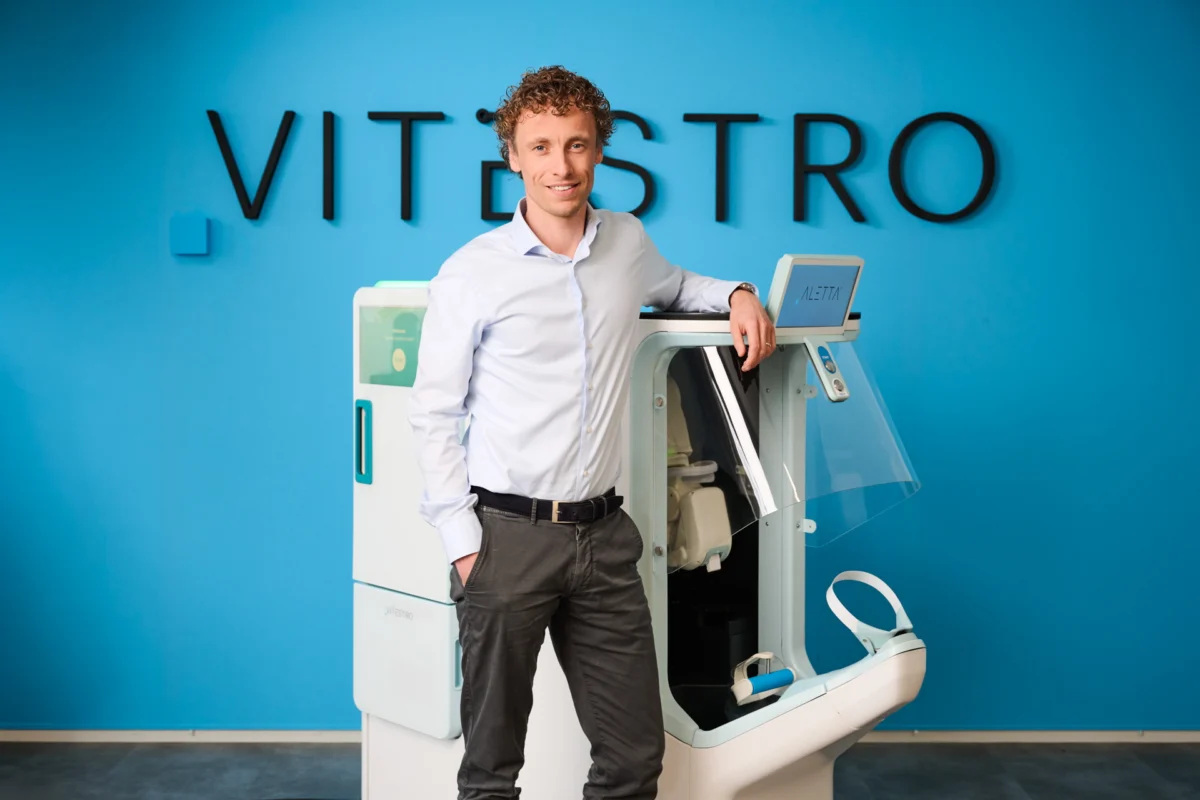
Vitestro, a pioneering Dutch medical robotics company, has successfully closed an oversubscribed Series B financing round, securing an impressive $70 million. This substantial capital infusion is earmarked to accelerate the clinical validation, scale manufacturing, and prepare its innovative Aletta Autonomous Robotic Phlebotomy Device (ARPD) for widespread adoption across hospitals and laboratories globally. The funding underscores a growing industry conviction in the potential of automation to address critical challenges in healthcare, particularly the persistent staffing shortages and the imperative for enhanced standardization in diagnostic procedures.
The successful funding round, announced via a press release on March 10, 2026, represents a pivotal moment for Vitestro and the broader medical technology landscape. The company’s Aletta system is designed to automate routine blood collection, a procedure that remains one of the last manual steps in the highly automated laboratory testing workflow. This technological leap promises to transform a high-volume, labor-intensive process, improving efficiency, consistency, and potentially the patient experience.
Addressing the Phlebotomy Predicament: A Critical Healthcare Bottleneck
Phlebotomy, the act of drawing blood, is arguably the most common invasive medical procedure performed globally, with billions of procedures conducted annually. Despite its ubiquity, it remains largely manual, susceptible to human variability, and a significant point of strain within healthcare systems. Clinical laboratories and hospitals frequently grapple with a confluence of challenges related to blood collection, including chronic staffing shortages, increasing specimen volumes, and the critical need to minimize pre-analytical errors.
The demand for phlebotomists has steadily outpaced the supply in many regions, exacerbated by an aging workforce, the expanding need for diagnostic testing, and the general pressures of healthcare labor shortages. This deficit not only leads to longer patient wait times and operational inefficiencies but also places immense pressure on existing staff, contributing to burnout and high turnover rates. Furthermore, human-dependent variability in blood collection can impact specimen quality, leading to pre-analytical errors that can compromise diagnostic accuracy and ultimately affect patient care. These errors, which can range from improper vein selection and multiple venipuncture attempts to incorrect sample handling, contribute significantly to diagnostic delays and potential misdiagnoses.
Recognizing these systemic challenges, the healthcare industry has increasingly turned its attention to automation as a viable solution. Robotic systems like Vitestro’s Aletta offer a compelling pathway to standardize the blood collection process, reduce reliance on human labor for routine tasks, and enhance the overall quality and reliability of diagnostic samples.
Vitestro’s Aletta ARPD: A New Paradigm in Blood Collection
At the heart of Vitestro’s mission is the Aletta ARPD, a sophisticated platform that integrates multimodal imaging, advanced robotics, and artificial intelligence to autonomously perform blood draws. The system is engineered to precisely identify suitable veins, guide needle insertion with high accuracy, and efficiently collect blood samples. This blend of technologies is crucial for overcoming the inherent challenges of manual phlebotomy.
Earlier clinical trials for the Aletta system demonstrated remarkable efficacy, reporting an impressive 95% first-stick success rate. This figure is particularly significant as it directly addresses a major pain point for both patients and healthcare providers: the discomfort and anxiety associated with multiple venipuncture attempts. Beyond its technical performance, the trials also highlighted strong patient acceptance, indicating a readiness among individuals to embrace automated solutions for routine medical procedures. Such high success rates and positive patient feedback position the Aletta ARPD as a transformative technology, capable of mitigating the stress often associated with blood draws and improving the overall patient experience.
The standardization offered by the Aletta system holds profound implications for clinical laboratories. By minimizing human-dependent variability in the collection process, it can significantly reduce pre-analytical errors, leading to more consistent and reliable specimen quality. This, in turn, can enhance the accuracy of diagnostic testing, improve laboratory efficiency, and ultimately contribute to better patient outcomes.
A Chronology of Innovation and Strategic Growth
Vitestro’s journey to this significant funding milestone has been marked by strategic development and regulatory achievements. While the company’s precise founding date is not detailed, its emergence as a leader in autonomous phlebotomy solutions suggests years of dedicated research and development.
A key milestone in Vitestro’s trajectory was the receipt of CE mark approval in Europe. As reported by The Dark Report in March 2025, this certification affirmed the Aletta ARPD’s compliance with European health, safety, and environmental protection standards, paving the way for its commercial deployment within the European Economic Area. This regulatory clearance was a critical validation of the technology’s safety and efficacy, setting the stage for broader market acceptance.
Following the CE mark, the company intensified its clinical validation efforts, culminating in the robust clinical trial results that showcased the device’s high first-stick success rate and strong patient acceptance. These foundational achievements laid the groundwork for the successful Series B financing, demonstrating both the technical maturity of the Aletta platform and its readiness for commercial scale-up. The March 10, 2026 announcement of the $70 million funding round is the latest and most substantial validation of Vitestro’s progress and future potential.
A Broad Coalition of Strategic and Financial Backers
The oversubscribed Series B financing round attracted a diverse and influential group of investors, reflecting widespread confidence in Vitestro’s technology and market strategy. The round saw strategic backing from prominent healthcare organizations, including the Labcorp Venture Fund, Mayo Clinic, and Sutter Health. The participation of such industry titans is particularly noteworthy. Labcorp, a global leader in clinical laboratory services, brings invaluable insights into the operational needs and challenges of high-volume diagnostic testing. Mayo Clinic and Sutter Health, both renowned healthcare providers, represent the end-users who stand to benefit most from enhanced phlebotomy solutions, lending significant credibility and a clear pathway for potential adoption. Their investment is not merely financial but a strategic endorsement of Vitestro’s potential to address critical operational and patient care needs within their respective ecosystems.
In addition to these strategic partners, the financing round drew significant participation from a strong contingent of financial investors. These included InterVest, MGFO, PGGM, Puma Venture Capital, and ROM Utrecht. The presence of these institutional investors, known for their rigorous due diligence and focus on high-growth potential, further validates Vitestro’s business model and market opportunity.

The round also saw continued support from existing investors, demonstrating sustained belief in the company’s vision and progress. These included Invest-NL, the EIC Fund, Fred Moll (a prominent figure in medical robotics), NYBC Ventures, and Sonder Capital. The commitment of both new strategic partners and existing financial backers underscores a broad consensus regarding Vitestro’s trajectory and its capacity to deliver a transformative solution to a global healthcare challenge.
Future Trajectory: Advancing Aletta and Global Commercialization
With the substantial Series B capital, Vitestro has outlined an ambitious plan for the next phase of its growth and market penetration. A significant portion of the funds will be allocated to advancing the next generation of the Aletta platform. This includes further research and development to enhance the system’s capabilities, potentially expanding its utility or refining its existing features for even greater precision and versatility. Continuous innovation is crucial in the rapidly evolving field of medical robotics to maintain a competitive edge and meet evolving healthcare demands.
Another critical use of the capital will be to conduct additional clinical studies. While initial trials have yielded impressive results, broader, multi-center studies are essential for gathering more comprehensive data, expanding the evidence base, and supporting regulatory submissions in new markets. These studies will be vital for demonstrating the Aletta system’s effectiveness across diverse patient populations and clinical settings, thereby reinforcing its credibility and facilitating wider adoption.
Scaling manufacturing operations is another key priority. As Vitestro prepares for broader commercial rollout, particularly in Europe following its CE mark approval, the ability to produce the Aletta devices at scale will be paramount. Efficient and high-quality manufacturing processes are essential to meet anticipated market demand and ensure timely product delivery to healthcare facilities.
Looking beyond Europe, Vitestro has articulated clear intentions for market entry into the United States. This will involve navigating the stringent regulatory landscape of the U.S. Food and Drug Administration (FDA). Vitestro plans to pursue the FDA’s de novo regulatory pathway, which is designed for novel low-to-moderate risk devices for which no legally marketed predicate device exists. This pathway allows for the classification of new devices into Class I or II, providing a streamlined route to market for truly innovative technologies. Successfully navigating the de novo process will be a monumental step, unlocking access to one of the world’s largest and most influential healthcare markets and significantly expanding Vitestro’s global footprint.
Broader Implications for Healthcare and Diagnostic Services
The emergence of autonomous robotic phlebotomy, spearheaded by companies like Vitestro, carries profound implications for various facets of healthcare.
Impact on Staffing and Workforce Dynamics: Rather than replacing human phlebotomists, robotic systems like Aletta are envisioned as powerful augmentation tools. By automating routine blood draws, these devices can free up skilled phlebotomists to focus on more complex cases, manage challenging patients, or engage in other critical tasks within the laboratory or clinic. This shift could alleviate workload pressures, improve job satisfaction, and potentially mitigate the effects of staffing shortages by optimizing the deployment of human capital. It allows existing staff to perform at the top of their license, enhancing their value and reducing burnout.
Enhanced Workflow Efficiency and Patient Throughput: The standardization and precision offered by robotic phlebotomy can significantly improve operational efficiency. Automated systems operate with consistent speed and accuracy, potentially reducing blood draw times and minimizing delays in patient queues. This improved throughput is particularly valuable in high-volume outpatient settings, emergency departments, and large hospital networks, where efficiency directly impacts patient flow and access to care. Shorter wait times contribute directly to a better patient experience.
Improved Patient Experience and Safety: For many, blood draws can be a source of anxiety and discomfort. The high first-stick success rate of the Aletta system means fewer painful venipuncture attempts, leading to a more positive experience for patients. Furthermore, the precision of robotics can reduce the risk of complications associated with manual draws, such as nerve damage or hematomas, thereby enhancing patient safety.
Elevated Specimen Quality and Diagnostic Accuracy: Pre-analytical variability is a well-documented challenge in laboratory medicine, accounting for a significant percentage of errors in the total testing process. By standardizing vein selection, needle insertion, and blood collection protocols, autonomous systems can drastically reduce these errors. Consistent specimen quality translates directly into more reliable diagnostic test results, which is critical for accurate diagnosis, effective treatment planning, and ultimately, better patient outcomes.
The Expanding Horizon of Medical Robotics: Vitestro’s success is indicative of a broader trend towards increased automation in healthcare. The global market for medical robotics is experiencing robust growth, driven by technological advancements, rising healthcare costs, and the persistent need for efficiency and precision. From surgical robots to diagnostic automation, robotic solutions are poised to redefine how medical procedures are performed, making healthcare more accessible, safer, and more efficient. Vitestro is positioning itself at the forefront of this revolution in diagnostic automation, demonstrating the tangible benefits that can be realized by applying advanced robotics to foundational medical procedures.
Official Reactions and Industry Outlook
Toon Overbeeke, CEO and co-founder of Vitestro, encapsulated the company’s vision and the significance of the funding round: "Closing our Series B financing reflects strong conviction in our mission to establish a new standard in autonomous robotic venous access and diagnostic blood collection. Diagnostic blood collection remains the highest-volume invasive medical procedure globally, with billions of procedures performed annually." His statement underscores not only the sheer scale of the problem Vitestro aims to solve but also the company’s commitment to setting a new benchmark for quality and efficiency in this critical area.
Industry experts and healthcare leaders are increasingly recognizing the imperative for such innovative solutions. Clinical laboratory executives, facing an aging workforce and escalating demand for diagnostic services, view autonomous phlebotomy as a strategic imperative. The investment by major healthcare systems and laboratory providers like Mayo Clinic, Sutter Health, and Labcorp Venture Fund sends a clear signal that the industry is ready to embrace and integrate advanced automation to fortify its operational resilience and enhance patient care. The participation of these strategic investors suggests a collaborative future where technology developers work hand-in-hand with healthcare providers to implement solutions that directly address real-world clinical needs.
As Vitestro prepares for its next phase of growth and commercial expansion, the healthcare world watches with keen interest. The forthcoming issue of The Dark Report promises to offer an in-depth analysis, featuring interviews with Vitestro executives and exploring the profound implications of autonomous robotic phlebotomy for clinical laboratories, including its potential impact on staffing models, workflow optimization, and the uncompromising pursuit of specimen quality. The journey of Vitestro highlights a transformative era where intelligent machines are set to redefine the very foundations of medical diagnostics, promising a future of more efficient, consistent, and patient-centric healthcare.
—Janette Wider