

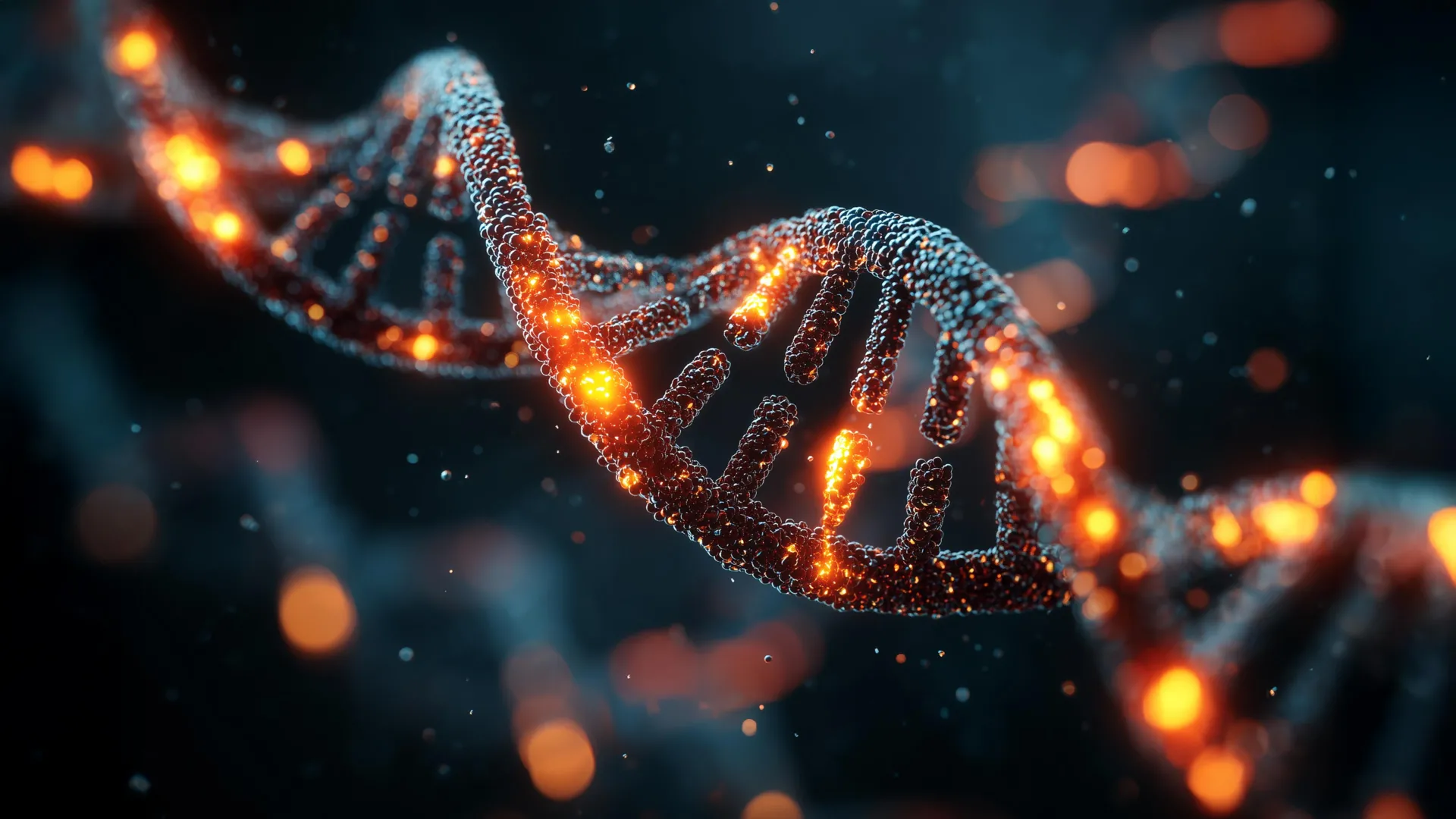
A routine scientific endeavor to test the limits of single-cell DNA sequencing at Oxford University Parks has yielded a discovery of profound significance, revealing a microscopic organism that manipulates the genetic code in a manner previously unseen by science. This finding, emerging from the humble waters of a university pond, challenges deeply ingrained assumptions about the universality and rigidity of life’s fundamental instructions.
Unexpected Discovery Amidst Technological Advancement
The breakthrough occurred during an experimental phase led by Dr. Jamie McGowan, a postdoctoral scientist at the Earlham Institute. His team was not initially seeking novel biological phenomena but rather aiming to validate a sophisticated DNA sequencing pipeline capable of analyzing minuscule amounts of genetic material, specifically from individual cells. The chosen subject for this rigorous testing was a protist, a single-celled organism, collected from a freshwater source within Oxford University Parks. The practical goal was to assess the pipeline’s efficiency and accuracy with such limited DNA samples, a critical step in advancing genomic research.
However, the meticulous work of Dr. McGowan and his colleagues soon veered into unexpected territory. Instead of merely confirming the capabilities of their sequencing technology, they stumbled upon a genetic outlier. The organism, cataloged as Oligohymenophorea sp. PL0344, was not only a previously unidentified species but also possessed a rare and significant alteration in its interpretation of DNA instructions for protein synthesis. Published in the esteemed journal PLOS Genetics, the study detailed how two of the three codons conventionally designated as genetic "stop signals" had been reassigned to code for different amino acids—a genetic flexibility that scientists had not previously documented in this combination.
"It’s sheer luck we chose this protist to test our sequencing pipeline, and it just shows what’s out there, highlighting just how little we know about the genetics of protists," Dr. McGowan remarked, underscoring the serendipitous nature of the discovery and the vast unexplored frontiers of microbial genomics.
The Enigmatic World of Protists: A Foundation for Surprise
Protists represent a diverse and often perplexing group within the biological kingdom. Their definition is broad, encompassing any eukaryotic organism that is not classified as an animal, plant, or fungus. This category includes a staggering array of life forms, from the microscopic amoebas and algae that form the base of many aquatic food webs to larger, multicellular entities like kelp and slime molds.
"The definition of a protist is loose—essentially it is any eukaryotic organism which is not an animal, plant, or fungus," Dr. McGowan explained. "This is obviously very general, and that’s because protists are an extremely variable group. Some are more closely related to animals, some more closely related to plants. There are hunters and prey, parasites and hosts, swimmers and sitters, and there are those with varied diets while others photosynthesize. Basically, we can make very few generalizations."
This inherent variability and complexity make protists a rich, albeit challenging, area for biological research. Oligohymenophorea sp. PL0344 belongs to the group known as ciliates, a class of motile, single-celled eukaryotes characterized by the presence of cilia, hair-like appendages used for locomotion and feeding. These organisms are ubiquitous in aquatic environments and have long been a subject of interest for geneticists due to their known propensity for genetic code variations, particularly concerning the critical stop codons.
Decoding the Genetic Alphabet: When Stop Signs Become Instructions
In the vast majority of life forms on Earth, the genetic code operates under a remarkably consistent set of rules. DNA, the blueprint of life, is transcribed into RNA, which is then translated into a sequence of amino acids, the building blocks of proteins. This process begins at a start codon and terminates at one of three designated stop codons: TAA, TAG, and TGA. These codons act as punctuation marks, signaling the end of a gene’s protein-coding sequence.
The near-universal adherence to this genetic code has long been a cornerstone of molecular biology, facilitating comparative genomics and the study of evolutionary relationships. While minor variations have been identified in a small number of organisms, they typically involve specific types of archaea and bacteria. Crucially, in these known variations, the codons TAA and TAG often undergo simultaneous changes, typically both ceasing to function as stop signals and instead coding for the same amino acid. This observed pattern led scientists to believe these two codons were evolutionarily linked and maintained their shared function.
"In almost every other case we know of, TAA and TAG change in tandem," Dr. McGowan stated. "When they aren’t stop codons, they each specify the same amino acid."
The discovery in Oligohymenophorea sp. PL0344 shattered this long-held paradigm. In this particular ciliate, the genetic machinery has evidently repurposed two of the canonical stop signals. The TGA codon appears to retain its role as a stop signal. However, TAA has been reassigned to specify the amino acid lysine, while TAG now codes for glutamic acid. This tripartite system, with two distinct stop codons and two reassigned former stop codons coding for different amino acids, represents an unprecedented deviation from the standard genetic code.
The researchers further observed an increased frequency of TGA codons within the organism’s genome, suggesting a potential compensatory mechanism to maintain adequate protein termination signals. The PLOS Genetics study noted that the remaining UGA stop codon is strategically positioned immediately after coding regions, likely preventing "readthrough"—the detrimental continuation of translation beyond the intended gene end.
"This is extremely unusual," Dr. McGowan emphasized. "We’re not aware of any other case where these stop codons are linked to two different amino acids. It breaks some of the rules we thought we knew about gene translation—these two codons were thought to be coupled."
The implications of this finding extend beyond mere curiosity. It demonstrates that life’s fundamental molecular machinery is not as immutable as once presumed. "Scientists attempt to engineer new genetic codes—but they are also out there in nature. There are fascinating things we can find, if we look for them. Or, in this case, when we are not looking for them."
The Mechanics of Translation: A Redefined Process
The process of reading DNA instructions involves transcription, where a gene’s sequence is copied into messenger RNA (mRNA), and then translation, where the mRNA sequence is decoded into a chain of amino acids to form a protein. This translation begins at a specific start codon, typically ATG, and concludes when the ribosome encounters a stop codon.
In Oligohymenophorea sp. PL0344, this familiar termination mechanism has been fundamentally altered. The discovery provides compelling evidence that even one of biology’s most conserved and fundamental systems—the genetic code itself—exhibits a greater degree of evolutionary flexibility than previously understood.
Further supporting the team’s conclusions, their genome and transcriptome analyses identified specific suppressor tRNA (transfer RNA) genes. These tRNAs are designed to recognize and bind to the reassigned codons, effectively ensuring that the organism’s cellular machinery correctly interprets TAA as lysine and TAG as glutamic acid, rather than halting protein synthesis. This molecular evidence solidifies the interpretation that these former stop signals have indeed been integrated into the active coding repertoire of the organism.
A Pattern of Genetic Innovation in Ciliates
The discovery of Oligohymenophorea sp. PL0344 is not an isolated incident but appears to be part of a broader trend within the ciliate lineage. Subsequent research, published in a 2024 edition of PLOS Genetics, has further illuminated the remarkable genetic adaptability of ciliates. This follow-up study reported multiple instances of independent reassignment of the UAG (the RNA equivalent of TAG) stop codon in a group of ciliates known as phyllopharyngeans.
Notably, some uncultivated ciliates sourced from the extensive TARA Oceans dataset were found to utilize UAG to encode the amino acid leucine. In other instances, specific species like Hartmannula sinica and Trochilia petrani were identified as using UAG to specify glutamine. This indicates a recurring evolutionary theme where this particular stop codon is repeatedly repurposed.
Intriguingly, the same 2024 study also found that in these phyllopharyngean ciliates, the UAA codon largely retained its role as a preferred stop signal, while UAG has repeatedly transitioned into a protein-coding function. These findings collectively suggest that significant and varied changes in the genetic code are not uncommon among poorly studied microbial eukaryotes, and that ciliates, in particular, stand out as prominent exceptions to the standard genetic code.
The cumulative evidence from these studies paints a picture of a genetic code that, while remarkably stable across most of life, is far from immutable. In the hidden depths of microbial ecosystems, particularly within the diverse world of ciliates, evolution has demonstrated a persistent capacity to "edit" and reinterpret life’s fundamental instructions, opening new avenues for understanding genetic variation and evolutionary innovation.
Broader Implications for Biological Understanding and Future Research
The implications of this discovery are far-reaching. For decades, the near-universality of the genetic code has been a foundational principle taught in biology, a testament to the deep evolutionary conservatism of life. The findings from Oligohymenophorea sp. PL0344 and related ciliate research challenge this perception, suggesting that the "standard" genetic code is not a monolithic, unchangeable entity but rather a framework that can be locally adapted and significantly modified.
This has profound implications for several areas of scientific inquiry:
- Synthetic Biology: The ability of organisms to naturally evolve alternative genetic codes provides invaluable insights for synthetic biologists aiming to engineer novel genetic systems. Understanding how these reassignments occur in nature could inform the design of artificial genomes with expanded amino acid repertoires or novel functionalities.
- Evolutionary Biology: The recurring nature of stop codon reassignment in ciliates raises questions about the evolutionary pressures that drive such changes. Are these adaptations driven by specific environmental conditions, metabolic advantages, or simply the inherent flexibility of the ciliate genetic machinery? Further research could shed light on the adaptive significance of these genetic deviations.
- Metagenomics and Astrobiology: As scientists increasingly explore the genetic diversity of uncultivated microbes and search for life beyond Earth, understanding the full spectrum of genetic codes becomes crucial. The existence of such variations means that future efforts to interpret extraterrestrial genetic material might need to account for a broader range of possibilities than previously assumed.
- Fundamental Understanding of Life: At its core, this discovery compels a re-evaluation of what constitutes the fundamental rules of life. It underscores the importance of exploring the vast microbial world, which often harbors biological innovations that challenge our anthropocentric view of life’s processes.
The initial research, published in 2023, was supported by substantial funding from the Wellcome Trust, as part of the Darwin Tree of Life Project, and benefited from the core funding provided to the Earlham Institute by the Biotechnology and Biological Sciences Research Council (BBSRC), a part of UK Research and Innovation. The sequencing data and genome assembly resources generated from this groundbreaking work have been made publicly available, ensuring that the scientific community can build upon this pivotal discovery. The ongoing exploration of these genetic rule-breakers promises to unlock further secrets of life’s incredible adaptability.












Leave a Reply