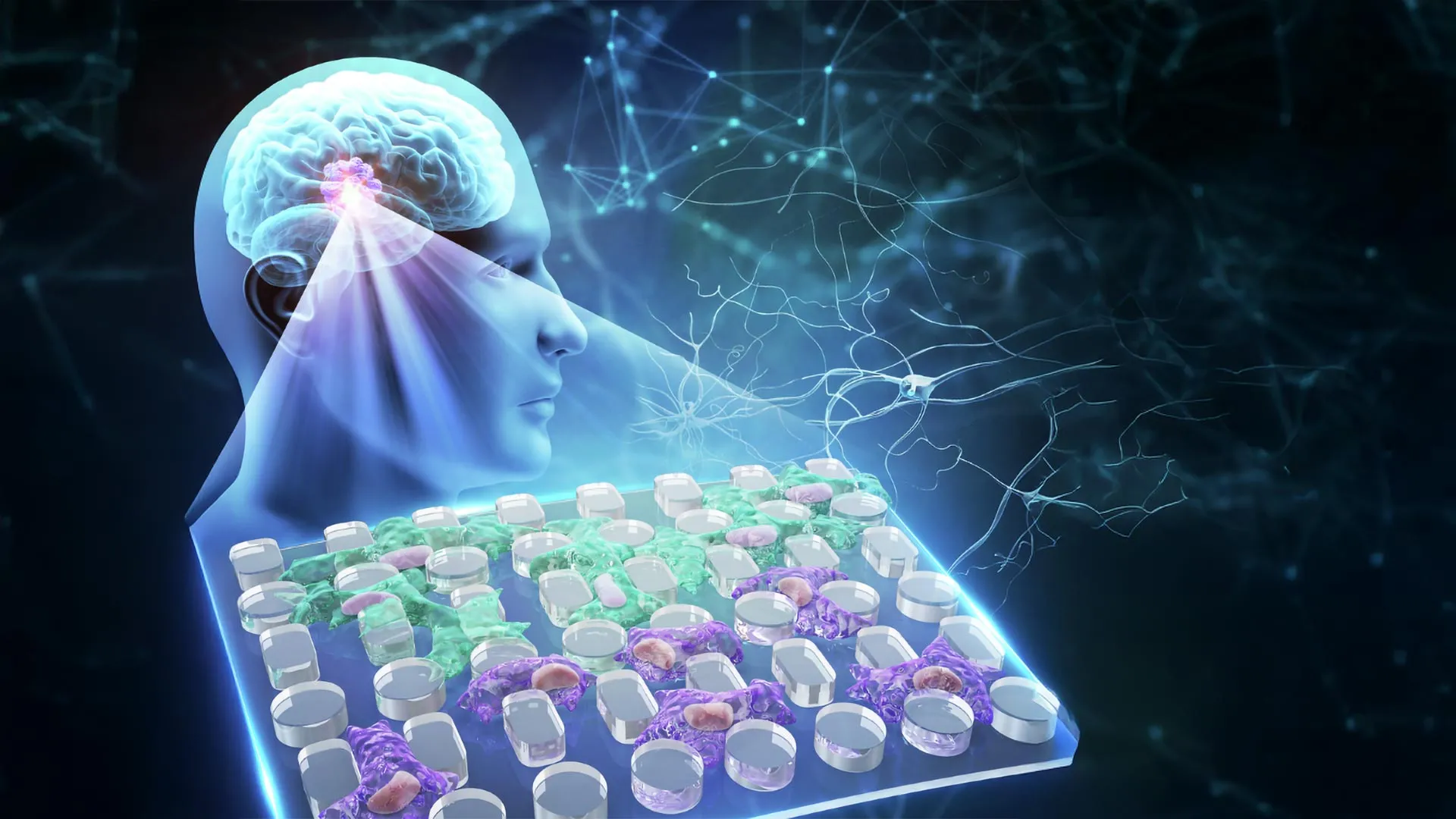
A groundbreaking preclinical study has identified a novel gene therapy that directly targets pain-processing regions within the brain, potentially revolutionizing the treatment of chronic pain by bypassing the addiction risks inherent in traditional narcotic medications. The research, published in the journal Nature, represents a collaborative effort between scientists at the University of Pennsylvania’s Perelman School of Medicine and School of Nursing, Carnegie Mellon University, and Stanford University. By utilizing a sophisticated blend of artificial intelligence and genetic engineering, the team has developed a method to modulate pain signals with unprecedented precision, offering a potential lifeline to the more than 50 million Americans currently suffering from chronic pain conditions.
For decades, the medical community has grappled with a fundamental paradox in pain management: the most effective tools for suppressing severe pain—opioids like morphine and fentanyl—are also the most dangerous. These substances operate by flooding the brain’s opioid receptors, which are distributed across various regions, including those responsible for breathing, mood, and reward. While this wide-reaching activation successfully dampens pain signals, it simultaneously triggers the euphoria that leads to addiction and the respiratory depression that causes fatal overdoses. The new study proposes a departure from this "sledgehammer" approach, instead offering a "scalpel-like" intervention that targets only the specific neural circuits involved in pain perception.
The Mechanism of Precision Pain Modulation
The central innovation of this gene therapy lies in its ability to act as a localized "volume control" for pain. Researchers often compare the experience of chronic pain to a radio stuck at maximum volume, where the persistent signal of discomfort becomes a permanent fixture of a patient’s life. While traditional opioids lower the volume, they also distort every other sound the brain produces. The newly developed gene therapy, however, is designed to turn down only the pain signal while leaving the rest of the brain’s sensory and reward processing intact.
To achieve this, the research team focused on the mu-opioid receptor (MOR) circuits, which are the primary targets of drugs like morphine. However, rather than introducing a chemical that binds to these receptors throughout the body, the therapy uses a viral vector to deliver genetic instructions directly to specific neurons in the central nervous system (CNS). This genetic "off switch" is designed to be activated only within the precise circuits that process pain.
"The goal was to reduce pain while lessening or eliminating the risk of addiction and dangerous side effects," explained Gregory Corder, PhD, an assistant professor of Psychiatry and Neuroscience at Penn and the study’s co-senior author. "By targeting the precise brain circuits that morphine acts on, we believe this is a first step in offering new relief for people whose lives are upended by chronic pain."
Leveraging AI to Map the Neural Landscape of Pain
A significant hurdle in developing non-addictive pain medication has been the difficulty of objectively measuring pain and identifying the exact neurons responsible for its persistence. To overcome this, the researchers integrated artificial intelligence into their experimental framework. By observing the natural behaviors of mice and utilizing AI-powered systems to monitor micro-expressions and movement patterns, the team was able to estimate pain levels with a high degree of accuracy.
This AI-driven mapping allowed the scientists to identify the specific neural signatures of chronic pain. By understanding which cells were firing during a pain event, they could tailor the gene therapy to intervene only when and where it was needed. This system served as a blueprint for the design of a targeted therapy that reproduces the analgesic benefits of morphine without triggering the brain’s reward pathways.
When the therapy was administered in preclinical models, the results were significant. The treatment provided sustained pain relief without interfering with normal physical sensations or inducing the drug-seeking behaviors associated with opioid addiction. This represents a major milestone in neuropharmacology: the decoupling of pain relief from the addictive "high."
The Societal Context: Addressing the Opioid Crisis
The urgency for such a breakthrough is underscored by the devastating toll of the ongoing opioid epidemic. According to data cited in the study, drug use was linked to approximately 600,000 deaths globally in 2019, with 80 percent of those fatalities involving opioids. In the United States, the crisis has permeated every level of society. A 2025 Pew survey highlighted the localized impact, finding that nearly half of the residents in Philadelphia knew someone struggling with opioid use disorder (OUD), and one-third knew someone who had died from an overdose.
The transition from legitimate chronic pain management to opioid dependency is a well-documented pathway into addiction. Patients often develop a tolerance to prescription narcotics, requiring higher doses to achieve the same therapeutic effect, which in turn increases the risk of overdose. By providing a non-addictive alternative, this gene therapy could potentially sever the link between chronic pain treatment and the development of substance use disorders.
Furthermore, the economic implications of chronic pain are staggering. Often referred to as a "silent epidemic," chronic pain is estimated to cost the U.S. economy more than $635 billion annually. This figure encompasses direct medical expenses as well as indirect costs such as lost productivity, missed work, and reduced lifetime earnings. For the 50 million Americans living with these conditions, the burden is not only physical and emotional but also financial.
A Chronology of Discovery and Development
The publication in Nature is the culmination of more than six years of intensive research. The project was catalyzed by a National Institutes of Health (NIH) New Innovator Award, a prestigious grant designed to support high-risk, high-reward research with the potential for significant impact on public health. This funding allowed the multi-institutional team to delve deep into the molecular and cellular mechanisms of how chronic pain develops and why it persists long after an initial injury has healed.
The research timeline involved several critical phases:
- Circuit Identification: Early years were spent using advanced imaging to identify the specific mu-opioid receptor-expressing neurons in the brain’s pain-processing centers.
- AI Integration: The development of the AI behavioral monitoring system allowed for the objective quantification of pain in animal models, a necessary step for testing efficacy.
- Vector Design: The team engineered custom genetic sequences (promoters) that would only activate in the targeted neurons.
- Preclinical Testing: Extensive trials in mice demonstrated that the gene therapy could provide long-term relief without the side effects of traditional narcotics.
This sustained effort was supported by a wide array of institutions, including the National Institute of General Medical Sciences (NIGMS), the National Institute on Drug Abuse (NIDA), and the National Institute of Neurological Disorders and Stroke (NINDS), as well as private organizations like the Howard Hughes Medical Institute and the Whitehall Foundation.
Path Toward Clinical Implementation and Future Implications
While the preclinical results are promising, the transition from laboratory success to human clinical trials is a complex process. The research team is currently collaborating with Michael Platt, PhD, the James S. Riepe University Professor at Penn, to navigate the next steps toward human application.
"The journey from discovery to implementation is long, and this represents a strong first step," Platt noted. "Speaking both as a scientist and as a family member of people affected by chronic pain, the potential to relieve suffering without fueling the opioid crisis is exciting."
The technical hurdles for human trials include ensuring the safety of the viral delivery system in the human brain and determining the optimal dosage for long-term efficacy. However, the foundational work—specifically the development of human and murine Oprm1 promoters—has already been filed under a provisional patent application through the University of Pennsylvania and Stanford University. This intellectual property foundation is critical for attracting the pharmaceutical partnerships necessary to fund large-scale clinical trials.
If successful in humans, this CNS-targeted gene therapy could redefine the standard of care for various types of chronic pain, including neuropathic pain, fibromyalgia, and treatment-resistant cancer pain. Unlike daily pills or injections, gene therapy could potentially offer long-lasting relief with a single intervention, significantly improving the quality of life for patients and reducing the healthcare system’s reliance on controlled substances.
Analysis of Potential Impact
The emergence of a non-addictive, circuit-specific pain medicine addresses one of the most significant gaps in modern neurology. By focusing on the "circuitry" rather than the "chemistry" of the brain, this approach sidesteps the systemic side effects that have plagued pain management since the isolation of morphine in the early 19th century.
From a public health perspective, the successful deployment of such a therapy could lead to a measurable decline in new cases of opioid use disorder. By offering an alternative to patients at the start of their chronic pain journey, physicians could avoid the "opioid trap" entirely. Furthermore, the use of AI in this study sets a new precedent for drug development, suggesting that the future of medicine lies in the integration of machine learning with genetic engineering to create "smart" therapeutics that respond to the body’s internal states.
As the research moves toward the clinical phase, the medical community remains cautiously optimistic. The complexity of the human brain compared to the mouse brain remains a challenge, but the blueprint established by Corder and his colleagues provides a clear and scientifically rigorous path forward in the fight against chronic pain and the opioid crisis.