In a discovery that reframes the scientific understanding of cognitive decline, researchers at Stanford University have identified a breakdown in the cellular machinery responsible for protein production as a foundational cause of brain aging. The study, published in the journal Science, reveals that as brain cells age, the process of translating genetic instructions into functional proteins becomes increasingly prone to error and physical "traffic jams." This failure in protein homeostasis, or proteostasis, appears to be a primary trigger for the widespread cellular dysfunction associated with Alzheimer’s disease, Parkinson’s disease, and other age-related neurodegenerative conditions.
The research team, led by Dr. Judith Frydman, the Donald Kennedy Chair in the School of Humanities and Sciences at Stanford, has provided what many in the field consider one of the most mechanistic and clear explanations to date for why the aging brain becomes vulnerable to disease. By tracing the origins of protein aggregation—the harmful clumping of proteins often seen in diseased brains—back to the very moment of their synthesis, the study offers a new target for therapeutic interventions that could potentially slow or even reverse aspects of mental decline.
The Critical Role of Proteostasis in Neurological Health
Proteostasis is the complex, highly regulated process by which cells ensure that proteins are correctly manufactured, folded into their functional shapes, and disposed of when they are no longer needed. In a healthy brain, this system operates with high fidelity, maintaining the delicate balance required for neurons to communicate and survive. However, it has long been observed that this balance shifts as organisms age.
"We know that many processes become more dysfunctional with aging, but we really don’t understand the fundamental molecular principles of why we age," explained Dr. Frydman. "Our new study begins to provide a mechanistic explanation for a phenomenon widely seen during aging, which is increased aggregation and dysfunction in the processes that make proteins."
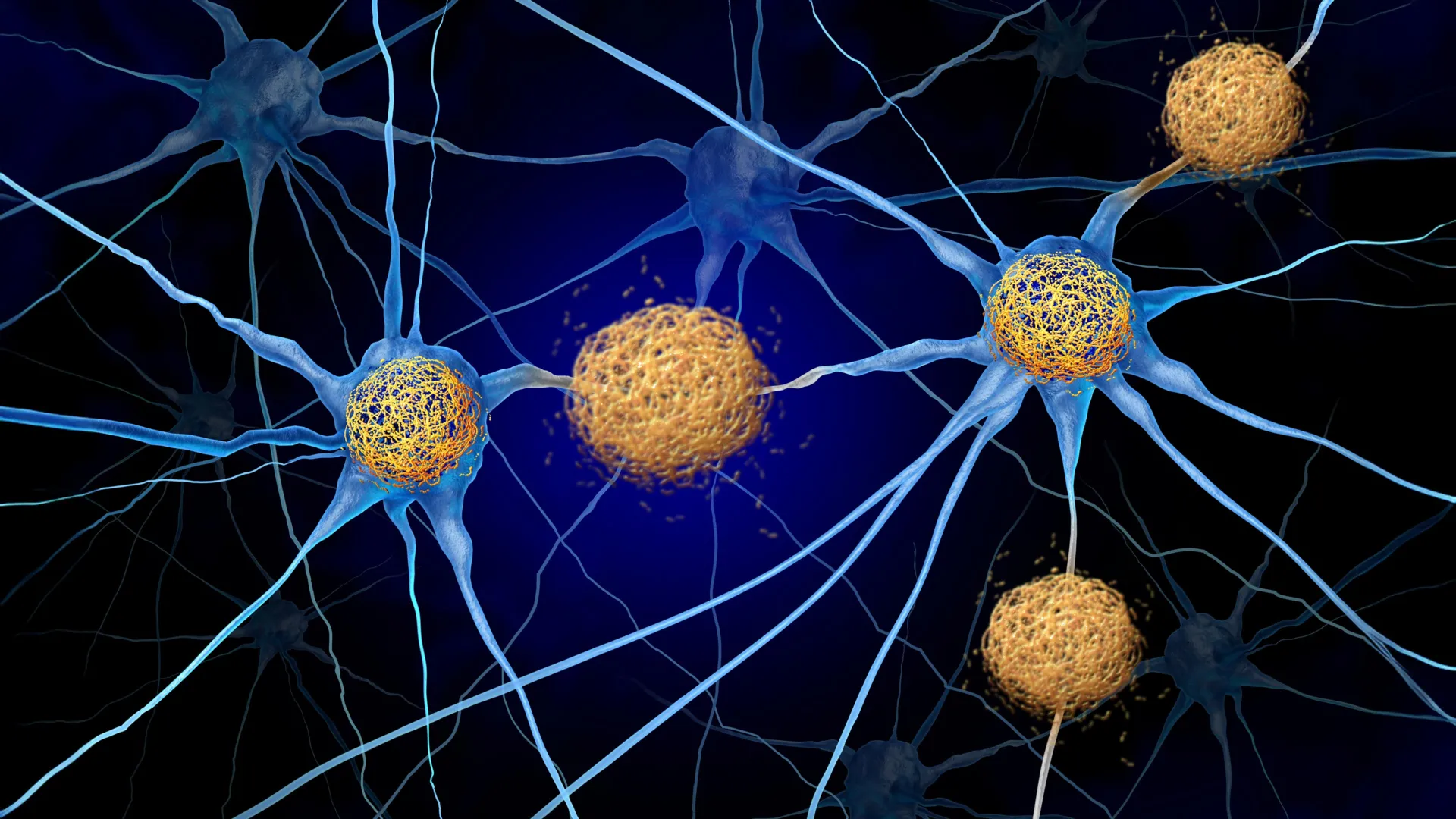
When proteostasis fails, proteins often misfold. These misfolded proteins are not only non-functional but can become "sticky," adhering to one another to form toxic aggregates. In Alzheimer’s disease, these aggregates manifest as amyloid-beta plaques and tau tangles. The Stanford study suggests that these aggregates are not merely a byproduct of age but are a direct result of a systemic failure in the protein manufacturing plant of the cell.
The Turquoise Killifish: An Accelerated Model for Aging
To observe the intricate transitions of an aging brain without waiting decades for human or mammalian subjects to decline, the Stanford team utilized the turquoise killifish (Nothobranchius furzeri). Native to temporary freshwater pools in the African savanna, these fish have evolved to complete their entire life cycle in just a few months, as their habitats disappear during the dry season.
This extremely short lifespan makes the killifish an ideal model for gerontology. They exhibit the same hallmarks of aging seen in humans—including cognitive decline, neurodegeneration, and the accumulation of protein aggregates—but they do so on a timeline of weeks rather than years. By comparing the brain tissue of young, adult, and aged killifish, the researchers were able to capture a high-resolution "biological time-lapse" of the aging process.
The team conducted a multi-omic analysis, measuring levels of amino acids, transfer RNA (tRNA), messenger RNA (mRNA), and the resulting proteins. This comprehensive approach allowed them to see not just what was in the cells, but how the relationship between these components changed over the fish’s lifespan.
Decoding the Ribosomal Traffic Jam
The researchers identified the specific point of failure in a phase of protein synthesis known as translation elongation. During this phase, a molecular machine called a ribosome travels along a strand of mRNA, reading the genetic code and linking amino acids together to form a protein chain.
In the brains of younger fish, ribosomes moved smoothly and at a regulated pace. However, in the aging brain, the researchers observed that ribosomes frequently stalled or collided with one another. These molecular "traffic jams" have two devastating effects. First, they slow down the production of essential proteins needed for cellular repair and signaling. Second, the stalled ribosomes often produce incomplete or misfolded protein chains that are highly prone to clumping into toxic aggregates.
"Our results show that changes in the speed of ribosome movement along the mRNA can have a profound impact on protein homeostasis," said Jae Ho Lee, the study’s co-lead author and an assistant professor at Stony Brook University, who conducted the research as a postdoctoral scholar at Stanford. Lee emphasized that the "regulated" speed of this process is essential; when the rhythm is lost, the entire system of cellular health begins to collapse.
Solving the Mystery of Protein-Transcript Decoupling
One of the most significant contributions of the study is its explanation for "protein-transcript decoupling." For years, biologists have been puzzled by the fact that in aging cells, the amount of mRNA (the instructions) often does not correlate with the amount of protein (the product) actually found in the cell. In a young cell, if mRNA levels for a specific gene increase, protein levels usually follow suit. In an aging cell, this relationship breaks down.
The Stanford team’s findings suggest that even if the brain continues to produce the correct "blueprints" in the form of mRNA, the "construction crews" (ribosomes) are too dysfunctional to execute them. This explains why gene therapy or treatments aimed solely at mRNA levels may have seen limited success in the past—the bottleneck lies further down the production line.
The proteins most affected by these ribosomal stalls are those involved in critical functions such as maintaining genome stability and cellular integrity. When these specific proteins fail to be produced correctly, it triggers a domino effect, leading to the broader systemic failures characteristic of old age.
Broader Implications for Neurodegenerative Disease
The link between ribosome stalling and protein aggregation provides a direct bridge to the study of Alzheimer’s, Parkinson’s, and ALS. In these diseases, the accumulation of proteins like alpha-synuclein or amyloid-beta is a defining feature. If the root cause is a fundamental defect in translation elongation, it suggests that these diseases may be extreme manifestations of a universal aging process.
This shift in perspective moves the focus away from the "trash" (the aggregates) and toward the "factory" (the ribosomes). Current research in the Frydman lab is already pivoting to investigate whether boosting the efficiency of ribosomes or enhancing the cell’s ability to clear stalled ribosomes can prevent the onset of neurodegeneration.
"Showing that the process of protein production loses fidelity with aging provides a kind of underlying rationale for why all these other processes start to malfunction with age," Frydman said. "The key to solving a problem is to understand why it’s gone wrong. Otherwise, you’re just fumbling in the dark."
Chronology of the Research and Scientific Context
The Stanford study represents a culmination of decades of work in the field of proteostasis.
- Pre-2000s: Early aging research focused heavily on DNA damage and oxidative stress (the "free radical" theory).
- 2000s-2010s: Researchers began to identify proteostasis as a "hallmark of aging," but the exact molecular trigger remained elusive.
- 2015-2020: The Frydman lab and others established that protein folding was essential in simpler organisms like yeast and worms.
- 2022-2024: The Stanford team applied these theories to the turquoise killifish, successfully bridging the gap between simple organisms and complex vertebrates.
The publication in Science marks a milestone in this chronology, shifting the focus from the degradation of existing proteins to the errors made during the birth of new proteins.
Future Horizons: Therapeutic Potential
The implications of this research for the pharmaceutical industry and clinical medicine are substantial. If ribosome dysfunction is a targetable "upstream" event, then new classes of drugs could be developed to:
- Improve Ribosome Quality Control: Developing small molecules that help the cell identify and dismantle stalled ribosomes before they cause collisions.
- Optimize Translation Speed: Finding ways to maintain the youthful "rhythm" of protein synthesis through metabolic or chemical interventions.
- Restoring Homeostasis: Using the findings to create better diagnostic tools that can detect the early signs of ribosomal stalling before cognitive symptoms appear.
The team is currently collaborating with the Knight Initiative for Brain Resilience at Stanford to explore how these molecular processes influence longevity across multiple species, including humans. By understanding the "mechanistic explanation for a phenomenon widely seen during aging," the scientific community is now better equipped to move from observing the decline of the human brain to actively preserving its resilience.
As the global population ages and the prevalence of Alzheimer’s is projected to nearly triple by 2050, the need for such foundational breakthroughs has never been more urgent. The Stanford study does not just offer a new piece of the puzzle; it provides a new map of the puzzle itself, highlighting the ribosome as a central figure in the fight against the diseases of time.