

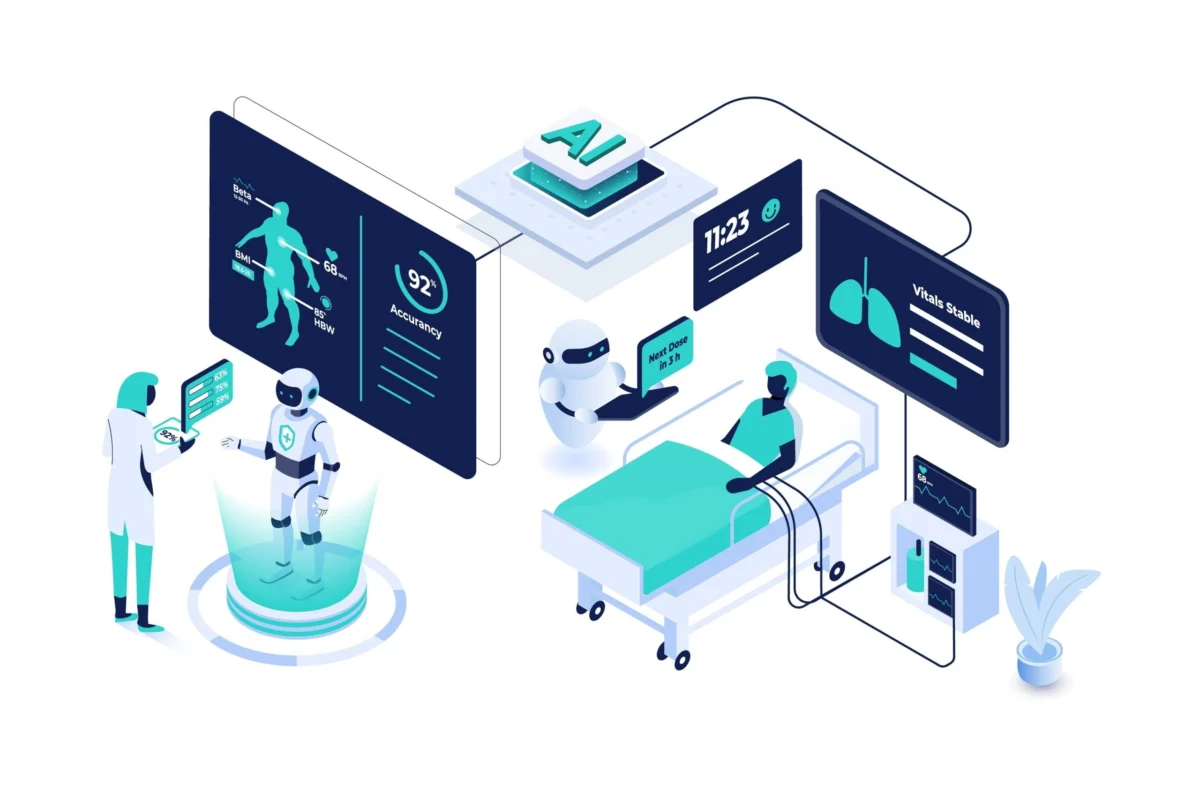
The pharmaceutical industry is experiencing a significant transformation as artificial intelligence (AI) tools move beyond experimental phases to deliver tangible administrative efficiencies, liberating specialized personnel to focus on higher-value, human-centric activities. This paradigm shift was a central theme at the recent Pharma Meets AI conference held in Barcelona, Spain, in April 2026, where discussions underscored the growing imperative for AI solutions that demonstrate clear, quantifiable business outcomes.
The Evolving Landscape of AI in Pharma
For years, the pharmaceutical sector has been a fertile ground for technological innovation, with AI holding immense promise. However, the practical application and measurable impact of these advanced technologies, particularly within commercial and field medical functions, have often lagged behind initial enthusiasm. The Barcelona conference served as a critical juncture, highlighting a collective industry recognition that the true value of AI lies not just in its existence, but in its seamless integration into daily operations and its ability to drive demonstrable improvements.
Sam Rolfe, sales director EMEA at Exeevo, articulated a prevailing sentiment among industry leaders: "Successful AI initiatives must move beyond the realm of experimentation and unequivocally demonstrate clear, quantifiable impact. The journey to achieving this is frequently hampered by fragmented data environments and a persistent misalignment between people, processes, and the technology itself. These challenges continue to constrain the full potential of AI-driven insights and their translation into actionable business advantages."
Overcoming Integration Hurdles: The Data and Alignment Challenge
The inherent complexity of pharmaceutical operations, characterized by vast datasets, stringent regulatory frameworks, and intricate stakeholder networks, presents unique challenges for AI implementation. Data silos, often arising from legacy systems and departmental fragmentation, impede the creation of a unified view necessary for AI algorithms to function optimally. Furthermore, the effective deployment of AI requires not only technological prowess but also a cultural and operational alignment across the organization. Without buy-in from personnel and streamlined processes that complement AI capabilities, even the most sophisticated tools can falter.
The Pharma Meets AI conference provided a platform for stakeholders to share best practices and address these persistent barriers. Discussions revolved around strategies for data standardization, the development of interoperable systems, and the critical importance of change management to foster AI adoption and maximize its benefits. The consensus was that a holistic approach, encompassing technological infrastructure, human capital development, and process re-engineering, is essential for unlocking the transformative power of AI in the pharmaceutical sector.
Exeevo’s "Ask-Nova": A Blueprint for Workflow Integration
Amidst these discussions, Exeevo’s "Ask-Nova" solution emerged as a compelling example of how AI can be effectively embedded into the daily workflows of pharmaceutical field teams. This innovative platform is designed to act as an intelligent assistant, supporting representatives with a range of critical administrative and preparatory tasks. By automating and streamlining functions such as meeting preparation, note-taking during interactions, and the meticulous entry of customer relationship management (CRM) data, "Ask-Nova" directly addresses the administrative burden that often consumes valuable professional time.
"The core principle behind ‘Ask-Nova’ is to delegate routine, time-intensive administrative tasks to AI workflow tools," explained Rolfe. "This liberation of time allows our representatives and field medical professionals to dedicate their energy and expertise to higher-value activities, such as in-depth scientific discussions with healthcare professionals, strategic relationship building, and providing crucial insights back to the organization. It’s about augmenting human capabilities, not replacing them, and ensuring that our most skilled personnel are focused on what they do best."
The platform’s architecture is built to integrate seamlessly with existing CRM systems and other relevant data sources, ensuring a consistent and efficient user experience. The AI capabilities are designed to learn from user interactions, becoming increasingly adept at anticipating needs and providing relevant support. This intelligent automation is key to unlocking the promised efficiencies and enabling a more proactive and impactful engagement model for field teams.
Quantifiable Impact: The Metrics of Success
The value proposition of AI in administrative tasks is increasingly being measured by concrete metrics. Exeevo’s experience with "Ask-Nova" highlights the potential for substantial improvements in operational efficiency and return on investment (ROI). According to Rolfe, AI-driven workflow tools like "Ask-Nova" are demonstrating measurable improvements, including reductions of up to 30-40% in the time pharmaceutical professionals spend on administrative tasks.
This significant time saving translates directly into tangible benefits. For a field representative who previously spent several hours each week on manual data entry, report generation, and scheduling, reclaiming 30-40% of that time means an additional 10-15 hours per week available for more impactful activities. This could translate into more frequent and meaningful interactions with healthcare providers, deeper engagement with key opinion leaders, and more comprehensive market intelligence gathering.
Furthermore, the financial implications are equally compelling. Exeevo reports that these AI-driven solutions can deliver a return on investment (ROI) within as little as six months. This rapid payback period is a critical factor for organizations considering AI adoption, particularly in a sector where investment decisions are often subject to rigorous scrutiny and lengthy approval processes. The swift realization of financial benefits underscores the practical and immediate value that AI can bring to pharmaceutical operations.
Broader Implications: Enhanced Data Quality and Engagement
Beyond the direct time savings and financial returns, the implementation of AI-driven administrative tools has broader, positive implications for pharmaceutical companies. One significant benefit is the enhancement of data quality. When administrative tasks like CRM data entry are automated and standardized by AI, the risk of human error is significantly reduced. This leads to more accurate, complete, and up-to-date customer and market information, which is crucial for effective sales strategies, targeted marketing campaigns, and informed decision-making. High-quality data is the bedrock of any successful data-driven organization, and AI plays a vital role in ensuring its integrity.
Moreover, by freeing up professionals to focus on higher-value interactions, AI fosters stronger engagement outcomes. When a sales representative or a field medical liaison is not bogged down by administrative duties, they can dedicate more time and mental bandwidth to understanding the needs of healthcare professionals, providing relevant scientific information, and building robust relationships. This enhanced engagement can lead to improved prescribing habits, greater adoption of new therapies, and ultimately, better patient outcomes. The human element of empathy, critical thinking, and complex problem-solving, when augmented by AI-driven efficiency, becomes more potent and impactful.
The Future of AI Governance in Pharma
The Pharma Meets AI conference also delved into the critical area of AI governance. As AI becomes more deeply embedded in pharmaceutical operations, establishing robust governance frameworks is paramount. This includes addressing ethical considerations, ensuring data privacy and security, and defining clear lines of accountability for AI-driven decisions. The industry is grappling with how to balance the rapid pace of AI development with the need for responsible and regulated deployment.
Industry experts believe that effective AI governance will require a multi-faceted approach, involving collaboration between technology providers, pharmaceutical companies, regulatory bodies, and ethical advisory groups. The goal is to create an environment where AI can be leveraged to its full potential while mitigating risks and upholding the highest standards of integrity and patient safety. The ongoing dialogue around AI governance at events like Pharma Meets AI is indicative of the industry’s commitment to responsible innovation.
A Transformative Shift on the Horizon
The advancements discussed at the Pharma Meets AI conference signal a transformative shift in how the pharmaceutical industry leverages technology. The transition from AI as an experimental concept to AI as an integrated operational tool is well underway. Solutions like Exeevo’s "Ask-Nova" are not just automating tasks; they are fundamentally reshaping the roles of pharmaceutical professionals, empowering them to operate at a higher strategic and interpersonal level.
As the industry continues to navigate the complexities of drug discovery, development, and commercialization, the ability to optimize human capital through intelligent automation will be a key differentiator. By effectively deploying AI to handle administrative burdens, pharmaceutical companies can unlock significant gains in efficiency, data accuracy, and ultimately, the quality of their engagement with the healthcare ecosystem. The message from Barcelona is clear: AI is no longer a futuristic promise for pharma, but a present-day reality delivering measurable value and paving the way for a more agile, efficient, and impactful future.











Leave a Reply