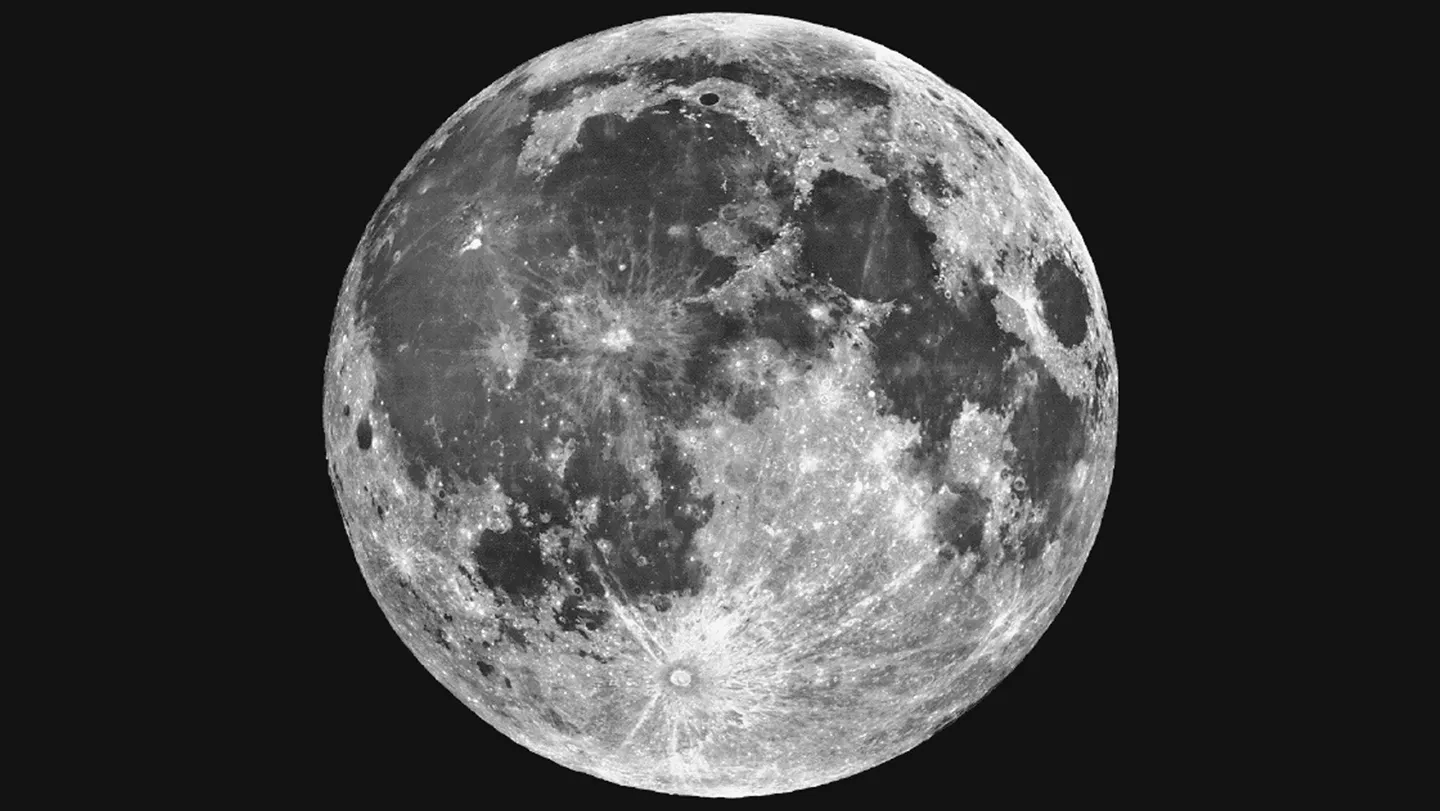
The moon, a silent sentinel in our night sky, has revealed a dramatic new feature: a fresh impact crater, estimated to be 225 meters wide, a size of impact that statistically occurs only once every 139 years. Discovered through a routine examination of images captured by NASA’s Lunar Reconnaissance Orbiter (LRO) camera, this significant event underscores the dynamic nature of our celestial neighbor and offers a rare opportunity to study recent lunar geological processes.
The Discovery: A Routine Search Yields an Extraordinary Find
The discovery was announced by planetary scientist Mark Robinson on March 17th at the Lunar and Planetary Sciences Meeting in The Woodlands, Texas. Robinson, a principal investigator for the LRO’s Moon Mineralogy Mapper instrument, presented findings that have captivated the scientific community. The newly formed crater, described as being as wide as two American football fields laid end-to-end, is not a relic of ancient cosmic bombardment but a recent addition to the lunar landscape.
The LRO, launched in 2009, has been systematically mapping the moon’s surface with unprecedented detail. Its sophisticated camera system, capable of resolving features as small as a meter across, has provided a wealth of data for scientists studying lunar geology, history, and potential resources. The discovery of this crater highlights the ongoing value of such missions, demonstrating that even in well-studied areas, new and significant events can be detected.
A Chronology of Impact: Estimating the Event’s Timing
While the exact date of the impact remains unknown, scientists can infer its recency based on several factors. The crater exhibits sharp, well-defined features, with no significant signs of erosion or weathering that would accumulate over long periods on the moon’s airless surface. The ejected material, known as ejecta, also appears relatively fresh, indicating that the event likely occurred within the last few decades, possibly even more recently.
The process of identifying such fresh craters involves comparing LRO images taken at different times. Scientists look for changes in the lunar surface, such as the appearance of new craters or the modification of existing ones. The distinct morphology of this particular crater—its bright ejecta blanket and crisp rim—immediately flagged it as a recent event, prompting further detailed analysis.
The Science Behind the Crater: Understanding Impact Dynamics
The 225-meter width of the crater suggests that the impacting object was substantial. While the exact size and composition of the impactor cannot be determined from the imagery alone, estimations can be made based on crater morphology and the likely impact velocity. Such an impactor would likely have been a stony or iron meteorite, perhaps tens of meters in diameter, traveling at speeds of tens of thousands of kilometers per hour.
The formation of a crater of this size is a violent process. The impactor’s kinetic energy is rapidly converted into heat and shock waves, vaporizing and excavating lunar material. The resulting explosion creates a bowl-shaped depression, surrounded by a raised rim formed from the displaced material. A curtain of debris, the ejecta blanket, is thrown outwards from the impact site, often creating radial patterns. The brightness of the ejecta blanket is a key indicator of its freshness, as it has not yet been darkened by micrometeorite impacts and solar wind exposure.
Supporting Data: The Lunar Reconnaissance Orbiter’s Crucial Role
The Lunar Reconnaissance Orbiter Camera (LROC) aboard the LRO is a critical instrument in this discovery. LROC comprises two narrow-angle cameras (NACs) and one wide-angle camera (WAC). The NACs provide high-resolution, monochromatic images, essential for detecting subtle changes and features on the lunar surface. It is these detailed images that allowed Robinson and his team to identify the new crater and assess its characteristics.
The LRO mission has been instrumental in advancing our understanding of the moon since its arrival in lunar orbit. It has provided detailed topographic maps, identified potential water ice deposits, and characterized the lunar radiation environment, all crucial for future human exploration. This crater discovery is another testament to the mission’s enduring scientific return.
Broader Context: The Moon as a Cosmic Record
The moon, lacking a substantial atmosphere and geological activity, serves as an invaluable archive of the solar system’s history. Its surface is pockmarked with craters of all sizes, each a record of an impact event that occurred over billions of years. By studying these craters, scientists can infer the rate of bombardment in the past and present, understand the processes of impact cratering, and even gain insights into the composition of the asteroid and comet populations that have traversed our solar system.
The moon’s current impact rate is significantly lower than in its early history, a period known as the Late Heavy Bombardment. However, impacts still occur. NASA has previously documented smaller, more recent impact events through LRO data, such as the formation of craters resulting from the impact of spent rocket stages or meteoroids. These smaller events, while less dramatic, are crucial for calibrating models of impact rates and understanding the current flux of objects in near-Earth space.
Statistical Significance: A Rare Occurrence
The statement that a crater of this size is expected only once every 139 years is derived from statistical models of impact probabilities. These models are based on the observed number and size distribution of craters on the moon, as well as estimations of the population of near-Earth objects. While this figure provides a useful statistical average, it is important to note that the actual occurrence of such events can fluctuate. There can be periods with more impacts and periods with fewer. The discovery of this crater suggests that the moon remains an active target for cosmic debris.
Potential Implications and Future Research
The discovery of this fresh, large crater offers several avenues for future research:
- Impact Dynamics Study: Scientists can use the detailed imagery to refine models of impact cratering. Analyzing the ejecta patterns, rim structure, and overall morphology can provide data to improve our understanding of how different types of impactors interact with lunar regolith.
- Lunar Surface Evolution: This event provides a tangible example of how the lunar surface is continuously, albeit slowly, being reshaped. Studying this crater can help scientists better understand the processes that contribute to the long-term evolution of lunar landscapes.
- Resource Potential: While not directly related to resource extraction, understanding impact events can inform strategies for future lunar bases. Knowing the frequency and scale of impacts helps in assessing potential hazards and in selecting safe landing and construction sites.
- Near-Earth Object Monitoring: The event serves as a reminder of the ongoing threat posed by asteroid and meteoroid impacts. While this particular impactor was relatively small and struck an uninhabited celestial body, it underscores the importance of continued efforts to detect and track potentially hazardous objects in our solar system.
Official Reactions and Scientific Community Response
While no official statements from NASA administrators have been released specifically regarding this crater, the scientific community has responded with significant interest. Presentations at conferences like the Lunar and Planetary Sciences Meeting are the primary channels for disseminating such findings. The detailed data and analysis presented by Dr. Robinson and his team are expected to be published in peer-reviewed journals, allowing for broader scrutiny and further investigation by planetary scientists worldwide. The discovery is likely to spur further analysis of LRO data, searching for other similar recent impact sites and refining our understanding of lunar impact history.
Conclusion: A Dynamic Moon Unveils Another Secret
The discovery of this 225-meter wide crater is a significant event in lunar science. It is a vivid reminder that even seemingly static celestial bodies are subject to dynamic processes. The precision of NASA’s LRO mission has once again provided invaluable data, allowing us to witness a rare cosmic event and deepen our understanding of the moon’s ongoing evolution. As scientists continue to analyze the data, this fresh scar on the lunar surface promises to unlock further insights into the violent, yet vital, processes that shape our solar system.