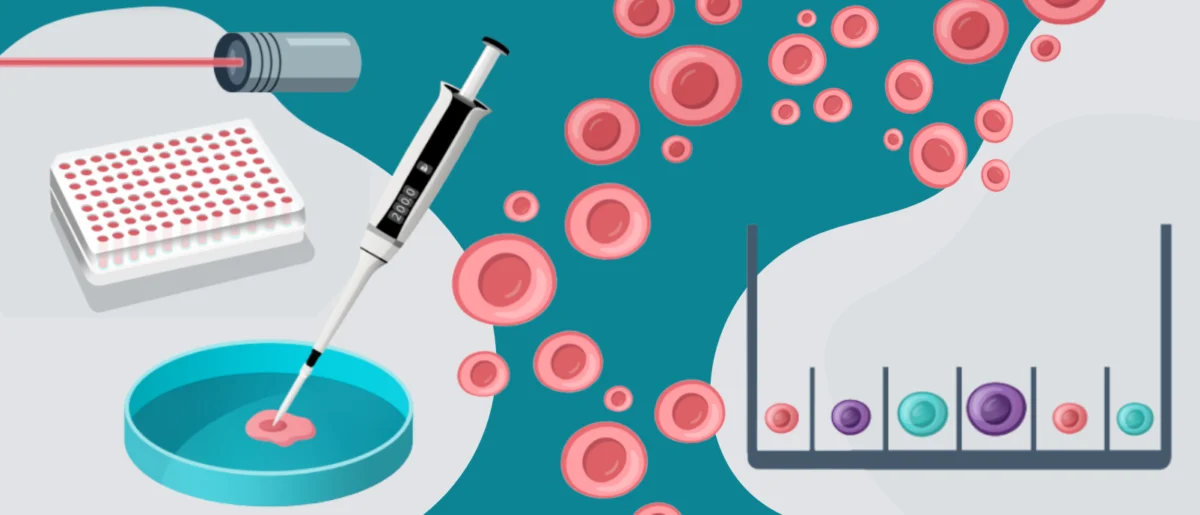
Cell-line development (CLD) stands as a foundational pillar in the biopharmaceutical industry, an intricate and often arduous process critical for the generation of therapeutic biomolecules ranging from life-saving monoclonal antibodies to innovative gene therapies. At the very genesis of this complex journey lies the isolation of single cells, a crucial step from which robust, high-yield, and consistently performing colonies must originate. This initial phase, encompassing single-cell isolation and cloning, is notoriously recognized for its demanding nature, frequently characterized by its time-consuming, resource-intensive, and often frustrating challenges for researchers and developers alike. The paramount question facing the industry today revolves around how to optimize this foundational isolation step, ensuring it reliably paves the way for the development of high-throughput, viable, and unequivocally monoclonal cell lines, thereby accelerating the pipeline from discovery to patient care.
In response to these pervasive industry challenges, a new infographic, sponsored by the global bioprocessing and life science leader Sartorius, has been released to provide critical insights into the landscape of single-cell isolation and cloning for CLD. This comprehensive resource delves into a comparative analysis of three established methodologies currently employed in the field, meticulously outlining their respective advantages and limitations. Crucially, the infographic then transitions to introduce a groundbreaking, next-generation alternative designed to transcend the existing limitations of nanowell-based image-verified cloning systems. Further exploration of this innovative approach is available through an accompanying animated video, offering a dynamic visual explanation of its principles and benefits.
The Criticality of Cell-Line Development in Modern Medicine
The biopharmaceutical market is a rapidly expanding sector, with biologics accounting for a significant and growing share of new drug approvals and global pharmaceutical sales. These complex therapeutic molecules, produced by living cells, offer targeted treatments for a vast array of diseases, including cancers, autoimmune disorders, and infectious diseases. The global biopharmaceuticals market size was valued at over $300 billion in 2020 and is projected to reach well over $600 billion by 2030, driven by advancements in biotechnology, increasing prevalence of chronic diseases, and a growing aging population. At the heart of this explosive growth lies the ability to reliably and efficiently produce these therapeutic proteins, a feat entirely dependent on robust and stable cell lines.
CLD is the process of selecting and culturing a specific cell line that can consistently produce a desired therapeutic protein at high yields and with the correct post-translational modifications. The initial step of single-cell isolation is not merely a technicality; it is a regulatory imperative and a biological necessity. Regulatory bodies worldwide, including the U.S. Food and Drug Administration (FDA) and the European Medicines Agency (EMA), mandate strict proof of clonality for therapeutic cell lines. This means demonstrating that the entire production cell line originated from a single progenitor cell, ensuring genetic homogeneity and consistent product quality. Without this stringent verification, the entire drug development process can face significant delays or even outright rejection, leading to substantial financial losses and missed opportunities to bring life-saving treatments to patients.
Navigating the Labyrinth: Challenges in Single-Cell Isolation and Cloning
Despite its undisputed importance, the process of isolating single cells and establishing clonal cell lines has historically been fraught with difficulties. Researchers are often confronted with a multi-faceted challenge that impacts timelines, resource allocation, and ultimately, the success rate of therapeutic development.
One of the primary hurdles is achieving and definitively proving monoclonality. Traditional methods, such as limiting dilution, involve serially diluting a cell suspension to a theoretical concentration of one cell per well. While simple and inexpensive, this method offers only probabilistic assurance of monoclonality, often requiring multiple rounds of subcloning and extensive documentation to satisfy regulatory requirements. The lack of visual confirmation at the outset means that wells initially thought to contain a single cell might actually harbor two or more, leading to heterogenous populations that can compromise product consistency and regulatory compliance.
Cell viability and recovery post-isolation represent another significant challenge. Many single-cell isolation techniques involve mechanical stress, temperature fluctuations, or exposure to harsh reagents, all of which can negatively impact cell health and survival. Cells, particularly delicate or slow-growing types, may not recover sufficiently to proliferate and form robust colonies, leading to low cloning efficiencies. This necessitates screening a larger number of wells or cultures, further increasing the time and resources expended.
Throughput is a critical consideration in an industry driven by speed and efficiency. The demand for new biologics means that drug developers need to screen hundreds, if not thousands, of potential clones to identify those with the highest productivity and desired quality attributes. Traditional manual methods are inherently low-throughput, labor-intensive, and prone to human error. Even semi-automated systems often struggle to meet the demand for rapid screening without compromising the integrity of the process.
The resource-intensive nature of single-cell isolation extends beyond labor. It encompasses the significant consumption of specialized reagents, culture media, consumables, and the need for sophisticated equipment, all contributing to the escalating costs of early-stage biopharmaceutical development. Furthermore, the process requires highly skilled personnel, whose expertise is a valuable and often limited resource.
Collectively, these challenges contribute to extended timelines in drug development. The period dedicated to establishing a stable, monoclonal, and high-producing cell line can stretch for months, adding considerable time to an already lengthy and expensive drug development pipeline. Any innovation that can significantly reduce this timeframe without compromising quality offers immense value to the industry.
A Historical Perspective: The Evolution of Isolation Techniques
The journey to current single-cell isolation methodologies has been one of continuous innovation, driven by the escalating demands of biopharmaceutical research and production. Early attempts primarily relied on manual methods like limiting dilution, where cell suspensions were diluted and distributed into multi-well plates. While foundational, its inherent probabilistic nature made definitive proof of clonality difficult, often necessitating laborious rounds of subcloning and extensive growth monitoring to achieve regulatory acceptance. This method, despite its simplicity and low cost, is notoriously inefficient and time-consuming for establishing truly clonal populations.
The advent of fluorescence-activated cell sorting (FACS) marked a significant leap forward in the 1970s and 80s. Flow cytometry offered the ability to sort individual cells based on specific fluorescent markers and physical characteristics, allowing for more precise and higher-throughput isolation. While FACS improved the efficiency of single-cell dispensing, challenges remained regarding cell viability post-sorting, potential for doublets (two cells being sorted as one), and the need for highly specialized and expensive equipment. The shear stress during sorting could also be detrimental to sensitive cell types.
In the late 20th and early 21st centuries, efforts shifted towards automation and image verification. Systems employing automated liquid handlers and robotic cell pickers emerged, aiming to reduce manual labor and improve reproducibility. However, these systems often lacked the crucial capability of real-time, high-resolution imaging to confirm the presence of a single cell at the point of deposition.
The development of nanowell-based systems represented a more recent advancement. These platforms typically feature arrays of micron-sized wells designed to capture and culture individual cells. Crucially, many nanowell systems integrate high-resolution imaging capabilities, allowing researchers to visually confirm the presence of a single cell in each well immediately after isolation. This image verification has been a game-changer for demonstrating clonality, providing irrefutable evidence for regulatory submissions. While a significant improvement, even these advanced systems face limitations, particularly concerning throughput, potential for cell stress during loading, and the overall efficiency of the workflow for generating large numbers of high-producing clones. The quest for even greater speed, higher viability, and more robust clonal assurance continues.
Sartorius’s Commitment to Advancing Bioprocessing Solutions
Sartorius, a leading international partner of life science research and the biopharmaceutical industry, has consistently positioned itself at the forefront of innovation in bioprocessing technologies. With a comprehensive portfolio spanning bioprocess solutions, lab products, and services, the company is deeply invested in addressing the critical bottlenecks that impede drug discovery and manufacturing. Sartorius’s commitment extends beyond providing equipment; it aims to develop integrated solutions that simplify complex workflows, enhance efficiency, and accelerate the development and production of novel therapeutics.
A spokesperson from Sartorius, while not specifically quoted in the original article, would logically emphasize the company’s dedication to supporting the scientific community in overcoming these significant early-stage hurdles. "The foundation of successful biopharmaceutical manufacturing lies in robust and well-characterized cell lines," a representative might state. "We understand the immense pressure on researchers to deliver high-quality, monoclonal cell lines quickly and cost-effectively. Our ongoing investment in research and development is driven by a mission to provide innovative tools that empower scientists to achieve unprecedented levels of precision, speed, and regulatory compliance in their cell-line development workflows. The introduction of next-generation technologies for single-cell isolation is a testament to this commitment, directly addressing the limitations our customers face daily." This proactive approach underscores Sartorius’s role not just as a technology provider but as a strategic partner in advancing the biopharmaceutical landscape.
Introducing the Next-Generation Paradigm: Beyond Current Nanowell Limitations
The infographic released by Sartorius highlights a pivotal shift in single-cell isolation technology by introducing a "next-generation alternative" designed to surpass the current capabilities of nanowell-based image-verified cloning systems. While the specific proprietary details of this new alternative are elaborated upon in the infographic and animated video, its very premise suggests significant advancements in key performance indicators.
This next-generation technology likely targets several critical areas for improvement. Firstly, it would aim for even higher cloning efficiency and cell viability. By minimizing stress on delicate cells during isolation and culture, and optimizing micro-environmental conditions, the system could significantly increase the percentage of single cells that successfully proliferate into clonal colonies. This translates directly into reduced screening efforts and faster identification of lead candidates.
Secondly, the "next-generation" aspect strongly implies enhancements in throughput and automation. Current nanowell systems, while offering image verification, can still be limited in the sheer number of clones that can be processed and monitored simultaneously. A truly next-generation system would integrate more sophisticated automation, potentially incorporating robotics and advanced plate handling, to process hundreds or thousands of single cells in parallel with minimal human intervention. This would dramatically reduce hands-on time and accelerate the screening phase.
Thirdly, and perhaps most critically, the new alternative would offer unparalleled assurance of monoclonality. Building upon the foundation of image-verified cloning, this could involve more advanced imaging modalities, potentially leveraging artificial intelligence (AI) and machine learning (ML) algorithms for real-time, automated analysis of single-cell deposition. Such intelligent verification systems could detect potential doublets or non-viable cells with greater accuracy and speed than human inspection, providing an even more robust evidentiary trail for regulatory purposes. This enhanced verification not only accelerates the process but also mitigates the risk of costly regulatory setbacks.
Furthermore, these advancements often come with a focus on workflow integration and user experience. A next-generation system would likely be designed to seamlessly integrate into existing CLD pipelines, offering intuitive software interfaces, streamlined data management, and comprehensive reporting tools. This holistic approach ensures that the technological improvements translate into tangible operational efficiencies for the end-user. The animated video serves as a crucial resource for understanding these nuanced improvements, offering a dynamic visual explanation of how the technology works and its practical implications in a lab setting.
Broader Implications: Reshaping the Future of Biologics Manufacturing
The introduction of such a next-generation single-cell isolation and cloning platform carries profound implications for the entire biopharmaceutical industry, promising to reshape drug development timelines, cost structures, and ultimately, patient access to innovative therapies.
Accelerated Drug Discovery and Development: By significantly reducing the time and effort required to generate stable, monoclonal cell lines, the new technology can shave critical months off the early stages of drug development. This acceleration means that promising therapeutic candidates can move from the research bench to preclinical and clinical trials much faster, bringing new treatments to patients who need them sooner. In a competitive landscape where time to market is paramount, this efficiency gain is invaluable.
Reduced Development Costs: The elimination of laborious manual steps, reduced re-screening due to non-clonal populations, and higher success rates in initial isolation translate directly into substantial cost savings. Fewer consumables, less highly skilled labor hours, and a streamlined workflow contribute to a more economical CLD process. Given that biopharmaceutical development costs can run into billions of dollars per drug, optimizing early-stage processes offers a significant return on investment.
Enhanced Regulatory Compliance and Confidence: With robust, image-verified proof of monoclonality, regulatory submissions become more straightforward and less prone to scrutiny. This reduces the risk of costly delays or requirements for additional data, instilling greater confidence in the integrity and consistency of the manufacturing process. For novel cell and gene therapies, where clonality and genetic stability are even more critical, such advanced verification is indispensable.
Improved Manufacturing Scalability and Product Quality: Starting with a truly monoclonal and robust cell line lays a stronger foundation for large-scale manufacturing. Homogeneous cell populations are more likely to exhibit consistent growth characteristics, productivity, and product quality attributes, minimizing batch-to-batch variability and ensuring a stable supply of therapeutic biomolecules. This directly impacts the safety and efficacy profile of the final drug product.
Impact on Patient Access: Ultimately, faster, more efficient, and more cost-effective drug development means that a greater number of innovative therapies can reach patients more quickly and potentially at a lower cost. This democratization of access to advanced treatments is a significant societal benefit of advancements in bioprocessing technology. The ability to bring a wider range of biologics to market, including orphan drugs for rare diseases, is directly facilitated by streamlined CLD processes.
Future Trends and Integration: The trajectory of CLD points towards even greater integration with automation, artificial intelligence, and advanced analytics. Next-generation single-cell isolation systems will likely become part of larger, interconnected bioprocessing ecosystems, where data from cell isolation, clone selection, and upstream processing are seamlessly integrated for comprehensive analysis and predictive modeling. This holistic approach will further optimize every stage of biopharmaceutical production, ushering in an era of unprecedented efficiency and reliability.
Accessing Deeper Insights: The Sartorius-Sponsored Infographic and Video
For researchers, bioprocess engineers, and industry stakeholders seeking a deeper understanding of these critical advancements, the Sartorius-sponsored infographic provides a visually rich and data-driven comparison of current single-cell isolation methods. It serves as an invaluable resource for assessing the pros and cons of limiting dilution, flow cytometry, and automated cell dispensers, setting the stage for the introduction of the next-generation alternative. The accompanying animated video further enhances this understanding, offering a dynamic and accessible explanation of the innovative principles and practical applications of this advanced technology. By completing a simple form, interested parties can gain immediate access to these essential resources, equipping them with the knowledge to navigate the complexities of cell-line development and drive the future of biopharmaceutical innovation. The illustration by Tobias Dumbraveanu underscores the visual clarity and informative nature of these educational materials, reinforcing Sartorius’s commitment to supporting the scientific community with cutting-edge tools and insights.