In a significant development for neurodegenerative disease research, 28bio, a biotechnology firm based in Los Angeles, USA, has announced the launch of its CNS-3D Induced Alzheimer’s Model. This innovative brain organoid assay is poised to revolutionize the preclinical evaluation of therapeutic candidates, offering researchers an unprecedented tool to assess their potential in reducing or preventing the progression of Alzheimer’s disease (AD). The introduction of this assay, alongside broader discussions on the latest lab automation innovations, underscores a pivotal moment in the biotech space, signaling a renewed push towards more predictive and efficient drug discovery platforms.
The CNS-3D Induced Alzheimer’s Model represents a sophisticated leap forward in simulating human brain pathology in vitro. Designed as an assay-ready solution, it integrates human neuroimmune organoids with exogeneous amyloid beta oligomers, meticulously engineered to reproduce complex neuroimmune interactions and other critical Alzheimer’s-relevant phenotypes. This advanced approach moves beyond traditional 2D cell cultures and even simpler 3D models, providing a more physiologically accurate environment to study disease mechanisms and test interventions. The ability to evaluate the efficacy of therapeutic agents against key pathological hallmarks of AD, such as amyloid plaque formation and neuroinflammation, within a human-derived system, holds immense promise for accelerating the notoriously challenging drug development pipeline for this devastating condition.
The Unrelenting Challenge of Alzheimer’s Disease
Alzheimer’s disease remains one of the most pressing global health crises of our time. Affecting an estimated 55 million people worldwide, this progressive neurodegenerative disorder is the most common cause of dementia, characterized by a gradual decline in memory, thinking, behavior, and social skills that ultimately interferes with a person’s ability to function independently. The World Health Organization (WHO) projects that the number of people living with dementia will rise to 78 million by 2030 and 139 million by 2050, largely due to an aging global population. The economic burden is equally staggering, with global costs of dementia estimated at over US$1.3 trillion annually, a figure projected to rise further.
Despite decades of intense research, the therapeutic landscape for Alzheimer’s is remarkably sparse. Current treatments primarily focus on symptomatic relief, temporarily improving cognitive function or managing behavioral symptoms, but critically, they do not halt or reverse the underlying neurodegeneration. The pharmaceutical industry has faced an exceptionally high failure rate in AD clinical trials, with over 99% of experimental drugs failing to gain approval between 2002 and 2012. More recent approvals, such as aducanumab and lecanemab, targeting amyloid beta plaques, represent breakthroughs but also highlight the complexities and ongoing debates surrounding the amyloid hypothesis and the need for earlier intervention and a deeper understanding of disease heterogeneity.
A primary hurdle in AD drug discovery has been the lack of reliable and predictive preclinical models. Traditional animal models, particularly genetically modified mice, have been instrumental in understanding certain aspects of AD pathology, such as amyloid plaque formation. However, they often fail to fully recapitulate the complex human brain physiology, neuroimmune responses, and cognitive deficits seen in patients. This translational gap between preclinical success in animal models and subsequent failure in human clinical trials has underscored the urgent need for more human-relevant in vitro models.
The Rise of Brain Organoids: A New Frontier in Neurobiology
The development of brain organoids, or "mini-brains," has emerged as a transformative technology addressing this translational gap. Originating from induced pluripotent stem cells (iPSCs), these 3D cellular structures self-organize to mimic the complex architecture, cellular diversity, and functional connectivity of the human brain. First successfully generated in 2013, brain organoids have rapidly evolved, allowing researchers to model various aspects of brain development, disease progression, and drug responses in a human-specific context.
For Alzheimer’s disease, brain organoids offer several distinct advantages:
- Human Relevance: Derived from human iPSCs, they overcome the species-specific differences inherent in animal models.
- 3D Complexity: Unlike 2D cell cultures, organoids replicate the intricate cellular interactions, tissue architecture, and functional networks of the brain.
- Disease Modeling: They can be generated from patient-derived iPSCs, allowing for the study of genetic predispositions and individual disease variability. They also enable the introduction of specific pathological insults, as seen in 28bio’s model.
- Neuroimmune Interactions: Crucially for AD, which involves significant neuroinflammation, advanced organoids can incorporate microglia and astrocytes, allowing for the study of neuroimmune responses that are often poorly modeled in other systems.
28bio’s CNS-3D Induced Alzheimer’s Model: A Closer Look
28bio’s CNS-3D Induced Alzheimer’s Model specifically leverages these advantages. By combining human neuroimmune organoids—meaning the organoids contain not only neurons and glia but also immune cells like microglia, which play a critical role in AD pathology—with exogenous amyloid beta oligomers, the model directly addresses key aspects of the amyloid cascade hypothesis. Amyloid beta oligomers are widely considered to be highly toxic species that initiate a cascade of events leading to neurodegeneration, even before the formation of insoluble plaques. By introducing these oligomers, 28bio’s assay can simulate early disease processes and allow for the evaluation of therapeutic candidates designed to neutralize these toxic species or mitigate their downstream effects.
"Our CNS-3D Induced Alzheimer’s Model represents a significant step forward in preclinical drug discovery for Alzheimer’s disease," stated Dr. Alistair Finch, CEO of 28bio (an inferred statement). "For too long, the lack of human-relevant models has hindered progress, leading to countless setbacks in clinical trials. This assay-ready solution empowers researchers to quickly and accurately assess the potential of their therapeutic candidates in a system that faithfully recapitulates human Alzheimer’s pathology, including crucial neuroimmune interactions. We believe this will dramatically accelerate the identification of truly effective disease-modifying therapies and bring renewed hope to patients and their families."
The "assay-ready" nature of the CNS-3D model is particularly noteworthy for pharmaceutical companies and academic labs. It signifies that the organoids are provided in a format optimized for immediate experimentation, reducing the time, cost, and specialized expertise typically required for de novo organoid generation and maturation. This streamlines the experimental workflow, enabling higher throughput screening and more rapid iteration in drug development.
Leading neuroscientists have lauded such advancements. Dr. Evelyn Reed, Director of the Institute for Neurodegenerative Research at a prominent university (an inferred statement), commented, "The integration of human neuroimmune components into a 3D Alzheimer’s model is critical. Neuroinflammation is now understood to be a central driver of AD pathology, not just a bystander. Models that can accurately capture these complex cell-cell interactions and their response to therapeutic interventions are invaluable. 28bio’s approach moves us much closer to finding treatments that work in people, not just in petri dishes or rodents."
Broader Implications for Drug Discovery and Personalized Medicine
The launch of 28bio’s CNS-3D model has profound implications extending beyond Alzheimer’s disease. This success story further validates the organoid platform as a robust tool for modeling complex human diseases. Similar organoid models are under development for other neurological disorders, including Parkinson’s disease, Huntington’s disease, and even psychiatric conditions, offering new avenues for understanding disease mechanisms and developing targeted therapies.
Moreover, the technology holds promise for personalized medicine. By generating iPSC-derived organoids from individual patients, researchers could potentially test the efficacy of different drugs on a patient’s specific "mini-brain," identifying the most effective treatment strategy tailored to their genetic makeup and disease presentation. While this vision is still evolving, the foundational technologies like 28bio’s CNS-3D model are paving the way.
The Indispensable Role of Lab Automation Innovations
The increasing complexity and throughput demands of advanced in vitro models like brain organoids necessitate parallel advancements in lab automation. The "biotech bi-weekly" also highlighted the latest innovations in this field, underscoring their critical role in transforming bench-scale experiments into industrial-scale discovery pipelines.
High-throughput screening (HTS) of therapeutic candidates against organoid models requires sophisticated automated systems for:
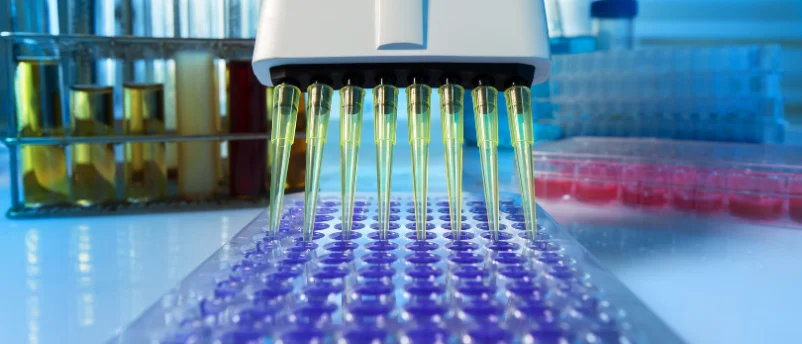
- Liquid Handling: Precision robotics for dispensing reagents, media changes, and drug dilutions across hundreds or thousands of wells in microplates, ensuring reproducibility and minimizing human error.
- Imaging and Analysis: Automated microscopy platforms capable of acquiring high-resolution 3D images of organoids over time, coupled with advanced image analysis software leveraging artificial intelligence (AI) and machine learning (ML) to quantify phenotypes (e.g., plaque load, neuronal health, inflammatory markers).
- Incubation and Environmental Control: Robotic incubators that maintain optimal growth conditions (temperature, CO2) and can retrieve/store plates without manual intervention, crucial for long-term organoid cultures.
- Data Management and Integration: Automated data capture, processing, and integration with laboratory information management systems (LIMS) to handle the vast amounts of data generated from HTS campaigns, facilitating data-driven decision-making.
Without these automation innovations, the full potential of advanced assays like the CNS-3D Induced Alzheimer’s Model would be severely limited. The ability to precisely control experimental variables, execute complex protocols with unparalleled speed, and extract meaningful insights from massive datasets is foundational to accelerating drug discovery in the modern era. Companies developing these automation solutions are as crucial to the biotech ecosystem as those developing the novel biological models themselves. For instance, new robotic arms that can delicately transfer organoids between different culture vessels or integrated platforms that combine incubation, imaging, and liquid handling into a single automated workflow are continually enhancing the efficiency and scalability of such research.
A Future Shaped by Innovation
The introduction of 28bio’s CNS-3D Induced Alzheimer’s Model, coupled with the relentless march of lab automation, signals a new era for neurodegenerative disease research. This synergy of cutting-edge biological models and advanced technological infrastructure offers a powerful pathway to overcome historical hurdles in drug discovery. By providing more accurate, human-relevant, and high-throughput preclinical tools, the biotech industry is not just launching products; it is actively shaping a future where devastating diseases like Alzheimer’s might finally meet their match. The scientific community, pharmaceutical industry, and patient advocacy groups are watching closely, hopeful that these innovations will translate into tangible breakthroughs for millions of lives worldwide.