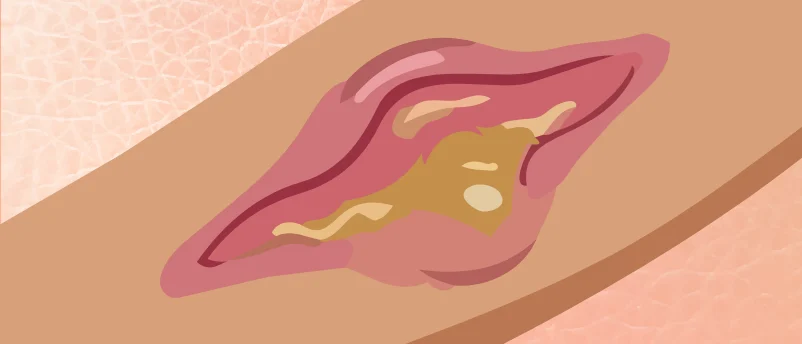
A groundbreaking advancement in biomedical materials has emerged from The Hong Kong Polytechnic University (PolyU), where scientists have engineered a bionic skin capable of passive cooling and on-demand antibacterial activity. This innovative material, designed to closely mimic the mechanical properties and permeability of natural skin, has demonstrated exceptional efficacy in treating infected wounds in mouse models, heralding a new era for wound care. The development addresses critical limitations inherent in conventional wound dressings, offering a comprehensive solution for managing complex and infected injuries.
The Enduring Challenge of Wound Healing and Infection
Wound repair is an intricate biological cascade, and its success is frequently jeopardized by bacterial infections. Infections can lead to significant delays in the healing process, cause substantial damage to newly formed tissues, and potentially culminate in life-threatening complications such as sepsis or gangrene. Consequently, the effective management and prevention of wound infections are paramount in clinical practice. The global burden of chronic wounds, including diabetic foot ulcers, pressure ulcers, and venous leg ulcers, is substantial, affecting millions worldwide and incurring immense healthcare costs. Estimates suggest that the annual cost of wound care in the United States alone exceeds tens of billions of dollars, a figure exacerbated by the rising prevalence of antibiotic-resistant bacteria, which renders many traditional treatments less effective.
For decades, wound dressings have played a transformative role in managing injuries. However, existing options are not without their drawbacks. Traditional gauze dressings, for instance, often adhere to the wound bed, causing considerable pain and potential re-injury during removal. Foam dressings, while effective in exudate management, can be prohibitively expensive. Hydrocolloid dressings, known for maintaining a moist wound environment, are generally unsuitable for already infected wounds due to their occlusive nature, which can inadvertently foster bacterial proliferation. The quest for an "optimal" wound dressing—one that seamlessly integrates high protective function, patient comfort, and potent antibacterial efficiency within a single material—has remained a significant challenge for researchers and clinicians alike.
A New Paradigm in Biomaterial Design: The PolyU Breakthrough
Driven by the imperative to overcome these longstanding hurdles, the PolyU research team embarked on developing a bionic cooling skin specifically tailored for infected wound management. Their innovative approach integrates advanced solvent welding technology with single-sided metal-organic frameworks (MOFs) that are engineered to generate reactive oxygen species (ROS) upon exposure to visible light. This sophisticated design marks a significant departure from conventional dressing strategies, offering a multi-functional platform that actively combats infection while promoting an optimal healing environment.
The resultant biomaterial possesses a unique Janus structure, characterized by two distinct layers, each performing specialized functions. The outer layer is composed of hydrophobic polyvinylidene fluoride (PVDF) fibers. This layer is strategically designed to reflect sunlight and efficiently transmit mid-infrared radiation, facilitating passive cooling of the wound site. The ability to passively cool a wound is crucial, as elevated temperatures can exacerbate inflammation and increase metabolic demand, potentially impeding healing. The inner layer, in contrast, is hydrophilic and embedded with Fe20-ZIF8 nanoparticles. These nanoparticles are the cornerstone of the material’s antibacterial properties, generating reactive oxygen species when exposed to visible light. Reactive oxygen species are highly effective antimicrobial agents, capable of disrupting bacterial cell membranes and intracellular components, thereby neutralizing pathogens without relying on traditional antibiotics.
In Vitro and In Vivo Validation: Promising Results
To rigorously assess the bionic skin’s efficacy, the researchers conducted a comprehensive series of experiments, including in vivo studies on Staphylococcus aureus-infected mouse wounds. Staphylococcus aureus is a common and often problematic bacterial pathogen frequently implicated in wound infections, making it an ideal model for evaluating antibacterial interventions.
The findings from these experiments were remarkably promising. Wounds treated with the bionic skin demonstrated rapid and robust healing under white light illumination. Within just 11 days, the treated wounds were almost completely closed, a healing rate comparable to that observed in wounds treated with an amoxicillin solution, which served as a positive control. Both groups exhibited more than twice the healing rate of wounds treated with other conventional dressings included in the study. This comparative efficacy underscores the bionic skin’s superior performance in accelerating tissue regeneration.
Beyond its healing prowess, the bionic dressing also showcased exceptional antibacterial efficacy. In in vivo antibacterial tests, the material achieved over 97% reduction in bacterial load, a performance that rivaled and, in some cases, surpassed, antibiotic-treated controls. This high level of antibacterial activity, achieved without the direct application of traditional antibiotics, holds profound implications for combating the growing threat of antibiotic resistance and reducing reliance on systemic antibiotic therapies for wound infections.

Unveiling the Mechanisms of Healing
To delve deeper into the molecular mechanisms underpinning the observed healing benefits, the PolyU team employed advanced analytical techniques, including RNA sequencing and quantitative Polymerase Chain Reaction (qPCR). These analyses provided critical insights into how the bionic skin modulates cellular processes at the wound site.
The results revealed a significant upregulation of various angiogenesis markers, which are crucial for the formation of new blood vessels. Angiogenesis is a vital process in wound healing, ensuring adequate oxygen and nutrient supply to the regenerating tissues. Specific markers like Vascular Endothelial Growth Factor (VEGF) and Fibroblast Growth Factor (FGF) are known to play pivotal roles in stimulating new blood vessel growth. Concurrently, the dressing also upregulated several cell migration genes, such as those encoding for integrins and cadherins, which are essential for the movement of various cell types—including fibroblasts and keratinocytes—into the wound bed, facilitating tissue repair and wound closure. Furthermore, the expression of antimicrobial peptides (AMPs), such as cathelicidins and defensins, was significantly enhanced. AMPs are a crucial component of the innate immune system, providing broad-spectrum antimicrobial activity and modulating inflammatory responses, thereby contributing to infection control and accelerated healing.
Conversely, the analyses indicated a simultaneous downregulation of a number of inflammation-related genes, including those responsible for producing pro-inflammatory cytokines like Interleukin-6 (IL-6) and Tumor Necrosis Factor-alpha (TNF-alpha). Chronic inflammation is a well-known impediment to wound healing, and the bionic skin’s ability to mitigate excessive inflammatory responses contributes significantly to creating a more conducive environment for tissue regeneration. This dual action—promoting beneficial processes while suppressing detrimental ones—highlights the sophisticated biological interplay facilitated by the novel biomaterial.
Beyond Healing: Comfort and Mechanical Integrity
Beyond its potent healing and antibacterial capabilities, the bionic cooling skin also addresses critical aspects of patient comfort and practical application. The material exhibits impressive mechanical properties, with tensile strength and elasticity comparable to that of human skin. This ensures that the dressing can conform comfortably to various body contours, withstand movement, and remain intact without causing undue discomfort or restricting mobility, which is a common complaint with rigid or poorly conforming dressings.
The cooling function of the bionic skin was also quantitatively assessed. Experiments revealed that the material could reduce the surface temperature of wounds exposed to sunlight by approximately 4°C. Furthermore, in rat wound models subjected to realistic outdoor conditions, the dressing demonstrated an average cooling effect of 1.7°C relative to an uncovered wound. This passive cooling capability is not only a comfort feature but also a therapeutic one, as reducing local temperature can help mitigate inflammation, reduce pain, and decrease the metabolic demands of the injured tissue, further optimizing the healing microenvironment.
Implications and Future Outlook
The development of this bionic cooling skin by PolyU scientists represents a significant leap forward in the field of advanced wound care. Its integrated functionalities—passive cooling, on-demand antibacterial activity, and promotion of key healing pathways—offer a holistic solution to the complex challenges posed by infected wounds. These findings underscore the novel biomaterial’s immense potential for clinical translation, promising to address longstanding unmet needs in wound healing and patient management.
From a broader perspective, this innovation holds several key implications:
- Combating Antibiotic Resistance: By providing an effective non-antibiotic strategy for managing wound infections, the bionic skin offers a crucial tool in the global fight against antimicrobial resistance, reducing the reliance on conventional antibiotics and preserving their efficacy for systemic infections.
- Enhanced Patient Outcomes and Quality of Life: The integrated approach promises faster healing, reduced pain, and improved comfort for patients, leading to better functional outcomes and an enhanced quality of life. The ability to mitigate inflammation and accelerate tissue repair could significantly shorten recovery times and reduce the incidence of complications.
- Economic Impact on Healthcare: While initial development costs for advanced biomaterials can be high, the potential for faster healing, reduced infection rates, and fewer complications could translate into substantial long-term cost savings for healthcare systems, alleviating the economic burden associated with chronic wound care.
- Advancing Biomaterial Design: This research pushes the boundaries of biomaterial science, showcasing the power of intelligent design that mimics biological functions. The integration of MOFs, solvent welding, and a Janus structure provides a blueprint for future generations of smart biomedical materials with multi-functional capabilities.
- Future Research and Clinical Translation: While promising, the journey from laboratory to widespread clinical use involves rigorous clinical trials, regulatory approvals, and scaled-up manufacturing. The success in mouse models provides a strong foundation for progressing to human trials, which will be essential to validate efficacy and safety in diverse patient populations.
In their concluding remarks, the PolyU researchers emphasized the transformative potential of their work: "This innovative bionic wound dressing not only enhances comfort and healing efficacy but also advances our understanding of wound repair mechanisms, holding significant promise for future wound care and biomedical material design." This statement encapsulates the dual impact of the discovery: offering an immediate, tangible solution for wound care while simultaneously paving the way for further advancements in the burgeoning field of bio-inspired materials science.
As the global population ages and the prevalence of chronic diseases like diabetes continues to rise, the demand for sophisticated wound care solutions will only intensify. The bionic cooling skin from The Hong Kong Polytechnic University represents a beacon of hope, offering a comprehensive, intelligent, and effective strategy to revolutionize the treatment of infected wounds and improve the lives of millions worldwide. The next steps will undoubtedly involve scaling up production, securing necessary regulatory approvals, and initiating human clinical trials to bring this promising technology from the laboratory bench to the patient’s bedside.