Johns Hopkins Medicine scientists who arranged for 48 human bioengineered heart tissue samples to spend 30 days at the International Space Station report evidence that the low gravity conditions in space weakened the tissues and disrupted their normal rhythmic beats when compared to earth-bound samples from the same source. This landmark study, published during the week of September 23 in the Proceedings of the National Academy of Sciences (PNAS), provides a granular look at the cellular and molecular deterioration of cardiac muscle in microgravity. The research suggests that the rigors of spaceflight act as an accelerator for heart muscle aging, a finding that carries profound implications for both long-duration interstellar travel and the treatment of age-related heart disease on Earth.
Led by Deok-Ho Kim, Ph.D., a professor of biomedical engineering and medicine at the Johns Hopkins University School of Medicine, the team found that heart tissues in space "really don’t fare well." Over the course of the month-long mission, the bioengineered samples aboard the space station exhibited a contractile force that was approximately 50% weaker than that of control samples maintained in a laboratory on Earth. This significant reduction in "twitch force"—the strength with which the muscle cells contract—was accompanied by the development of irregular beating patterns, or arrhythmias, which are known precursors to heart failure in humans.
Engineering the Cardiac Payload: From Stem Cells to Tissue Chips
The genesis of the study lies in the convergence of stem cell biology and micro-fabrication technology. To create the heart tissues, Jonathan Tsui, Ph.D., then a postdoctoral fellow in Kim’s lab, utilized human induced pluripotent stem cells (iPSCs). These cells are adult cells reprogrammed into an embryonic-like state, which can then be "coaxed" into becoming specialized heart muscle cells known as cardiomyocytes. By using iPSCs, the researchers could create a consistent and renewable source of human heart tissue without the ethical and logistical hurdles of using primary human cardiac samples.
The researchers housed these cardiomyocytes in a sophisticated, bioengineered miniaturized tissue chip. This "heart-on-a-chip" system was designed to mimic the physiological environment of an adult human heart. The tissues were strung between two microscopic posts within a chamber roughly half the size of a mobile phone. This architecture allowed the team to measure the mechanical work of the cells; as the heart tissue contracted, it pulled the posts together, providing a measurable metric of strength and rhythm. This 3D housing was essential for maintaining the viability of the cells in the harsh environment of space and for providing high-fidelity data during the mission.
Mission Timeline and Logistics: The Journey to the ISS
The project required years of preparation and a complex logistical operation to move biological samples from the laboratory to the launchpad. The research began at the University of Washington before moving to Johns Hopkins University in 2019 when Dr. Kim transitioned his lab. To ensure the tissues were ready for the SpaceX CRS-20 mission, Jonathan Tsui had to manually transport the tissue chambers on a commercial flight to Florida.
Once at the Kennedy Space Center, Tsui spent a month meticulously caring for the tissues, ensuring they were in peak condition for the high-vibration environment of a rocket launch. The samples launched in March 2020. Once docked at the International Space Station (ISS), the experiment was overseen by NASA astronaut Jessica Meir, Ph.D. Meir was responsible for the delicate task of exchanging the liquid nutrients that sustained the cells once a week and preserving specific tissue samples at set intervals for later genomic and imaging analysis back on Earth.
Throughout the 30-day orbit, the scientists received real-time data transmissions. Every 30 minutes, the tissue-on-a-chip system recorded 10 seconds of data regarding the "twitch forces" and beating patterns of the cells. This allowed the Baltimore-based team to monitor the steady decline of the cardiac tissue’s health in real-time, providing a rare longitudinal view of microgravity’s impact on human biology.
Quantitative Analysis of Cardiac Decline in Microgravity
The data returned from the ISS revealed a stark contrast between the space-bound tissues and the Earth-bound controls. The most immediate finding was the loss of contractile strength. The "twitch force" of the space samples began to decline shortly after entering orbit and reached a state of significant weakness by the end of the 30 days.
Furthermore, the tissues developed severe rhythmic disruptions. Under normal conditions on Earth, the interval between heartbeats in these engineered tissues is approximately one second. In the microgravity environment of the ISS, this interval grew nearly five times longer, indicating a profound struggle within the cellular electrical system to maintain a steady pulse. Interestingly, the researchers noted that while the strength remained compromised, the timing between beats returned nearly to normal once the tissues were brought back to Earth’s gravity, suggesting that some—but not all—of the effects of microgravity may be reversible upon return.
Microscopic and Genetic Hallmarks of Heart Disease
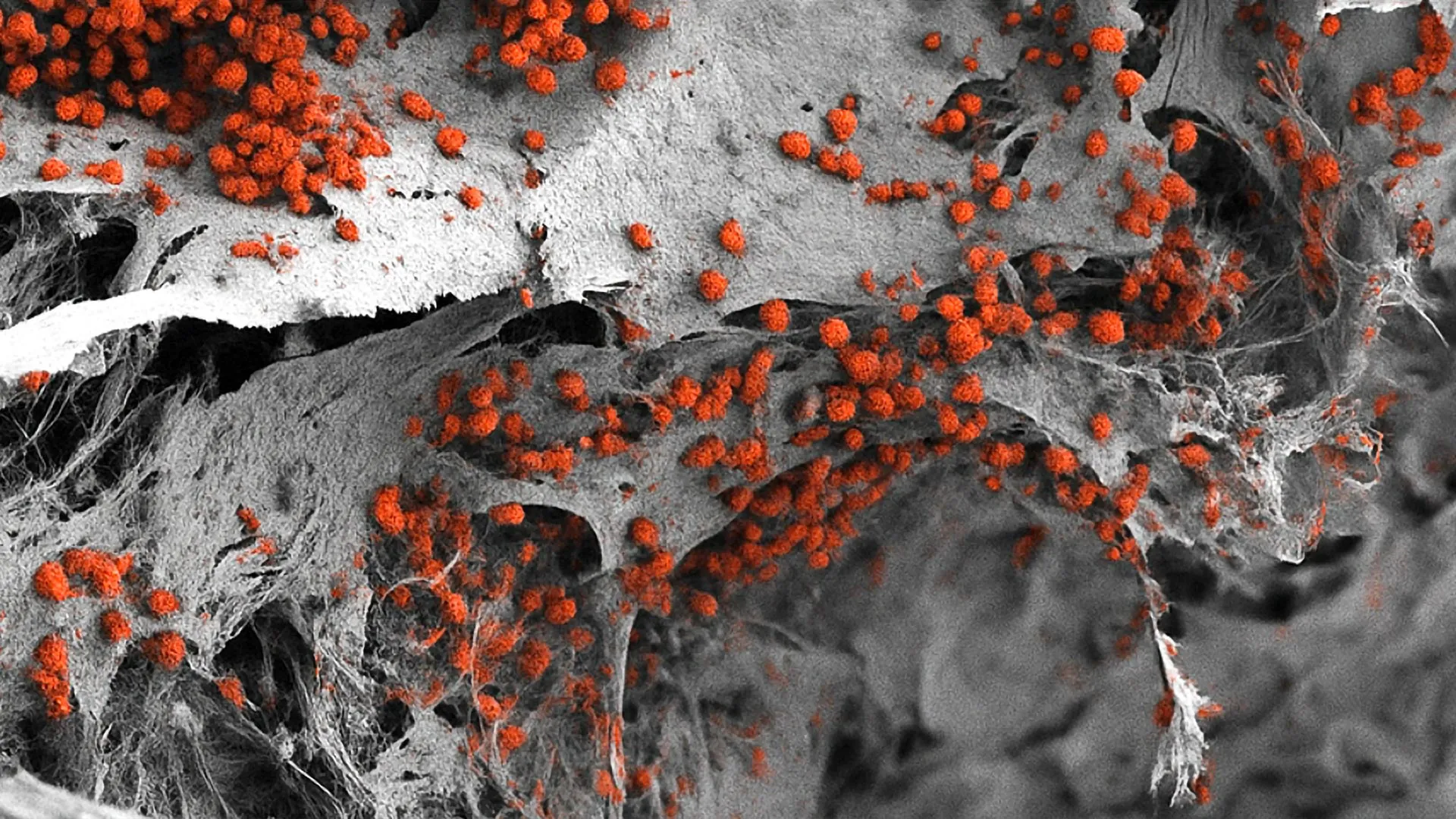
Beyond the functional measurements, the team conducted an exhaustive post-flight analysis of the cellular architecture. Devin Mair, Ph.D., a postdoctoral fellow at Johns Hopkins, led the analysis of the tissues’ physical structure. Using advanced imaging, the team discovered that the sarcomeres—the protein bundles responsible for muscle contraction—had become shorter and more disordered in the space-bound samples. In cardiology, disordered sarcomeres are a primary hallmark of various forms of human heart disease.
The energy-producing components of the cells, the mitochondria, also showed signs of distress. In the samples exposed to low gravity, the mitochondria grew larger and rounder, losing the characteristic internal folds (cristae) that maximize energy production. This structural degradation suggests a "metabolic brownout," where the heart cells become less efficient at producing the energy required to pump blood.
At the genetic level, Eun Hyun Ahn, Ph.D., and Ph.D. student Zhipeng Dong analyzed the gene readouts (transcriptomics). Their findings confirmed the physical observations: there was a marked increase in the expression of genes associated with inflammation and oxidative damage. These molecular markers are consistent with the physiological changes observed in astronauts during post-flight medical examinations, providing a cellular explanation for why space travelers often return with reduced heart muscle function and arrhythmias.
Broader Implications for Long-Duration Space Exploration
As NASA and private entities like SpaceX look toward the Moon and Mars, the health of the human cardiovascular system remains a significant hurdle. Long-duration missions will expose astronauts to microgravity for months or even years. The Johns Hopkins study provides a sobering look at how the heart might degrade during such journeys.
"Many of these markers of oxidative damage and inflammation are consistently demonstrated in post-flight checks of astronauts," noted Devin Mair. By understanding the molecular pathways that lead to this degradation, scientists can begin to develop countermeasures—whether through exercise protocols, dietary supplements, or pharmacological interventions—to protect the hearts of those venturing into deep space.
Terrestrial Benefits: Using Space as a Laboratory for Aging
The implications of this research extend far beyond the aerospace industry. Because the heart tissues in space appear to age at an accelerated rate, the ISS serves as a unique laboratory for studying the progression of heart disease and aging in a compressed timeframe. The structural and genetic changes observed in the 30-day space mission mirror those that occur over decades in elderly populations on Earth.
Dr. Kim’s lab has already moved into the next phase of this research. In 2023, a second batch of 3D engineered heart tissues was sent to the space station to screen for drugs that might mitigate the effects of low gravity. The scientists believe that drugs capable of protecting heart cells in space may also prove effective in treating age-related heart failure and inflammation in patients who have never left Earth.
Future Research and Radiation Concerns
While microgravity is a primary focus, it is not the only challenge of spaceflight. The current study was conducted on the ISS, which resides in Low Earth Orbit (LEO). In this orbit, the Earth’s magnetic field still provides significant protection against space radiation. However, for missions to Mars, radiation will be a much greater factor.
The Johns Hopkins team is currently utilizing the NASA Space Radiation Laboratory to study the combined effects of radiation and microgravity on heart tissue. By refining their "tissue-on-a-chip" technology, they aim to create even more accurate models of the human heart that can withstand and report on the multifaceted stressors of deep space.
The study was supported by substantial funding from the National Institutes of Health (NIH), reflecting the high priority placed on understanding these biological mechanisms. As Dr. Kim, a co-founder of Curi Bio, continues to develop these bioengineered platforms, the bridge between space biology and terrestrial medicine grows stronger, promising new insights into the fundamental mechanics of the human heart.