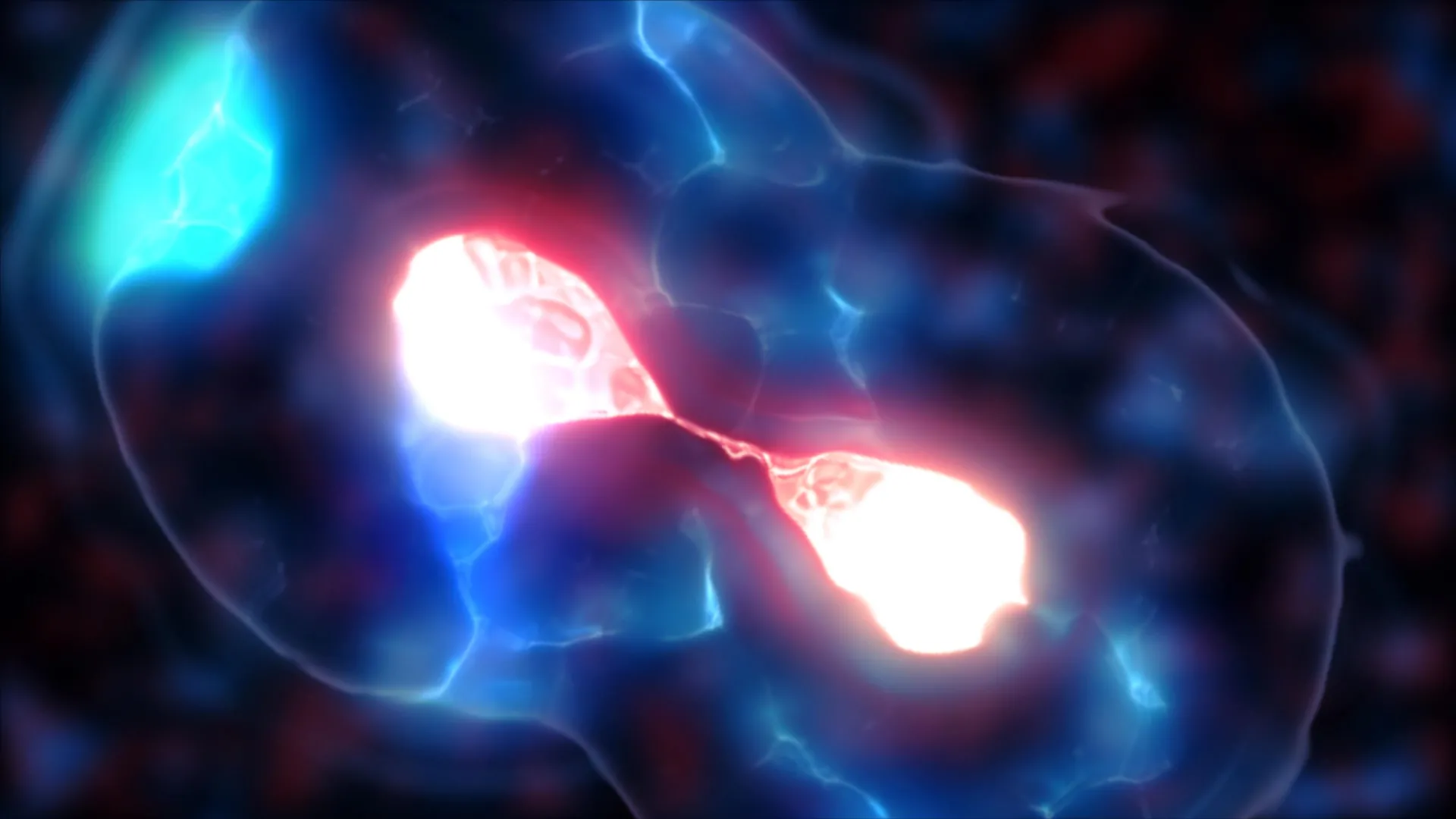
The fundamental process of cell division, a cornerstone of life’s perpetuation across nearly all known organisms, hinges on the precise and accurate segregation of chromosomes. At the heart of this critical maneuver lie centromeres, specialized regions of DNA that act as crucial docking sites for the molecular machinery responsible for pulling duplicated chromosomes apart, ensuring each daughter cell receives a complete and accurate genetic blueprint. Despite this universal functional imperative, the structural diversity of centromeres presents a profound enigma to the scientific community. While some organisms boast extensive tracts of repetitive DNA at their centromeric regions, others, most notably the widely studied yeast, exhibit remarkably compact and simplified structures termed "point" centromeres. This stark divergence in form, coupled with the rapid pace at which centromeres evolve, has long been a subject of intense scientific inquiry and speculation.
A groundbreaking investigation spearheaded by Andrea Musacchio, Director at the Max Planck Institute of Molecular Physiology in Dortmund, in collaboration with Jef Boeke from the NYU Grossman School of Medicine, has now illuminated the intricate origins and evolutionary trajectory of these minimalist yeast centromeres. The research team has identified what they propose to be a "proto-point" centromere, an intermediate evolutionary form that serves as a crucial transitional link between the complex ancestral centromeres and the diminutive, precisely defined structures found in modern yeast. Crucially, these earlier centromeric versions harbored fragments of parasitic DNA, a discovery that underscores one of the most dramatic examples of evolutionary transformation at the DNA level, demonstrating how seemingly disruptive genetic elements can be co-opted and repurposed for essential cellular functions.
The Centromere Paradox: A Universal Role, Diverse Forms
Centromeres are not merely passive DNA sequences; they are dynamic organizational hubs that recruit and assemble a complex protein superstructure known as the kinetochore. This kinetochore is the direct interface with the spindle fibers, microscopic ropes that emanate from opposite poles of the dividing cell. During mitosis and meiosis, these spindle fibers attach to the kinetochores, exerting the forces necessary to align chromosomes at the cell’s equator and then to segregate the sister chromatids or homologous chromosomes to the nascent daughter cells. The fidelity of this process is paramount; errors in chromosome segregation can lead to aneuploidy, a condition characterized by an abnormal number of chromosomes, which is a hallmark of many developmental disorders and cancers.
The remarkable conservation of the kinetochore machinery—the protein complexes that interact with centromeric DNA—stands in stark contrast to the astonishing variability observed in the centromeric DNA sequences themselves. This discrepancy, termed the "centromere paradox," has puzzled molecular biologists for decades. While the proteins that bind to centromeres have remained largely unchanged throughout evolutionary history, the DNA sequences that define these attachment sites have undergone rapid and substantial alterations. This phenomenon suggests that while the function is conserved, the specific DNA sequences that achieve this function are highly plastic and subject to evolutionary pressures that favor rapid change. Yeast, with its exceptionally small and precisely defined centromeres, serves as a particularly compelling model organism for unraveling this paradox. The work by Musacchio and Boeke’s teams provides the first mechanistic explanation for how these distinctive yeast centromeres evolved, tracing their genetic lineage to an unexpected source.
Unraveling the Evolutionary Tapestry: The Proto-Point Centromere Discovery
The seminal findings, detailed in a recent publication, pinpoint a crucial intermediate stage in the evolution of yeast centromeres. The research team discovered previously uncharacterized centromeres in yeast species closely related to Saccharomyces cerevisiae (brewer’s yeast). These centromeres exhibit characteristics that place them squarely between the large, repetitive centromeres found in many other eukaryotes and the minimalist point centromeres of brewer’s yeast. These "proto-point" centromeres, as described by the researchers, possess a reduced size and a less repetitive DNA structure compared to their more complex ancestors, yet they retain a degree of complexity not seen in the highly refined centromeres of S. cerevisiae.
The most startling revelation of the study is the identification of the genetic origins of these proto-point centromeres. The DNA sequences constituting these intermediate centromeres are significantly related to a class of mobile genetic elements known as retrotransposons. Retrotransposons, often referred to as "jumping genes," are DNA sequences that can replicate themselves and insert copies into different locations within a genome. Historically, these elements have been viewed as potentially parasitic or selfish DNA, contributing to genomic instability and evolution through their ability to move and proliferate. However, this research demonstrates a remarkable instance of genomic domestication, where such parasitic elements were gradually reshaped and integrated into the essential centromeric machinery of yeast.
A Chronology of Discovery and Insight
The journey to this groundbreaking discovery can be traced back through decades of centromere research. Early studies in the 1980s, notably by Clarke and Carbon, first isolated and characterized the functional DNA sequences of yeast centromeres, revealing their surprisingly small size and specific nucleotide composition. This initial work laid the foundation for understanding the genetic basis of centromere function in yeast but did not explain their evolutionary origins.
Over the subsequent decades, comparative genomics and molecular evolution studies began to reveal the vast diversity of centromeric structures across the tree of life. The identification of repetitive DNA at centromeres in organisms ranging from humans to plants highlighted the unique nature of yeast centromeres and intensified the search for their evolutionary history. The "centromere paradox" became a central theme in evolutionary biology, prompting investigations into how such functionally conserved elements could diverge so dramatically at the sequence level.
The current research, building upon this rich history, represents a significant leap forward. The identification of the proto-point centromere provides a tangible intermediate form, allowing researchers to bridge the evolutionary gap. The subsequent tracing of these sequences to retrotransposon origins offers a concrete genetic explanation for the transition from more complex centromeres to the simplified yeast versions. This research was not a singular event but rather the culmination of years of meticulous genetic analysis, comparative sequencing, and sophisticated bioinformatics. The collaborative effort between the Max Planck Institute and NYU underscores the global nature of scientific inquiry and the power of interdisciplinary research.
Supporting Data: Quantifying the Evolutionary Shift
While the article does not provide specific numerical data on the size or repetitive content of the centromeres studied, the implications of the findings can be understood through comparative metrics. Typical eukaryotic centromeres can span hundreds of kilobases (kb) to megabases (Mb) of DNA, often dominated by highly repetitive satellite DNA sequences. In contrast, yeast point centromeres are remarkably concise, typically consisting of only 100-250 base pairs (bp) of specific DNA elements, often including a central AT-rich core and flanking CG-rich elements.
The proto-point centromeres identified in the study likely fall within an intermediate range, perhaps tens to hundreds of base pairs, exhibiting a reduced but still discernible level of repetitive elements or a more complex arrangement of non-repetitive sequences compared to the single, well-defined centromeric DNA elements of S. cerevisiae. The connection to retrotransposons suggests that the ancestral centromeres were significantly larger and more structurally complex, perhaps incorporating multiple copies of these mobile elements. The evolutionary process then involved a gradual reduction, deletion, and refinement of these sequences, ultimately leading to the highly efficient and compact point centromeres characteristic of brewer’s yeast. This reduction in size is often associated with an increase in sequence specificity, where a smaller number of precisely defined DNA elements are recognized by the kinetochore.
Broader Impact and Implications for Genomic Innovation
The discovery of the evolutionary origins of yeast centromeres has profound implications for our understanding of genome evolution and the plasticity of essential genetic elements. It provides a compelling case study demonstrating how "selfish" or parasitic DNA, once considered genomic detritus, can be co-opted and integrated into core cellular functions. This process, termed "exaptation" in evolutionary biology, highlights the remarkable ability of genomes to repurpose existing genetic material for new roles.
This finding challenges the traditional view of genomic "junk" and underscores the dynamic nature of genomes, where even elements that appear to offer no immediate benefit can, over evolutionary time, become indispensable. The domestication of retrotransposons for centromere formation suggests a mechanism by which new chromosomal structures can arise and become essential. This has implications for understanding the evolution of other complex genomic features, such as telomeres and heterochromatin, which also often involve repetitive DNA elements.
Furthermore, the study sheds light on the "centromere paradox" by offering a concrete genetic mechanism for rapid centromere evolution. The plasticity of retrotransposons, their ability to copy and insert themselves, provides a fertile ground for evolutionary innovation. Over time, selective pressures can favor specific arrangements or sequences within these mobile elements that are better recognized by the kinetochore, leading to the gradual refinement and miniaturization of centromeres. This suggests that the rapid evolution of centromeres may be driven, in part, by the inherent mutability and mobility of their ancestral DNA components.
The research also has implications for synthetic biology and the engineering of chromosomes. Understanding how natural systems have evolved to repurpose genetic elements for critical functions could inform efforts to design and construct novel genetic elements or even entire chromosomes with specific properties.
Future Directions: The Kinetochore’s Adaptability
The research team is not resting on its laurels. The next phase of their investigation aims to delve deeper into the intricate relationship between centromeric DNA and the kinetochore. A key question remains: how does the kinetochore, the protein machinery that recognizes centromeres, accommodate such dramatic changes in centromeric DNA over evolutionary time? The researchers plan to explore the mechanisms by which centromeres assemble the kinetochore, seeking to understand the flexibility and adaptability of this complex process.
Moreover, the team intends to broaden their search for similar instances of transposon reuse in the formation of other chromosome structures. By investigating whether other crucial genomic elements have also evolved from parasitic DNA, they aim to ascertain the prevalence of this innovative evolutionary strategy across different organisms and genomic contexts. This systematic exploration could reveal a widespread pattern of genome innovation, where the repurposing of mobile genetic elements plays a more significant role in shaping chromosome architecture than previously appreciated. The ongoing research promises to further unravel the complex and fascinating evolutionary journey of chromosomes and the essential structures that govern their faithful transmission.