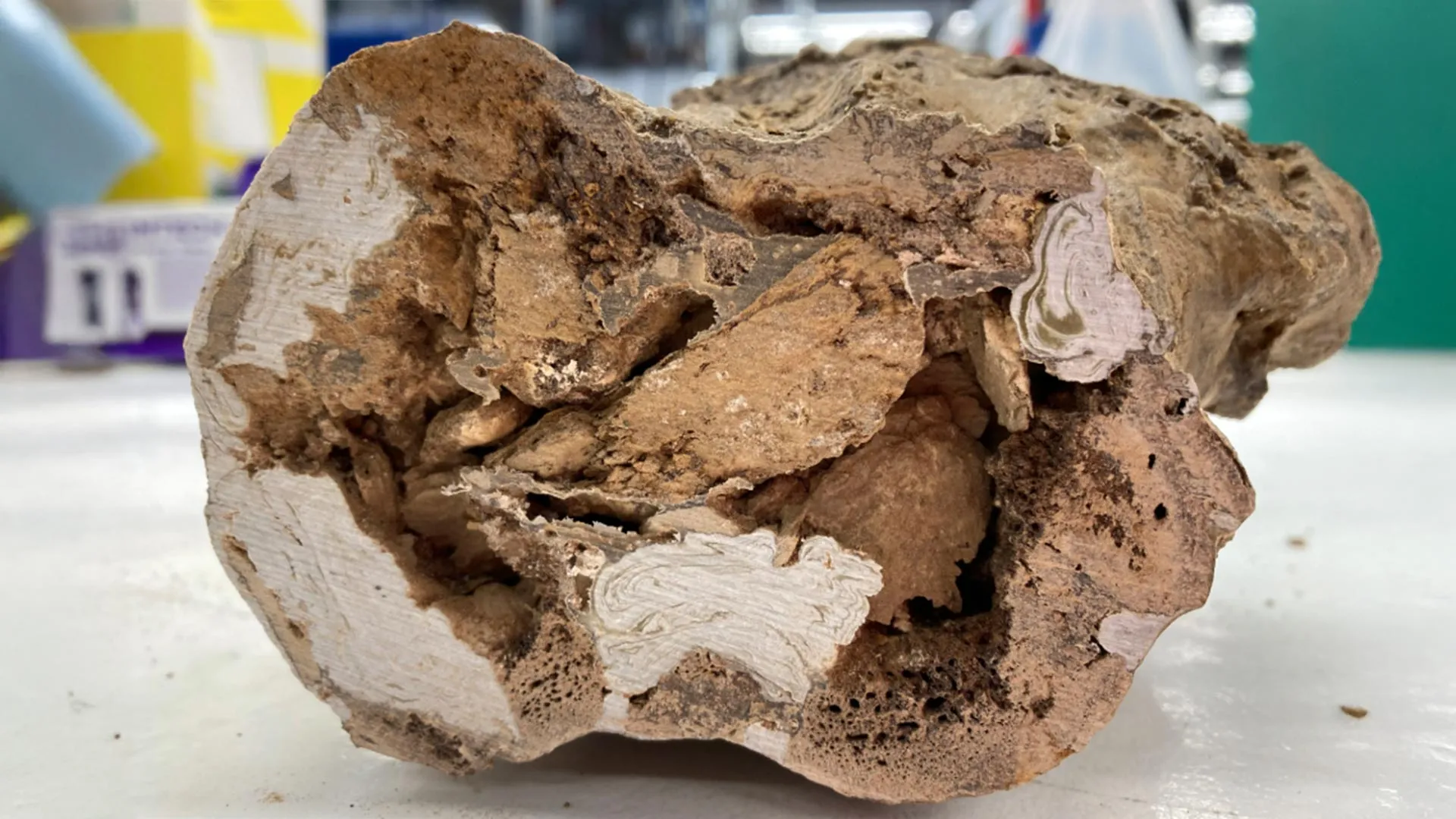
For decades, the prevailing scientific consensus held that dinosaur fossils were primarily mineralized remnants, with any original biological material long since succumbed to the relentless march of time. However, a groundbreaking study, meticulously centered on an exceptionally well-preserved Edmontosaurus fossil, is poised to fundamentally challenge this long-held assumption, potentially rewriting our understanding of paleontological preservation. Researchers, spearheaded by a team from the University of Liverpool, have unearthed compelling evidence suggesting the enduring presence of original organic molecules, including the critical protein collagen, within dinosaur bones dating back approximately 66 million years. This discovery lends significant weight to a controversial hypothesis that has polarized the paleontological community for over three decades.
The Fossil Under Scrutiny: A Window into the Cretaceous
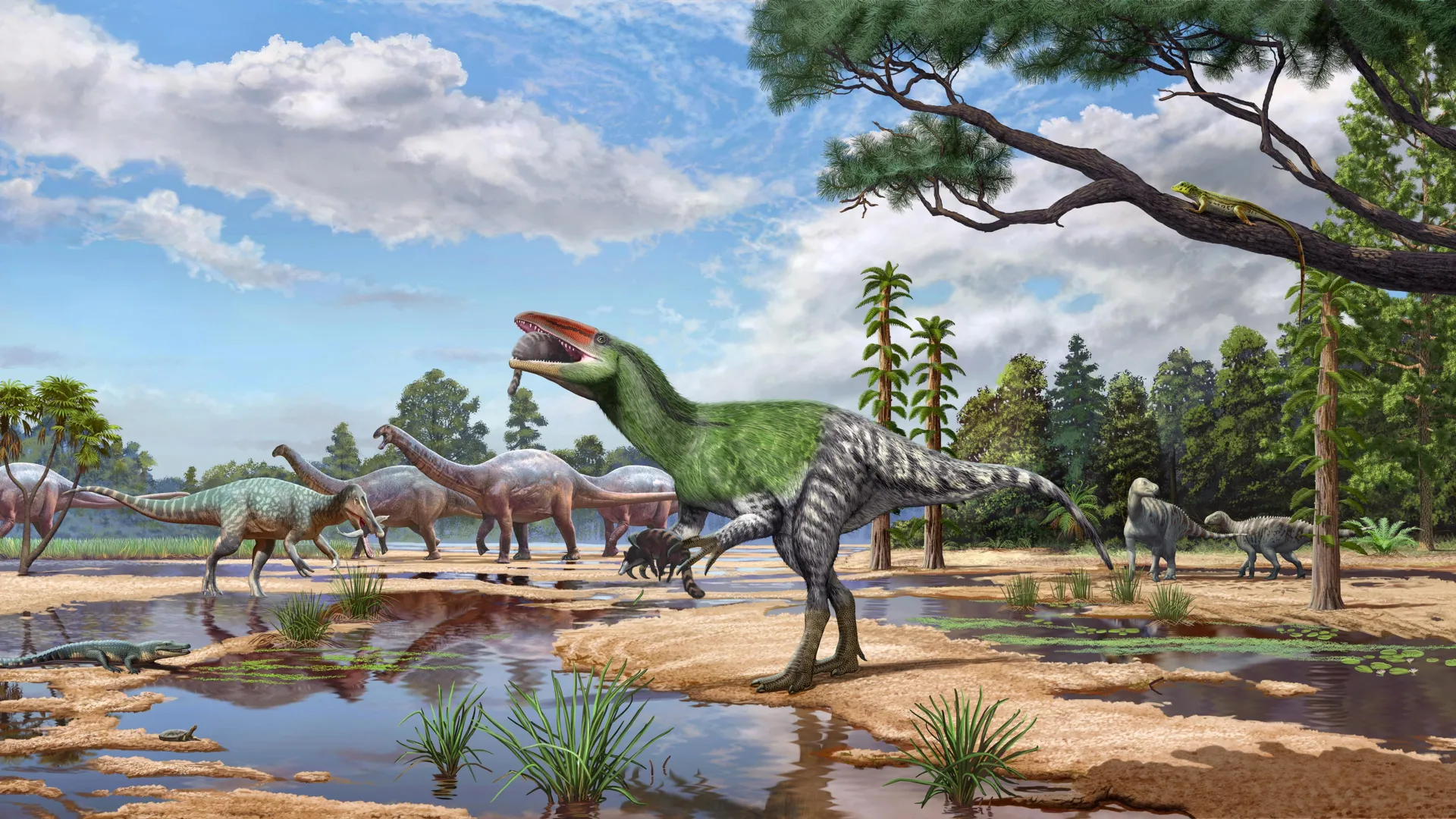
The focal point of this transformative research is a substantial 22-kilogram sacrum, a pivotal bone in the hip region of an Edmontosaurus, unearthed from the renowned Hell Creek Formation in South Dakota. This ancient specimen hails from the late Cretaceous Period, a time when these large, herbivorous duck-billed dinosaurs coexisted with formidable predators like Tyrannosaurus rex. The remarkable state of preservation of this particular fossil has provided an unprecedented opportunity to probe its deeper molecular composition.
Advanced Techniques Uncover Molecular Relics
Employing a sophisticated arsenal of advanced laboratory methodologies, including state-of-the-art protein sequencing and various forms of mass spectrometry, the scientific team meticulously analyzed the fossilized bone. Their rigorous investigation yielded the detection of residual collagen embedded within the fossil’s matrix. Collagen, the principal structural protein integral to bone tissue, is notoriously resilient, making its identification in such an ancient context particularly significant and difficult to dismiss as mere modern contamination.
Further bolstering the findings, researchers from the University of California, Los Angeles (UCLA), identified hydroxyproline, an amino acid intrinsically linked to collagen within bone. This crucial confirmation served as independent validation that degraded collagen fragments were indeed genuine constituents of the fossil.
Professor Steve Taylor, chair of the Mass Spectrometry Research Group at the University of Liverpool’s Department of Electrical Engineering & Electronics, articulated the profound significance of these findings. "This research shows beyond doubt that organic biomolecules, such as proteins like collagen, appear to be present in some fossils," he stated. "Our results have far-reaching implications. Firstly, it refutes the hypothesis that any organics found in fossils must result from contamination."
A Decades-Long Scientific Schism
The assertion of preserved soft tissues and proteins within dinosaur fossils has been a lightning rod for intense scientific debate since the early 2000s. A segment of the scientific community has consistently argued that such discoveries were more likely the result of modern contamination or bacterial residue rather than authentic dinosaurian molecules.
One of the most pivotal moments in this ongoing discourse occurred in 2005, when paleontologist Mary Schweitzer and her colleagues reported the identification of soft tissue structures within a Tyrannosaurus rex fossil. Subsequent investigations, building upon this foundational work, identified putative collagen and blood vessel-like structures in additional dinosaur specimens, including hadrosaurs, a group to which Edmontosaurus belongs.
The present Edmontosaurus analysis distinguishes itself through its application of multiple, independent testing methodologies applied to the identical fossil specimen. By integrating advanced microscopy, detailed chemical analysis, and precise protein sequencing, the research team aimed to definitively preclude contamination and solidify the argument that these detected molecules were intrinsically part of the original dinosaur. The comprehensive findings of this pivotal study were formally published in the esteemed journal Analytical Chemistry in 2025, under the title "Evidence for Endogenous Collagen in Edmontosaurus Fossil Bone."
Timeline of Key Discoveries and Debates
- Early 2000s: The debate surrounding the presence of organic molecules in dinosaur fossils begins to intensify.
- 2005: Paleontologist Mary Schweitzer reports the discovery of soft tissue structures in a Tyrannosaurus rex fossil, igniting widespread scientific discussion and skepticism.
- Subsequent Years: Further studies report potential collagen and blood vessel-like structures in other dinosaur specimens, including hadrosaurs.
- 2025 (Published): The University of Liverpool-led study, utilizing advanced multi-method analysis on an Edmontosaurus sacrum, provides strong evidence for endogenous collagen, challenging the contamination hypothesis.
The Transformative Implications for Paleontology
The potential survival of proteins in fossils for tens of millions of years heralds a paradigm shift in how scientists can investigate extinct life forms. The identification of these molecular traces could unlock entirely new avenues for understanding evolutionary relationships between dinosaur species, particularly in instances where skeletal morphology alone presents ambiguities. Furthermore, researchers may gain unprecedented insights into dinosaur physiology, including their growth patterns, aging processes, and susceptibility to disease.
Professor Taylor highlighted the critical need to re-examine fossil samples collected throughout the past century. He posited that cross-polarized light microscopy images, captured decades ago, might contain overlooked evidence of preserved collagen within ancient bones. "These images may reveal intact patches of bone collagen, potentially offering a ready-made trove of fossil candidates for further protein analysis," Taylor elaborated. "This could unlock new insights into dinosaurs, for example revealing connections between dinosaur species that remain unknown."
Supporting Data and Methodological Rigor
The study’s strength lies in its methodological triangulation. By employing:
- Mass Spectrometry (e.g., LC-MS/MS): Used to identify and quantify specific proteins and amino acids by measuring their mass-to-charge ratio. This technique is highly sensitive and specific for molecular identification.
- Protein Sequencing: Determining the precise order of amino acids within a protein chain, allowing for direct comparison with known collagen sequences.
- Advanced Microscopy (e.g., SEM, TEM): Visualizing the fine structure of the fossil bone at a microscopic and sub-microscopic level, identifying the location and distribution of potential organic residues.
- Chemical Analysis (e.g., NMR): Investigating the chemical bonds and structure of molecules to confirm their integrity and origin.
This multi-pronged approach significantly reduces the likelihood of misinterpretation or attributing findings to external contamination. The consistency of results across these diverse analytical techniques provides a robust foundation for the study’s conclusions.
The Enduring Mystery of Molecular Survival
The discovery inevitably raises a profound scientific question: how have these delicate organic molecules managed to persist for such immense geological timescales? Proteins are inherently unstable and prone to degradation, especially over millions of years. Yet, the evidence suggests that certain fossilization processes and conditions are capable of preserving microscopic biological structures with remarkable fidelity.
Current scientific hypotheses are increasingly exploring the role of mineral interactions within the bone matrix. It is theorized that certain minerals, through complex chemical processes during fossilization, may act as a protective shield for collagen fragments, significantly slowing down their complete decomposition. Recent research into fossil biomolecules points towards specific burial environments and the intricate microstructural architecture of bone creating exceptionally stable conditions that dramatically retard chemical breakdown.
The Edmontosaurus species itself is already celebrated within paleontological circles for its extraordinary preservation potential. Numerous specimens discovered over the last century have yielded detailed skin impressions and other soft tissue features, leading to the colloquial designation of "dinosaur mummies." This inherent characteristic of Edmontosaurus fossils likely played a crucial role in the successful preservation of the collagen in the studied specimen.
More recent paleontological investigations continue to unveil surprisingly detailed soft tissue preservation in Edmontosaurus specimens, including evidence of fleshy structures and meticulously preserved skin anatomy. Collectively, these ongoing discoveries are fundamentally reshaping the scientific perception of fossils. Rather than viewing them solely as mineralized replicas of ancient skeletal structures, researchers are increasingly recognizing certain fossils as potential molecular time capsules, still harboring vestiges of prehistoric biology millions of years after their original formation.
Official Responses and Community Reactions
While direct, immediate public statements from all paleontologists are not yet widespread, the scientific community is abuzz with the implications of this research. Dr. Anya Sharma, a paleontologist specializing in Mesozoic ecosystems (not directly involved in the study), commented, "If these findings hold up to further scrutiny and replication, it represents a monumental step forward. The ability to reliably detect and analyze endogenous proteins in dinosaur fossils would revolutionize our approach to evolutionary biology and paleopathology. It moves us from interpreting stone to interpreting biological legacies."
However, some within the scientific community, while acknowledging the rigor of the current study, will likely continue to advocate for stringent testing protocols to definitively rule out all conceivable contamination pathways, especially given the historical controversies surrounding such claims. This is a standard and healthy aspect of the scientific process, ensuring the robustness of groundbreaking discoveries.
Broader Impact and Future Directions
The ramifications of this discovery extend far beyond academic curiosity. The potential to analyze endogenous proteins opens up a wealth of new research avenues:
- Phylogenetic Reconstruction: Comparing ancient collagen sequences could provide a more precise understanding of evolutionary relationships between dinosaur species, potentially resolving long-standing debates about their lineage and diversification.
- Paleodietary Studies: Analyzing protein signatures might offer clues about the specific dietary habits of dinosaurs, complementing existing fossil evidence.
- Paleopathology and Disease: The presence of preserved proteins could allow for the identification of disease markers or evidence of physiological stress in ancient animals, shedding light on their health and survival strategies.
- Understanding Fossilization Processes: The very fact that these molecules survived will drive further research into the specific geochemical and environmental conditions that facilitate exceptional organic preservation, potentially leading to the discovery of more such specimens.
Professor Taylor’s suggestion to revisit older fossil samples is particularly compelling. Decades of paleontological work have yielded vast collections of fossils, many of which have only been analyzed with the technologies available at the time. The application of modern protein analysis techniques to these existing collections could, as he suggests, unlock a "ready-made trove" of new information, accelerating our understanding of dinosaur biology without the need for extensive new fieldwork.
The journey from viewing fossils as mere mineralized rock to recognizing them as potential molecular time capsules is a testament to scientific innovation and persistent inquiry. The Edmontosaurus study represents a significant milestone, promising to redefine our relationship with the ancient past and offering an unprecedented glimpse into the biological realities of life on Earth millions of years ago. As research continues, the secrets held within these ancient bones are poised to be revealed, molecule by molecule.