Beneath the ground, vast networks of fungi quietly support plant life and play an important role in regulating the planet’s climate by helping move carbon into soils. Now, researchers have created the first global maps showing where these underground fungal networks are found and how much of them exist worldwide. This groundbreaking research, published in the prestigious journal Science, illuminates a critical but often overlooked component of Earth’s biosphere, offering unprecedented insights into the hidden infrastructure that underpins terrestrial ecosystems.
The Architects of Underground Life: Arbuscular Mycorrhizal Fungi
The study focuses on arbuscular mycorrhizal fungi (AM fungi), a ubiquitous and vital group of fungi that form symbiotic partnerships with approximately 70% of plant species on Earth. These microscopic organisms are the unsung heroes of the soil, facilitating nutrient and water uptake for plants in exchange for carbon produced through photosynthesis. This mutually beneficial relationship is fundamental to the health and productivity of most terrestrial ecosystems, from lush rainforests to arid grasslands.
Historically, scientific understanding of these fungal networks has been largely inferred through their impact on plant health and soil composition. While earlier research, such as a global analysis of underground mycorrhizal fungal diversity published in Nature in 2025, had begun to map the types of fungi present and identify biodiversity hotspots via the digital platform "Underground Atlas," a comprehensive understanding of the physical extent and biomass of these fungal networks has remained elusive. This new study directly addresses that knowledge gap, providing the first quantitative estimates of their global scale.
Mapping the Unseen: A Monumental Data Collection Effort
To construct these pioneering global maps, an international team of researchers embarked on a monumental data collection and analysis endeavor. They meticulously compiled measurements from over 16,000 soil cores collected from diverse locations across the globe, representing a wide array of environmental conditions, from scorching deserts to frozen tundra and dense forests. This extensive sampling provided a granular look at the physical presence of AM fungal networks in various ecosystems.
Crucially, where direct measurements were unavailable, the researchers employed sophisticated machine-learning models. These models integrated the collected soil core data with extensive environmental variables, such as soil type, temperature, precipitation, and vegetation cover, to predict fungal network density in un-sampled regions. This approach allowed for the extrapolation of findings to a global scale, creating a comprehensive picture of the distribution and abundance of these hidden networks.
Further enhancing the accuracy and scope of their estimations, the team collaborated with the Physics of Behavior group at the AMOLF research institute. They utilized advanced robotic imaging techniques to analyze over 300,000 living AM fungal hyphae cultured under controlled laboratory conditions. This microscopic examination provided critical data on the physical characteristics and growth patterns of these fungal threads. The integration of data from soil cores, environmental modeling, and robotic imaging allowed researchers to arrive at robust estimates for both the total length and the total mass of the global AM fungal network.
The Scale of the Underground: Astonishing Figures Revealed
The findings of this study are nothing short of astonishing. The researchers estimate that AM fungal networks collectively extend for approximately 110 quadrillion kilometers worldwide. To put this into perspective, this unfathomable length is equivalent to stretching a thread around the Earth over 2.7 billion times. Furthermore, the total biomass of these fungal networks is estimated to be around 300 megatons of carbon. This figure is a staggering four to six times the estimated total mass of all living humans on the planet, underscoring the sheer biological significance of this subterranean realm.
"It is hard to overstate the importance and enormity of these fungi," stated lead author Dr. Justin Stewart, affiliated with the Society for the Protection of Underground Networks (SPUN). "There could be up to 10 meters (32 feet) of mycorrhizal network in just a teaspoon of soil." This statement vividly illustrates the incredible density and intricate nature of these fungal systems, even within the smallest soil samples.
Earth’s Living Circulatory System: Facilitating Global Flows
Scientists often liken mycorrhizal networks to Earth’s circulatory system, and for good reason. These living conduits are instrumental in the transport of vital resources, including carbon, essential nutrients, and water, throughout underground ecosystems. In healthy soils, these fungal networks dramatically expand the effective foraging range of plant roots, enabling them to access a wider area for water and nutrients. The study highlights that AM fungi can increase a plant’s phosphorus uptake by over 80%, a critical nutrient for plant growth.
The movement of carbon through these networks is particularly crucial for climate regulation. As plants sequester atmospheric carbon through photosynthesis, a significant portion is translocated to the soil via these fungal partnerships. This process helps to store carbon in the soil, mitigating its accumulation in the atmosphere as a greenhouse gas. Previous research by several of the same authors, published in Nature, had already demonstrated the efficiency of this carbon exchange, measuring movement speeds reaching 120 micrometers per second – a rate that would feel akin to 400 kilometers per hour if one were inside the network. The new study elevates this understanding to a planetary scale, revealing the immense capacity of these networks to influence global carbon cycles.
"With the emergence of new technologies in high-resolution imaging, machine-learning and robotics, we are starting to reveal what has long been hidden under our feet," remarked co-lead author, Dr. Corentin Bisot, a biophysicist at AMOLF. "We are learning how the complex bodies of network-forming fungi transport nutrients and help regulate the climate." This sentiment reflects a broader scientific awakening to the profound ecological roles played by fungi, previously underestimated in global environmental dialogues.
A Visualizing the Invisible: The Mycorrhizal Infrastructure Map
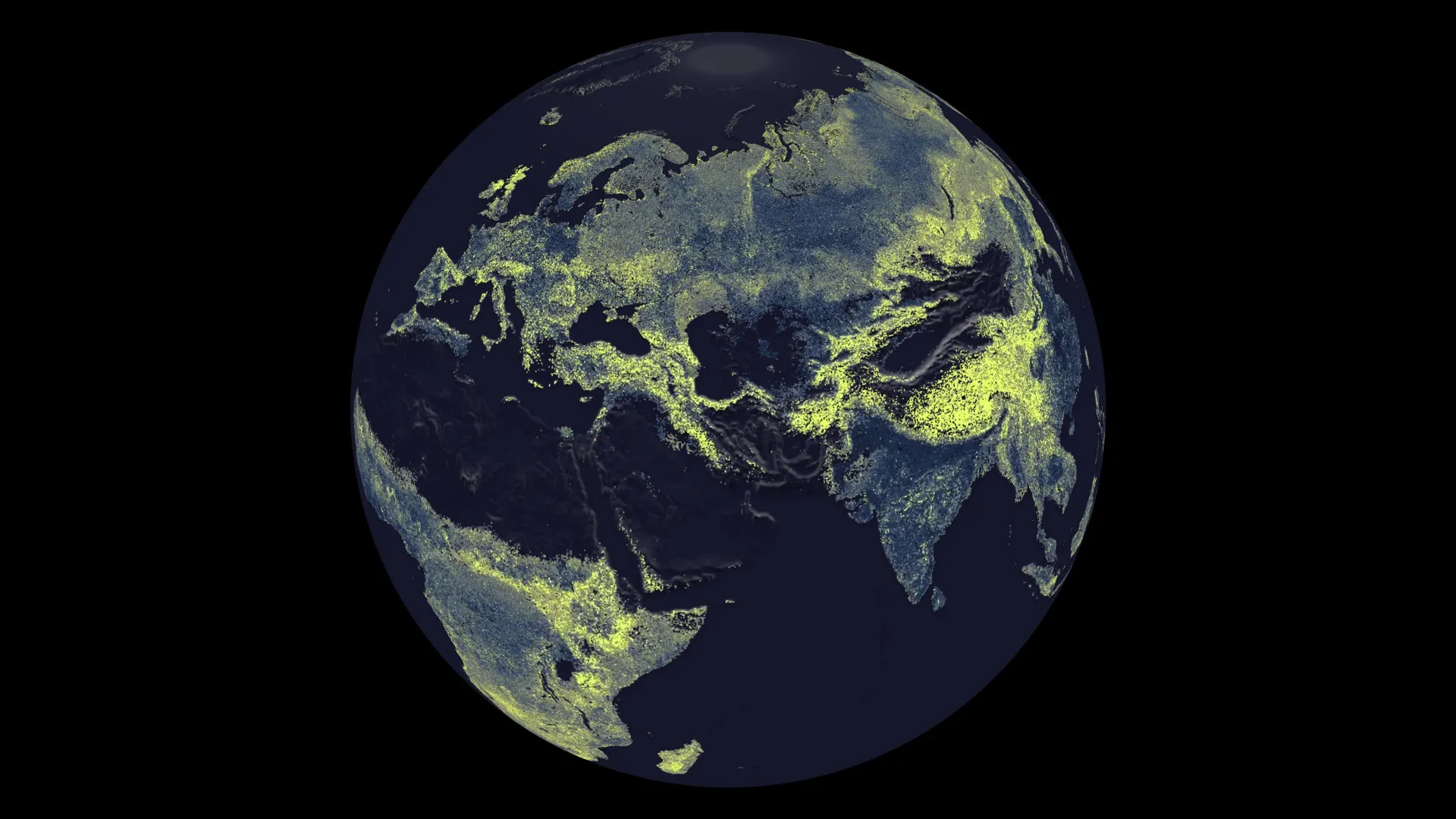
To make these complex findings accessible and comprehensible to a wider audience, the researchers collaborated with award-winning data visualization designer Moritz Stefaner. Together, they developed the "Mycorrhizal Infrastructure Map," an interactive online visualization that allows users to explore the global distribution and estimated density of AM fungal networks. This innovative tool provides the most detailed global overview to date of Earth’s subterranean fungal infrastructure, with estimates calculated for every square kilometer of terrestrial land, excluding ice caps and areas with insufficient data for reliable predictions.
The availability of the underlying data from this project offers significant potential for researchers and policymakers. It provides a crucial new tool for monitoring the health and extent of underground fungal communities, enabling targeted conservation efforts and informed land management decisions.
Areas of Concern: Grasslands and Agricultural Lands Under Threat
While the maps reveal the extraordinary scale of fungal networks, they also highlight significant areas of concern regarding their vulnerability. The study predicts that network densities in croplands are approximately half those found in wild ecosystems. This reduction in fungal biomass and complexity in agricultural settings likely has implications for soil health, nutrient cycling, and the long-term sustainability of food production.
Furthermore, the research identifies wild grasslands as containing a substantial proportion, roughly 40%, of the world’s arbuscular mycorrhizal biomass. Despite their critical ecological importance, grasslands are among the least protected ecosystems globally, facing conversion to agricultural land at a rate four times faster than forests. This rapid transformation poses a severe threat to these vital fungal communities.
These findings align with previous research from SPUN, which indicated that an overwhelming 95% of biodiversity hotspots for arbuscular mycorrhizal fungi lie outside of designated protected areas. This disconnect underscores a critical gap in current conservation strategies, which often overlook the unique needs and distributions of subterranean life.
A Call for Fungal Inclusion in Conservation and Climate Planning
The implications of these findings are profound, particularly for the fields of conservation and climate change mitigation. Dr. Toby Kiers, Executive Director of SPUN and a recipient of prestigious awards for her work on plant-fungal relationships, emphasized the urgent need to integrate fungi into global environmental strategies. "Fungi have been ignored in climate and conservation for too long. Now is the time to change that trajectory," she asserted. Her call reflects a growing consensus within the scientific community that a holistic approach to ecosystem management must acknowledge and actively incorporate the vital roles played by fungi.
The inclusion of fungi in climate and conservation planning could lead to more effective strategies for carbon sequestration, soil restoration, and biodiversity preservation. Understanding and protecting these underground networks is not merely an academic pursuit; it is a critical step towards addressing some of the most pressing environmental challenges of our time, from food security to climate change resilience.
The Frontiers of Discovery: Unanswered Questions and Future Research
Despite the remarkable advancements made by this study, significant knowledge gaps remain. Co-author and biologist Dr. Merlin Sheldrake noted, "Mycorrhizal fungi have shaped life on earth for hundreds of millions of years, but we still understand too little about how the infrastructure of these living transport systems is distributed across the planet. This study is an exciting step towards understanding how this planetary circulatory system operates and suggests ways that we can better work with fungi to help address many of the unfolding challenges of our times, from food security to climate change."
The global maps, while comprehensive, also reveal vast regions of the world where direct soil sampling has been limited. These unsampled areas represent crucial frontiers for future research, providing a roadmap for scientists eager to further unravel the complexities of one of the planet’s most important, yet least visible, ecosystems. Continued exploration and mapping will undoubtedly deepen our understanding of these foundational networks and their indispensable contribution to a healthy and functioning planet. The ongoing scientific endeavor to map and understand Earth’s fungal infrastructure is a testament to the power of interdisciplinary collaboration and technological innovation in revealing the hidden wonders that sustain life on Earth.