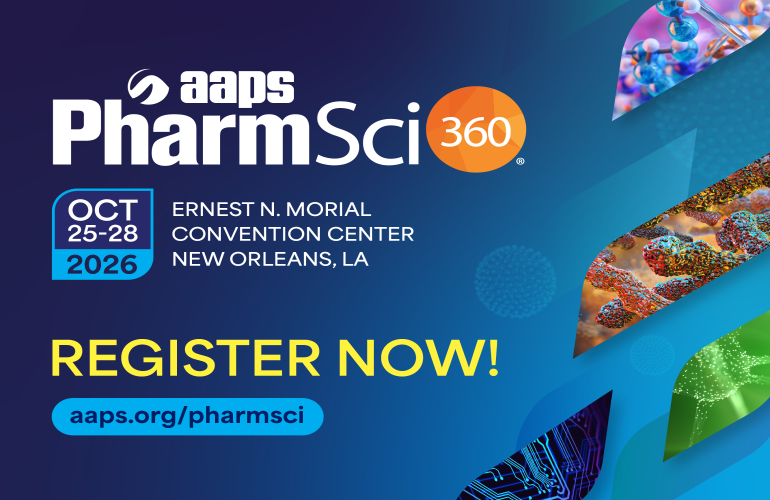
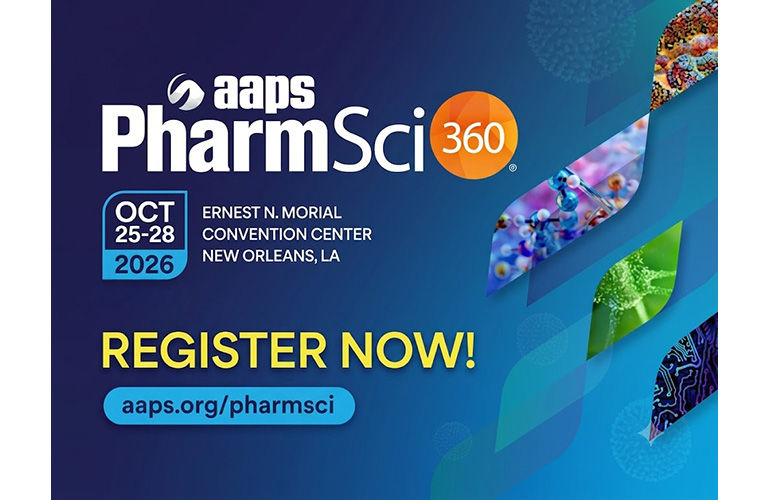
The American Association of Pharmaceutical Scientists (AAPS) has unveiled a transformative agenda for its 2026 PharmSci 360 conference, slated for October 25–28, 2026, at the Ernest N. Morial Convention Center in New Orleans. Recognizing the dual pressures of an AI-driven research landscape and the global regulatory pivot away from animal testing, the association will debut two high-profile, Innovator-Curated tracks. These sessions represent a strategic shift in the organization’s educational programming, moving beyond traditional pharmacology to address the structural integrity of science itself and the technological frontiers of drug safety.
Addressing the Crisis of Scientific Credibility
The first of these tracks, scheduled for Monday, October 26, tackles the increasingly urgent issue of research reproducibility and integrity. In an era where generative AI can be weaponized to produce "paper mills" and fabricated data, the scientific community is facing a crisis of trust. Brian Nosek, executive director of the Center for Open Science, will anchor this track. Nosek’s presence underscores the industry’s need to move toward radical transparency—a concept he has championed for over a decade.
The sessions will move beyond theory to address the mechanics of scientific oversight. Attendees will examine the prevalence of problematic manuscripts that permeate modern literature, the systemic challenges in citation verification, and the ethical guardrails required for integrating generative AI into the drug discovery pipeline. This is not merely an academic exercise; the failure to catch fraudulent preclinical data leads to millions of dollars in wasted R&D and potential patient safety risks in clinical settings.
The Chronology of Modern Research Reform
The current movement toward open science has been building momentum for years. A brief timeline reveals the progression of these efforts:
- 2020–2022: The "Reproducibility Crisis" gains mainstream attention as high-profile retractions occur across major oncology and pharmacology journals.
- March 2025: A landmark study from Johns Hopkins University, co-authored by Thomas Hartung and Lena Smirnova, demonstrates that human neural organoids exhibit synaptic plasticity, effectively proving that lab-grown tissue can mirror human learning and memory functions.
- March 2026: The FDA releases its pivotal draft guidance outlining four core principles for the submission of New Approach Methodologies (NAMs), signaling a move toward standardized acceptance of non-animal data.
- October 2026: AAPS PharmSci 360 serves as the primary industry forum to operationalize these guidelines and address the ethics of the AI-research interface.
The Shift Toward Non-Animal Methodologies
The second curated track, led by Johns Hopkins professor Thomas Hartung, focuses on the transition to New Approach Methodologies (NAMs). As the pharmaceutical industry faces mounting public and legislative pressure to reduce the use of animal models—which are frequently criticized for their poor predictive power regarding human toxicity—the need for robust, human-relevant models has never been greater.
The track will feature deep dives into organ-on-a-chip technology, neural organoids, and computational modeling. Hartung’s expertise in organoid intelligence (OI) is expected to be a focal point. Recent data from the Johns Hopkins team has provided the essential validation required for the scientific community to take human-derived neural systems seriously as a replacement for traditional animal neuro-safety testing.
Data and Financial Commitment
The transition away from animal testing is supported by significant financial and regulatory backing. The National Institutes of Health (NIH) has committed $150 million over a five-year period through its "Complement-ARIE" (Complementing Animal Research in Experimentation) program. This initiative is designed to accelerate the development, standardization, and validation of human-based research tools.
Furthermore, the FDA’s recent draft guidance provides a clear framework for how startups and large pharmaceutical firms can submit data packages derived from organ-on-a-chip and other microphysiological systems. By setting these four principles, the FDA has effectively moved NAMs from the realm of "novel research" to "regulatory readiness." The PharmSci 360 track will directly address this, featuring sessions on how developers can construct regulatory-grade data packages that meet these new federal standards.
Regulatory and Institutional Perspectives
The inclusion of high-level figures such as NIH Deputy Director Nicole Kleinstreuer signifies the importance of this conference for government policy. Kleinstreuer’s keynote will focus on "Building Trust in Non-Animal Safety Science," a critical topic because, even with superior technology, the pharmaceutical industry is notoriously risk-averse when it comes to regulatory submissions.
Industry analysts suggest that the integration of AI-assisted chemical "read-across" methods—a process where AI predicts the toxicity of a substance based on its chemical structure compared to known data—will be a game-changer for speed. By reducing the reliance on long-term animal studies, companies could potentially shave years off the preclinical development cycle. However, as the PharmSci 360 sessions will highlight, this efficiency is only valuable if the data is verifiable, reproducible, and compliant with the evolving standards for scientific integrity.
Broader Implications for Drug Development
The convergence of these two tracks—research integrity and post-animal testing—is not coincidental. As the industry adopts more complex, AI-driven, and lab-grown models, the potential for "black box" failures increases. If a neural organoid produces a result that indicates a drug candidate is toxic, the researcher must be able to prove that the result is genuine and not an artifact of the model or an error in the AI’s data interpretation.
The implications for the industry are three-fold:
- Economic Efficiency: By utilizing NAMs, companies can identify failures earlier in the drug discovery pipeline, avoiding the massive costs associated with late-stage clinical trial failures.
- Scientific Accuracy: Human-based models are, by definition, more relevant to human biology than murine or other animal models, potentially leading to more accurate predictions of human efficacy.
- Regulatory Compliance: Firms that align their internal R&D processes with the emerging FDA and NIH standards for NAMs will likely experience faster approval pathways and fewer queries during the investigational new drug (IND) application process.
Conclusion: A Turning Point in New Orleans
The 2026 PharmSci 360 conference serves as a microcosm for the larger challenges facing global pharmacology. The industry is currently at a crossroads where the technological capability to innovate—through AI and organoids—is being met with a concurrent demand for higher standards of proof. By bringing together the pioneers of open science and the architects of non-animal testing, the American Association of Pharmaceutical Scientists is positioning itself as the central authority for this transition.
As the October dates approach, the focus remains on whether these new methodologies can indeed replace the century-old reliance on animal testing without sacrificing the safety profiles that patients rely upon. The presence of key regulatory stakeholders suggests that the path forward is being paved in real-time, and the discussions in New Orleans will likely set the industry standard for the remainder of the decade. For professionals in drug discovery and development, the 2026 conference represents a must-attend event for understanding not just the science of tomorrow, but the very infrastructure upon which that science will be built.