For pharmaceutical companies navigating the complex journey from clinical trial success to market entry, the final phase—commercialization—often represents the most significant operational hurdle. While software procurement in most industries has been revolutionized by data-driven comparison platforms like G2 and Gartner Peer Insights, the multi-billion-dollar pharmaceutical commercial services sector remains stubbornly opaque. For years, vendor selection for critical infrastructure—including distribution networks, pricing strategies, and customer relationship management (CRM) systems—has functioned primarily through anecdotal evidence and private word-of-mouth networks.
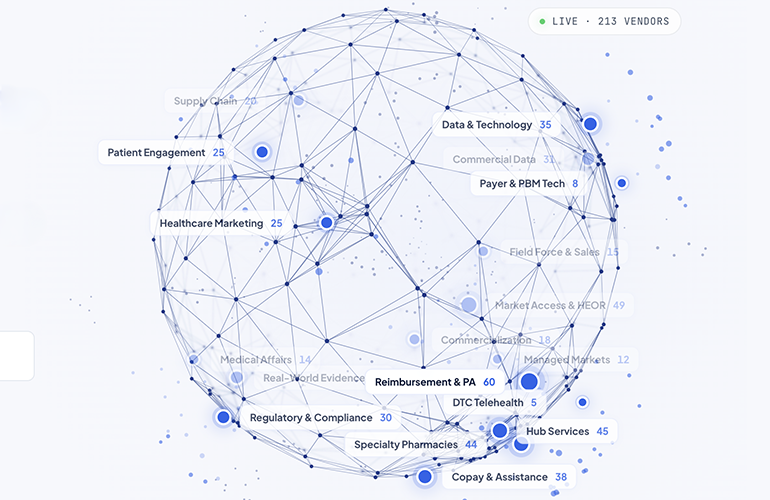
Hoyt Gong, an MBA candidate at Harvard Business School and a former senior product manager at a prominent insulin pump manufacturer, identified this information asymmetry as a fundamental bottleneck in the life sciences supply chain. To address this, he has launched Rx Almanac, an editorial platform and digital directory designed to provide neutral, rigorous, and data-backed evaluations of the vendors that power the pharmaceutical industry’s commercial engine. With early backing from both Harvard and Google, the project seeks to establish a standardized framework for evaluating vendors that have historically operated in the shadows of the industry.
The Genesis of a Market Disrupter
The inspiration for Rx Almanac originated during Gong’s tenure in the medical device sector, where he was tasked with scaling commercial operations for a high-growth insulin pump company. The scope of his responsibilities included selecting CRM providers, refining pharmaceutical distribution strategies, managing pricing vendors, and navigating complex Pharmacy Benefit Manager (PBM) landscapes.
Gong found that while the R&D and clinical trial phases of drug development are supported by vast amounts of scientific data, peer-reviewed literature, and public disclosures, the commercial stage—the "last mile" of drug delivery—suffered from a profound lack of transparency. The industry lacked a "Yellow Pages" for commercial services, leaving leadership teams to rely on the opinions of consultants or previous professional connections rather than objective performance metrics. By creating Rx Almanac, Gong intends to shift this paradigm, focusing specifically on the post-clinical-trial environment where the rubber meets the road for patient access and product adoption.
The Challenge of Vendor Consolidation
A significant factor driving the need for better transparency is the rapid consolidation of the commercial services landscape. The industry has seen a massive influx of private equity capital, with firms like Carlyle, KKR, and Summit Partners aggressively acquiring boutique service providers to build integrated commercial platforms.
This trend toward "roll-up" strategies has created a market where service providers are often aggregations of smaller, disparate companies. While this consolidation offers the promise of a "one-stop-shop" for pharma companies, it creates a new set of risks. When a vendor is composed of piecemeal acquisitions, questions regarding technical integration, data interoperability, and cultural cohesion become paramount.

"A lot of these companies are buying each other out, and that gobbling up is how they’re growing," Gong observed. "That leads to concerns from pharma: Are these services really the most capable? Are they just piecemealed together?" For a launch team, the implications are practical and urgent: if the underlying technology stacks of a newly merged vendor do not communicate effectively, the patient experience, drug affordability, and distribution efficiency suffer.
Standardizing Comparisons in a Complex Landscape
To bring clarity to this market, Rx Almanac employs a structured analytical approach. A primary example of this is the platform’s detailed buyer matrix comparing Veeva Vault CRM and Salesforce Life Sciences Cloud. In a market where these two platforms are the dominant forces, the stakes for a correct selection are incredibly high.
The Rx Almanac evaluation framework moves beyond marketing claims, scoring vendors on six critical dimensions:
- Migration Complexity: The ease of moving legacy data into the new environment.
- Validation Requirements: Compliance with GxP and other regulatory standards.
- Data Integrity: The quality and accessibility of underlying customer and prescription data.
- Commercial Workflows: How well the software mirrors the actual daily operations of a pharmaceutical sales force.
- Implementation Partners: The quality and reliability of the third-party ecosystem supporting the software.
- Risk and Total Cost of Ownership (TCO): A comprehensive view of long-term financial and operational exposure.
By forcing vendors to compete on these specific, measurable criteria, Gong’s platform aims to reveal what vendors are "actually capable of versus what they say they can do."
The AI Imperative and the Marketing Hype Cycle
A growing challenge in evaluating commercial vendors is the ubiquity of Artificial Intelligence in sales literature. In the current market, almost every commercial service provider claims to leverage AI to improve patient engagement or physician targeting. However, Gong points out that much of this is marketing fluff that lacks technical substance.
"One of my pet peeves is when someone talks about AI but isn’t crisp about what the agents are actually doing and how they add value," Gong noted. Through Rx Almanac, he aims to dissect these AI claims, demanding transparency regarding the specific tasks these agents perform and the measurable outcomes they produce. As AI agents move from the periphery to the core of commercial strategy, this level of scrutiny will become essential for pharma companies looking to avoid "AI washing" in their vendor procurement processes.
Broader Industry Implications
The emergence of Rx Almanac comes at a pivotal time for the pharmaceutical industry. As drug prices remain a focal point of public policy and global competition intensifies, the margin for error during a product launch is slimmer than ever.

The traditional "word-of-mouth" model for selecting vendors is not merely outdated; it is increasingly risky. A poor vendor choice at the commercial stage can lead to significant delays in patient access, regulatory non-compliance, and millions of dollars in wasted capital. By professionalizing the procurement process, Rx Almanac provides a service that extends beyond the individual pharma company; it potentially elevates the standard of efficiency for the entire industry.
Furthermore, the platform represents a shift in how knowledge is disseminated within the life sciences. By acting as an independent arbiter of quality, the site challenges the hegemony of traditional management consulting firms that have historically served as the primary, yet often expensive and biased, gatekeepers of vendor information.
Looking Toward the Future
As Rx Almanac continues to expand its directory and publish deeper dives into niche service areas, it is likely to influence the behavior of both buyers and sellers. Vendors, aware that their claims are now being subjected to a rigorous, public-facing analytical framework, may be compelled to invest more heavily in product quality and integration rather than purely in acquisition-based growth.
For the pharmaceutical industry, the implications are clear: the transition toward a data-driven, transparent procurement process is necessary to support the next generation of drug launches. Whether a company is a global pharmaceutical giant or an emerging biotech preparing for its first commercial effort, the ability to discern the difference between marketing rhetoric and operational reality will be the deciding factor in their success.
As Gong continues to refine the platform, he is focused on the ultimate mission: ensuring that after years of complex R&D and clinical trials, the commercial stage succeeds in getting life-saving therapies into the hands of patients. By providing the tools to compare the "how" behind the "what," Rx Almanac is carving out a vital niche in the modern pharmaceutical ecosystem. In an era where efficiency is synonymous with survival, the arrival of such a resource may prove to be one of the most significant developments in pharmaceutical commercial operations of the decade.