The landscape of modern pharmaceutical research has been fundamentally altered by the advent of protein structure prediction tools, most notably AlphaFold. While these technologies have provided researchers with a comprehensive catalog of 200 million protein structures, the transition from identifying a protein’s 3D architecture to designing a therapeutic small molecule remains a significant hurdle. Seattle-based biotechnology firm Talus Bio is now challenging the industry-standard reliance on these models, unveiling a computational platform called Ptarmigan-1 that bypasses structural prediction entirely to identify drug candidates.
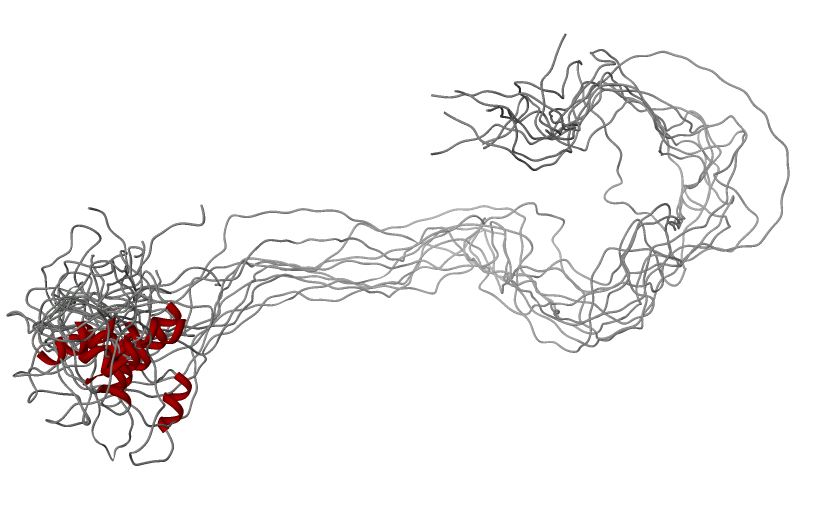
This shift in strategy is specifically targeted at a class of proteins long considered "undruggable": transcription factors. These proteins, which orchestrate gene expression within the cell, often possess inherently flexible, disordered regions. Because they lack a static, defined binding pocket, they behave like "a plate of spaghetti" under traditional analytical frameworks, rendering standard folding-based drug discovery tools ineffective. By focusing on target engagement through empirical mass spectrometry data rather than 3D geometric modeling, Talus Bio claims to have unlocked a high-speed, cost-effective pathway for drug discovery that could redefine how researchers approach the human proteome.
The Limits of Structural Biology
For decades, the "lock and key" model of drug discovery has dominated the field. Researchers identified a stable protein pocket, determined its 3D structure, and designed a molecule to fit perfectly into that space. While this approach has produced successful therapies, it leaves the vast majority of the human proteome untouched. According to data provided by Talus Bio in a recent preprint, approximately 87% of the 20,431 human proteins currently have neither an approved therapeutic nor a known potent small-molecule ligand.
The reason for this failure is twofold. First, as noted by Talus Bio CTO Lindsay Pino, nearly 50% of human proteins exhibit "intrinsically disordered" characteristics. They do not maintain a single, rigid 3D conformation, meaning they do not present the stable "pockets" required for traditional computer-aided drug design. Second, even when proteins are structured, the computational expense of folding them and testing them against billions of potential drug compounds is prohibitive.
Ptarmigan-1: A Paradigm Shift in Computational Screening
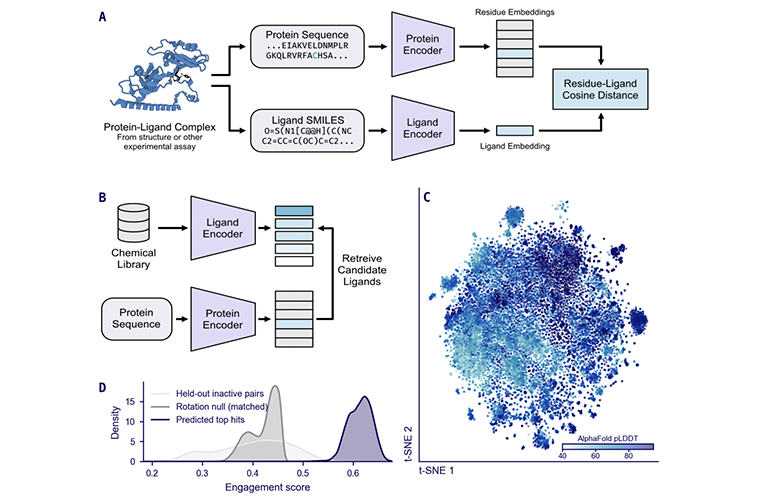
Ptarmigan-1 represents a radical departure from the prevailing methodology. Instead of attempting to predict the 3D shape of a target, the platform utilizes machine learning to interpret mass spectrometry data that records where a compound actually binds to a protein within a living cell. By training the model on empirical "target engagement" data, Talus Bio has created a system that identifies chemical binders based on real-world cellular interaction rather than theoretical geometry.
The efficiency gains reported by the company are substantial. In a series of benchmarks conducted on a single Nvidia H100 GPU, the team compared Ptarmigan-1 against Boltz-2, an open-source model designed for predicting molecular structures and binding affinities. The results indicated that Ptarmigan-1 required an average of just 10 milliseconds to screen a single compound, whereas Boltz-2 required 54 seconds. Extrapolated to a standard discovery-scale library of one million compounds, this difference translates to a reduction in processing time from nearly two years to less than three hours.
Benchmarking Against Established Standards
To validate the efficacy of their approach, Talus Bio researchers conducted a retrospective study on STAT6, a transcription factor known to be difficult to inhibit. By analyzing Pfizer patents published after the training cutoff date for Boltz-2, the team evaluated how well their model could identify known inhibitors.

Ptarmigan-1 achieved an area under the curve (AUC) score of 0.94, a metric of predictive accuracy where 1.0 represents perfect performance. In contrast, both the Boltz-2 model and a conventional docking baseline scored 0.58, which is statistically proximate to random guessing. This discrepancy highlights the core strength of the Talus approach: while structural models struggle with the dynamic, non-canonical nature of transcription factors, the empirical, data-driven nature of Ptarmigan-1 excels.
Economic and Logistical Implications
The financial burden of traditional drug discovery is a major bottleneck in the pharmaceutical pipeline. CEO Alex Federation emphasized that the computational cost of "co-folding"—predicting the interaction between a protein and a drug molecule—becomes astronomical when scaled to the millions of compounds required for modern high-throughput screening.
"A big experiment in drug discovery in the real world is a million compounds," Federation stated. "That would cost something like $100,000 to $1 million and take months, for one protein." By eliminating the need for folding, Talus Bio claims it can screen the entire human proteome of 20,431 proteins against a 3.4-billion-compound library in under 24 hours using only 20 H100 GPU-hours. This represents a democratization of the discovery process, potentially allowing smaller labs to perform screens that were previously the exclusive domain of pharmaceutical giants.
Future Outlook and Industry Integration
Despite the high performance of Ptarmigan-1 on disordered targets, the developers do not view their platform as a total replacement for structural biology. Rather, they characterize the current landscape as a complementary ecosystem. In scenarios where a protein possesses a well-defined, stable structure, structural models like Boltz-2 remain highly effective at ranking potential binders.
The industry consensus is shifting toward a tiered screening process: utilizing platforms like Ptarmigan-1 to rapidly filter billions of compounds down to a manageable few, and subsequently employing structural models to refine and optimize those top candidates. This "funnel" approach minimizes the use of expensive computational resources while maximizing the breadth of the initial search.
The broader implications for oncology and rare disease research are profound. Transcription factors are frequently mutated or overexpressed in aggressive cancers, yet they have remained largely inaccessible to small-molecule intervention. By providing a reliable method to find binders for these proteins, Talus Bio is effectively expanding the "druggable" space of the human genome.
As the biotechnology sector continues to digest the impact of the 2024 Nobel Prize-winning work on protein structure, the industry is clearly moving toward a more nuanced understanding of biological complexity. The success of Talus Bio suggests that the future of drug discovery may not lie in better folding algorithms alone, but in the ability to interpret the complex, dynamic, and "spaghetti-like" reality of cellular machinery. With the tools to finally target these elusive proteins, the industry faces a potential wave of new therapeutic candidates that could address the most persistent challenges in human medicine.