The quest for the largest crayfish in North America began in the mud of a Kentucky stream, but it ended in the hushed, climate-controlled aisles of a university research archive. What started as a spirited debate between two biologists has culminated in a landmark study that suggests the continent’s native crayfish species are governed by a previously unrecognized biological "growth ceiling." Published in the journal Ecology, the study challenges long-held assumptions about environmental influence on crustacean size and shifts the focus toward the internal, physiological constraints that may dictate how large these ubiquitous freshwater inhabitants can truly become.
The Origins of the "Crawzilla" Competition
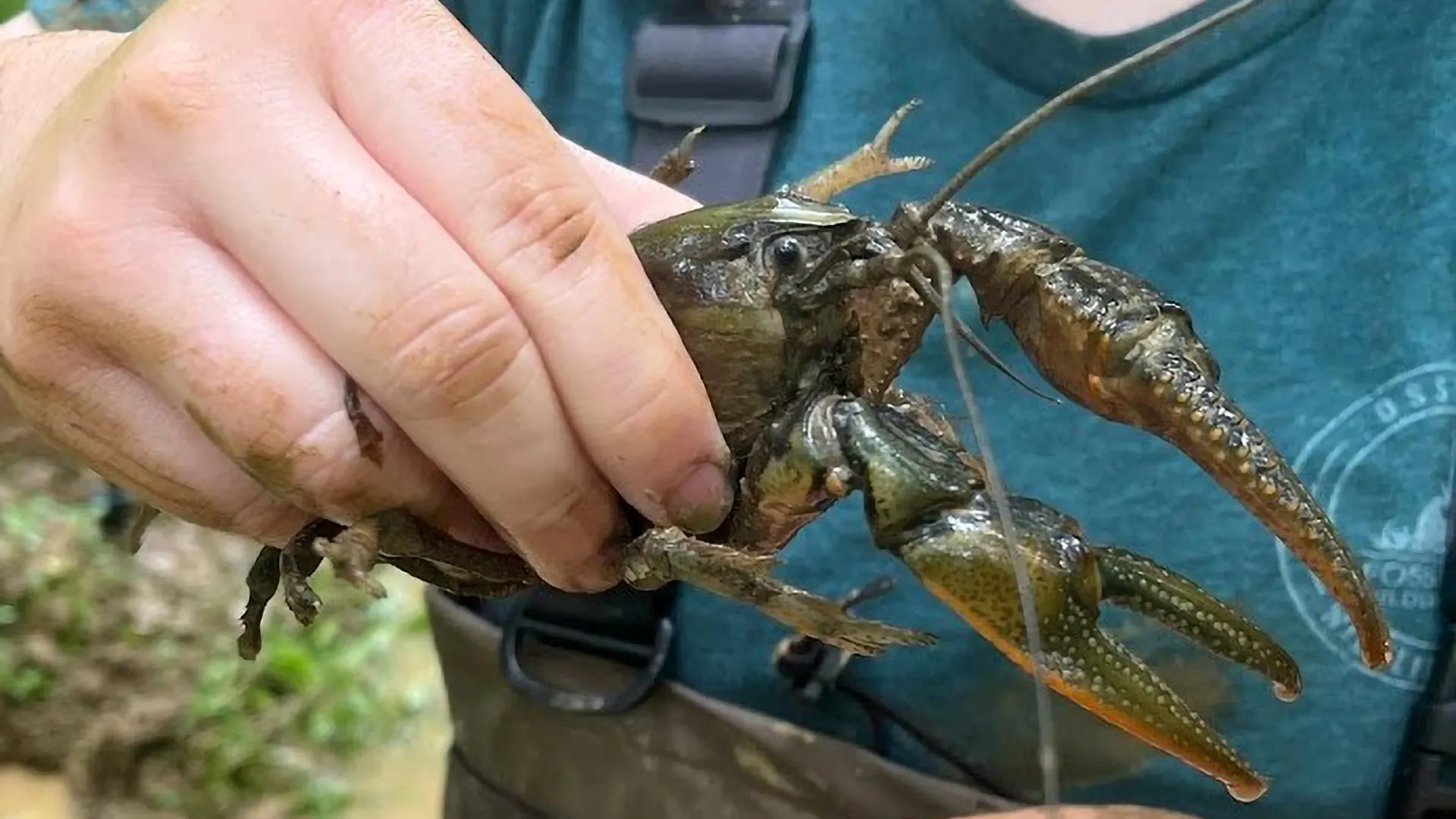
The scientific inquiry was sparked by Caitlin Bloomer, a teaching assistant professor in the Department of Natural Resources and Environmental Sciences at the University of Illinois Urbana-Champaign. During a routine biological survey in Kentucky, Bloomer unearthed an exceptionally large specimen, affectionately dubbed "Crawzilla." Confident that she had set a new benchmark for North American crayfish size, Bloomer presented the specimen to a colleague.
The reaction was immediate and dismissive. Her colleague, relying on his own extensive field experience, claimed to have personally encountered larger individuals. This professional rivalry quickly evolved into a nationwide, multi-institutional effort to document and measure the largest crayfish ever recorded. Bloomer and her collaborators reached out to curators, museum directors, and academic researchers across the United States, requesting access to preserved collections to conduct precise measurements using professional-grade calipers.
Chronology of the Nationwide Hunt
The process of identifying the largest specimens was methodical and relied on decades of accumulated biological data. The research team focused on standardized measurements, specifically the carapace length, to ensure consistency across different species and preservation methods.
- Initial Discovery (2023): The informal dispute between Bloomer and her colleague catalyzed the research project.
- Data Collection (Early 2024): The team contacted major institutions, including the Illinois Natural History Survey (INHS) and the Smithsonian Institution’s National Museum of Natural History.
- Analysis Phase (Mid 2024): Researchers analyzed 20 specimens representing 18 distinct species.
- Publication (Late 2024): Findings were finalized and published in Ecology, establishing a verified list of the largest crayfish ever documented in North American waters.
While Bloomer’s "Crawzilla" did not secure the top position, it earned a prestigious spot in the top 20 and gained the unique distinction of being the only burrowing crayfish species to make the list.
The Record-Holders: A Tale of Two Giants
The investigation revealed that the largest known crayfish in North America is a Tennessee bottlebrush crayfish, currently housed in the West Liberty University Astacology Collection in West Virginia. The specimen, collected in 2011 by Dr. Zac Loughman and a team of students, boasts a carapace length of 86.6 millimeters—roughly 3.4 inches—excluding the appendages.
Zackary Graham, an assistant professor of biology at West Liberty University, noted the significance of the collection. "I knew we had some massive crayfish in our holdings, but the discovery that we possessed the two largest specimens known from North America was a genuine surprise," Graham said. "The record-holder is a visual testament to the diversity of this group. Its carapace is the length of a credit card, and when you include the claws and tail, it stretches nearly the width of a standard sheet of paper."
The contribution of institutional archives was vital to the project’s success. The Illinois Natural History Survey, a division of the Prairie Research Institute, provided six of the top 20 specimens, while the Smithsonian Institution contributed four. These collections, some containing specimens gathered over the last century, provided the longitudinal data necessary to establish a cross-species comparison that fieldwork alone could not achieve.
Challenging Environmental Determinism
One of the most significant findings of the study was the discovery of a "growth limit." Despite the vast array of habitats, elevations, and latitudes across North America—from the Appalachian streams to the lowland marshes of the Midwest—the largest individuals of the species studied consistently maxed out around the 80-millimeter mark.
For decades, ecological theory has suggested that environmental factors such as water temperature, oxygen saturation, and nutrient availability are the primary drivers of body size in aquatic invertebrates. However, the researchers found no statistically significant correlation between these variables and the maximum size of the crayfish.
"They all seemed to max out around that 80-millimeter mark, but we weren’t sure why," Bloomer stated. "We examined latitude, oxygen availability, and habitat type as potential correlates, but we weren’t seeing any patterns."
The absence of an environmental link has led the researchers to pivot toward a physiological hypothesis. They suggest that the limit might be imposed by the crayfish’s own biology—specifically, the structural integrity of the exoskeleton. As a crustacean grows, its shell must be molted and replaced. The mechanical stresses involved in supporting a larger body size, combined with the metabolic cost of synthesizing a larger, thicker exoskeleton, may represent a "hard ceiling" that North American species have evolved to accommodate.
The Global Comparison
The existence of this 80-millimeter ceiling is even more intriguing when compared to global crustacean diversity. In Tasmania, the giant freshwater crayfish (Astacopsis gouldi) can grow to be significantly larger, sometimes weighing several kilograms and reaching lengths exceeding 30 inches. The disparity between these Tasmanian giants and North American species suggests that evolutionary history and lineage-specific adaptations play a far larger role in size potential than immediate environmental conditions.
The study posits that while North American crayfish have adapted to a wide range of niches, their lineage may lack the specific physiological modifications required to bypass the structural limitations that prevent them from reaching the massive sizes seen in other parts of the world.
Broader Implications and Future Research
The "Crawzilla" study serves as a poignant reminder of how much remains unknown about common aquatic life. Crayfish are often the first subjects of childhood curiosity, frequently serving as the initial point of engagement for young people interested in biology and ecology. Yet, the fact that a basic question regarding their maximum size remained unanswered until now highlights a gap in current ecological literacy.
"It is fascinating how much we still have to learn about creatures that are so familiar," Bloomer remarked. "We go to a stream and see these animals, but we are only just beginning to understand the biological constraints that shape their lives."
The implications of this research extend beyond mere record-keeping. By identifying potential physiological limitations, researchers can better predict how these species might respond to changing environmental pressures. If the growth ceiling is indeed hard-coded into their biology, it suggests that these animals may have a limited capacity to adapt their body size in response to climate-induced changes in water temperature or chemistry.
Moving forward, the research team intends to conduct physiological studies to test their exoskeleton hypothesis. By examining the calcium density, muscle anatomy, and metabolic rates of the largest specimens, they hope to confirm whether these structural features are indeed the limiting factors in North American crayfish development.
The collaboration between field biologists and museum curators has transformed a casual disagreement into a formal scientific inquiry. It underscores the vital importance of natural history collections, which serve as "time capsules" of biological data. As scientists continue to grapple with the impacts of environmental change, the ability to look back at preserved specimens to answer fundamental questions about growth and evolution remains an indispensable tool in the scientific arsenal. For now, the Tennessee bottlebrush crayfish remains the undisputed king of North American streams, at least until the next discovery pulls a new giant from the mud.