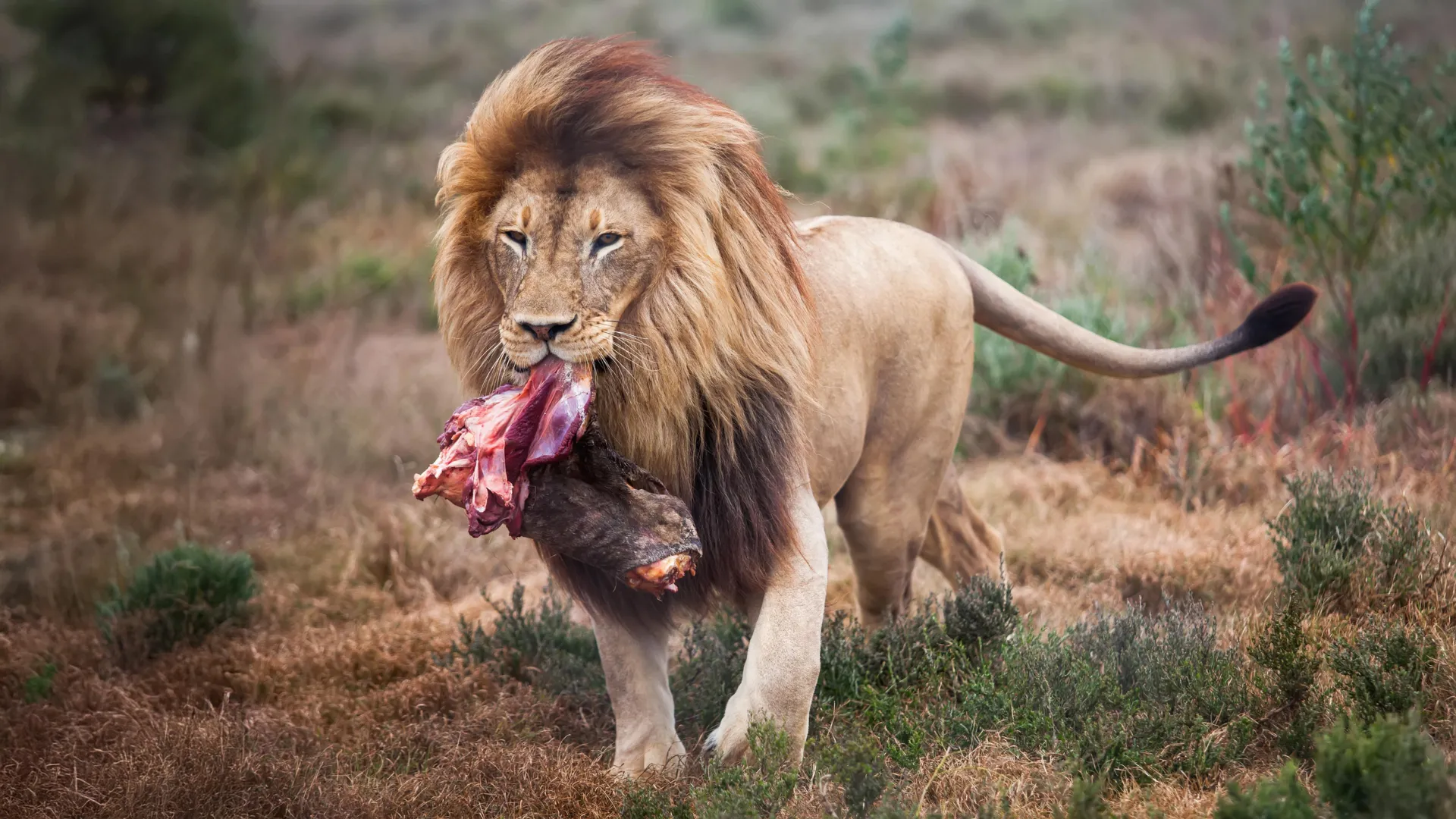
A groundbreaking study conducted by researchers at the University of Adelaide, in collaboration with Monarto Safari Park, has revealed that implementing a feast-and-fast feeding regime involving whole animal carcasses significantly improves the welfare of captive African lions. By moving away from standardized daily portions and introducing biological rhythms observed in the wild, the study demonstrates that zoo-managed carnivores can exhibit more complex, naturalistic behavioral patterns, providing a blueprint for future animal management practices in zoos globally.
The research, published in the peer-reviewed journal Applied Animal Behaviour Science, offers a comprehensive analysis of how dietary logistics directly dictate the physical and psychological state of apex predators. The findings suggest that when zoos prioritize the process of feeding over the mere delivery of nutrients, they can foster an environment that encourages instinctual behaviors such as tearing, pulling, and manipulating prey, which are often absent in traditional captive feeding scenarios.
Chronology of the Research Project
The project spanned several months at Monarto Safari Park, located in South Australia, a facility renowned for its large-scale, open-range enclosures. The study was structured into distinct phases to ensure the validity of the data collected from the park’s resident pride of adult male African lions.
The research team, led by Lesia Hryhorenko from the University of Adelaide’s School of Animal and Veterinary Sciences, included international collaboration from Florence Demoulin, a Masters student from the University of Liege in Belgium. Preparations for the study began with an extensive baseline observation period, where researchers cataloged the existing behavior of the lions under their established daily feeding routine.
Following this baseline, the experimental phase was introduced. Over a three-month duration, the feeding protocol was altered to include the provision of whole carcasses every nine days. During these events, the lions were provided with approximately 200 kilograms of carcass material, which remained accessible to them for up to three days. This intentional delay allowed the animals to engage in prolonged feeding sessions, followed by a necessary period of rest and digestion, mirroring the sporadic but intense hunting cycles of their wild counterparts.
Technical Methodology and Data Collection
To ensure high-fidelity data, the team utilized a sophisticated network of eight infrared cameras positioned strategically throughout the lions’ habitat. This equipment allowed for continuous, 24-hour monitoring, capturing every interaction the lions had with the carcasses. This methodology produced one of the most granular datasets ever compiled regarding the feeding ecology of captive African lions.
The technological approach was critical in capturing subtle behavioral shifts that occur outside of daylight hours. By analyzing the high-resolution footage, researchers were able to quantify the duration of eating, the intensity of manipulation, and the subsequent recovery periods. The data indicated that on carcass-feeding days, the lions spent approximately three times longer consuming their food compared to their baseline routine. This increased duration was not merely a matter of quantity but of mechanical effort, as the lions were required to utilize their dental and muscular systems to tear into the carcasses, an act that is essential for both dental health and mental stimulation.
Behavioral Analysis and Findings
The core of the study’s findings centers on the concept of "behavioral synchrony." In the wild, African lions do not adhere to a 24-hour cycle of consumption. Their feeding habits are inherently unpredictable, dictated by the success of the pride’s hunting efforts and the availability of prey.
The study observed that when provided with whole carcasses, the lions exhibited a distinct cycle: intense, prolonged feeding sessions followed by extended periods of inactivity. As the digestion phase progressed and the "fasting" portion of the cycle continued, the lions displayed a gradual increase in movement and activity levels, reaching a peak just before the next feeding event. This oscillation between states of lethargy and alertness closely mirrors the circadian and ultradian rhythms of wild prides in the Serengeti or the Okavango Delta.
One of the most significant aspects of the study was the investigation into pacing—a common stereotypic behavior in captive carnivores often interpreted as a sign of stress or anticipation. While the researchers noted a slight increase in pacing during the study, the data indicated that this behavior was not driven by hunger. Instead, the highest frequencies of pacing were correlated with predictable human routines, such as the arrival of keepers or scheduled shifts between enclosures. This suggests that the lions’ anticipatory behaviors were rooted in environmental conditioning rather than dietary insufficiency, a vital distinction for zookeepers looking to refine their management strategies.
Perspectives from the Research Team
Lead author Lesia Hryhorenko emphasized that the nutritional content of the diet is only one component of animal welfare. "Wild lions don’t eat at the same time every day. They experience natural periods of feasting and fasting depending on hunting success," Hryhorenko noted. "By shifting the focus toward the behavioral act of feeding, we are providing the animals with the tools to express their natural biology. Tearing, pulling, and manipulating food are not just feeding behaviors; they are core components of their natural ecology."
Associate Professor Alexandra Whittaker, a co-author of the study, highlighted the importance of longitudinal data in zoo management. "Many zoo studies focus only on what happens immediately after food is provided," she stated. "Our results show that feeding schedules can influence behavior for days afterward. This makes it essential to look at behavioral patterns across the entire feeding cycle rather than a single event. It is a shift from measuring ‘what they eat’ to ‘how they live’."
Implications for Modern Zoo Management
The success of the study at Monarto Safari Park carries broad implications for the global zoo community. As zoos move toward more welfare-centric models, the findings provide empirical support for moving away from standardized, small-portion feeding toward "environmental enrichment feeding."
The study also addressed concerns regarding the potential for increased aggression when large food items are introduced to a group. Contrary to common assumptions, the researchers found no increase in competitive aggression or social instability within the pride during carcass-feeding sessions. This suggests that for well-established social groups, the logistical challenges of whole-carcass feeding are manageable and the social risks are minimal.
Furthermore, the study suggests that the "feast and fast" model may serve as a powerful form of cognitive enrichment. In traditional settings, the lack of effort required to obtain food can lead to boredom or sedentary lifestyles in captive predators. By introducing a cycle that mimics the challenges of the wild, facilities can encourage natural problem-solving behaviors and physical exertion, potentially mitigating some of the health risks associated with inactivity, such as obesity or muscle atrophy.
Future Research Directions
While the current study provides a robust framework, the researchers acknowledge that there is more work to be done. Future investigations are expected to combine these behavioral findings with physiological measurements, such as hormonal analysis or metabolic tracking, to create a holistic picture of how feeding strategies impact the long-term well-being of apex predators.
By integrating behavioral monitoring with internal biological markers, future research will aim to determine the optimal frequency of carcass provision that balances animal health, staff safety, and public engagement. This data-driven approach marks a significant evolution in the field of zoo biology, moving away from anecdotal observation toward rigorous, evidence-based practices that prioritize the biological integrity of the species in human care.
Ultimately, the University of Adelaide study serves as a call to action for zoological institutions to re-evaluate their daily routines. By acknowledging that an animal’s welfare is a product of its entire 24-hour cycle—and not just its scheduled meal times—zoos can bridge the gap between captive management and the wild experience, ensuring that predators are not just kept alive, but allowed to live as their biology intended.